
Поделиться



 Computer-Hardware-Input-and-Output-Devices.pdf
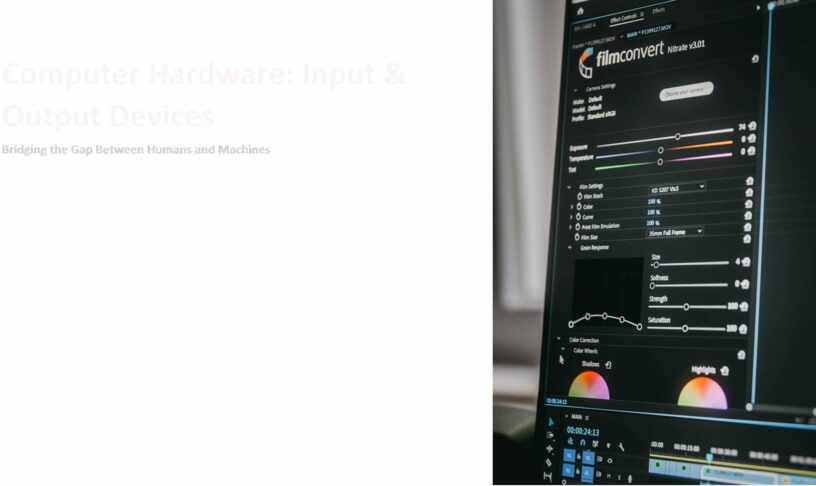
 Computer Hardware:
Input & Output Devices
Computer Hardware:
Input & Output Devices
Bridging the Gap Between Humans and Machines
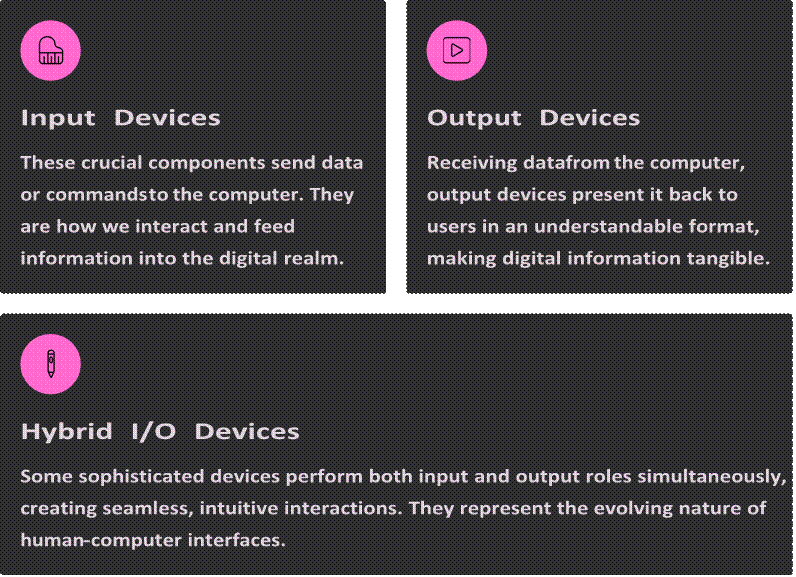
 What Are Input &
Output Devices?
What Are Input &
Output Devices?
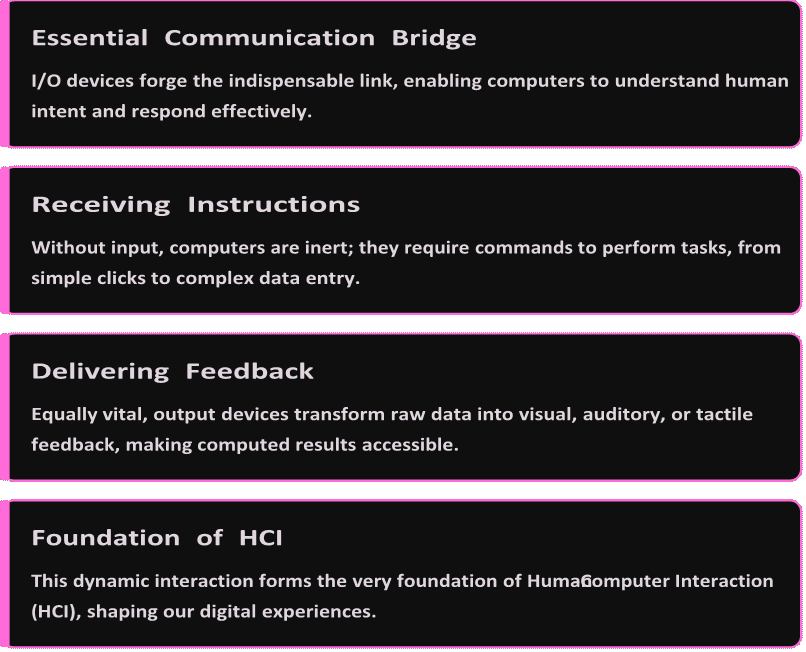
 Why Input & Output
Matter
Why Input & Output
Matter
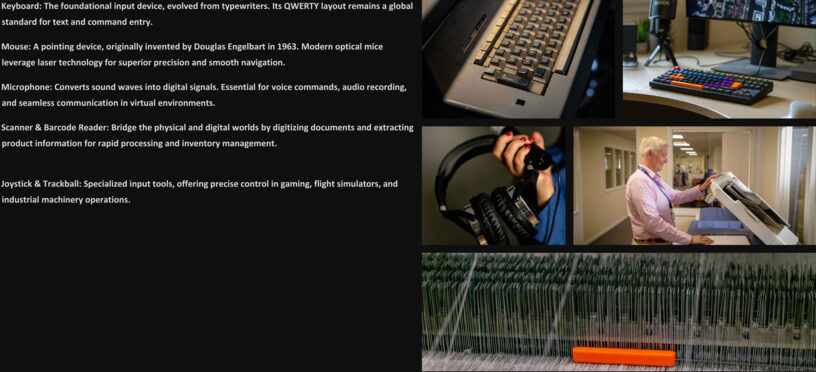
Key Input Devices: The User’s Gateway
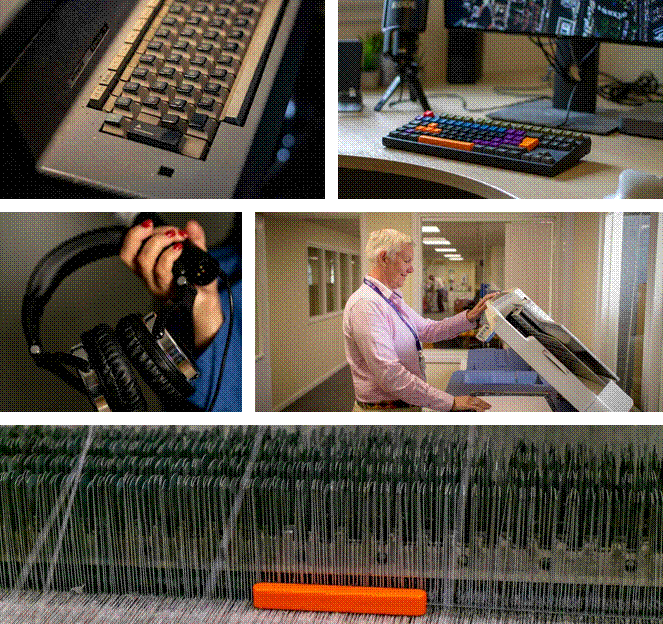 Keyboard: The
foundational input device, evolved from typewriters. Its QWERTY layout remains
a global standard for text and command entry.
Keyboard: The
foundational input device, evolved from typewriters. Its QWERTY layout remains
a global standard for text and command entry.
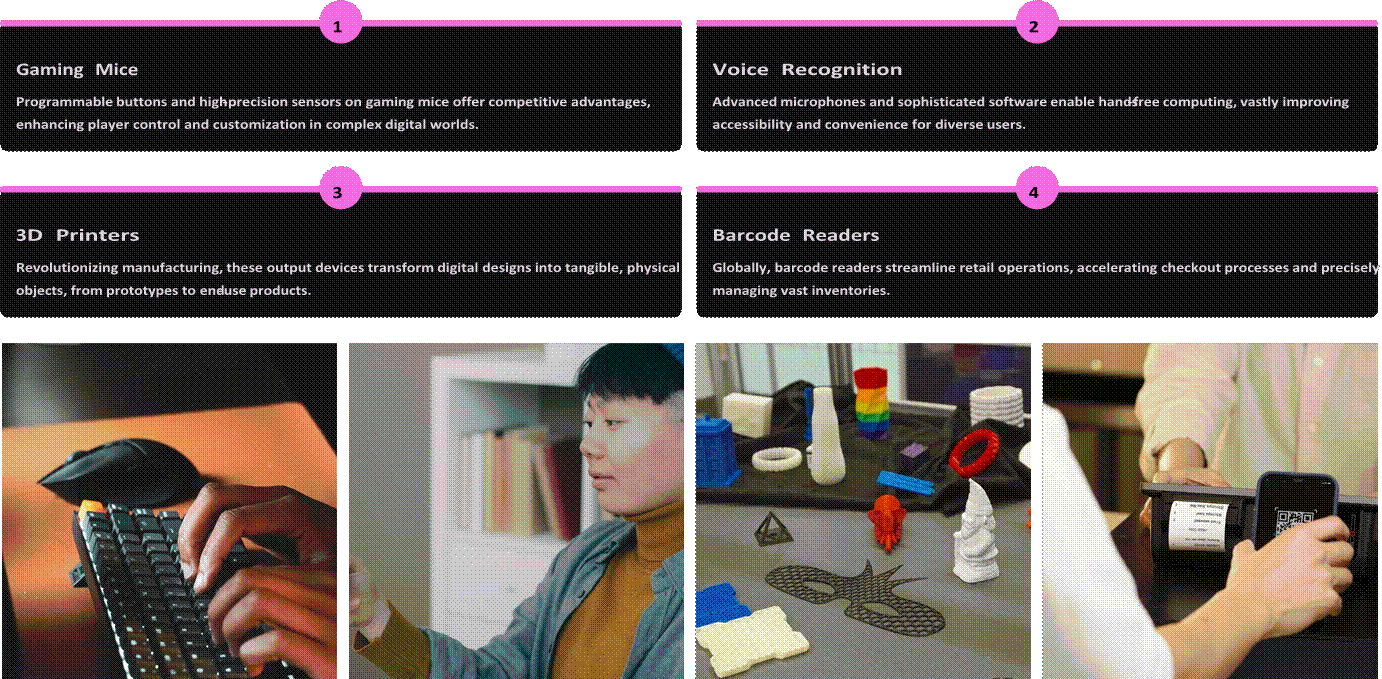
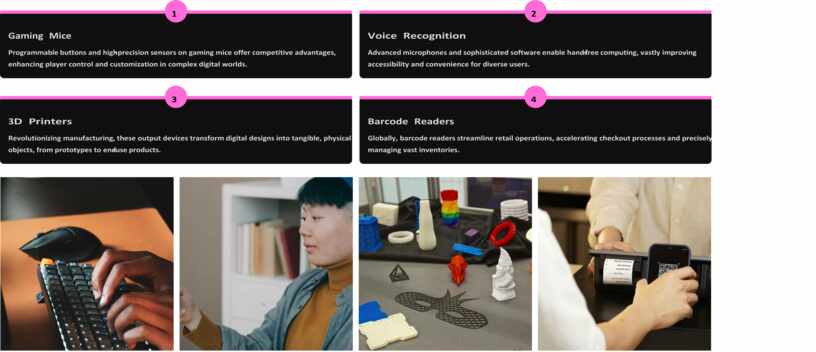
Mouse: A pointing device, originally invented by Douglas Engelbart in 1963. Modern optical mice leverage laser technology for superior precision and smooth navigation.
Microphone: Converts sound waves into digital signals. Essential for voice commands, audio recording, and seamless communication in virtual environments.
Scanner & Barcode Reader: Bridge the physical and digital worlds by digitizing documents and extracting product information for rapid processing and inventory management.
Joystick & Trackball: Specialized input tools, offering precise control in gaming, flight simulators, and industrial machinery operations.
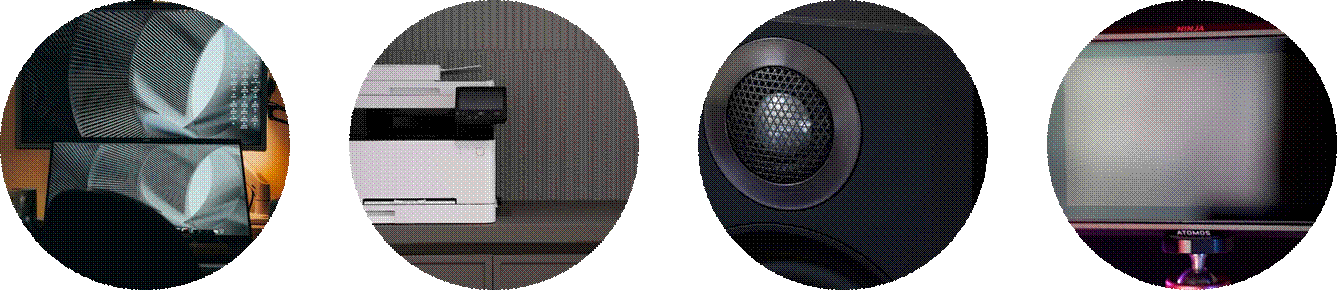
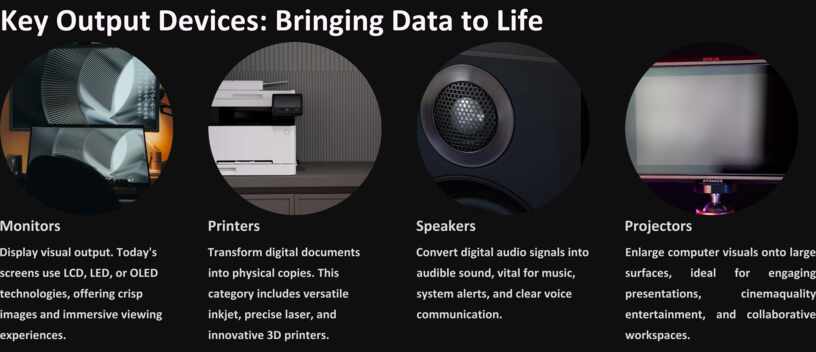
Display visual output. Today's screens use LCD, LED, or OLED technologies, offering crisp images and immersive viewing experiences.
Transform digital documents into physical copies. This category includes versatile inkjet, precise laser, and innovative 3D printers.
Convert digital audio signals into audible sound, vital for music, system alerts, and clear voice communication.
Enlarge computer visuals onto large surfaces, ideal for engaging presentations, cinemaquality entertainment, and collaborative workspaces.
Devices That Do Both: Input & Output Together
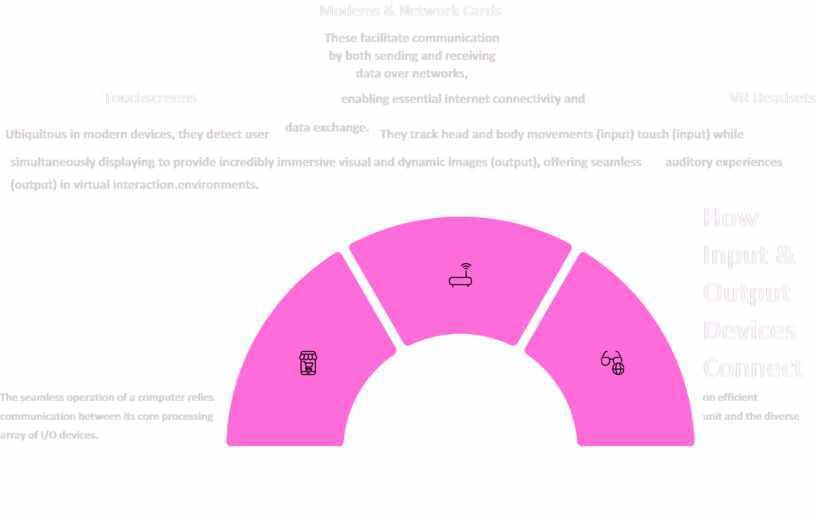
Modems & Network Cards
 These facilitate
communication by both sending and receiving data over networks,
These facilitate
communication by both sending and receiving data over networks,
Touchscreens enabling essential internet connectivity and VR Headsets
Ubiquitous in modern devices, they detect user data exchange. They track head and body movements (input) touch (input) while simultaneously displaying to provide incredibly immersive visual and dynamic images (output), offering seamless auditory experiences (output) in virtual interaction.environments.
How Input & Output Devices Connect
The seamless operation of a computer relies on efficient communication between its core processing unit and the diverse array of I/O devices.
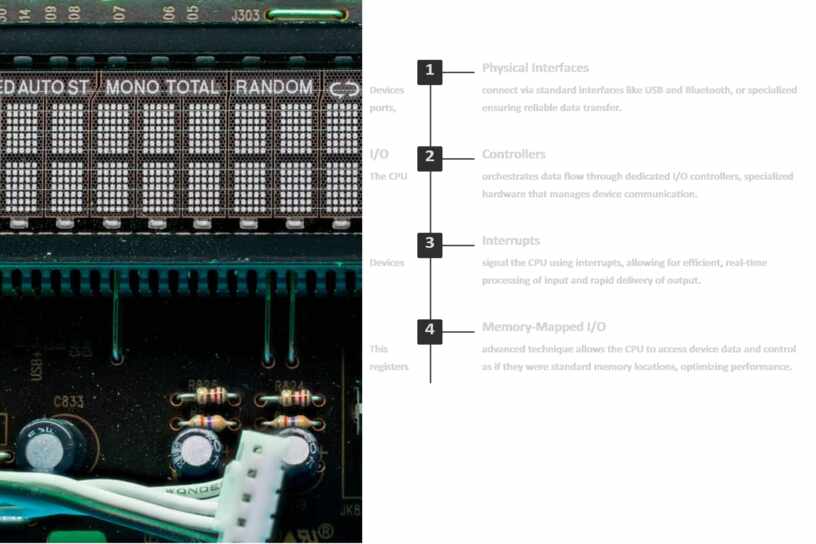
 Physical
Interfaces
Physical
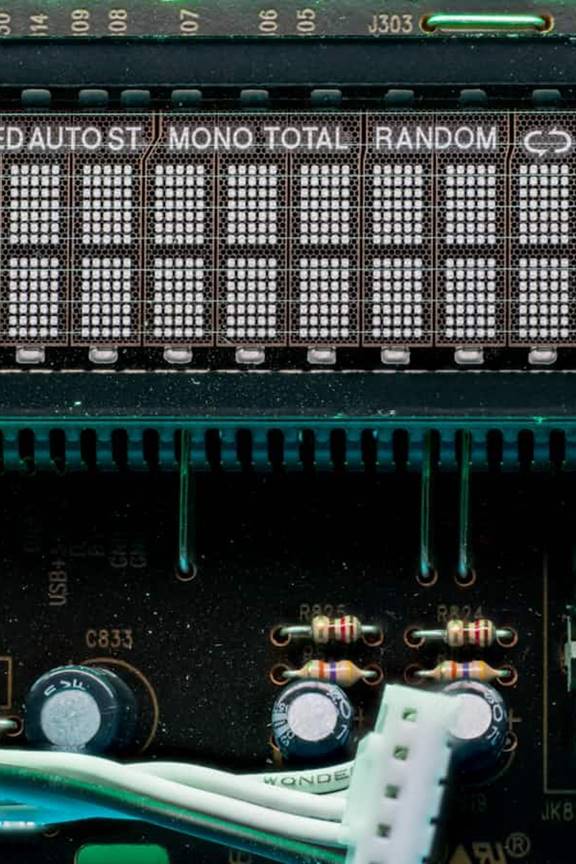
InterfacesDevices connect via standard interfaces like USB and Bluetooth, or specialized ports, ensuring reliable data transfer.
 I/O
Controllers
I/O
ControllersThe CPU orchestrates data flow through dedicated I/O controllers, specialized hardware that manages device communication.
Devices signal the CPU using interrupts, allowing for efficient, real-time processing of input and rapid delivery of output.
This advanced technique allows the CPU to access device data and control registers as if they were standard memory locations, optimizing performance.
The Future of I/O Devices
 The trajectory of input
and output technologies points towards increasingly intuitive, integrated, and
immersive human-computer interfaces.
The trajectory of input
and output technologies points towards increasingly intuitive, integrated, and
immersive human-computer interfaces.
Smarter input recognition, leveraging AI for advanced gesture control, nuanced voice understanding, and adaptive interfaces.
 Flexible &
Wearable Tech
Flexible &
Wearable TechThe advent of flexible, foldable, and wearable I/O devices promises expanded usability and integration into everyday life.
Significant advancements in haptic technology will simulate realistic touch sensations, enriching virtual and augmented realities.
Growing importance of devices combining sight, sound, and touch, fostering richer, more natural interactions.

Summary: The
Vital Role of Input & Output Devices
|
|
|
||||
|
|

Материалы на данной страницы взяты из открытых источников либо размещены пользователем в соответствии с договором-офертой сайта. Вы можете сообщить о нарушении.


