
Поделиться



 Solar System Educational Presentation.pptx
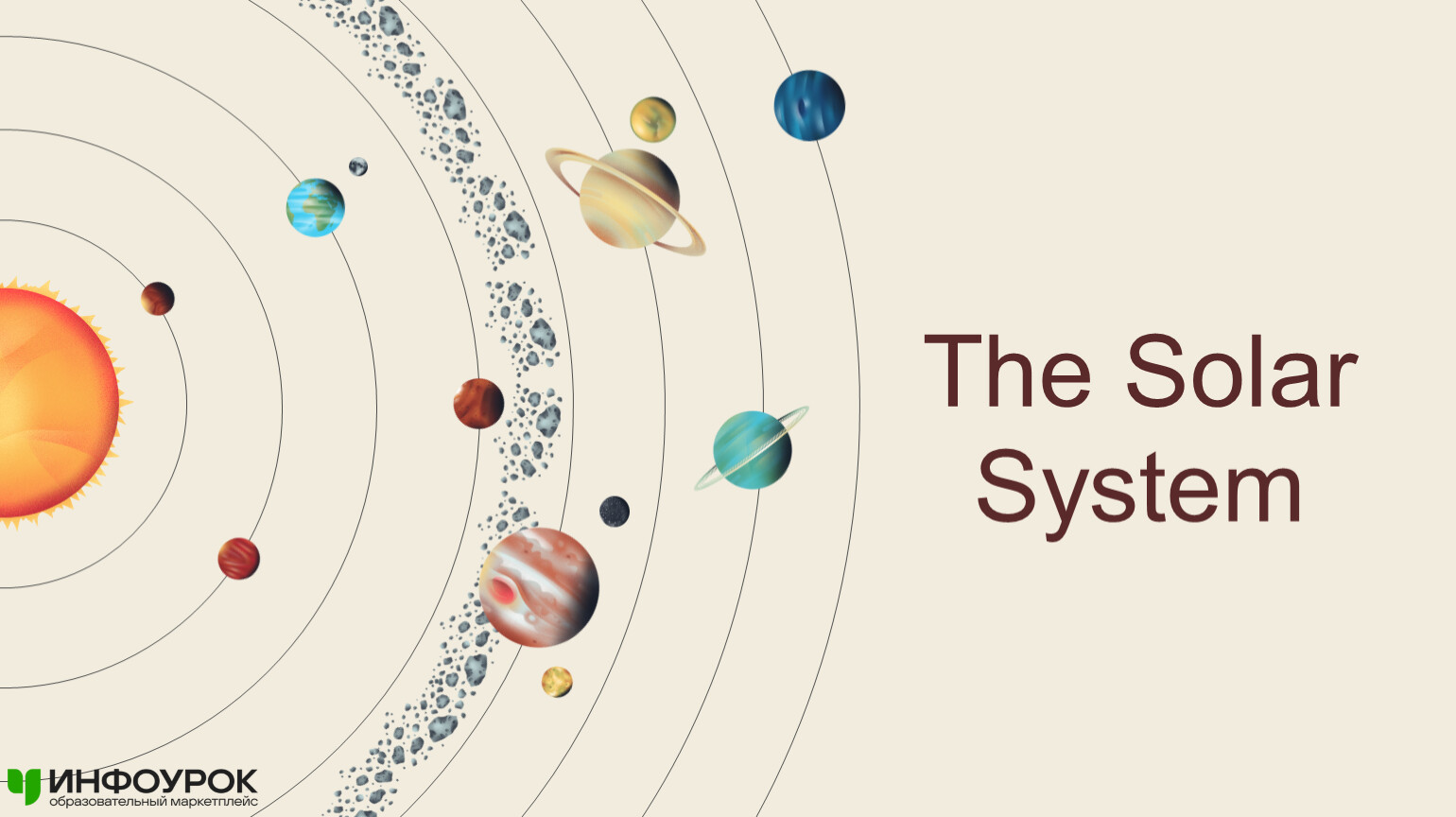
The Solar
System
Lesson Agenda
INTRODUCTION
01
An introduction of the efforts and discovery of our solar system and its history
THE SUN
02
A discussion on the characteristics and importance of the sun in the solar system
TERRESTRIALS
03
A discussion on the characteristics and importance of the terrestrial planets in the solar system
GAS GIANTS
04
A discussion on the characteristics and importance of the gas giants in the solar system
Objectives
01
The students should be able to identify the difference between terrestrial planets and gas giants.
02
The students should be able to compare and contrast related planets from the solar system
03
The students should be able to show appreciation on the importance of the other 7 planets to earth
Introduction
Many astronomers have attempted to discover the truth about our world and beyond; with the collective knowledge gained from these efforts, we have come to understand and continue to discover worlds beyond our own.
In this lesson, we will learn the fundamentals of our solar system's heavenly bodies and discover some of the most fascinating facts about stars, moons, and planets.
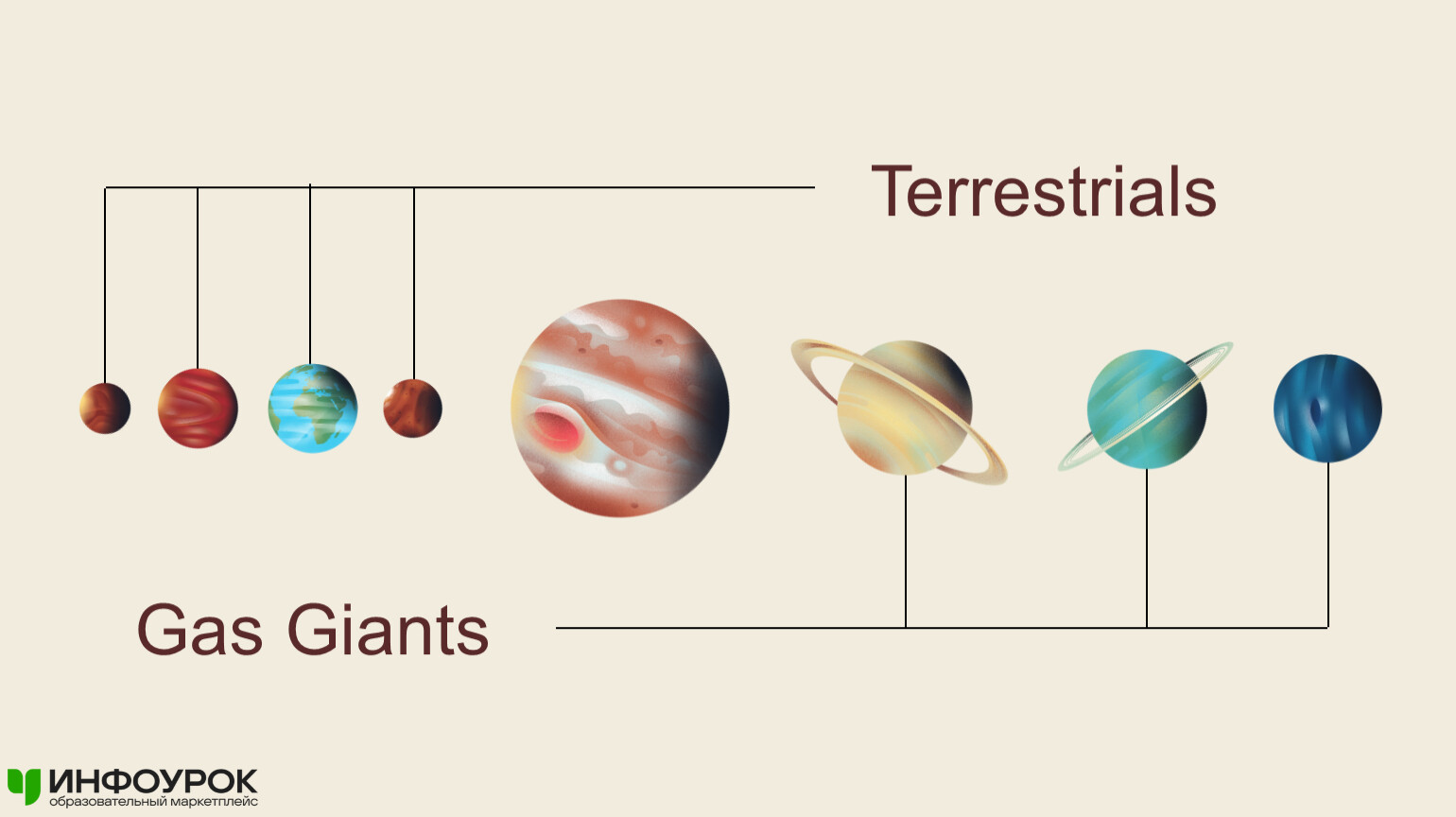
Terrestrials
Gas Giants
The Sun
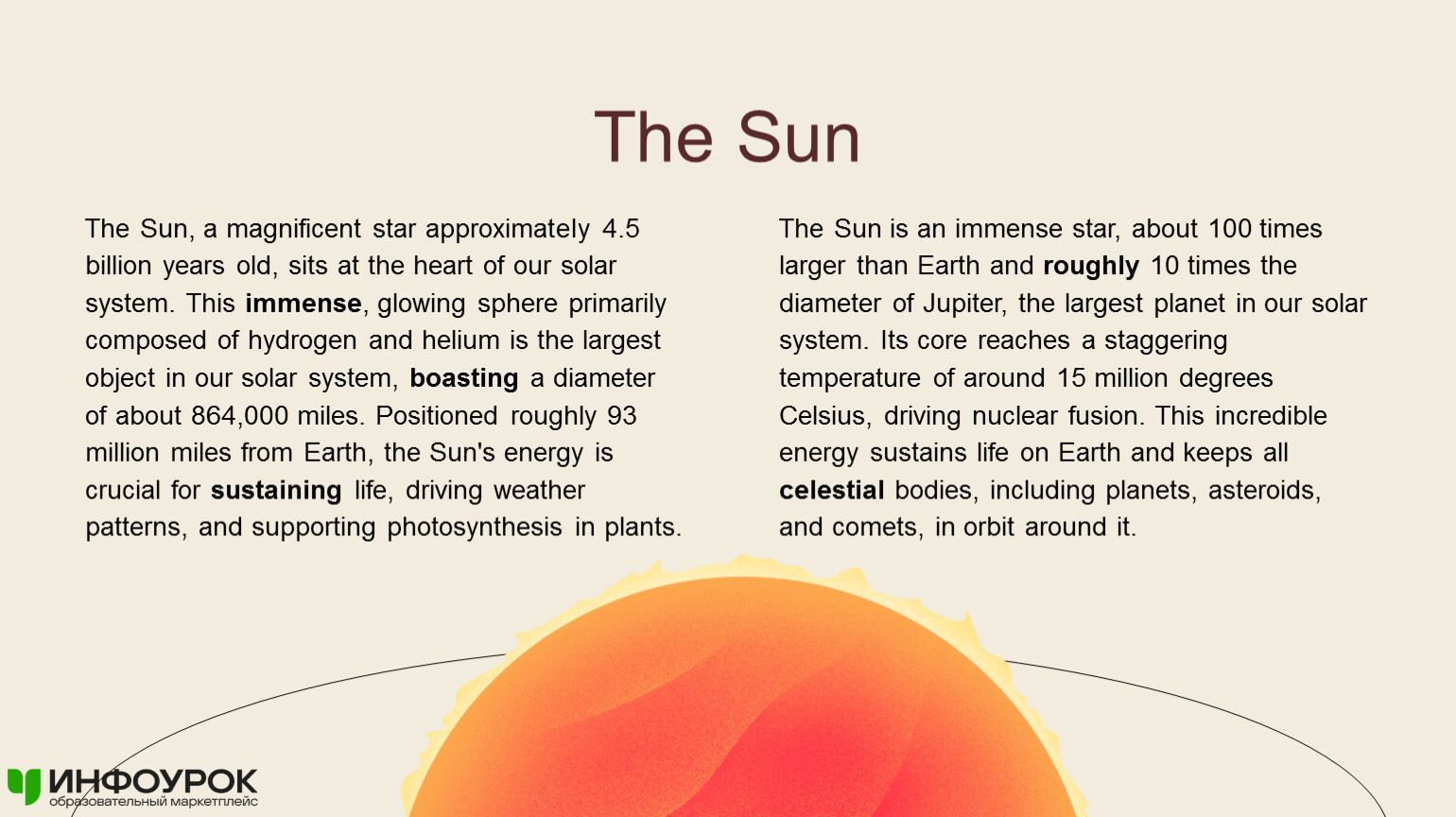
The Sun, a magnificent star approximately 4.5 billion years old, sits at the heart of our solar system. This immense, glowing sphere primarily composed of hydrogen and helium is the largest object in our solar system, boasting a diameter of about 864,000 miles. Positioned roughly 93 million miles from Earth, the Sun's energy is crucial for sustaining life, driving weather patterns, and supporting photosynthesis in plants.
The Sun is an immense star, about 100 times larger than Earth and roughly 10 times the diameter of Jupiter, the largest planet in our solar system. Its core reaches a staggering temperature of around 15 million degrees Celsius, driving nuclear fusion. This incredible energy sustains life on Earth and keeps all celestial bodies, including planets, asteroids, and comets, in orbit around it.
Mercury
Venus
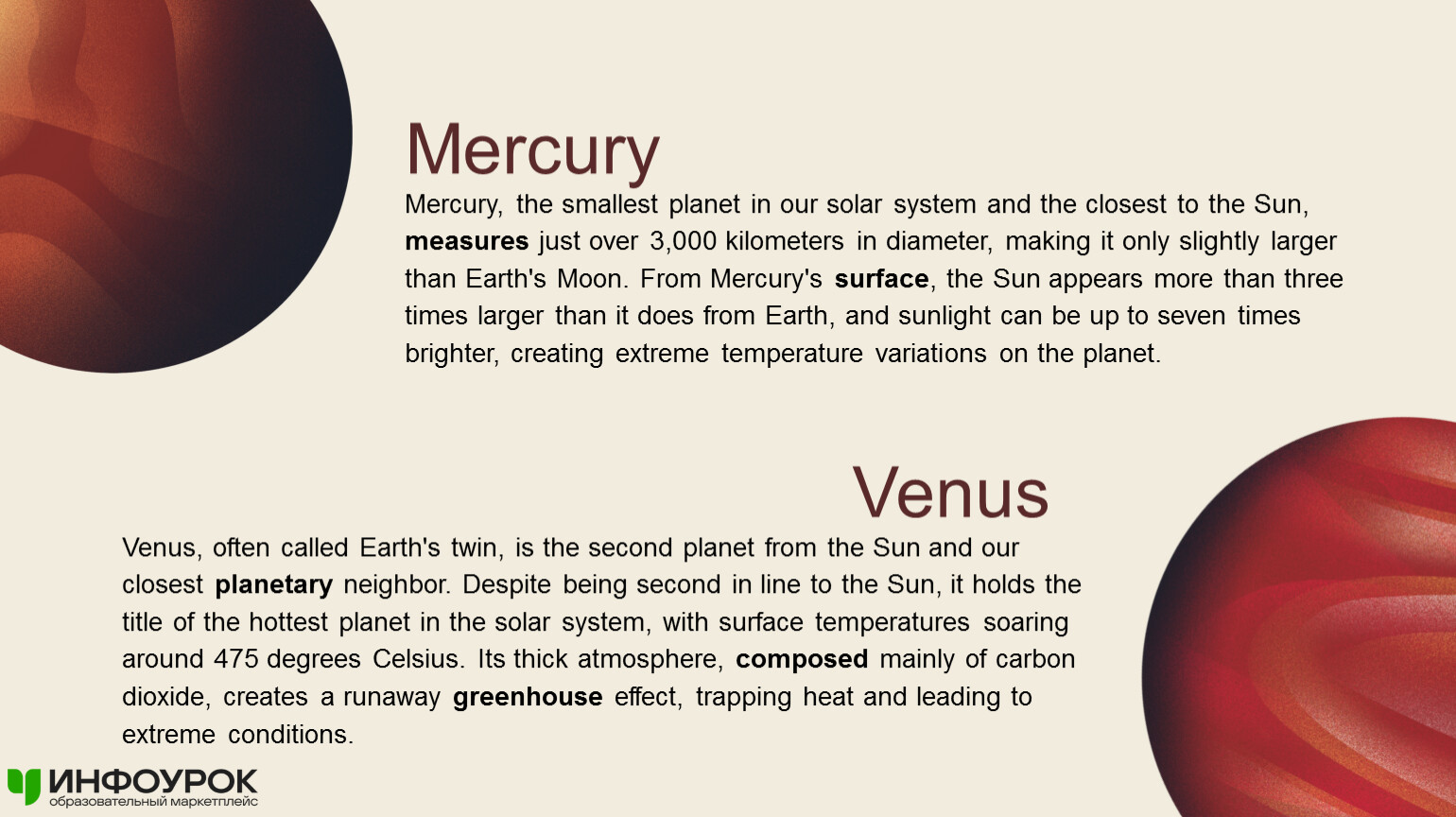
Mercury, the smallest planet in our solar system and the closest to the Sun, measures just over 3,000 kilometers in diameter, making it only slightly larger than Earth's Moon. From Mercury's surface, the Sun appears more than three times larger than it does from Earth, and sunlight can be up to seven times brighter, creating extreme temperature variations on the planet.
Venus, often called Earth's twin, is the second planet from the Sun and our closest planetary neighbor. Despite being second in line to the Sun, it holds the title of the hottest planet in the solar system, with surface temperatures soaring around 475 degrees Celsius. Its thick atmosphere, composed mainly of carbon dioxide, creates a runaway greenhouse effect, trapping heat and leading to extreme conditions.
Earth
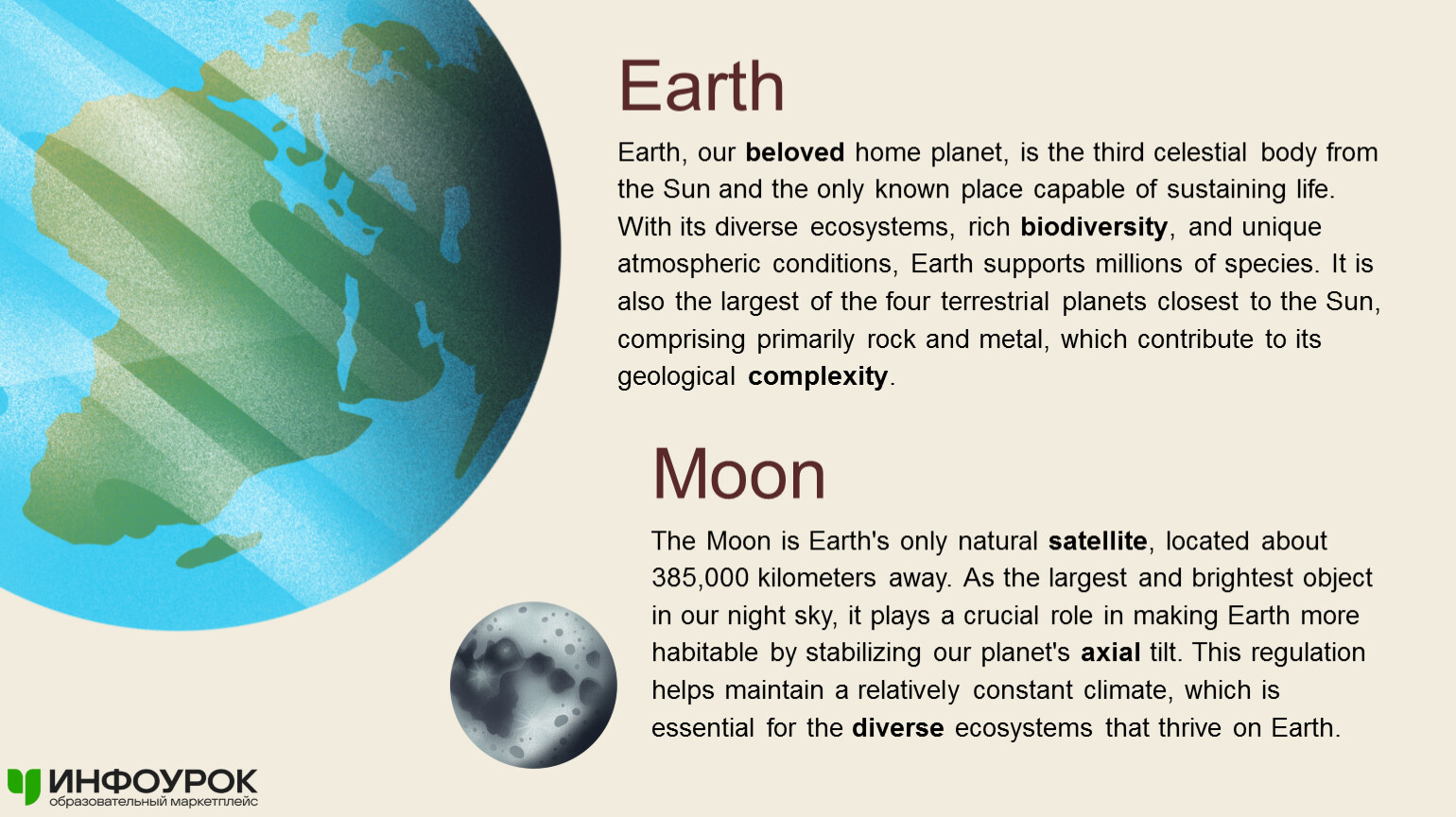
Earth, our beloved home planet, is the third celestial body from the Sun and the only known place capable of sustaining life. With its diverse ecosystems, rich biodiversity, and unique atmospheric conditions, Earth supports millions of species. It is also the largest of the four terrestrial planets closest to the Sun, comprising primarily rock and metal, which contribute to its geological complexity.
Moon
The Moon is Earth's only natural satellite, located about 385,000 kilometers away. As the largest and brightest object in our night sky, it plays a crucial role in making Earth more habitable by stabilizing our planet's axial tilt. This regulation helps maintain a relatively constant climate, which is essential for the diverse ecosystems that thrive on Earth.
Mars
Asteroid Belt
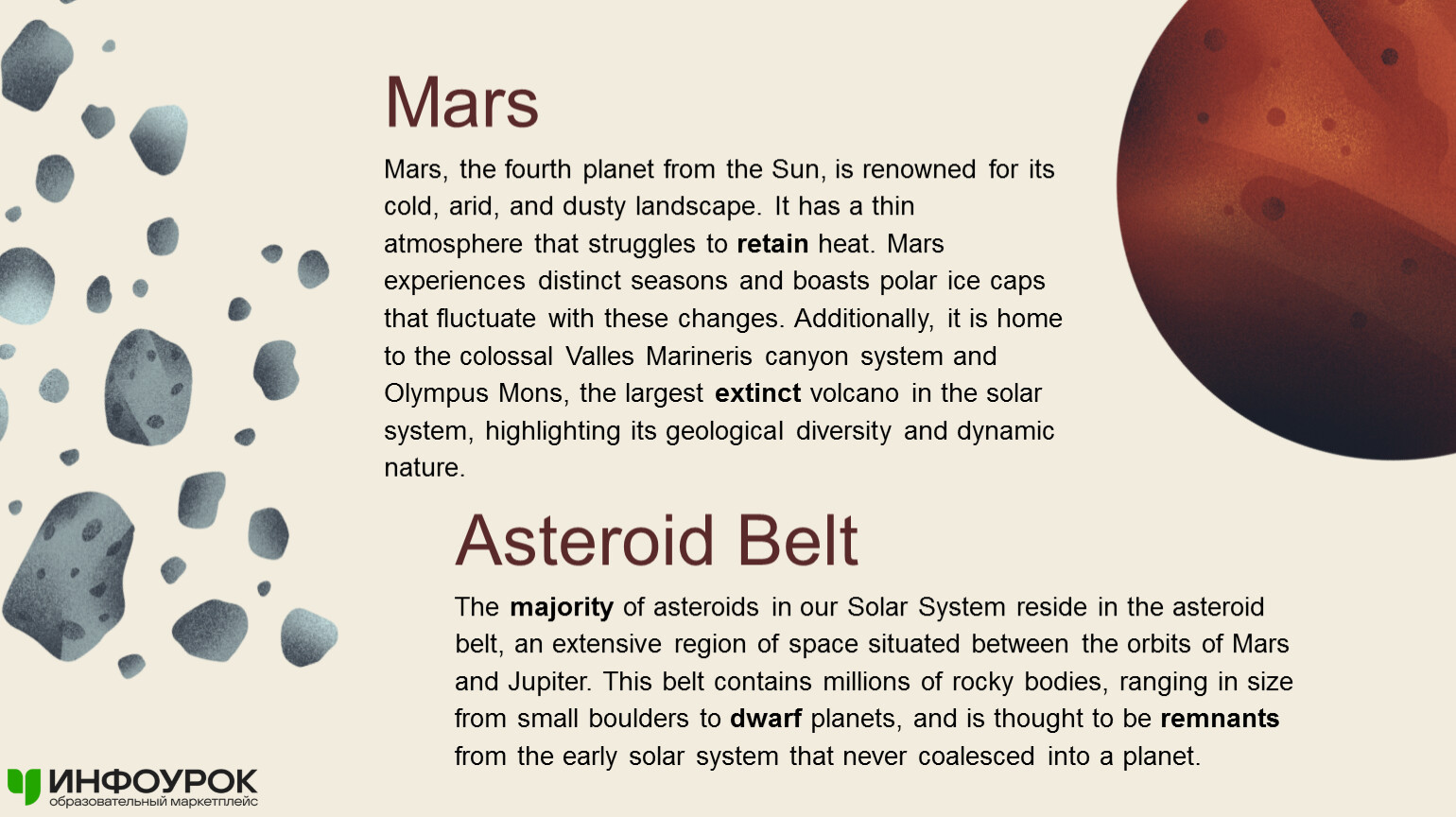
Mars, the fourth planet from the Sun, is renowned for its cold, arid, and dusty landscape. It has a thin atmosphere that struggles to retain heat. Mars experiences distinct seasons and boasts polar ice caps that fluctuate with these changes. Additionally, it is home to the colossal Valles Marineris canyon system and Olympus Mons, the largest extinct volcano in the solar system, highlighting its geological diversity and dynamic nature.
The majority of asteroids in our Solar System reside in the asteroid belt, an extensive region of space situated between the orbits of Mars and Jupiter. This belt contains millions of rocky bodies, ranging in size from small boulders to dwarf planets, and is thought to be remnants from the early solar system that never coalesced into a planet.
Jupiter
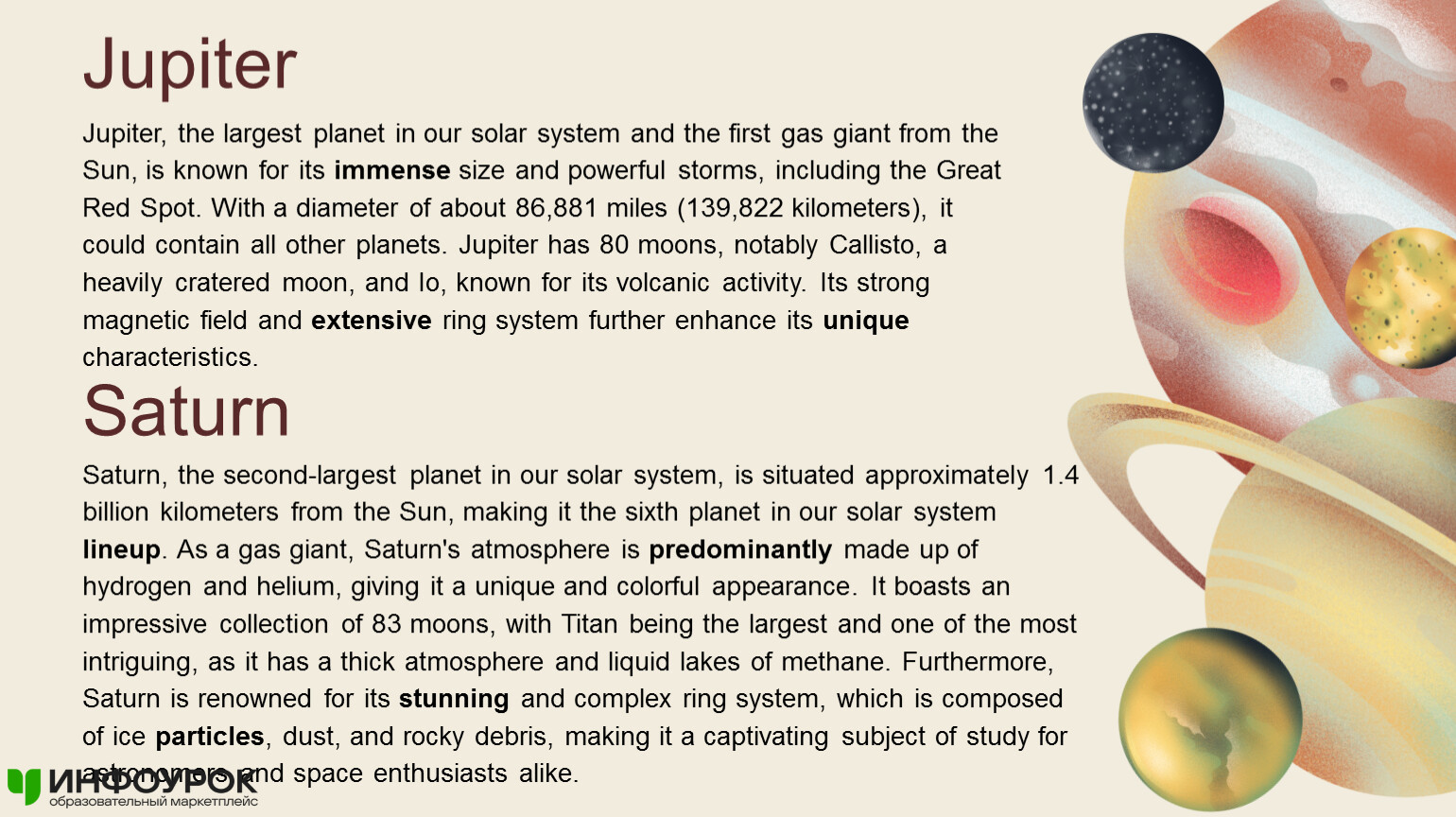
Jupiter, the largest planet in our solar system and the first gas giant from the Sun, is known for its immense size and powerful storms, including the Great Red Spot. With a diameter of about 86,881 miles (139,822 kilometers), it could contain all other planets. Jupiter has 80 moons, notably Callisto, a heavily cratered moon, and Io, known for its volcanic activity. Its strong magnetic field and extensive ring system further enhance its unique characteristics.
Saturn
Saturn, the second-largest planet in our solar system, is situated approximately 1.4 billion kilometers from the Sun, making it the sixth planet in our solar system lineup. As a gas giant, Saturn's atmosphere is predominantly made up of hydrogen and helium, giving it a unique and colorful appearance. It boasts an impressive collection of 83 moons, with Titan being the largest and one of the most intriguing, as it has a thick atmosphere and liquid lakes of methane. Furthermore, Saturn is renowned for its stunning and complex ring system, which is composed of ice particles, dust, and rocky debris, making it a captivating subject of study for astronomers and space enthusiasts alike.
Uranus
Neptune
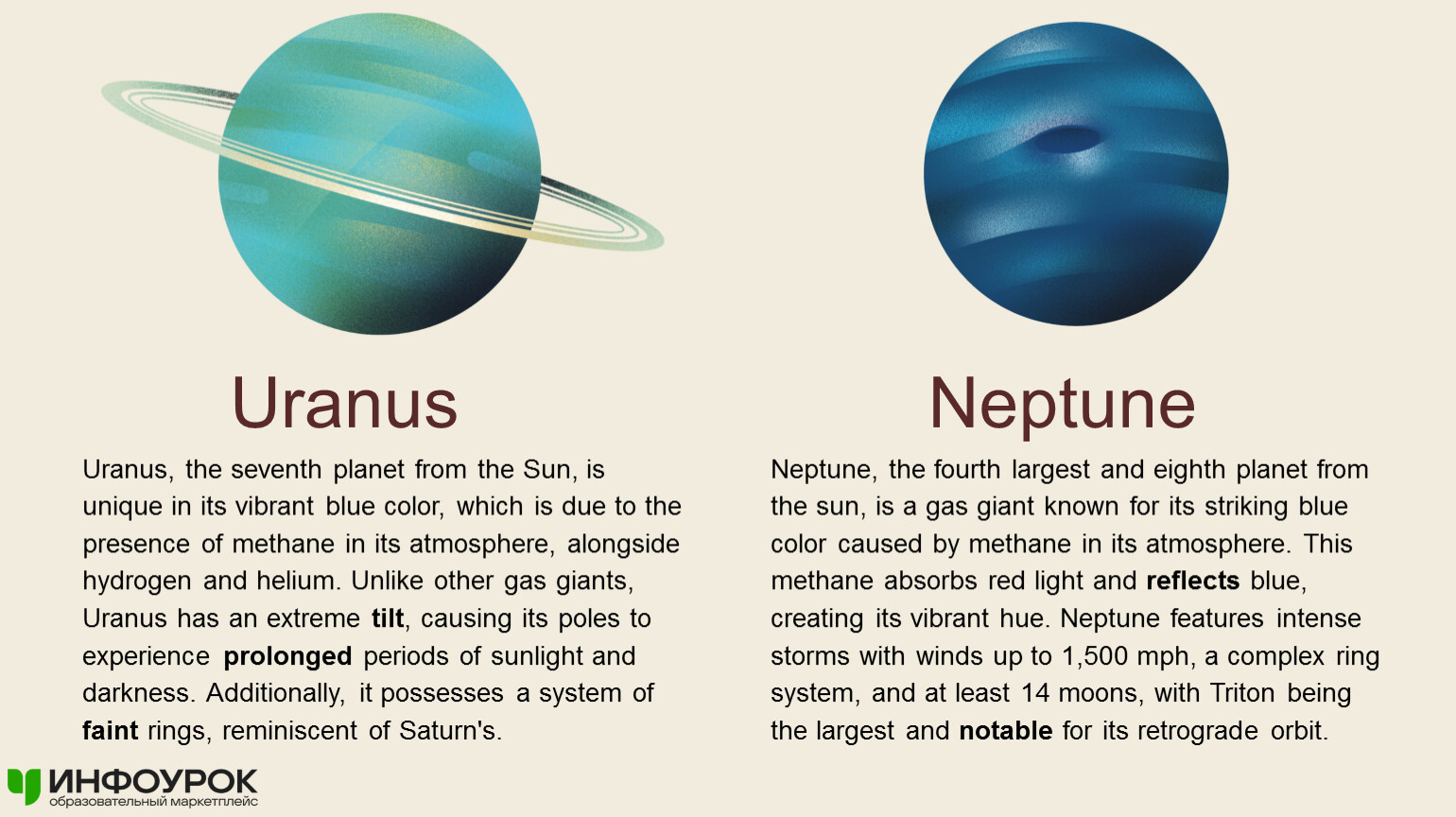
Uranus, the seventh planet from the Sun, is unique in its vibrant blue color, which is due to the presence of methane in its atmosphere, alongside hydrogen and helium. Unlike other gas giants, Uranus has an extreme tilt, causing its poles to experience prolonged periods of sunlight and darkness. Additionally, it possesses a system of faint rings, reminiscent of Saturn's.
Neptune, the fourth largest and eighth planet from the sun, is a gas giant known for its striking blue color caused by methane in its atmosphere. This methane absorbs red light and reflects blue, creating its vibrant hue. Neptune features intense storms with winds up to 1,500 mph, a complex ring system, and at least 14 moons, with Triton being the largest and notable for its retrograde orbit.
How does the Moon
contribute to Earth's
habitability?
What is a notable feature
of Mars' geological
diversity?
What causes Uranus's
vibrant blue color?
What causes Neptune's
striking blue color?
Why does the Sun appear
much larger and brighter
from Mercury compared
to Earth?
Which statement about
Earth is true based on its
position and composition?
Which moon of Jupiter is
known for its volcanic
activity?
What are the primary
components of Saturn's
famous ring system?
What is the primary role of
the Sun's energy on Earth?
Why is Venus the hottest
planet in the solar system
despite being second from
the Sun?
What gas mainly composes
Venus's atmosphere,
causing a runaway
greenhouse effect and
extreme heat?
Quizz
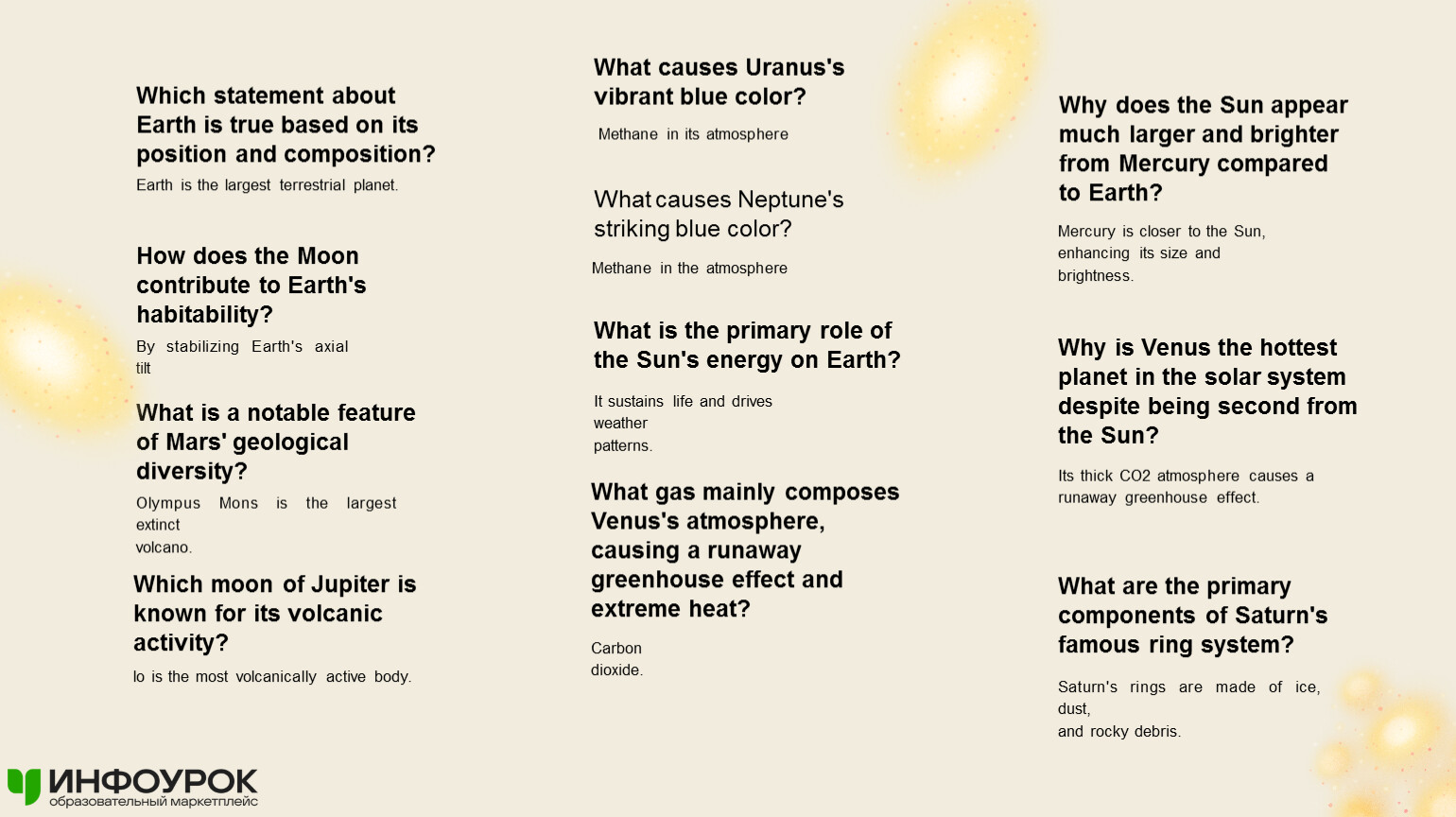
How does the Moon
contribute to Earth's
habitability?
By stabilizing Earth's axial tilt
What is a notable feature
of Mars' geological
diversity?
Olympus Mons is the largest extinct
volcano.
Saturn's rings are made of ice, dust,
and rocky debris.
What causes Uranus's
vibrant blue color?
What causes Neptune's
striking blue color?
Why does the Sun appear
much larger and brighter
from Mercury compared
to Earth?
Which statement about
Earth is true based on its
position and composition?
Earth is the largest terrestrial planet.
Which moon of Jupiter is
known for its volcanic
activity?
lo is the most volcanically active body.
What are the primary
components of Saturn's
famous ring system?
Methane in its atmosphere
Methane in the atmosphere
What is the primary role of
the Sun's energy on Earth?
It sustains life and drives weather
patterns.
Mercury is closer to the Sun,
enhancing its size and brightness.
Why is Venus the hottest
planet in the solar system
despite being second from
the Sun?
Its thick CO2 atmosphere causes a
runaway greenhouse effect.
What gas mainly composes
Venus's atmosphere,
causing a runaway
greenhouse effect and
extreme heat?
Carbon dioxide.
Материалы на данной страницы взяты из открытых источников либо размещены пользователем в соответствии с договором-офертой сайта. Вы можете сообщить о нарушении.


