
Поделиться



 beeing a teen.doc
Topic: Being a Teenager
Vocabulary
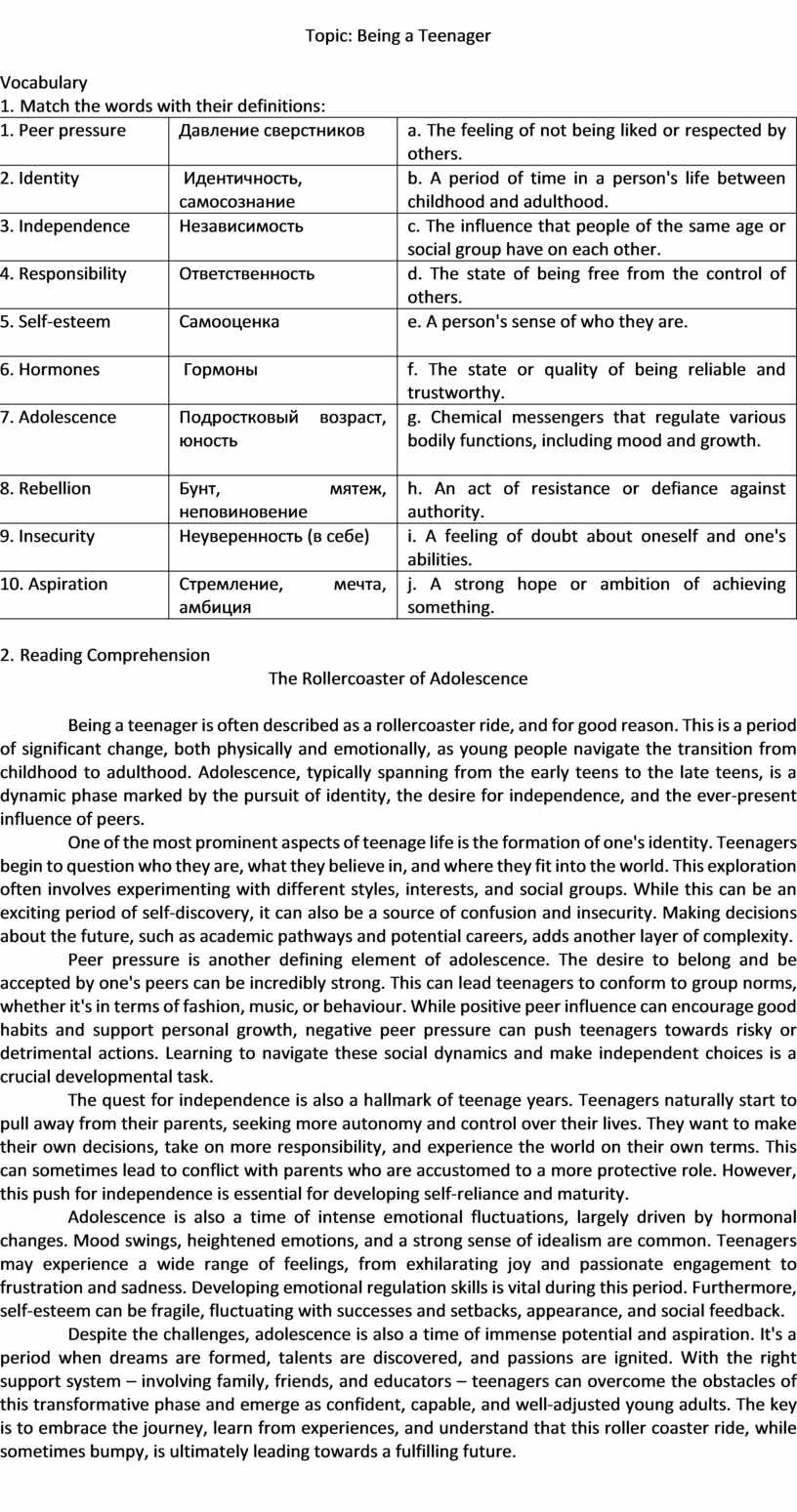
1. Match the words with their definitions:
|
1. Peer pressure
|
Давление сверстников
|
a. The feeling of not being liked or respected by others. |
|
2. Identity |
Идентичность, самосознание |
b. A period of time in a person's life between childhood and adulthood. |
|
3. Independence
|
Независимость |
c. The influence that people of the same age or social group have on each other. |
|
4. Responsibility
|
Ответственность |
d. The state of being free from the control of others. |
|
5. Self-esteem |
Самооценка
|
e. A person's sense of who they are. |
|
6. Hormones |
Гормоны |
f. The state or quality of being reliable and trustworthy. |
|
7. Adolescence |
Подростковый возраст, юность
|
g. Chemical messengers that regulate various bodily functions, including mood and growth. |
|
8. Rebellion |
Бунт, мятеж, неповиновение |
h. An act of resistance or defiance against authority. |
|
9. Insecurity |
Неуверенность (в себе) |
i. A feeling of doubt about oneself and one's abilities. |
|
10. Aspiration
|
Стремление, мечта, амбиция |
j. A strong hope or ambition of achieving something. |
2. Reading Comprehension
The Rollercoaster of Adolescence
Being a teenager is often described as a rollercoaster ride, and for good reason. This is a period of significant change, both physically and emotionally, as young people navigate the transition from childhood to adulthood. Adolescence, typically spanning from the early teens to the late teens, is a dynamic phase marked by the pursuit of identity, the desire for independence, and the ever-present influence of peers.
One of the most prominent aspects of teenage life is the formation of one's identity. Teenagers begin to question who they are, what they believe in, and where they fit into the world. This exploration often involves experimenting with different styles, interests, and social groups. While this can be an exciting period of self-discovery, it can also be a source of confusion and insecurity. Making decisions about the future, such as academic pathways and potential careers, adds another layer of complexity.
Peer pressure is another defining element of adolescence. The desire to belong and be accepted by one's peers can be incredibly strong. This can lead teenagers to conform to group norms, whether it's in terms of fashion, music, or behaviour. While positive peer influence can encourage good habits and support personal growth, negative peer pressure can push teenagers towards risky or detrimental actions. Learning to navigate these social dynamics and make independent choices is a crucial developmental task.
The quest for independence is also a hallmark of teenage years. Teenagers naturally start to pull away from their parents, seeking more autonomy and control over their lives. They want to make their own decisions, take on more responsibility, and experience the world on their own terms. This can sometimes lead to conflict with parents who are accustomed to a more protective role. However, this push for independence is essential for developing self-reliance and maturity.
Adolescence is also a time of intense emotional fluctuations, largely driven by hormonal changes. Mood swings, heightened emotions, and a strong sense of idealism are common. Teenagers may experience a wide range of feelings, from exhilarating joy and passionate engagement to frustration and sadness. Developing emotional regulation skills is vital during this period. Furthermore, self-esteem can be fragile, fluctuating with successes and setbacks, appearance, and social feedback.
Despite the challenges, adolescence is also a time of immense potential and aspiration. It's a period when dreams are formed, talents are discovered, and passions are ignited. With the right support system – involving family, friends, and educators – teenagers can overcome the obstacles of this transformative phase and emerge as confident, capable, and well-adjusted young adults. The key is to embrace the journey, learn from experiences, and understand that this roller coaster ride, while sometimes bumpy, is ultimately leading towards a fulfilling future.
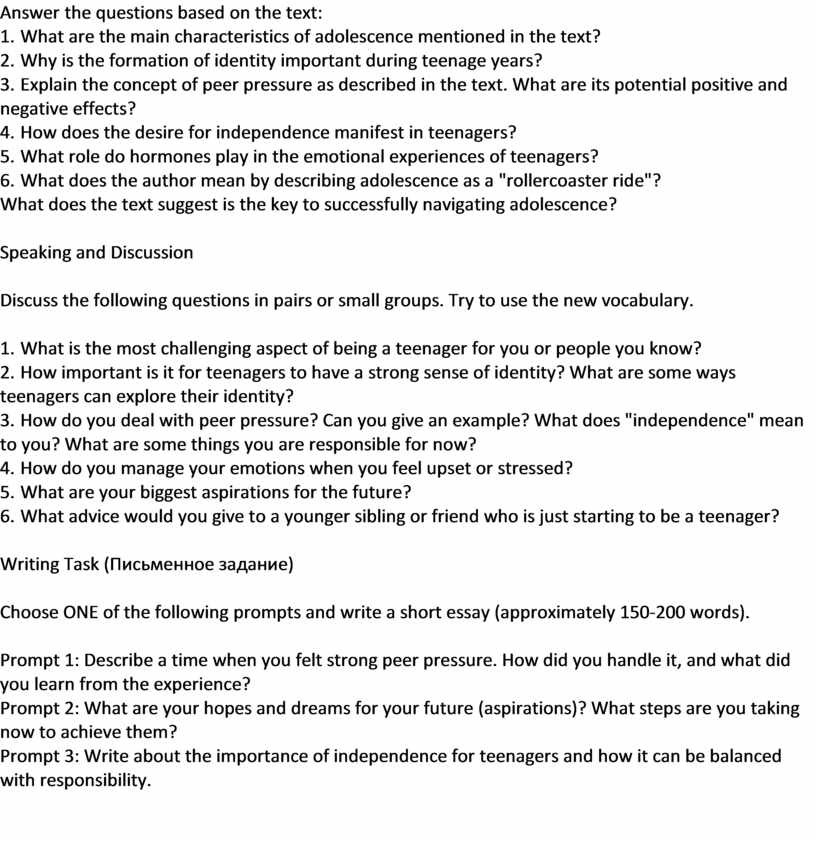
Answer the questions based on the text:
1. What are the main characteristics of adolescence mentioned in the text?
2. Why is the formation of identity important during teenage years?
3. Explain the concept of peer pressure as described in the text. What are its potential positive and negative effects?
4. How does the desire for independence manifest in teenagers?
5. What role do hormones play in the emotional experiences of teenagers?
6. What does the author mean by describing adolescence as a "rollercoaster ride"?
What does the text suggest is the key to successfully navigating adolescence?
Speaking and Discussion
Discuss the following questions in pairs or small groups. Try to use the new vocabulary.
1. What is the most challenging aspect of being a teenager for you or people you know?
2. How important is it for teenagers to have a strong sense of identity? What are some ways teenagers can explore their identity?
3. How do you deal with peer pressure? Can you give an example? What does "independence" mean to you? What are some things you are responsible for now?
4. How do you manage your emotions when you feel upset or stressed?
5. What are your biggest aspirations for the future?
6. What advice would you give to a younger sibling or friend who is just starting to be a teenager?
Writing Task (Письменное задание)
Choose ONE of the following prompts and write a short essay (approximately 150-200 words).
Prompt 1: Describe a time when you felt strong peer pressure. How did you handle it, and what did you learn from the experience?
Prompt 2: What are your hopes and dreams for your future (aspirations)? What steps are you taking now to achieve them?
Prompt 3: Write about the importance of independence for teenagers and how it can be balanced with responsibility.
Материалы на данной страницы взяты из открытых источников либо размещены пользователем в соответствии с договором-офертой сайта. Вы можете сообщить о нарушении.


