
Поделиться


 культура и традиции.docx
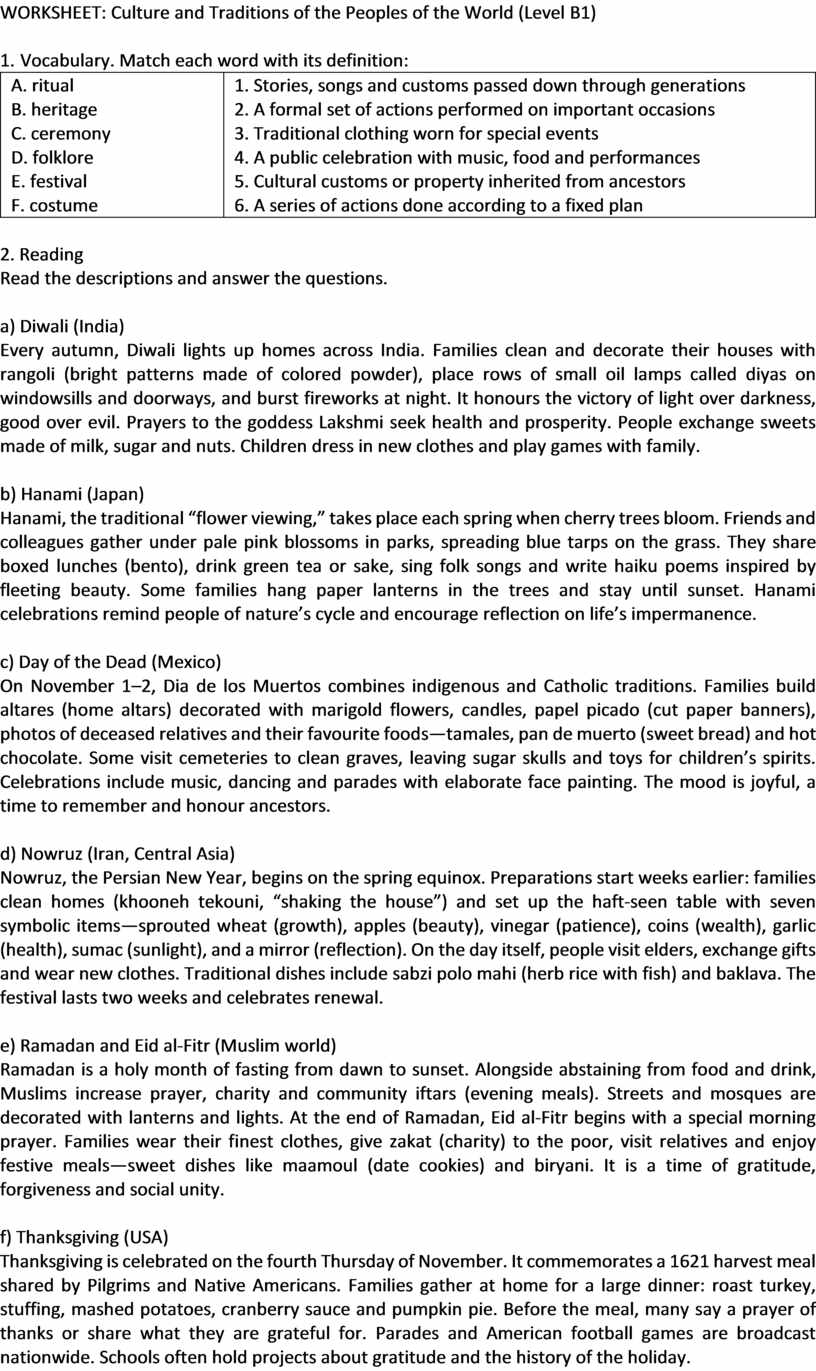
WORKSHEET: Culture and Traditions of the Peoples of the World (Level B1)
1. Vocabulary. Match each word with its definition:
|
A. ritual B. heritage C. ceremony D. folklore E. festival F. costume |
1. Stories, songs and customs passed down through generations 2. A formal set of actions performed on important occasions 3. Traditional clothing worn for special events 4. A public celebration with music, food and performances 5. Cultural customs or property inherited from ancestors 6. A series of actions done according to a fixed plan |
2. Reading
Read the descriptions and answer the questions.
a) Diwali (India)
Every autumn, Diwali lights up homes across India. Families clean and decorate their houses with rangoli (bright patterns made of colored powder), place rows of small oil lamps called diyas on windowsills and doorways, and burst fireworks at night. It honours the victory of light over darkness, good over evil. Prayers to the goddess Lakshmi seek health and prosperity. People exchange sweets made of milk, sugar and nuts. Children dress in new clothes and play games with family.
b) Hanami (Japan)
Hanami, the traditional “flower viewing,” takes place each spring when cherry trees bloom. Friends and colleagues gather under pale pink blossoms in parks, spreading blue tarps on the grass. They share boxed lunches (bento), drink green tea or sake, sing folk songs and write haiku poems inspired by fleeting beauty. Some families hang paper lanterns in the trees and stay until sunset. Hanami celebrations remind people of nature’s cycle and encourage reflection on life’s impermanence.
c) Day of the Dead (Mexico)
On November 1–2, Dia de los Muertos combines indigenous and Catholic traditions. Families build altares (home altars) decorated with marigold flowers, candles, papel picado (cut paper banners), photos of deceased relatives and their favourite foods—tamales, pan de muerto (sweet bread) and hot chocolate. Some visit cemeteries to clean graves, leaving sugar skulls and toys for children’s spirits. Celebrations include music, dancing and parades with elaborate face painting. The mood is joyful, a time to remember and honour ancestors.
d) Nowruz (Iran, Central Asia)
Nowruz, the Persian New Year, begins on the spring equinox. Preparations start weeks earlier: families clean homes (khooneh tekouni, “shaking the house”) and set up the haft-seen table with seven symbolic items—sprouted wheat (growth), apples (beauty), vinegar (patience), coins (wealth), garlic (health), sumac (sunlight), and a mirror (reflection). On the day itself, people visit elders, exchange gifts and wear new clothes. Traditional dishes include sabzi polo mahi (herb rice with fish) and baklava. The festival lasts two weeks and celebrates renewal.
e) Ramadan and Eid al-Fitr (Muslim world)
Ramadan is a holy month of fasting from dawn to sunset. Alongside abstaining from food and drink, Muslims increase prayer, charity and community iftars (evening meals). Streets and mosques are decorated with lanterns and lights. At the end of Ramadan, Eid al-Fitr begins with a special morning prayer. Families wear their finest clothes, give zakat (charity) to the poor, visit relatives and enjoy festive meals—sweet dishes like maamoul (date cookies) and biryani. It is a time of gratitude, forgiveness and social unity.
f) Thanksgiving (USA)
Thanksgiving is celebrated on the fourth Thursday of November. It commemorates a 1621 harvest meal shared by Pilgrims and Native Americans. Families gather at home for a large dinner: roast turkey, stuffing, mashed potatoes, cranberry sauce and pumpkin pie. Before the meal, many say a prayer of thanks or share what they are grateful for. Parades and American football games are broadcast nationwide. Schools often hold projects about gratitude and the history of the holiday.
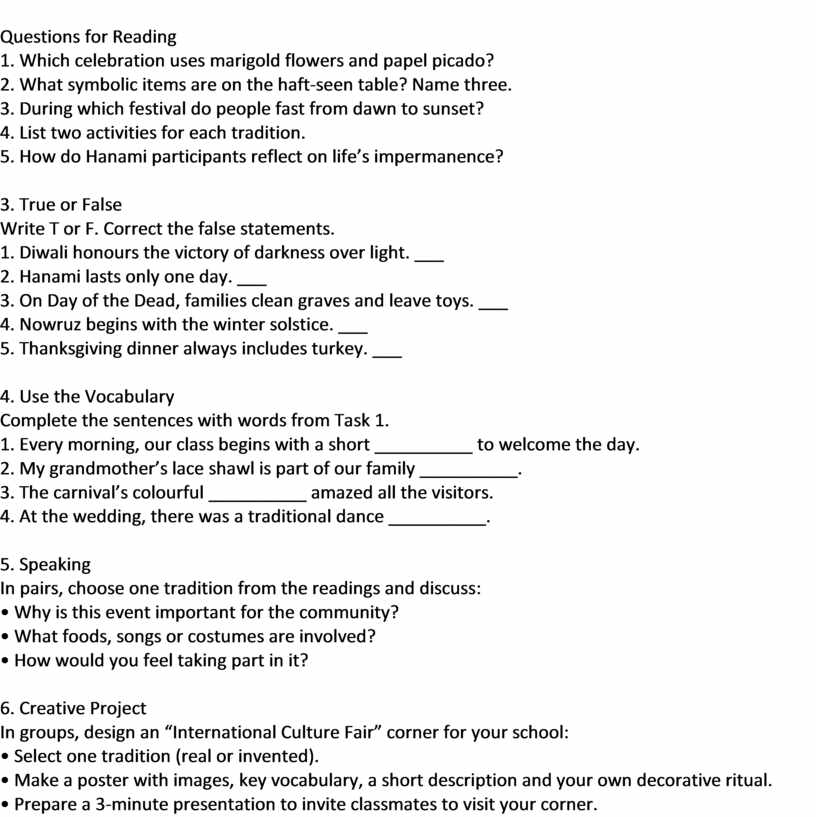
Questions for Reading
1. Which celebration uses marigold flowers and papel picado?
2. What symbolic items are on the haft-seen table? Name three.
3. During which festival do people fast from dawn to sunset?
4. List two activities for each tradition.
5. How do Hanami participants reflect on life’s impermanence?
3. True or False
Write T or F. Correct the false statements.
1. Diwali honours the victory of darkness over light. ___
2. Hanami lasts only one day. ___
3. On Day of the Dead, families clean graves and leave toys. ___
4. Nowruz begins with the winter solstice. ___
5. Thanksgiving dinner always includes turkey. ___
4. Use the Vocabulary
Complete the sentences with words from Task 1.
1. Every morning, our class begins with a short __________ to welcome the day.
2. My grandmother’s lace shawl is part of our family __________.
3. The carnival’s colourful __________ amazed all the visitors.
4. At the wedding, there was a traditional dance __________.
5. Speaking
In pairs, choose one tradition from the readings and discuss:
• Why is this event important for the community?
• What foods, songs or costumes are involved?
• How would you feel taking part in it?
6. Creative Project
In groups, design an “International Culture Fair” corner for your school:
• Select one tradition (real or invented).
• Make a poster with images, key vocabulary, a short description and your own decorative ritual.
• Prepare a 3-minute presentation to invite classmates to visit your corner.
Материалы на данной страницы взяты из открытых источников либо размещены пользователем в соответствии с договором-офертой сайта. Вы можете сообщить о нарушении.


