
Поделиться



 Английские-тексты-для-чтения-и-пересказа.pdf
Н. Г. Шкляева
И. П. СтуликОв
ЗАНИМАТЕЛЬНЫЕ
 ЧТЕНИЯ
 |

 |
 |
||
 ПЕРЕСКАЗА
 Помощь в овладении разговорным
английским
Помощь в овладении разговорным
английским
Подсказки в переводе

 «Начаяьна.я школа» серия книжек—
  Поможет учить малышеЙ и малышек!
Н. П Шкляева, И, П, Стуликов
ЗАНИМАТЕЛЬНЫЕ
 для ЧТЕНИЯ и ПЕРЕСКАЗА
санкт-петербург
удк 373,3
 81,2Апгл
Шкляева Н. Г., Стуликов И. П,
11166 Занимательные английские тексты
для чтения й пересказа „ 
СПб.: Издательский Дом •Лктера•, 2011. — 96 ее; иле — (Серия
•Н,ачадьная школа.),
1SBN 978-5-94455-943-2
Шкляев, Н, Г., СтулнковИг П.» 2009
ISBN 978-5-ВИ55.м,а.2  Изднтельсжл:" Дам •јјитерњ•,
2011
Изднтельсжл:" Дам •јјитерњ•,
2011
Дорогие ребята! Уважаемые родители!
Эта книга рассчитана на детей от 7 до 12 лет. Работая с ней, вы познакомитесь с разными детьми, которые, как и вы, изучают английский язык. Вы прочитаете истории и сказки, которые читают ваши сверстники во всём мире, и надеемся, что многие из них вызовут у вас улыбку.
Для того чтобы облегчить чтение и перевод каждого текста, к нему даны
соответствующие слова и фразы. В конце книги приведены переводы всех текстов
для правильного понимания их содержания. Самое сложное  научиться пересказывать. Это требует
умения строить предложения на английском языке, после того как вы запомните
новые слова и фразы. Рекомендуем вам сначала прочитать текст, затем перевести
его и только потом уже пересказывать. Пересказ поможет вам быстрее оњладеть
англиЙским языком, особенно разговорным.
научиться пересказывать. Это требует
умения строить предложения на английском языке, после того как вы запомните
новые слова и фразы. Рекомендуем вам сначала прочитать текст, затем перевести
его и только потом уже пересказывать. Пересказ поможет вам быстрее оњладеть
англиЙским языком, особенно разговорным.
Желаем успеха!
Sveta is
a little girl. She is only She is a very nice girl  with fair hair and blue She likes to sing and dance.
She also likes to get presents.
with fair hair and blue She likes to sing and dance.
She also likes to get presents.
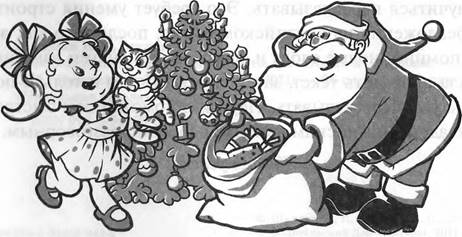
Today is
the 31st of December. She is waiting for Santa  She hag a New Year's tree with the candles lighted.
At last
Santa Claus comes and says, "Hello, Sveta. I have a  present for you." He puts his hand into his red
bag and takes out a lovely kitten.
present for you." He puts his hand into his red
bag and takes out a lovely kitten.
Sveta is very happy. She says, "Thank you, Santa Claus."
Santa Claus l,sænta • klo;zl — CaHTa Khayc, ilea Mop03 only I 'acnlll — TOJ1bKO, JIH11Jb nice Inarsl — MMJlb1ii, c:raBHHiå fair ['feal — CBeTJ1b1ii
hair [ *heal — BOJlOCb1 also ['atlsaul — Tawxe, TO*e to like llalkl —
J110ÓHTb,  to get lgetl —
  present Iprezntl — nonapox
New
Year's tree Lnju:'jlaz tri:] — HOBOI'OJHHR ëJIKa  with the candles lighted ða
'kændlz • laitidl — c aaXXëHHb1-
with the candles lighted ða
'kændlz • laitidl — c aaXXëHHb1-

she is
waiting for IJi: 'welt") fa:l — ona  at last lat — HHkOHe11, to say Ilsell — TOBOPHTb to
put into IPUt — onycxa•r'b B to take out Itelk autl —
at last lat — HHkOHe11, to say Ilsell — TOBOPHTb to
put into IPUt — onycxa•r'b B to take out Itelk autl —  lovely ['Irvvll] — npe;recTHb1ii,
KpaCHBb1ii kitten Ikltnl — KOTëHOK
lovely ['Irvvll] — npe;recTHb1ii,
KpaCHBb1ii kitten Ikltnl — KOTëHOK
Sveta has a kitten now.
He is red. He is only one month. He cannot eat or drink yet. Grandmother asks
Sveta, "What is his name?" Sveta doesn't know. Then she says,
"Let's call  him Ginger." Now the kitten has the name but he doesn't know it. He
only sleeps all day long. Grandfather says, "Let him sleep! Soon he will
be a big and handsome cat." And so he was.
him Ginger." Now the kitten has the name but he doesn't know it. He
only sleeps all day long. Grandfather says, "Let him sleep! Soon he will
be a big and handsome cat." And so he was.
Words andphrases
Ginger —  now Inaul — •renepbt ceñuac red — pb1YMii, Pb1.xeHbKHii month
ltmn91 — MCC51t1, can Ikæn] — YMee'T, MOXe•r yet (jetl — (B
OTpguareJ1bHb1X npeunoxeHHHx) to ask [a:skl — cnpaumga•rb 10 kJ10W — 311a-rb to
sleep [slitpl — cnaTb handsome ['hænsam] — KpaCMBb1ii
now Inaul — •renepbt ceñuac red — pb1YMii, Pb1.xeHbKHii month
ltmn91 — MCC51t1, can Ikæn] — YMee'T, MOXe•r yet (jetl — (B
OTpguareJ1bHb1X npeunoxeHHHx) to ask [a:skl — cnpaumga•rb 10 kJ10W — 311a-rb to
sleep [slitpl — cnaTb handsome ['hænsam] — KpaCMBb1ii
Vladik
is a very curious boy. He is six. He doesn't go to school yet. He likes to taste
everything but only once. In summer he and his father live in the country.
Father takes him to the river every day. They have a boat and fishing rods.
They are anglers. Vladik knows that fish like worms. So when father puts a worm
on the hook Vladik wants to taste it.
Suddenly his father hears that NIadik is crying, "What's the matter?" asks he. Vladik points to the worm and says, "The worm is not tasty, Dad."
worm IW3:ml — qePBflK curious l i kjuanas] — Jl'0603Ha;re.J1bHb1iå school [sku:ll — 1.11KOJ1a once [wnnsl — OllMH paa to taqe Itetst] — nortp060gaTb everything evr101nl — ÐCë countlY — aepeB1•Ð1 to take Itelkl — 6pŒTb river I*nval — peKa boat Ibautl — J10AKa fiShing rod ['flfinrndl — yaoqKa angler ['ænglal — Pb160JIOB fish [fifl — Pblóa hook [hvkl — KPIOAOK suddenly sndnlll — BHeaanuo, napyr
to hear — C.11b11.UXTb to cry Ikrall — n,naKaTb
What's the matter? lwnts ða 'mætal — B •qëM aeno? cnyt1H'IOCb?
to point Iporntl —  Dad [dædl — page. nana,
  tasty l i terstl] —
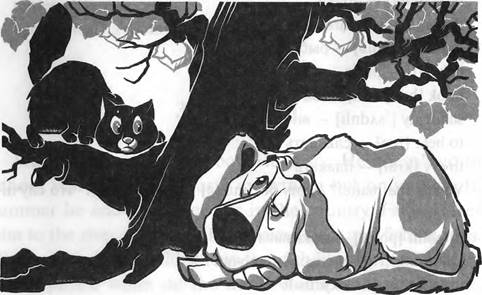
 Alfred is a big old dog. Fred is a young cat@ Fred likes Alfred but not
all the time,
Alfred is a big old dog. Fred is a young cat@ Fred likes Alfred but not
all the time,
 |
 Alfred cannot climb. He sees Fred and barks loudly. Fred climbs to the
top of the tree@ He can see everything: a house, a park, and a lake in the park
He secs a man fishing. Fred likes to eat fish. He wants to go to the park and
tries to go down. But it is very difficult. Fred mews but Alfred cannot
Alfred cannot climb. He sees Fred and barks loudly. Fred climbs to the
top of the tree@ He can see everything: a house, a park, and a lake in the park
He secs a man fishing. Fred likes to eat fish. He wants to go to the park and
tries to go down. But it is very difficult. Fred mews but Alfred cannot  hear him. Then Fred sees a nut on the
tree. Ile takes the nut into his mouth and drops it. The nut falls on Alfred's
head and he stops barking, He hears Fred. Fred needs helP@ Alfred runs to the
house to get help.
hear him. Then Fred sees a nut on the
tree. Ile takes the nut into his mouth and drops it. The nut falls on Alfred's
head and he stops barking, He hears Fred. Fred needs helP@ Alfred runs to the
house to get help.
One minute later everyone comes to help Fred. The little boy climbs up the tree and Fred jumps into his hands. Fred thinks, "Alfred can't hear well. But anyway he is my best friend."
old Iatldl — c•rapblii young — MOJIoaoiÍ all the time lotl ða
tarml — Bcerna to climb [klarml — Jla3a'Tb, B3ónpa'1'E,cg to bark [ba:kl
— na5V1'b loudly l i lavdlJl — rp0MK0 too — -roxe, •raK.uce lake
Ilelkl — ogepo to fish [fJfl — Pb16y to try ltrml — m,rraTbCfl,  down [davnl —
  difficult I'dlfikaltl —
  to mew [mju:] — MBYKaTb nut lt1Atl —
opex mouth ImauOl — POT to drop Idrnpl — POH¶Tbt CGPaCb1HaTb to fall Ifo:ll —
naxrrb head [hed] — ronoua needs help Ini:dz helpl— Hywuaemcn B
to mew [mju:] — MBYKaTb nut lt1Atl —
opex mouth ImauOl — POT to drop Idrnpl — POH¶Tbt CGPaCb1HaTb to fall Ifo:ll —
naxrrb head [hed] — ronoua needs help Ini:dz helpl— Hywuaemcn B  to run Innl — 6exaTb anyway l'emwell
— BCë paBH0
to run Innl — 6exaTb anyway l'emwell
— BCë paBH0
best Ibestl  friend Ifrend] — npyr
Leonid
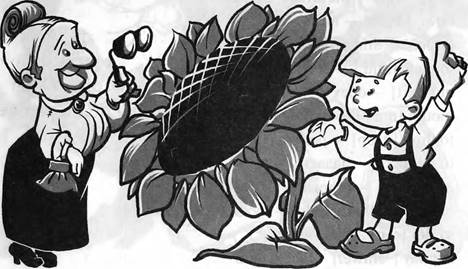
is a boy of seven. His father and mother speak English to him but his
grandmother doesn't know English. One day Leonid sees a  and says in English, "Granny! It
 is a sunflower!" But she doesn't understand him. He goes to his
father and mother and says, "Granny doesn't understand me!" Then
father says, "Go and explain to her." Leonid re
is a sunflower!" But she doesn't understand him. He goes to his
father and mother and says, "Granny doesn't understand me!" Then
father says, "Go and explain to her." Leonid re turns to his grandmother. He points
to the flower and to the sun. Then he says in Russian, "3m coJIHe¶Hb1ii
UBeTOK"
turns to his grandmother. He points
to the flower and to the sun. Then he says in Russian, "3m coJIHe¶Hb1ii
UBeTOK"  She understands Leonid is happy. He can translate!
sunflower snn,flaua] — noncoJIHyx grandmother lgrændtnp,öal —
6a6YlJJKa to know [noul —  to understand l. Anda'stændl — 110HHMaT'b to explain [Iks*pleml —
06bHCH51Tb to return — noanparua'Tb•cq to translate ltræns'leltl —
nepeB0AHTb
to understand l. Anda'stændl — 110HHMaT'b to explain [Iks*pleml —
06bHCH51Tb to return — noanparua'Tb•cq to translate ltræns'leltl —
nepeB0AHTb
Today is the 1st of September. All children go to school. Vladik goes to school for the first time. At school the children meet their teacher. Her name is Olga Aleksandrovna. She says, "Good morning, children. I want to teach you to read, write and count". The children are eager to study.
Madik returns home from school. His brother asks him, "Do you like school?" "Yes, I do", says Madik. "What do you like best at school?" asks father. "My uniform", answers Vladik.
children l'tflldranl —  for the first time [fat ða f3:st tarml — B nepBb1ii pag
to read — '-IVTTaTb to write Irmtl — 11MCaTb to count Ikauntl — CH11TaTb
to meet Imi:tl — BCTpeuaTb,  to be eager [bi: — C'1peMHTbCR, OueHb xoreTb to study I'stAd11 —
  to answer a:nsal — 0TBeqaTb uniform
  — rþop,uenuaq onexaa, (bop.Ma
Te a c h e r: Madik, your homework about your cat is very much like your brother's story. How is that?
VI ad i k: Nothing strange about that, we have only one cat at home.
one  — OAHH your
  — TB0ii homework l' havmwxkl — AOMa111ftee 3a,aamte
like [lark] — noxoyarii Ha story I'staml — paccKag nothing — HHqero strange
[strejnd31 — YAMBMTeJ1bHb1ii, CTPaHHt,Jii to hoe [hævl — HMeTb
— TB0ii homework l' havmwxkl — AOMa111ftee 3a,aamte
like [lark] — noxoyarii Ha story I'staml — paccKag nothing — HHqero strange
[strejnd31 — YAMBMTeJ1bHb1ii, CTPaHHt,Jii to hoe [hævl — HMeTb
Leonid is very clever. He is doing at school well and reads very much. His favourite subject is English. He reads a lot of books in English and learns to retell the most interesting stories. Leonid likes best to read about animals, the jungle, famous travellers, adventures, discoveries; he likes to read funny stories, too.
clever I 'kleva] — YMHb1ii to do Idu:l — pa6ŒraTb, 3,aHHMaTbcq much
— MHOI'O favourite ['fervrltl — $1106MMb1ii subject l' sAbcb1ktl — npeavœT
06yreHHH (n TIJKOJ1e) a lot of [a Int nvl — oueHb MHOI'O to learn 113Žnl —
YMHTbCS1 to retell [Nit' tell — nepecKa3b1BaTb best Ibestl — 60Jb11je Bcero
animal ['cmmll — *HOOTHOe jungle I'cWqogll  famous I 'felmasl —
'OneCTHb1iá traveller l' trævlal — I'lyreurecTBeHHMK discovery
Idls'kworl] — 0TKPbmte
famous I 'felmasl —
'OneCTHb1iá traveller l' trævlal — I'lyreurecTBeHHMK discovery
Idls'kworl] — 0TKPbmte

One rainy day a woman with a dog gets on a bus. The dog is very 'big and his paws arc very dirty.
The woman asks, "Conductor, if I pay for my dog, can he have a seat like the other passengers?"
The conductor looks at the dog and
then says, "Certainly Ile can have a seat like all the other passengers,
if he doesn't put his feet on the seat"
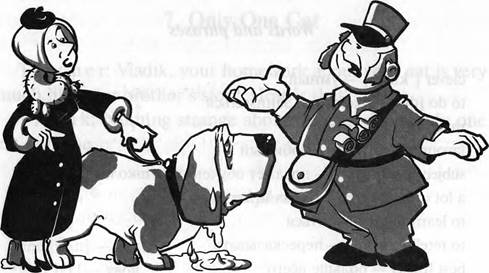

dog Idogl — nëc
to get on a bus (get on a bAsl — CELUHTbCH B aBT06yc paw Ipo:.l — nana
dirty — rpR3HbJii if llfl — ecJIH to pay [pen — naaTH'Tb seat Isi;tl — CHIRHbe
passenger — Itaccaxup other I 'Aðal — HI-IOM certainly ['smtnlll — KOHeHHO,
pa3YMee'TCH to put [putl — wracTb feet Ifi:tl —
Sveta studies at the gymnasium. She studies French and English. She can speak and read two languages. Once her English teacher says, "Children, you know the alphabet and many words. Soon we are going to write a dictation. And now learn a very short text:
"The
boy is in the bed. The egg is in the eggcup. Where is the clock? The clock is
on the wall. Where is the apple? The apple is on the plate and the plate is on
the table. The cat is under the umbrella. The mouse is under the umbrella, too.
Then the teacher says, "Learn this text at home, please."
Sveta comes home and starts crying. "What's the matter?" asks her grandmother. "I can't write dictations. It is very
difficult."
Grandmother says, "Learn the text sentence by sentence. It's so
simple." Every 15 minutes Sveta writes one sentence, In 2 hours she knows the text by heart. The
teacher gives her a "five". Sveta is happy. Now she knows how to
prepare herself to write a dictation. And grandmother says, "No pains, no
gains".
to study I'stAd11 — ltgyqa•Tb
gymnasium lgrm'na:zuom] — UlMHa31tH language I'læogwlcbl —
once — OAHa*Ab1, KaK-TO pag alphabet l'ælfabltl — atacþaB}tT
many ['mem] — MHOI'O to learn llg:nl —  short [Ja:tl — KOPOTKHiå bed
(bedl — kpona-rt, eggcup I 'egknpl — noncrraBKa
short [Ja:tl — KOPOTKHiå bed
(bedl — kpona-rt, eggcup I 'egknpl — noncrraBKa  where — rue clock Iklbkl — r,lacbl
wall [wail] — c-reHa apple læpll — SIG]IOKO plate [pleit] — Tape.TIKa
umbrella Inm'brelal — 30H'1'HK to know by heart [nav bal ha:tl — 3HaTb HtuoycTb
to give lgrvl —
where — rue clock Iklbkl — r,lacbl
wall [wail] — c-reHa apple læpll — SIG]IOKO plate [pleit] — Tape.TIKa
umbrella Inm'brelal — 30H'1'HK to know by heart [nav bal ha:tl — 3HaTb HtuoycTb
to give lgrvl —
sentence I 'sentõns]
npewuoxemte simple ISImpll — npocro\i, HCC-00XHb1ii  to prepare [prr pea] ISOTOBVtTbCf1
No pains, no gains Inau pemz nau gernzl — beg crapaHitrt Her n06eA (aH1'ÄHÏcKaq 110CJIOÜHUa)
A Crow sits in a tree, She has a large piece of cheese in her mouth. She wants to eat it, but suddenly she sees a Fox. Thc Fox comes up to the treœ She looks up and sees the Crow. And she also sees thc cheese. The Fox wants to get the cheese.
She says, "How beautiful you are, Mrs. Crow! What big eyes you have! What a pity you cannot sing."
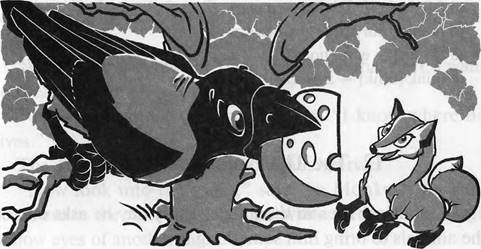
"You are wrong, I can sing. Car-r! Car-r!"
The Crow opens her mouth, the piece of cheese falls down. The Fox runs up to the cheese and quickly eats it up.
''Thank you very much," says she. "The cheese is good and you sing well. What a pity you cannot think well."
fable Ife1blJ —  crow [kravl — Bop,0Ha fox Ifoksl —
  large Ilo:ct51 — 60J1b11JOi\,
KpY11Hb1ii a piece of cheese [a pi:s ov WIZ] — KYCOK c,blpa suddenly ['sndnlll
— Bapyr, BHega1iHO also — Tas:xe, TO*'e Mrs. ['mrstzl — rocnoxa Ofcourse Inv
kat,sl — KOHeHHO to fall down Ifà:l davnl — nana'l'b to run up Irrvn —
110A6exaTb to eat li:tl — ec-rb, noeaa-rb to think 1010k] — 11YMaTb
large Ilo:ct51 — 60J1b11JOi\,
KpY11Hb1ii a piece of cheese [a pi:s ov WIZ] — KYCOK c,blpa suddenly ['sndnlll
— Bapyr, BHega1iHO also — Tas:xe, TO*'e Mrs. ['mrstzl — rocnoxa Ofcourse Inv
kat,sl — KOHeHHO to fall down Ifà:l davnl — nana'l'b to run up Irrvn —
110A6exaTb to eat li:tl — ec-rb, noeaa-rb to think 1010k] — 11YMaTb
An old Tiger lives in the jungle. Every day he asks one of the animals to bring him something to eat.
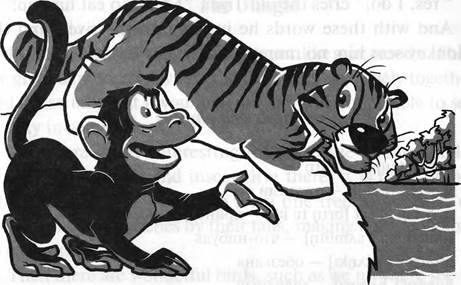
One morning he sees a Monkey and says, "I am hungry,
Monkcy. Go to the village and bring me a fat piglet."
"Oh, Tiger," cries thc Monkey. "l cannot do that@ There is another tiger, who is younger and stronger than you are. He tells me not to bring you anything. He is so fierce that I'm afraid of him."
"WIIat?!" growls the old Tlgcr. "Show me that tiger, I want to speak to him."
"Come
with me," says the Monkey. "I know where he lives.
The Tiger and the Monkey go to a large river,
"Now
look into the water," says the Monkey. "Do you see there in the river the head, the
white teeth and the large yellow eyes of another tiger?"
And with these words he jumps into the river, and the Monkey sees him no more.
tiger I 'tmgal —  jungle IctF,ngll —
  to bnng to eat Ibrlt) tu i:tl — 11PMHOC1,fTb rtoec•rb something [ i snm01nl
— •no-HM6YAb monkey
to bnng to eat Ibrlt) tu i:tl — 11PMHOC1,fTb rtoec•rb something [ i snm01nl
— •no-HM6YAb monkey  05e3bRHa hungry I 'hnngrJl — roAOAHb1ii village I •valtd31 — nepenHH fat
Ifætl —
05e3bRHa hungry I 'hnngrJl — roAOAHb1ii village I •valtd31 — nepenHH fat
Ifætl —  piglet ['plglltl — nopocëH0K to cry Ikrall —
  young Ijnnl — MOJIOAOii strong
Istrool — CW1bHb]ii than [ðænl — geM to tell [tell — nene-rb fierce
[fiasl — cBvtpeflb1ii to be afraid of [hi: a'freJd nvl —
young Ijnnl — MOJIOAOii strong
Istrool — CW1bHb]ii than [ðænl — geM to tell [tell — nene-rb fierce
[fiasl — cBvtpeflb1ii to be afraid of [hi: a'freJd nvl —  to growl lgraull — Pb1S1aTb river —
pesa water I 'wattal — Bona head [hedl — ronona teeth Iti:91 ay6b1
to growl lgraull — Pb1S1aTb river —
pesa water I 'wattal — Bona head [hedl — ronona teeth Iti:91 ay6b1
In hot countries the are not like our woodsy They are great dark forests, where the trees grow so closely together and are so tall, that if you look up, you will not be able to sce the sky in some places
 There are many interesting things to
see in the jungle. Birds, wild animals and insects live there, it is their
home. Thousands of monkeys jump from one tree to another, or swing from the
branches by their tails, making a noise talking to each other.
There are many interesting things to
see in the jungle. Birds, wild animals and insects live there, it is their
home. Thousands of monkeys jump from one tree to another, or swing from the
branches by their tails, making a noise talking to each other.
Then there are wonderful birds, such as we nowhere sec in our country, except in the zoo.
Flocks of red and green parrots fly from tree to tree. They look •very beautiful in the sun.
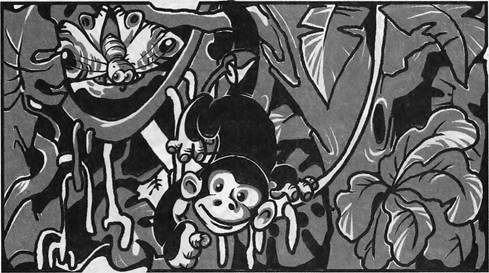
If you want to know more about the jungle, go to the Iibraw and take "The Jungle Book" by Rudyard Kipling. It is really a fine book!
hot [hot] — *'vapwit country ['lantrrl — c•rpana wood [WUd] — nec alike
la' larkl — noxoxmi forest [ *fnrrst] — nec tree ltri:l — onepeno to grow
[graul — pacTH closely ['klauslJl — -recero able leibll — YMe10LLIHii wild
animal [walld •æmmal] — 3Bepb insect I 'Insektl — HaceR0Moe thousand
['Oauzondl — Tb1C5åHa to swing —  tail [tell] — XBOCT noise Inorzl —
  amazing la' mernnl —
bird Ib3:dl —  nowhere ['nauweal — Hi,trae zoo Izu:] — aoonapK except Ilk'septl — xpoMe,
pa•gge wro flock [flDk] crag
nowhere ['nauweal — Hi,trae zoo Izu:] — aoonapK except Ilk'septl — xpoMe,
pa•gge wro flock [flDk] crag
parrot ['paratl — nonyraii to look [IUkl  fine Ifaml — npexpacHb1iå, O'iteHb XOPOLUMii
When I was quite a young man, I was travelling in the northwest part of India. One evening, after hunting in the forest all day, I was returning alone to the place where I had put up my tent. It was getting dark I was walking along a narrow path. On my right there was a wide river; on my left, a thick, dark forest. Suddenly I saw two yellow eyes looking at me from behind the trees A man-eating tiger was getting ready to jump on me.
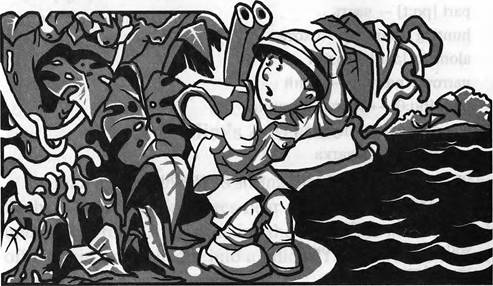
What could I do? Should I jump into the river and hope to save my life by swimming? I looked to the right. In the river there was an immense crocodile with its mouth wide open.
I was so frightened that I shut my eyes. I heard branches move noisily as the tiger jumped. I opened my eyes. What do you think had happened? The tiger had leaped right over me and was now in the jaws ofthe crocodile. That's a true story, believe it or not!
tale Iteull — paccKa3 to travel I' træVll — nyTe11JecTB0BaTb quite [kwaltl — coesceM northwest Lna:0'westl — cevepo-aanaAHb1ii part Ipa:tl — qacTb
hunting — OXO'Ta alone la' launl
—  narrow I'næraul — Y3KHii path Ipa;Bl — Tpona,
  where [weal — rue tent [tent] —
  on my right Ion mar raltl — cnpaHa 0T

 thick 101kl — rycroiå wide
Iwaldl —
thick 101kl — rycroiå wide
Iwaldl —  river l'rrval peka from behind Ifrom bfhmndl — H3-aa man-eating tiger I
•mæn.i;t 'tmgal — •rurp-mogoea toget ready lget 'redll — roT0BHTbcq
should — to hope Ihaupl — Ha.uesm,c$l to save Isewl — cnacaTb swimming
I'swlrmnl — nnaaaHHe immense [l i mens] — orp0MHb1ii crocodile l'
krnkadarll — KPOKOLIWI to be frightened Ibi; 'frartndl —
river l'rrval peka from behind Ifrom bfhmndl — H3-aa man-eating tiger I
•mæn.i;t 'tmgal — •rurp-mogoea toget ready lget 'redll — roT0BHTbcq
should — to hope Ihaupl — Ha.uesm,c$l to save Isewl — cnacaTb swimming
I'swlrmnl — nnaaaHHe immense [l i mens] — orp0MHb1ii crocodile l'
krnkadarll — KPOKOLIWI to be frightened Ibi; 'frartndl —  to shut IfAtl — gaKPb1B8Tb branch
[bra:ntJl — BeTKa to happen ['hæpanl — t'1POMCXOÄHTb, cJty•uaTb.cq
to leap Ili:pl — nepenpbffHBaTb over — yepea jaw Ictso:l — lie.'HOCTb true
[tru:] — npaBA}tBb1ii to believe lbl'li:vl — gepwrb
to shut IfAtl — gaKPb1B8Tb branch
[bra:ntJl — BeTKa to happen ['hæpanl — t'1POMCXOÄHTb, cJty•uaTb.cq
to leap Ili:pl — nepenpbffHBaTb over — yepea jaw Ictso:l — lie.'HOCTb true
[tru:] — npaBA}tBb1ii to believe lbl'li:vl — gepwrb
By midday the sun was so strong that Jim could not go any further. There were no trees near the path, so he sat down under a big rock. After drinking the rest of his water he took off his shirt and rolled it into a pillow. Then he lay down on the ground and went to sleep.
It was late in the afternoon when Jim awoke. He was just about to get up when he felt something moving near his feet. He looked down. A long black snake was crawling towards him.
Jim was so terrified that he could not move. The snake crawled across his legs, then moved on and disappeared under the rock. Jim jumped to his feet, picked up his shirt and ran off down the path.
adventure lad'ventfal — npmanoqeHMe, caygaii midday L mid* dell —
110JIAeHb sun Isnnl — COAHUe further l'fg:ðal — nam,me to sit Isatl —  sat [sæt] — ce.n could Ikudl —
  rest [rest] — OCTaTOK to take OIT
[terk — CHHMaTb took off Itok Dfl — CHA-rr shirt IJg:t] — pyóa1JIKa
(Myxcxaq) pillow I 'Pllaol —
rest [rest] — OCTaTOK to take OIT
[terk — CHHMaTb took off Itok Dfl — CHA-rr shirt IJg:t] — pyóa1JIKa
(Myxcxaq) pillow I 'Pllaol —  to lie [Ian — nexaTb lay Ileil — Jlër to go to sleep tv sli:pl —
3acHYTb went to sleep (went tv sli:pl — gacHYT1
to lie [Ian — nexaTb lay Ileil — Jlër to go to sleep tv sli:pl —
3acHYTb went to sleep (went tv sli:pl — gacHYT1
to awake welkl — npocHYT1,cq awoke [a'wauk] — rupoct•tyncbl to get up
lget — BCTaBaTb to feel [fill —  felt Ifeltl — HO¶YBCT'BOBUI snake
[snelk] — 3Meq long [1001 — 3JIHHHb1iå to crawl Ikrxll — FIOT13TM towards
Ita'wa:dzl — K terrified ['tarrfald] — ucrryraHHbåii to move —
felt Ifeltl — HO¶YBCT'BOBUI snake
[snelk] — 3Meq long [1001 — 3JIHHHb1iå to crawl Ikrxll — FIOT13TM towards
Ita'wa:dzl — K terrified ['tarrfald] — ucrryraHHbåii to move —  nepengnra•t'bcq to disappear
l,drsa'pral — qcqeaaTb rock [rnk] — cKaJ1a
nepengnra•t'bcq to disappear
l,drsa'pral — qcqeaaTb rock [rnk] — cKaJ1a
16. As Much as Possible!
Alex
is a confirmed reader! But he only thinks he can read. Actually, his mother and
father read to him. Father knows English, but mother doesn't know it quite
well. She wants to know it better and she learns English together with Alex.
First, she asks father to read a fairy tale. She learns all the new words and
then she reads the fairy tale to her son. They  watch English video films on TV about Mowgli, Mickey
Mouse, The Three Little Pigs, The Little Red Riding Hood, and many others.
watch English video films on TV about Mowgli, Mickey
Mouse, The Three Little Pigs, The Little Red Riding Hood, and many others.
Alex has got a sister, Sveta by name. She is 12 and she is 7 years older than Alex. When Sveta has free time from school, she reads the English books that Alex likes most of all. They enjoy reading together. Alex knows by heart a lot of poems and songs because he is a good listener, and every day he wants to listen and watch as much as possible. That is why he has got such a gnnd memory.
confirmed [kan'fg:mdl — gan11J1b1iå actually l*æktualll — na
caMOM neae quite well Ikwmt well — AOBOJ1bHO xopolno together with Ita'geða
wrö] — c first If3:stl — CHaqæaa to ask @sk] — npocHTb fairy tale
l'fearaterll —  television (TV) ['tellusanl — TeneBH30P older l' auldal — c•raptue free
Ifri;l — CB060AHb1ii most ofál] Imattst 0:11 — 60JlbU:re ncero to know
Inaul — 3HaTb to enjoy — rro;ryyaTb YAOBOJ1bCTBHe song [sonl — necH5å to
listen [Irsn] — CJIY11JaTb because Ibi'kozl — •no that is why lòæt
wall — BOT nogeMY memory I 'memarll — nat01Tb
television (TV) ['tellusanl — TeneBH30P older l' auldal — c•raptue free
Ifri;l — CB060AHb1ii most ofál] Imattst 0:11 — 60JlbU:re ncero to know
Inaul — 3HaTb to enjoy — rro;ryyaTb YAOBOJ1bCTBHe song [sonl — necH5å to
listen [Irsn] — CJIY11JaTb because Ibi'kozl — •no that is why lòæt
wall — BOT nogeMY memory I 'memarll — nat01Tb
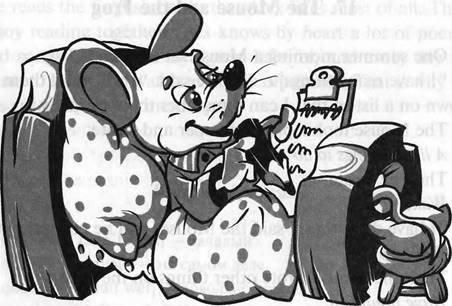
One summer morning a Mouse sat in his bed.
"I
have many things to do," he said. "I will write them all down on a
list so that I can remember them properly  The Mouse took a piece of paper and wrote: A list of
things to do today
The Mouse took a piece of paper and wrote: A list of
things to do today
Then he wrote:
Wake up
"I have done that," said the Mouse, and he crossed out
Then the Mouse wrote other things on the paper:
Have breakfast
Get dressed
Go to Frog's house
Take a walk with Fmg
Have lunch
Take a nap
Play games with Fmg
Have supper
Go to sleep
"There," said the Mouse. "Now my day is all written down."
He got out of bed and had breakfast.
Then the Mouse crossed out of the list

He took his clothes out of the closet and put them on.
Then the Mouse crossed out

The Mouse put the list in his pocket, opened the door and walked out.
Soon the Mouse was at the front door of the Frog's house. He took the list from his pocket and crossed out

The Mouse knocked at the door, "Hello," said the Frog.
"Look at my list of things to do today," said the Mouse.
"Oh," said the Frog, "that is very nice."
"My list tells me that we will go for a walk," said the Mouse.
"All Tight," said the Frog. '41 am ready."
The Frog and the Mouse went for a walk.
The Mouse took the list from his pocket again and crossed out

And just then began to blow a strong wind. The list slipped out of Mouse's hand and flew high up into the air.
"Help!"
cried the Mouse. "My list is flying away. Wmat will I do without it?"
"Hurry up!" said the Frog„ will run and catch it?'
"No!" shouted the Mouse. SS I cannot do that."
"Why not?" asked the Frog¼
"Because," wailed the Mouse, "runnine after my list is not one of the things that I wrotc on my list of things to do!"
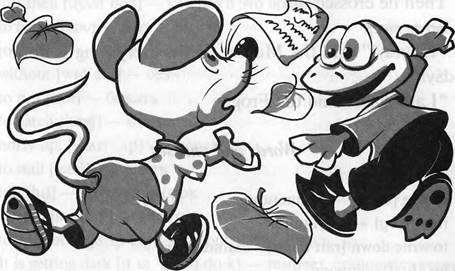
But
anyway the Frog ran after the list. He ran over hills  and swamps but the list flew on and
on. At last the Frog came back to the Mouse.
and swamps but the list flew on and
on. At last the Frog came back to the Mouse.
 am sorry," gasped he, "but I could not catch your list."
"It's too bad," said the Mouse. "I cannot remember any of the things that were on my list of things to do. I will just have to sit here and do nothing."
The
Mouse sat and did nothing. And the Frog sat with him. After a long time the
Frog said, "It is getting dark.  should be going to sleep now."
"Go to sleep!" shouted the Mouse. "That was the last thing on my list!"
The Mouse took a stick and wrote on the sand:
Go to sleep
Then he crossed out

"Hooray!" said the Mouse. "Now everything is done for
"l am glad," said the Frog.
 andphrases
mouse Imausl — MHIUOHOK frog Ifrngl — JIRWIIJOHOK to write down Iratt daunl — gall"Cb1HaŸb list [list] — cm,1COK
them lðeml — ux properly I' propalll — paw. XOPOU1eHbkO to remember
Irr'membal — TJOMHWTb thing [910] — neuqo to wake up lwerk AP] — npocb1naTbcn
to cross out Ikros attl — aaqëPKMBaTb to get dressed [get drestl —
onenan,cq lunch IlnntJl — 06•ea to take out Iterk autl —  JOCTüBElTb took [tukl — BHHYJI,
.UOCTZ'I clothes ['klauðzl — one.vua closet l*klozrtl —
JOCTüBElTb took [tukl — BHHYJI,
.UOCTZ'I clothes ['klauðzl — one.vua closet l*klozrtl —  pocket ['pOk1t] — KilPMaH to knock
Inokl — ca•ygaTb to say Isen — cxa:aaTb said Isedl — ckaaa-tl just then [d3ASt
ðenl — Kak pag H
pocket ['pOk1t] — KilPMaH to knock
Inokl — ca•ygaTb to say Isen — cxa:aaTb said Isedl — ckaaa-tl just then [d3ASt
ðenl — Kak pag H  to blow lblaÜl — AYTb to fly [flan — nereTb, .11œraTb without
  to run Irnnl — 6exaT<b to catch
[kætfl — noiÍMarrb hurry up! ('hnrl — cxopeii! to wail
[wedl — Bonwrb hill lhlll — XOJIM, npHropoK swamp [swnmp] —
to run Irnnl — 6exaT<b to catch
[kætfl — noiÍMarrb hurry up! ('hnrl — cxopeii! to wail
[wedl — Bonwrb hill lhlll — XOJIM, npHropoK swamp [swnmp] —  to gasp out Iga:sp at.it] — TOBOPHTb
3ansrxaflCb
to gasp out Iga:sp at.it] — TOBOPHTb
3ansrxaflCb
It is getting dark [It rz 'gent) da:kl — TeMHeeT, CTaHOBHTCfl TeMHO
sand Isændl — rrecoK stick Istlk] — npYT}tK, Tia.i1F.a
18. The Little Red Hen and the Grains of Wheat
Once upon a time there was a Little Red Hen. And she lived at a farm.
One day the Little Red Hen found some grains of wheat. She took them to the other animals that lived at the farm.
 will help me to plant these grains?" asked the Little Red Hen.
"Not I," said the Cat.
"Not I," said the Rat.
"Not l," said the Piglet.
"Then I shall plant the grains myself," said the Little Red Hen.
So she did.
Every day the Little Red Hen went to the field to watch the ears of wheat growing. They grew tall and strong.
One
day the Little Red Hen saw that the wheat was ready to be cut. So she went to
the other animals in the farm.
"Who will help me to cut the wheat?" asked the Little Red Hen.
"'Not 1," said the Cat.
"Not I," said the Rat.
"Not 1," sard the Piglet.
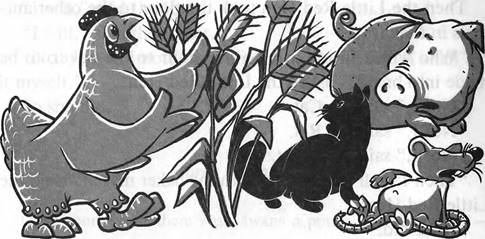
"Then I shall cut the wheat myself," said the Little Red
Hen.
So she did.
"The
grains of wheat are now ready to be made into flour," said the Little Red
Hen to herself as she set off for the farm  will help me to take the grains of
wheat to the mill,
will help me to take the grains of
wheat to the mill,  to be made into flour?" asked the Little Red Hen.
"Not I," said the Cat.
"Not 1," said the Rat.
"Not I," said the Piglet.
"Then I shall take the wheat to the mill myself," said the Little Red Hen.
So she did.
The Little Red Hen took the grains of wheat to the mill and the miller made them into floun
Then the Little Red Ilen took the flour to the other animals in the farm.
"Who will help me to take this flour to the baker, to be made into bread?" asked the Little Red Hen.
"Not l," said the Cat. "Not 1," said the Rat.
"Not said the Piglet.
'*Then I shall take this flour to the baker myself," said the Little Red Hen.
So she did.
The
Little Red Hen took the flour to the baker and he made it into bread.
Then the Little Red Hen took the bread to the other animals in the farnl@
"The bread is now ready to be eaten," said the Little Red Hen. "Who will help me to cat the bread?" "l will," said the Cat.
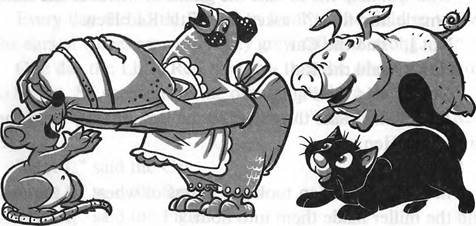
"I will," said the Rat.
"I will," said the Piglet.
"No, you will not," said the Little Red Hen. "I shall eat it myself. "
So she did.
 Once upon a time there was... IWF,ns
a'pon a tarm, ðea wozl — Koraa-T0 zaBHb1M-aaBHO (Ml•lorne anrJ111iicvate
Once upon a time there was... IWF,ns
a'pon a tarm, ðea wozl — Koraa-T0 zaBHb1M-aaBHO (Ml•lorne anrJ111iicvate  nagmqa.10TCA C one day [wsn dell —
OAHa;K.ctH to find [farndl —
nagmqa.10TCA C one day [wsn dell —
OAHa;K.ctH to find [farndl —  found Ifavndl — Hallma grain [greml —
  wheat Iwi:tl — nmeHHua to plant
[plo:ntl — (pacTe.J1}1fl) ear — KO]IOC rat Irætl — KPb1ca myself
Imal'selfl — oca.Ma to do Idu:l — Ae..nan„ BbJ110JIHRTb did Idld] —
cue;ra.J1a field Ifi:ldl — none to watch [wntJ'] — cwyrpeTb, Ha6:ttoaaTb,
cneavtTb tall Ita:ll — BblCOKHiå to cut IkAtl — xaT'b, yó}tpaTb
(ypoxaii) to set off for Iset of fatl — ornpawuwrŒ,cq
wheat Iwi:tl — nmeHHua to plant
[plo:ntl — (pacTe.J1}1fl) ear — KO]IOC rat Irætl — KPb1ca myself
Imal'selfl — oca.Ma to do Idu:l — Ae..nan„ BbJ110JIHRTb did Idld] —
cue;ra.J1a field Ifi:ldl — none to watch [wntJ'] — cwyrpeTb, Ha6:ttoaaTb,
cneavtTb tall Ita:ll — BblCOKHiå to cut IkAtl — xaT'b, yó}tpaTb
(ypoxaii) to set off for Iset of fatl — ornpawuwrŒ,cq
flour l'flaval — MYRa mill [null — Me,'1bHHUa to take Iterkl —  took [tUk] — O'THeCJža baker —
5YJIOHHHK, rreKapb ready I 'redll — roTOBb1ii
took [tUk] — O'THeCJža baker —
5YJIOHHHK, rreKapb ready I 'redll — roTOBb1ii

"This is the day we go to the fair," shouted all the animals on the farmyard one morning.
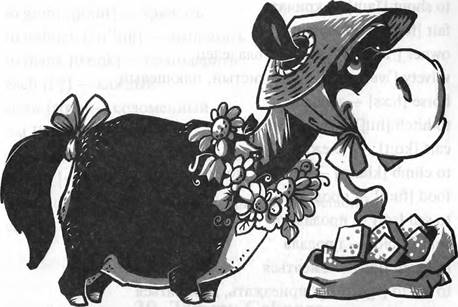
The little boy, the owner of Plush, a little black velvety horse, hitched him to the cart.
The animals climbed in the cart with the food they wanted to sell at the fair.
Down the road goes Plush, clippety-clop, with the animals laughing and shouting.
When they got to the fair, the Hen sold her basket of eggs, the Duck sold her strawberry jam, the Lamb sold the apple pie that she had baked, the Pig sold pink lemonade. Then they bought some things with their money. Everyone had a fine time.
It was late in the afternoon when the animals all got back in the cart with the things they had bought.
And Plush started for home. All his friends were cackling and quacking and baaing and grunting.
Wien
they got back to the farm, the boy unhitched Plush  from the cart. Then all his friends
thanked the little black horse for taking them to the fair and home again.
from the cart. Then all his friends
thanked the little black horse for taking them to the fair and home again.
Each of them gave Plush a present. The Duck gave him a straw hat with ear holesY There was a bag of sugar from the Hen. The Lamb had a wreath of flowers for Plush.
And
only the Pig gave nothing. She grunted much and decided it was enough„
Plush IplnJl —  farmyard
  lt»epMepcKHli
to shout Ilautl — Kpuqa•tb fair [feal — gpMapsa owner ['aunal — X03SIHHt BJ1aaueneu
 ['velvatl] — óapxantcTb1ii, 11.q}omeBb1ii horse Ihacsl —
  to hitch [hltf] — 3anpqraTb cart
Ika:tl — •rejlexvza to climb [klmm] — B.qeaaTb,
to hitch [hltf] — 3anpqraTb cart
Ika:tl — •rejlexvza to climb [klmm] — B.qeaaTb,  food Ifu:dl —
  to sell Isel] — np0A8BaTb sold
Isauldl — npogw'la to laugh [la:f] — to get to l' gettvl — au06upaT1,c5å
got to ['gott01 — npltexa-nu, duck [dnkl — yrot{lKa lamb Ilæml — 0Be11Ka
basket l'ba:skJtl — KOP3}fHa strawberry l' stracbarrl — 3CMj1AH14F,a jam —
napeHbe apple læpll —
to sell Isel] — np0A8BaTb sold
Isauldl — npogw'la to laugh [la:f] — to get to l' gettvl — au06upaT1,c5å
got to ['gott01 — npltexa-nu, duck [dnkl — yrot{lKa lamb Ilæml — 0Be11Ka
basket l'ba:skJtl — KOP3}fHa strawberry l' stracbarrl — 3CMj1AH14F,a jam —
napeHbe apple læpll —  pie [pan — nupor lemonade Llerna•netdl —
  to buy [bal] — now«ynaTb bought
Ibo;tl —
to buy [bal] — now«ynaTb bought
Ibo;tl —  money I' n1Aml — aeHbTH to cackle Ikækll — Kyuax•raTb to quack
Ikwækl — KPMKaa'b to baa Ibo:] — 6J1eHTb
money I' n1Aml — aeHbTH to cackle Ikækll — Kyuax•raTb to quack
Ikwækl — KPMKaa'b to baa Ibo:] — 6J1eHTb
to grunt [grnntl — xp10KffTb to unhitch Inn'hl¶l — BblnpqraTb to thank
[Oæok] — óJ1aronapHTb each li:tJl —  straw [strad — COJIOMeHHb1ii hat
[hætl —
straw [strad — COJIOMeHHb1ii hat
[hætl —  ear holes Ira havlzl — npope3b ytueii wreath — BCHOK to decide [dl*sald]
— pewaTb, npHHHMa1'b penuemoe enough 11' nr,fl — aocra•roqH0
ear holes Ira havlzl — npope3b ytueii wreath — BCHOK to decide [dl*sald]
— pewaTb, npHHHMa1'b penuemoe enough 11' nr,fl — aocra•roqH0
"Tommy Caboose," hooted the engine, "go to the end of the train. It's time to leave."
"No!" said Tommy crossly. "I'm tired of riding at the end. I'm tired of being a nobody."
"Well,"
said the engine. "%uld you like to be a cattle car?
"Hooray!" shouted Tommy. "I'm going to be a cattle car." And so he was.
Soon the cows and the búlls came. They were mooing and bumping through Tommy's narrow doors. Then the train started.
"Stop jiggling," mooed one of the cows. can't eat my hay."
But Tommy was used to swinging at the end of the train and so he couldn't stop.
The cows and the bulls were bounced back and forth and therefore they were very angry,
Tommy Caboose was sad. He knew he didn't make a good cattle car.
"W3uld you like to be a coal car?" asked the engine.
'(Oh, yes," said Tommy "J would rather be a coal car?' And so he was.
The railway workers filled Tommy full ofcoal and the train started. But
Tommy jiggled and joggled so much that the coal flew out the windows.
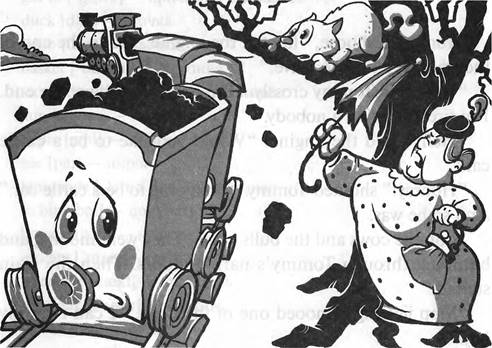
One piece of coal hit an old lady.
"Oh, dear!" she cried. "Who threw that coal at me?" Alas, Tommy couldn't stop.
Another piece of coal flew into a pie that was cooling on a window sill.
And one piece frightened a big white cat so that she ran up a tree and wouldn't come down for three whole days.
Tommy Caboose was unhappy again.
And that night, when everything was quiet, Tommy went back to the end of the train.
The next morning the engine saw Tommy back in his old place.
"Oh, Tommy wants to be a caboose again," the engine thought, but he never said a word to anyone. He just puffed out some steam to let everyone know he was ready to start.
"Hooray!" shouted Tommy as he joggled and jiggled.
"I will always be a caboose from now on."
caboose [kaibu:sl — c.nyxe6Hb1ii naroH n •ronapHoro rto-
to hoot [hu:tl — ryaeTb, CHI'HaJIHTb engine I •end3tnl — JlOkOMOTMB train [treml — noe3A to leave [li:vl — yegxa'Tb, o•rnpaBJ151T'b.c51 crossly ['krnsIJl — cepllHT0 to tire l' taral — yc•raB8Tb, YTOMJIMTbCS1 cattle car kætlka:l — Baron nepeB03KH Kpyrmor•o porarroro cvarra
Hooray! [hu'rel] — Ypa! to moo Irnu:l — Mb1uaTb to bump Ibnmp] —
TOJIKaTbCS1 narrow l' næraul — Y3KJ•tii to jiggle Ict51gll —  hay lhetl — CCH0 to be used to Ibi:
'jutsttül —
hay lhetl — CCH0 to be used to Ibi:
'jutsttül —  to swing — Kaqa•rbc$l, KOJIe6aTT,CH were bounced lwg: baunstl — Cipocwto
back and forth Ibæk ænd fatt31 — Baan BilepëA therefore
l'öeafo:l — n03T0MY angry [ i ængrll —
to swing — Kaqa•rbc$l, KOJIe6aTT,CH were bounced lwg: baunstl — Cipocwto
back and forth Ibæk ænd fatt31 — Baan BilepëA therefore
l'öeafo:l — n03T0MY angry [ i ængrll —  sad Isædl —
  coal Ikaull — V,aMeHHb1iÍ
yronb to joggle Id30gll — •rpgc'l'}tcb to fill [fill — HanOJIHflTb to throw
19rauJ — 6pocaTb,
coal Ikaull — V,aMeHHb1iÍ
yronb to joggle Id30gll — •rpgc'l'}tcb to fill [fill — HanOJIHflTb to throw
19rauJ — 6pocaTb,  Oh, dear! lat dial — 60xe MOA! to cool [ku:ll — OCTblnaT'b,
  window sill l'wmdauslll —
I'lOaOKOHHHK 00 frighten Ifrautnl — nyraTb steam Isti:ml — nap always
window sill l'wmdauslll —
I'lOaOKOHHHK 00 frighten Ifrautnl — nyraTb steam Isti:ml — nap always  — ncerna from now on Ifrom nau onl —
01'Hb1He,
— ncerna from now on Ifrom nau onl —
01'Hb1He,
Alex and his mother are reading the tale "Tommy Caboose". He knows this tale, but he wants to read it again and again. Suddenly he says, "Mum, Santa Claus is coming soon."
"Yes," agrees mother. "And why?"
"I want Santa Claus to bring me an engine, 22 cars, some bridges, some tunnels, and..."
"Stop, stop, interrupts him mother. "Santa Claus is very old. He can't carry so many things. They are very heavy. "
"O.K.," answers Alex. "Let them come three."
"But," says mother, "there is only one Santa Claus,"
"No," says Alex. "There are many of them I have seen."
mum Imarnl — page. Mi:iMa
to agree gri:l — cornama'l'bcß-l And why? I[ænd wall — A wro?
to bring Ibrll)l — 11PHHOCITTb bridge [br1d3] — MOCT tunnel ltnnll —
TOHHe11b to interrupt [Anta'rvvptl — npepblBaTb to carry l'kærrl —
 thing heavy ['heul —
Tasya and Sveta are good friends. Tasya is 10 and Sveta is 2 years older. They both go to and study at the same gymnasium. They learn two foreign languages: English and French. They made friends 6 years ago.
One
day, when Sveta was about six, she was walking with her grandfather in the
Tavrichesky garden. They were watching ducks in the pond, feeding them and
speaking
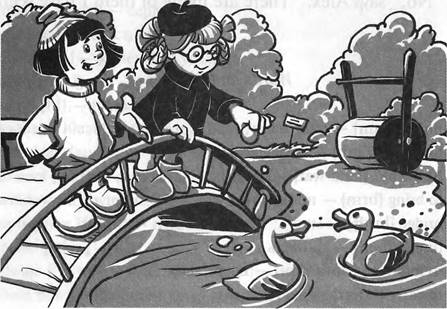
English. Suddenly there came a woman with a little girl. The woman heard them speaking English and said, "May we join you? We can speak English, too."
The girls were very pleased, and since then they have been good friends.
They read much, then discuss and retell the fairy tales that they like best. Let's read the most famous and favourite tales together with them.
both IbacOl — oõe same [serm] — omm H TOT xe, TOT caMbtii foreign
l'foranl — HHOCTPaHHb1ii language  to make friends Imelk frendzl —
noapytKHTbCfl garden Iga:dnl — can pond [pond] — rapya
to make friends Imelk frendzl —
noapytKHTbCfl garden Iga:dnl — can pond [pond] — rapya
to hear
lhlal — CJ1b1UJ8Tb heard them speaking [hg:d dem  — cJ1b11.uana, KaK OHM roBopwr

since then Isms ðenl — c Tex nop to discuss [drs*knsl —
to retell L rit'tell — nepecKa3bdBaTb famous ['fennasl — wanecTHblii,  favourite I 'fewratl — JIBD6UMb1ii
Long, long ago there lived a young and beautiful girl called Cinderella.
Cinderella
lived with her stepmother and stepsisters. The sisters were wicked and haughty.
They were jealous of Cinderella's beauty and treated her as a servant.
Cinderella had no clothes to wear and no sparkling jewels. But Cinderella was very kind and cheerful and she 5Åent about her daily work with a gay smile.
One day all the ladies of the kingdom were invited to a ball in honour of the King's only son. The Prince intended to choose his bride from among those present at the ball.
Cinderella had also received an invitation to the ball, but her sisters laughed and said she could not go because she had nothing to wear.
"How I wish I could go," sighed Cinderella.
"Back
to work," snapped her sisters. "You will have plenty to do later helping
us to prepare for the ball,
And indeed their selfish demands kept Cinderella running back and forth all day.
After they had gone, Cinderella felt quite lonely. There was nobody in the whole world who cared for herl
Suddenly
sweet music filled the air and in the doorway appeared a fairy with a wand in
her hand. "1 am your godmother, Cinderella," said the fairy, in a sweet voice. "I
have come to grant your heart's desire. Tonight you will go to
the grand ball. There is no time to lose, for the dancing has already begun. "
The fairy waved her wand, and soon there was a wonderful gown for Cinderella to wear. It was made of silvery brocade shimmering as moonlight.
Then the fairy changed six mice into prancing white horses and a big grey rat into a stately coachman.
"Now, you must have a coach," said the fairy. "This yellow pumpkin will do very nicely." The fairy waved her wand again and a coach appeared,
"Now to the ball," the fairy said. "But remember, you must leave before midnight because on the last stroke of the clock your clothes will turn into rags."
The coachman cracked his whip and the horses pranced through the streets to the King's palace.
As the coach drove up to the big oak doors, Cinderella jumped out eagerly and ran up the wide marble staircase.
Inside, the palace was more wonderful than anything she had ever dreamed. Everything was so bright and colourful.
All the guests whispered among themselves that she must be a Princess from another land and they were not surprised when the Prince danced only with Cinderella all night. And so happy was she that she quite forgot the warning of the fairy. "One, two, three." The loud chimes rang out.
Suddenly Cinderella remembered everything! Panicstricken, she ran out of the ballroom, not even waiting to say the Prince goodbye.
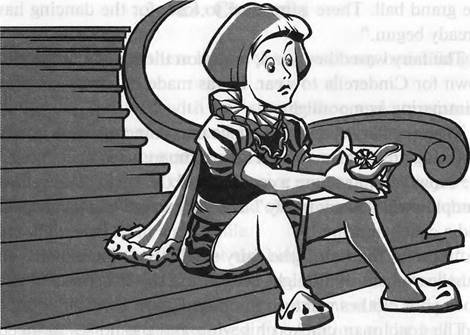
She
raced down the marble staircase dropping one of her  tiny crystal slippers as she ran. And
as the last chime sounded, her clothes changed back into rags.
tiny crystal slippers as she ran. And
as the last chime sounded, her clothes changed back into rags.
The Prince grieved bitterly at having lost the girl whom he now wanted to make his bride.
 He remembered the slipper which Cinderella had lost. Through all the
land, for days and weeks and months, the Prince searched for its owner. And at
last he found Cinderella, for she was the only one whom the tiny crystal
slipper would fit.
He remembered the slipper which Cinderella had lost. Through all the
land, for days and weeks and months, the Prince searched for its owner. And at
last he found Cinderella, for she was the only one whom the tiny crystal
slipper would fit.
And in a few days the Prince and Cinderella celebrated a merry wedding.
Words and phrases
Cinderella  — 30$JYUJKa stepmother I'step.mAðal — IMaqexa stepsister
['step,slstål —
— 30$JYUJKa stepmother I'step.mAðal — IMaqexa stepsister
['step,slstål —  cec•rpa wicked I 'wrkldl — 3]10iå haughty ['ho:tl] — 3auocHHBblii,
BblCOKOMCPHbåït to be jealous of Ibi: 'd:selas OVI — aaBIUIOBflTb
beauty l'bju:tll — Kpaco•ra to treat [tri:tl — 06PaagaT'b.CS1 c servant
['sa:vantl — cny.«aHKa, npucnyra to wear [weal — (one:vay) sparkling
['spav'k1101 — cBepKa'011A}tii jewel — apar01tCHHOC'1'b cheerful l '
tfrafüll — XlOHePaAOCTHb1iä gay lgerl — necëJINii smile Ismalll
— YJ'1b16Ka kingdom Cklndam] —
cec•rpa wicked I 'wrkldl — 3]10iå haughty ['ho:tl] — 3auocHHBblii,
BblCOKOMCPHbåït to be jealous of Ibi: 'd:selas OVI — aaBIUIOBflTb
beauty l'bju:tll — Kpaco•ra to treat [tri:tl — 06PaagaT'b.CS1 c servant
['sa:vantl — cny.«aHKa, npucnyra to wear [weal — (one:vay) sparkling
['spav'k1101 — cBepKa'011A}tii jewel — apar01tCHHOC'1'b cheerful l '
tfrafüll — XlOHePaAOCTHb1iä gay lgerl — necëJINii smile Ismalll
— YJ'1b16Ka kingdom Cklndam] —  to invite On'valtl — rtpnrnaujaTb
  invited [wg: rn ì valtld]
—
invited [wg: rn ì valtld]
—  ball [ba:l] —
  in honour 1m 'onal — B qeCTb only — enviHC1'BeHHb1iå to intend
Im'tendl — Haterepenal'i,cq, c06}tpaTbCf1 to choose — Bb16MPH'1'b bride Ibraldl
— Hegec-ra to receive
in honour 1m 'onal — B qeCTb only — enviHC1'BeHHb1iå to intend
Im'tendl — Haterepenal'i,cq, c06}tpaTbCf1 to choose — Bb16MPH'1'b bride Ibraldl
— Hegec-ra to receive  11011yqa1'b to sigh Isall — B3AHXï1Tb
to snap [snæpl —pqnKaTb plenty I 'plentll — MHOI'O indeed ditdl —
neÌiCTBHTeJ1bHO selfish I •selflfl — 31ŒICTHqHb1ii demand  — Tpe60BaHHe had gone [hæd
gnn] — yexa-'l]' felt Ifeltl — nouyBCTBOBana lonely I 'launll] — OA}tHOKHJi
sweet Iswittl — 11P1fflTHb1iå, aaCKOBb1h to fill [fill —
— Tpe60BaHHe had gone [hæd
gnn] — yexa-'l]' felt Ifeltl — nouyBCTBOBana lonely I 'launll] — OA}tHOKHJi
sweet Iswittl — 11P1fflTHb1iå, aaCKOBb1h to fill [fill —  to appear la' pral — 110flBJIHTbCfl
fairy I'fearl] — rþeH
to appear la' pral — 110flBJIHTbCfl
fairy I'fearl] — rþeH

godmother
['god,mAðal — KPëCTHaR Mart, voice — ro:toc desire Idl*zalal — CWTbHOe
xenaHHe, Mem•na to grant lgru;ntl — aapM'Tb tonight [ta e naltl —
cercuHH BegepoM to lose llu:zl — repH'Tb to wave IWeuvl — B3MaXHYTb gown [gavn]
—  silvery l ' silvarrl — cepe6pucTHii brocade Ibra'keld] — napya to shimmer
l' Jltnal — MepuaTb prancing ['pra:nstnl — rapuyrouuòi grey [grerl —
cepblii rat Iræt] — Kpblca stately [ •steltlll —
He-illitaeC'TBeHHb1iå coachman ['kautfmanl — Kyqep coach [kautfl —
Kape•ra yellow I 'jelaul — N.ëJITb1h pumpkin l'pAmpklJ1] —
silvery l ' silvarrl — cepe6pucTHii brocade Ibra'keld] — napya to shimmer
l' Jltnal — MepuaTb prancing ['pra:nstnl — rapuyrouuòi grey [grerl —
cepblii rat Iræt] — Kpblca stately [ •steltlll —
He-illitaeC'TBeHHb1iå coachman ['kautfmanl — Kyqep coach [kautfl —
Kape•ra yellow I 'jelaul — N.ëJITb1h pumpkin l'pAmpklJ1] —  will do very nicely [WII du: 'ven
'nmslll — KaK pa3 110110itaëT to remember [ru•membal — 110MHHTb, BCITOMHHTb
to leave Ili:vl —
will do very nicely [WII du: 'ven
'nmslll — KaK pa3 110110itaëT to remember [ru•membal — 110MHHTb, BCITOMHHTb
to leave Ili:vl —  yeaxaTb because [bl i koz] — no-row two, Tax KaK will turn
[WII tg:nl — llpegpa•rnrc'$l rags [rægzl — JlOXMOTbH to crack
Ikrækl — IUëJIKHTb whip — LKHYT palace I •pæltsl — AH0peu oak
['aukl —
yeaxaTb because [bl i koz] — no-row two, Tax KaK will turn
[WII tg:nl — llpegpa•rnrc'$l rags [rægzl — JlOXMOTbH to crack
Ikrækl — IUëJIKHTb whip — LKHYT palace I •pæltsl — AH0peu oak
['aukl —  marble Irna:bll — upflMopHblii staircase I'steakelsl — neCTHHUa guest
lgestl — roCTb to whisper w•spal — uaerrraTbcB
marble Irna:bll — upflMopHblii staircase I'steakelsl — neCTHHUa guest
lgestl — roCTb to whisper w•spal — uaerrraTbcB  night [nart] negep to forget Ifa'getl
—aa6b1BaTb forgot Ifa•gotl — 3aób1na loud [laud] — IVOMkMii chimes
ItJarmzl — KypaHTb1 panic-stricken l'pæmk.strlkanl — OXBaqeHHaq unaHHK0ñ
to drop [drop] — POHflTb, TePflTb tiny l' tarml — KpoureMHb1ii, MLt1CHbKMii
crystal [krrstll — XPYCTaJ1bHb1Th slipper [ • slrpal — TYIþe11bKa
night [nart] negep to forget Ifa'getl
—aa6b1BaTb forgot Ifa•gotl — 3aób1na loud [laud] — IVOMkMii chimes
ItJarmzl — KypaHTb1 panic-stricken l'pæmk.strlkanl — OXBaqeHHaq unaHHK0ñ
to drop [drop] — POHflTb, TePflTb tiny l' tarml — KpoureMHb1ii, MLt1CHbKMii
crystal [krrstll — XPYCTaJ1bHb1Th slipper [ • slrpal — TYIþe11bKa
to grieve lgri:vl — ropegaTb to
search [smtll — HCKaTb would fit fitl — 110A01W1a, 6bU1a Bluopy a few fju:l
— HeCKOJ1bKO merry [• merr] —  wedding l'wedlnl — CBaAb6a
In the country, close by the roadside, there stood a cottage. In front there was a little garden full of flowers and surrounded by a painted fence. Outside the fence there grew, in the grass, a Daisy.
The Daisy did not care that she was only a little flower and no one could see her for the grass; she was quite contented. She looked up to the blue sky and listened to a Lark singing in the air. The Daisy did not in the least envy the Lark. "I can see and hear everything," thought she. "The sun shines on me, and the wind kisses me. Oh, how happy am l!"
Just at that moment the Lark flew down to the Daisy in the grass.
The little bird hopped about and sang, "Oh, how soft is this grass! And what a sweet daisy blooms here!"
How happy the little Daisy was one can ever tell! The Lark kissed her, sang to her, and then flew up again into the warm
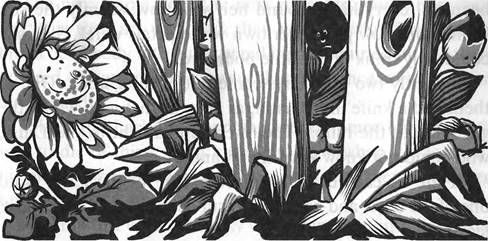
blue sky. He looked at the other flowers in the garden, but he could see at once that they were angry
Just then a girl camc into the garden with a sharp shining knife. She went up to the tulips and cut off one after another. "Oh, that is dreadful!" sighed the Daisy. Then the girl carried away the tulips.
How glad was the Daisy that she grew in the grass, and was only a poor little flower! When the sun set, she went to sleep, and dreamed all night of the sun and the beautiful bird.
The
next morning, when the Daisy again spread all her white petals to the bright
sunshine and clear blue sky, she heard the voice of the Lark; but he sang
mournfully. The Lark had been caught and put into a cage close by the open window.
The little Daisy wished very much to help him; but how could she? And because she could not, she quite forgot how beautiful everything around her was, how warmly the sun shone, and how pretty her own white petals were! Then she could only think of the little poor bird.
Suddenly two little boys came out of the garden. One of them had a knife in his hand, as large as that with which the girl had cut the tulips. They went up straight to the Daisy, who could not know what they wanted.
"Here we can cut a nice piece of turffOr the Lark," said one of the boys; and he began to cut deep all round the Daisy, leaving her in the centre.
"Tear
out the flower," said the other boy, The Daisy  trembled all over for fear. She wished
so much to live!
trembled all over for fear. She wished
so much to live!
"No, leave it alone," said the first boy; "it looks so pretty!"
So the Daisy was put into the Lark's cage.
The Lark loudly mourned the loss of his freedom. The Daisy could not say a single word of comfort to him, much as she wished to do so! Thus passed the whole morning.
"There
is no water here", said the Lark. "They have all gone away and forgotten me. Not a
drop of water to drink! My throat is quite dry. And the air is so heavy! Alas!
I must die, I must leave the warm sunshine and the green fields and all the
beautiful things here."
Then his eyes fell on the Daisy, and he said, "You too will die here, you poor little flower!"
"Ah! How could I comfort him?" thought the Daisy but could do nothing.
The boys came only the next morning; and when they saw; that the Lark was dead, they wept bitterly. They put the bird's dead body into a pretty red box and buried it, and then covered the grave with flowers. Like a prince was the poor bird buried!
Whilst the Lark lived and sang, they forgot him and left him to die of thirst in his cage; and now, when it was dead, his grave was covered with flowers, and tears were shed over him.
And the turf with the Daisy was thrown out into the dusty road. No one thought of the flower that had so much wished to comfort the poor little bird.
daisy I'detzal — poMa111Ka close by [klavs ball — c to stand [stendl —  stood Istudl — CTOWža to
surround [so'ravnd] — ospyxa•rb, 06HOCMT'b to paint Ipemtl — Kpac1TTb fence
[fens] — aa50p
stood Istudl — CTOWža to
surround [so'ravnd] — ospyxa•rb, 06HOCMT'b to paint Ipemtl — Kpac1TTb fence
[fens] — aa50p
 Laut'sardl — 3a, cHapyxw to grow [grav] — pacn:t grew lgru;l — pocna to
care Ikea] — 5ecT10K0HTbcq, TPeBOXH'TbCA quite Ikwattl — BIAOJIHet rt0AHOCTb*0
contented Ikan@tentrdl —
Laut'sardl — 3a, cHapyxw to grow [grav] — pacn:t grew lgru;l — pocna to
care Ikea] — 5ecT10K0HTbcq, TPeBOXH'TbCA quite Ikwattl — BIAOJIHet rt0AHOCTb*0
contented Ikan@tentrdl —  lark lla:kl — XaBOPOHOK to envy l i envr] — aanwuoaaTb to kiss
1ktsl — UCJIOBœ1'b bird lb3:dl — rrrwua to bloom lbluml — 1.1BCCTM to tell
[tell — CKaaaT'b sham [JOTII — ocTpbtii to shine IJatnl — finec'1©Tb knife
[nalfl — HOX to spread Ispredl — pacKPb1BaTb, pa3BëpTbJnaTb mournfully
ma:nfalll — neqaj1bH0, Ck0P6H0 to catch Ikætfl — AOBHTb, noiiMaTb had
been caught lhæd bitn —
lark lla:kl — XaBOPOHOK to envy l i envr] — aanwuoaaTb to kiss
1ktsl — UCJIOBœ1'b bird lb3:dl — rrrwua to bloom lbluml — 1.1BCCTM to tell
[tell — CKaaaT'b sham [JOTII — ocTpbtii to shine IJatnl — finec'1©Tb knife
[nalfl — HOX to spread Ispredl — pacKPb1BaTb, pa3BëpTbJnaTb mournfully
ma:nfalll — neqaj1bH0, Ck0P6H0 to catch Ikætfl — AOBHTb, noiiMaTb had
been caught lhæd bitn —  B ganaJH10 turf [tr.fl — aëPH to cut IlkAtl — Konan, deep
[divpl — rny60K0 to leave [li:vl — OCTaBJIHTb to tear out [tea autl —
BblPbtBaTb to Itrembll — apoxan„ •rpenemn., TPflCTUCb fear [fia] — c-rpax to
wish IWIfl — XenaTb cage (kerd3] — Wlvrv,a to mourn Imar.nl — OllJ1aKMBa'Tb,
ropenaTb loss Ilosl — no-repq, yrpa•ra freedom l'fri:daml — CB060aa to comfort
I 'km•nfatl — yrelllHTb throat lerattl — rop.qo
B ganaJH10 turf [tr.fl — aëPH to cut IlkAtl — Konan, deep
[divpl — rny60K0 to leave [li:vl — OCTaBJIHTb to tear out [tea autl —
BblPbtBaTb to Itrembll — apoxan„ •rpenemn., TPflCTUCb fear [fia] — c-rpax to
wish IWIfl — XenaTb cage (kerd3] — Wlvrv,a to mourn Imar.nl — OllJ1aKMBa'Tb,
ropenaTb loss Ilosl — no-repq, yrpa•ra freedom l'fri:daml — CB060aa to comfort
I 'km•nfatl — yrelllHTb throat lerattl — rop.qo
dry Idrall — cyxoiå the air is so heavy [ðl ea IZ sau 'hevJ] —
AblLUaTb TSI.xeJIO! alas la'la;sl — YBb1 to die (darl — YMepeTb body ['bodil —
-reno to bury I *berll — XOPOH11Tb grave Ilgretvl —  whilst Iwallstl — nova thirst
lØ3:stl —
whilst Iwallstl — nova thirst
lØ3:stl —  tear [trol — cJ1eaa to shed [fed] — np0JIHnaTb was thrown out lwoz eratn
autl — HbÏ6ponre11 dusty — 11bW1bHb1ii road l'ratdl — nopora
tear [trol — cJ1eaa to shed [fed] — np0JIHnaTb was thrown out lwoz eratn
autl — HbÏ6ponre11 dusty — 11bW1bHb1ii road l'ratdl — nopora
One day a young man went into town and bought himself a pair of trousers. When he got home, he went upstairs to his bedroom, put them on and found that they were about two inches too long.
He
went downstairs, where his mother and his two sisters were washing up tea
things in the kitchen. "These new trousers are too long," he said.
"They need shortening by about two inches. W)uld one ofyou mind doing this for me?" His mother and sisters were busy at
work and none of them said anything.
But as soon as his mother had finished washing up, she went quietly upstairs to her son's bedroom and shortened the new trousers by two inches. Then she came downstairs without saying anything to her daughters.
Later on, after supper, the elder sister remembered her brother's trousers, She was a kind-hearted girl, so she went quietly upstairs to her brother's bedroom without saying anything to anyone, and shortened the new trousers by two inches.
The younger sister went to the cinema, but when she came home she, too, remembered what her brother had said. She ran upstairs with her scissors, needle, and thread and also shortened the new trousers by two inches.
You can imagine the look on the young man's face when he put this trousers the next morning!
trousers ['trauzazl —  to go Igaul —
  went [went] — npH111ëJ1 upstairs Inp'steazl — Hagepx to put on [put
onl — Ha;teBaTb downstairs Ldaun'steazl — BHM3 tea things ['ti:ffiozl — qaiiHaq
nocyna need shortening
went [went] — npH111ëJ1 upstairs Inp'steazl — Hagepx to put on [put
onl — Ha;teBaTb downstairs Ldaun'steazl — BHM3 tea things ['ti:ffiozl — qaiiHaq
nocyna need shortening  • — HYRH0 YKOPOTHTb to be busy [bit 'blZJl — 6b1Tb 3aHSTb1M
none Inanl — HMKTO anything l'emG1ql — (B o•rpuuaTeJ1bHb1X
rupeanoxeHHflx) as soon as [æz sum æzl — v.aK TODbKO quietly l'
kwaratlll —  to shorten Ilo:tnl — Y'Kopaqnsa•rŒ, later on onl — no.3AHee elder
eldal — crap1LIHii kind-hearted l, katnd'ha:tldl — A0öpocepAet1Haq anyone
I 'emwnnl — HldKTO (B OT'Pmua•reJ1bHblX npenaoxeHHHx) scissors I's:zazl —
HO'.KHHUb1 needle lhi:dll —
to shorten Ilo:tnl — Y'Kopaqnsa•rŒ, later on onl — no.3AHee elder
eldal — crap1LIHii kind-hearted l, katnd'ha:tldl — A0öpocepAet1Haq anyone
I 'emwnnl — HldKTO (B OT'Pmua•reJ1bHblX npenaoxeHHHx) scissors I's:zazl —
HO'.KHHUb1 needle lhi:dll —  thread [Bred] — HHTKa to imagine 11' tnæd31n] — npe.uc•raBJJH'1'b
ce6e younger ['jAnga] —
thread [Bred] — HHTKa to imagine 11' tnæd31n] — npe.uc•raBJJH'1'b
ce6e younger ['jAnga] —  cinema I'smtmal — kMHO,
26. Business Is the First of All!
This happened in old Russia, a few
years before the First  War. General Kuropatkin wanted to give his daughter a poodle as a
Christmas And then poodles were rare in Russia, and the general saw them in
the pictures only.
War. General Kuropatkin wanted to give his daughter a poodle as a
Christmas And then poodles were rare in Russia, and the general saw them in
the pictures only.
But
there was in the town a man called Boris, who bought  and sold a lot of various things.
General sent for him.
"Dear," he said, "I want a poodle before the end of the week. Can you get me one?"
"A what, Your Excellency?"
"A poodle?'
"Ah, a poodle! Certainly, Your Excellency, I can find you one; but poodles are very expensi'ee this year."
"How much will it cost?"
"I do not think I can get you
one for less than a hundred roubles."  let us say a hundred roubles."
"Still if you want a really fine poodle, the best that can be found, it may cost a hundred and fifty roubles."
 Do your best and bring it to me before Saturday.
Boris went home; his wife was sitting in the shop.
" Masha," he said, "there is something I want to know. Tell mc what kind of a thing is a poodle?"
business
['brznasl — geano, 6H3Hec to happen I'hæpanl — c..nyqan,cg, npoucx0AHTb
the First AAOrld lða fg:st wg:ld wo:l — nepgaq MHPOHaq BOñna poodle
Ipu:dll — nyaeJ1b rare [real — peaKHiå to see [si:l — B'tneTb saw Iso:l —
 shop [Jopl — JlaBKa, Mara3VIH to send for [send fo:l —
  ga sent Isentl — IIOCJIWI expensive
Ilks' penslvl — aoporoii, noporoc'l'0Hl,i1Hii
ga sent Isentl — IIOCJIWI expensive
Ilks' penslvl — aoporoii, noporoc'l'0Hl,i1Hii
Your Excellency Ijo: •eksalansrl — Bame npeBocxoawreJIbcrgo
Kim works at a car factory. But he doesn't make cars. He works at the office. He uses a computer and answers the telephone.
Kim starts work at 9 a.m. The telephone rings. It is a salesman, He wants to know the name of the boss. Kim tells him that the boss is called Mr. Thompson. At 1 1 0'clock Kim has coffee. At I p. m. he has lunch. He stops for tea at 4 in the afternoon.
It is 5 p. m. In one hour Kim can go home. Suddenly the telephone rings. The person wants to speak to Mr. Thompson
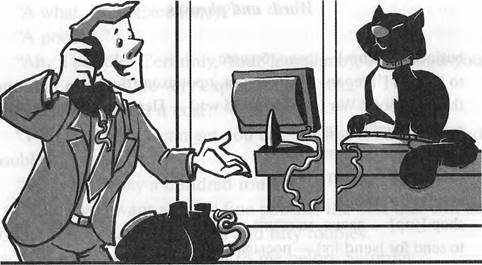
urgently. Kim says,
"Mrv Thompson is busy. My name is Kim, Can I help you?" The caller is
angry. He says, "I must speak to ML Thompson. He knows what I am calling
about and I need to speak to him now!" Kim refuses to put the call through
to Mr. Thompson. The caller is even more angry and says he will write to Mr.
Thompson with a complaint about Kim.
Kim smiles. Mr. Thompson is the factory cat!
job [dsnbl — pa60ra to Ilwxkl — pa50raTb car [ka:l awrOMOfiW1b factory l'fæktrll — 3ïtBOA
to make [melkl — AenaTb, H'JrOTaRIMB8Tb computer Ikam'pju;tal —
K0MlJb10'rep to start [sta.•t] — HatlHH8Tb to ring ílr1tJl — 3BOHHTb a,
m, = ante meridiem (nom.) — AO  salesman Il 'sellzmanl — nponaneu to
know Inaul — 3}-raTb boss Ibos] — Hatra.J1bHHK
salesman Il 'sellzmanl — nponaneu to
know Inaul — 3}-raTb boss Ibos] — Hatra.J1bHHK
p. m. post meridiem (mm.) — nocne  suddenly I'sndnlll — nnpyr, BHeaa11H0
urgently l' 3:cbant111 — cpot.mo to answer ['u;nsal — OTneqaTb to speak to him
Ispi:k tv hltnl — rogopvtTb c HMM complaint Ikam•plemtl — xanoõa
suddenly I'sndnlll — nnpyr, BHeaa11H0
urgently l' 3:cbant111 — cpot.mo to answer ['u;nsal — OTneqaTb to speak to him
Ispi:k tv hltnl — rogopvtTb c HMM complaint Ikam•plemtl — xanoõa
28. Mireille Mathieu Kissed Them Herself!
It was the end of the first trimester at school and the schoolchildren were going to have holidays.
Tasya and Sveta got very good marks at the gymnasium, so their grandmother decided to give them some presents as she always did. This time it was really a great surprise! TWO tickets for the concert of Mireille Mathieu! Their favourite French singer!
At last the day came! The girls took a big bunch of white and yellow roses and set offfor the concert.
At the interval Sveta called her grandmother on the mobile phone from the concert hall, "Granny," she cried in delight. "Hooray! Mé've presented her the flowers and Mireille Mathieu has kissed us herselfl"
"It has been the concert of my life," added Tasya.
to be Ibi:l — 6b1Tb was Iwozl —  were [wa:] — 6bUIH holidays
['I'lt'iladewl — xaHMKYT1b1 always ['xlwerzl — Bceraa this time [ö1S
taurn] — 3'TOT opa3 really I 'nalll — AeticrrmtreJ1bHO, B
CŒIMOM .ue,qe ticket o['tlkltl — 5H-neT to come Ikxrnl — npMiiTM came
Ikeltl —
were [wa:] — 6bUIH holidays
['I'lt'iladewl — xaHMKYT1b1 always ['xlwerzl — Bceraa this time [ö1S
taurn] — 3'TOT opa3 really I 'nalll — AeticrrmtreJ1bHO, B
CŒIMOM .ue,qe ticket o['tlkltl — 5H-neT to come Ikxrnl — npMiiTM came
Ikeltl —  bunch Ibnn¶l — nyqox, 6YKer to set off Iset of] —
  interval I 'Intavll — naysat
nepgpb1B, awrpawr
interval I 'Intavll — naysat
nepgpb1B, awrpawr
delight Idl'lartl — BOCXHURHHe, BOCTOPr life [laifl —
Света — маленькая девочка. Ей только 5 лет, Она очень милая девочка со светлыми волосами и голубыми глазами, Она любит петь и танцевать, Также она любит получать подарки.
Сегодня 31 декабря- Света ждёт Деда Мороза. У неё сТоит новогодняя ёлка с зажжёнными свечами. Наконец Дед Мороз приходит и говорит: «Здравствуй, Свега! У меня есть подарок для тебя». Он опускает руку в свой красный мешок и вынимает прелестното КШЕнка.
Света очень счастлива. Она говорит: «Спасибо, Дед Мороз»,
Теперь
у Светы есть котёнок. Он рыженький, ему всего  месяц. Он не умеет ни есть, ни пить.
Бабушка спрашивает Свету: «Как его зовут?» Света не знает. Затем она говорит.
месяц. Он не умеет ни есть, ни пить.
Бабушка спрашивает Свету: «Как его зовут?» Света не знает. Затем она говорит.
«Давайте назовём его РЫЖИКОМ». Теперь у котёнка есть имя, но он его не знаете Он только спит целый день,
Дедушка говорит: «Пусть спит! Скоро он будет большим и красивым котом», Таким он и стал.
Владик — очень любознательный мальчик: Ему 6 лег. Он ещё не ходит в школу Но он любит попробовать всё хотя бы один раз, Летом он с папой живёт в деревне. Папа берёт его с собой на речку каждый день. У них есть лодка и удочки. Владик знает, что рыба любит червяков, Поэтому; когда папа насаживает червяка на крючок, Владик хочет его попробовать. Вдруг папа слышит, что Владик плачет. «Что слуЧш1ОСЬ?» — спрашивает он, Владик показывает на червяка и говорит: «Червяк невкусный, папа».
Альфред — большой старый пёс. Фред — молодой кот. Фреду нравюся Альфред, но не всегда.
Фред любит лазать по деревьям, и сейчас он тоже на дереве, Хльфред не умеет лазать. Он видит Фреда и громко лает, Фред взбирается на верхушку дерева. Он может видеть всё» дом, парк и озеро в парке. Он видит мужчину, который удит рыбу, Фред любит рыбу. Он хочет пойти в парк и пытается спуститься вниз, Но это очень трудно. Фред мяукает, но Альфред его не слышит, И тут Фред видит орех на дереве. Он берёт его в рот и сбрасывает вниз. Орех падает на голову Альфреда, и тот перестаёт лаять, Он слышит Фреда. Фред нуждается в помощи. Атьфред бежит в дом за помощью.
Через минуту все спешат на помощь Фреду. Маленький мальчик взбирается на дерево, и Фред прыгает ему в руки.
Фред думает: «Альфред Плохо слышит. Но всё равно он мой лучший друг»,
Леонид — семилетний мальчик, Его папа и мама говорят с ним по-английски, но бабушка не знает английского. Однажды Леонид, увидев подсолнух, говорит по-английски: «(Эгаппу! It is а sunt10wet.• Но она не понимает его. Он идёт к папе и маме и говорит: «Бабушка нс понимает меня!» Тогда отец яоворит: «Иди и объясни ей!» Леонид возвращается к бабушке, Он показывает на цветок и на солнце. Затем он ГОВОРИТ по-русски: «Это солнечный цветок». Она понимает. Леонид счастлив. Он может переводить!
Сегодня
Г сентября. Все дети идут в школу Владик идёт в школу в первый раз. В школе
дети встречают свою учительницу Её зовут Ольга Александровна. Она товорит:
«Доброе утро, дети! Я научу вас читать, писать и считать». Дети очень хотят
учиться.
Владик
возвращается домой из школы. Его брат спрашивает: «Тебе нравится школа?» «Да»,
— говорит Владик. «Что тебе больше всего нравится в школе?» — спрашивает папа.
«Моя форма», — отвечает Влачу.
7. Только один кот
Уч и тель: Владик, твоя домашняя работа о коте очень похожа на рассказ твоего брата. Как это может быть?
Вл ад и к: Ничего удивительного, у нас в доме только один кот.
ЛСОниД очень умный. Он хорошо учится в школе и очень много читает, Его любимый предмет — английский язык. Он читает очень много книг по-английски и учится пересказывать наиболее интересные истории. Больше всего Леонид любит читать о живОтных, ДЖУНГЛЯХ, известных путешественниках, приключениях, открытиях; он также любит читать смешные рассказы.
В один дождливый день женщина садится в автобус со своим псом. Пёс очень большой, и сго лапы очень грязные.
Женщина
спрашивает: «Кондуктор, если я заплачу; за своего пса, может ли он получить
место, как и другие пассажиры?»
Кондуктор смотрит на пса и затем говорит: «Конечно; Он может получить место, как и все другие пассажиры, если не будет пасть ноги на сиденье».
Света учится в гимназии, Она изучает французский и английский языки. Она умеет ГОВОРИТЬ и читать на двух языках, Однажды учительница по английскому языку говорит:
— Дети, вы знаете алфавит и много слов. Скоро мы будем писать диктант. А пока выучите очень короткий текст:
«Мальчик в кровати, Яйцо в ноДставке, где часы? Часы на стене где яблоко? Яблоко на тарелке, а тарелка на столе. Кот под зонтиком. Мышка под зонтиком тоже».
Затем учительница говсррит: «Пожалуйста, выучите дома этот текст».
Света приходит домой и начинает плакать. «В чём дело?» — спрашивает бабушка. «Я не умею писать диктанты. Это очень трудно». Бабушка говорит: «Учи текст по предложениям, Это так просто».
Каждые 15 минут Света учит одно предложение. Через 2 часа она знает текст наизусть. Учительница ставит ей пятёрку. Света счастлива. Тетерь она знает, как готовиться к диктанту А бабушка говорит: «Без труда не вытащишь и рыбку из пруда».
Ворона сидит на дереве. У неё во рту большой кусок сыра. Она хочет съесть его, но вдруг видит Лисицу Лисица подходит к дереву. Она смотрит вверх и видит Ворону И она также видит сыр. Лисица хочет получить сыр.
Она говорит,
— Как
Вы красивы, госпожа Ворона! Какие у Вас большие глаза! Как жаль, что Вы не
умеете петь,  Неправда, я умею петь. Кар-р! Кар-р!
Ворона открывает рот, и кусок сыра падает. Лисица под, бегает к сыру и быстро съедает его.
— Большое спасибо, — говорит она. — Сыр хороший, и
Вы поёте хорошо. Как жаль, что Вы не умеете думать-
В джунглях живёт старый тигр. Каждый день он просит кого-либо из животных принести ему что-нибудь поесть, Однажды утром он видит Обезьяну и говорит:
— Я
голоден, Обезьяна, Иди в деревню и принеси мне жирного поросёнка.
 О, Тигр! — кричит Обезьяна. — Я не могу это сделать, Есть друтой тигр,
который моложе и сильнее, чем ты. Он велит мне не приносить «тебе ничего, Он
такой свирепый, что я боюсь его,
О, Тигр! — кричит Обезьяна. — Я не могу это сделать, Есть друтой тигр,
который моложе и сильнее, чем ты. Он велит мне не приносить «тебе ничего, Он
такой свирепый, что я боюсь его,
— Что?! — рычит старый Тигр. — Покажи мне того тигра, Я хочу поговорить с НИМ.
— Пойдём со мной. — говорит Обезьяна. — Я знаю, где
ОН ЖИВЕТ,
Тигр и Обезьяна идут к большой реке.
— А теперь посмотри в воду, — говорит Обезьяна. — Ты видишь в реке голову белые зубы и большие жёлтые глаза другого тигра?
— Да, вижу, — кричит старый Тигр, — Я хочу его съесть,
И с этими словами он прыгает в реку, и Обезьяна больше его не видит.
В жарких странах леса непохожи на наши, Это огромные тёмные леса, где деревья растут так тесно и так высоко, что если вы посмотрите вверх, то в некоторых местах не сумеете увидеть небо.
В джунглях очень много интересного. Птицы, дикие звери и насекомые обитают там, это их доме Тысячи обезьян прыгают с одного дерева на другое или раскачиваются на хвосте на ветвях, устраивают шум, болтая друг с другом-
Живут там и такие удивительные птицы, каких мы нигде не увидим в нашей стране, разве что в зоопарке,
Стаи красно-зелёных попугаев перелетают с дерева на дерево. Они очень красиво выглядят на солнце,
Если ты хочешь узнать про джунгли больше, пойди в библиогеку и возьми «Книгу джунглей» Редьярда Киплинга. Это действительно прекрасная книга!
14. Рассказ путешественника
Когда
я был совсем молодым человеком, я путешествовал по северо-западной части Индии,
Однажды вечером, после целого дня охоты в лесу, я возвращался один в то место,
где я поставил палатку Темнело. Я шёл по узкой тропинке. Справа от меня была широкая река,
слева — густой тёмный лес. Вдруг я заметил, что из-за деревьев на меня смотрят
два жёлтых глаза, Тигр-людоед готовился к прыжку.
Что мне было делать? Прыгнуть в реку в надежде спастись вплавь? Я посмотрел направо. В реке лежал огромный крокодил, широко раскрыв пасты
Я так испугался, что зажмурил глаза. Я услышал, как с шумом раздвинулись ветки, когда тигр сделал прыжок. Я открыл глаза. Как вы думаете, что произошло?
Тио перепрыгнул через меня и угодил прямо в челюсти кроходила, Это правдивая история, хотите верьте — хотите нет!
К полудню солнце так припекало, что Джим не мог идти дальше, Рядом с тропинкой деревья нс росли, поэтому он сел под большим камнем. Допив воду, он снял с себя рубашку и скатал её в подушку. Затем он лёг на землю и заснул.
День был уже на исходе, когда Джим проснулся, Он уже собирался встать, как вдруг почувствовал, что у ног что-то движется, Он посмотрел вниз, К нему ползла длинная чёрная змея.
Джим так испугался, что не мог двинуться с места. Змея проползла по его ногам и двинулась дальше, исчезнув под скалой, Джим вскочил, схватил рубашку и бросился вниз по лтопинке„
16. Как можно больше!
Мекс — заядлый читатель! Но он только думает, что умеет читать, На самом деле ему читают мама и папа, Пала знаст английский, а вот мама знает его не очень хорошо, Она хочет знать его лучше и учит английский вместе с Алексом. Сначала она просит папу прочитать сказку. Она учит все новые слова и затем читает сказку сыну Они также смотрят английские видеофильмы по телевизору о Маугли, Микки Маусе, трёх поросятах, Красной Шапочке и многие другие.
У Алекса есть сестра по имени Света. Ей 12 лет, и она на 7 лет старше Алекса. Когда у Светы бывает свободное от школы время, она читает английские книги, которые Алекс любит больше всего. Они с удовольствием читают вместе. Алекс знает наизусть очень много стихотворений и песен, потому что он хороший слушатель и каждый день хочет слушать и смотреть как можно больше. Вот почему у него такая хорошая память,
Однажды летним утром Мышонок сидел в своей кро-
— Столько дел, столько дел, — сказал он. — Запишу-ка я их все на листке бумаги, чтобы хорошенько запомнить.
Мышонок ВЗЯЛ лист бумаги и написал: Список дел на сегоДня
Затем он написал:
Проснуться
— Я то уже сделал, — скази Мышонок, и он зачеркнул

ПОтОМ Мышонок написал на бумаге другие дела:
Позавтракать
ОДеться
Пойти к Лягушонку
Погулять с ЛЯГУШОНКОМ
ПообеДшпь
Взфе.мнуть
Поиграть с Лягушонком Поужинать Лечь спать.
— Вот! — сказал Мышонок. — Теперь весь мой день расписан.
Он встал с кровати и позавтракал. Затем зачеркнул в списке

МыШОНОК достал одежду из шкафа и оделся. И сразу зачеркнул

Мышонок
засунул список в карман, открыл дверь и вы шел на улицу.
Вскоре Мышонок уже был у парадной двери дома Лягушонкае
Он достал список из кармана и зачеркнул

Мышонок постучат в дверь.
— Привет, — сказал Лягушонок.
 Посмотри-ка на список моих дел на
сегодня, — сказал
Посмотри-ка на список моих дел на
сегодня, — сказал
МЫШОНОК,
— О, — сказал Лягушонок. — Эго просто замечательно.
— В моем списке сказано, что мы пойдём гулять, — скази Мышонок.
— Прекрасно, — сказал Лягушонок, — Я готов,
Лягушонок и Мышонок отправились на прогулку.
Мышонок снова достал список из кармана и зачеркнул

И как раз в это время подул сильный ветер. Список выскользнул из рук Мышонка и полетел высоко-высоко в небо.
— Помогите! — закричал Мышонок, — Мой список улетает. Что я буду делать без него?
— Скорей! — сказал Лягушонок. — Побежим и поймаем
— Нет! — закричал МЫШОНОК. — Я не могу.
— Почему? — спросил Лягушонок.
 Потому что, — завопил Мышонок, — в моём списке дел на сегодня не
сказано, что за ним надо бегать!
Потому что, — завопил Мышонок, — в моём списке дел на сегодня не
сказано, что за ним надо бегать!
Но Лягушонок всё-таки побежал за списком, Он бежал по холмам и болотам, но листок бумаги уносило всё дальше и дальше. Наконец Лягушонок возвратился к Мышонку
—
Прости, — сказал он задыхаясь, — но я не смог поймать твой список.
— Очень плохо! — сказал Мышонок. — Я не помню, какие там ещё дела указаны в списке. Придётся мне тут сидеть и ничего не делать,
Мышонок сидел и ничего не делал, И Лягушонок сидел с ним. После долгой паузы Лягушонок сказал:
— Темнеет. Пора нам ложиться спать.
 — Лечь спать! — закричал Мышонок. — Вот что было последним делом в моём списке!
Мышонок взял прутик и написал на песке:
Лечь спать
Затем он зачеркнул

— Ура! — восиикнул Мышонок- — Теперь все сегодняшние дела сделаны.
— Я рад, — сказал Лягушонок.
18. Рыженькая Курочка и пшеничные зёрна
Когда-то давным-давно жила-была рыженькая Курочка. И жила она на ферме.
Однажды рыженькая Курочка нашла зёрна пшеницы. Она отнесла их другим животным на ферме.
— Кто
поможет мне посадить эти зёрна? — спросила  рочка„
 Не я, — сказал
Коте
Не я, — сказал
Коте
— Не я, — сказала Крыса.
 Не я, — сказал
Поросёнок.
Не я, — сказал
Поросёнок.
— Тогда я посажу зёрна сама, — сказиа Курочка.
Так она и сделала.
Каждый день рыженькая Курочка ходила на поле смотреть, как растут колосья пшеницы. Они росли высокими и крепкими,
Однажды рыженькая Курочка увидела, что пшеницу уже пора жать. Поэтому она пошла к другим Ж1ВОтным на ферме. — Кто поможет мне убрать пшеницу? — спросила Куроч-
 Не я, — сказал
Кот,
Не я, — сказал
Кот,
 Не я, — сказала
Крыса.
Не я, — сказала
Крыса.
— Не я, — сказал Поросёнок-
— Тогда я уберу пшеницу сама, — сказала рыженькая Курочка.
Так она и сделала.
 Теперь из зёрен пшеницы можно делать муку, — сказала сама себе Курочка и
отправилась на ферму.
Теперь из зёрен пшеницы можно делать муку, — сказала сама себе Курочка и
отправилась на ферму.
— Кто поможет мне отнести зёрна пшеницы на мельницу, чтобы сделать из них муку? — спросила Курочка.
 Не я, — сказал
Кот,
Не я, — сказал
Кот,
 Не я, — сказала
Крыса,
Не я, — сказала
Крыса,
 Не я, — сказал
Поросёнок.
Не я, — сказал
Поросёнок.
— Тогда я сама отнесу пшеницу на мельницу, — сказала рыженькая Курочка.
Так она и сделала.
Рыженькая Курочка отнесла зёрна пшеницы на мельницу, и мельник сделал из них муку
Затем рыженькая Курочка отнесла муку другим животным на ферме,
 Кто поможет мне
отнести муку булочнику, чтобы испечь из неё хлеб? — спросила Курочка.
Кто поможет мне
отнести муку булочнику, чтобы испечь из неё хлеб? — спросила Курочка.  Не я, — сказал Кот.
— Не я, — сказала Крыса.
— Не я, — сказал Поросёнок.
 Тогда я сама
отнесу муку булочнику, — сказала рыженькая Курочка.
Тогда я сама
отнесу муку булочнику, — сказала рыженькая Курочка.
Так она и сделала.
Рыженькая Курочка отнесла муку булочнику, и он испёк из неё хлеб-
Затем рыженькая Курочка отнесла хлеб другим животным на ферме,
— Теперь меб готов и его можно есть, — сказала рыженькая Курочка. — Кто поможет мне съесть хлеб?
— Я, — сказал Кот.
— Я, — сказала Крыса.
— Я, — сказал Поросёнок
 Нет, вы не будете
еп.т есть, — сказала рыженькая Курочка„ — Я съем его сама, Так она и сделала.
Нет, вы не будете
еп.т есть, — сказала рыженькая Курочка„ — Я съем его сама, Так она и сделала.
Как-то утром на фермерском двере все домашние ЖИВОТ“ ные закричали: «Сегодня мы едем на ярмарку!»
Маленький мальчик, хозяин Плюшки, чёрной плюшевой лошадки, запряг её в тележку
Животные сели в тележку, взяв с собой всякие продукты, которые они ХОГСЛИ продать на ярмарке.
«Цок-цок» стучит копытцами Плюшка по дороге, а жинотные шумят и смеются.
Когда они приехали на ярмарку, Курочка продала корзину яиц, Уточка продала земляничное варенье, Овечка продала яблочный пирог, который сама же испекла, Свинка продала розовый лимонад, Затем ОнИ накупили всякой всячины на вырученные деньги, Все весело провели время.
Было уже далеко за полдень, когда животные снова уселись в тележку со всеми своими покупками.
И Плошка отправилась домой под весёлое кудахтанье, кряканье, блеянье, хрюканье своих друзей,
Когда
они вернулись на ферму, мальчик выпряг Плюшку из тележки. И туг все её друзья
принялись благодарить чёр ную лошадку за то, что она взяла их на ярмарку и привезла домой, Каждый из них сделал Плюшке
подарок. Уточка подарила ей соломенную шляпку с прорезью для ушей. От Курочки
достался ей мешочек с сахаром. Овечка подарила Плюшке венок из цветов. И только
Свинка ничего не подарила. Она много хрюкала и решила, что этого достаточно,
ную лошадку за то, что она взяла их на ярмарку и привезла домой, Каждый из них сделал Плюшке
подарок. Уточка подарила ей соломенную шляпку с прорезью для ушей. От Курочки
достался ей мешочек с сахаром. Овечка подарила Плюшке венок из цветов. И только
Свинка ничего не подарила. Она много хрюкала и решила, что этого достаточно,
20. Томми Кэбус
— Томми Кэбус, — прогудел локомотив, ступай в хвост поезда. Пора отправляться,
— Нет! — сказал Томми сердито. — Мне надоело ездить в хвосте. Мне надоело быть никем и ничем.
 Ладно, — сказал локомотив. — Не хочешь ли стать вагоном для перевозки
крупного рогатого скота?
Ладно, — сказал локомотив. — Не хочешь ли стать вагоном для перевозки
крупного рогатого скота?
 Ура! — закричал Томми. — Я буду
возить коров и быков.
Ура! — закричал Томми. — Я буду
возить коров и быков.
Так и вышло.
Вскоре пришли коровы и быки. Они мычали и толкались, пролезая в узкие двери Томми, И вот поезд тронулся.
 Перестань раскачиваться, — промычала
одна из коров, — Я не моту есть моё сено.
Перестань раскачиваться, — промычала
одна из коров, — Я не моту есть моё сено.
Но Томми привык качаться в хвосте поезда и он никак не мог ОСТ,чНОВИТЬС.Я. Коров и быков бросало взщщ и вперёд, и поэтому они очень сердились,
Грустно стало Томми. Он понял, что для перевозки скота он совсем не годится.
— А не хочешь ли ты стать вагоном, который возит каменный уголь? — спросил локомотив.
— О да, — сказал Томми, — мне очень хочется стать угольным вмоном. Так и вышло.
фузчики заполнили Томми углём, и поезд отправился в путы Но Томми трясся и раскачивался так сильно, что уголь полетел из окон.
Один кусок угля попал прямо в старушку.
— Коже мой! — закричала она. — Кто бросил в меня углём?
Увы, Томми не мог ОСпНОВИТЬСЯ.
Другой кусок угля залетел прямо в пирог, который остывал на подоконнике,
А ещё один кусок лак напупз,л большого белого кота, что тот взлетел на дерево да так и не слезал с него целых три
Томми Кэбус опять загрустил. И той же ночью, когда всё стихло, он перебрался в хвост поезда.
На следующее утро локомотив увидел Томми на его прежнем месте.
— О, Томми вновь хочет стать служебным вагоном, — подумал локомотив, но никому не сказал ни слова- Он просто пыхнул паром, чтобы дать всем понять, что он Готов отправиться в путь.
— Ура! — кричал ТОмМИ, когда его трясло и раскачивало, — Отныне я всегда буду только служебным вагоном!
Алекс с мамой читает сказку «Томми Кэбус».
Он знает эту сказку, но ему хочется читать её снова и снова. Вдруг он говорит:
— Мама, скоро придёт Дед Мороз.
— Да, — соглашается мама. — А что?
— Я
хочу, чтобы Дед Мороз принёс мне локомотив, 22 вагончика, несколько мостов,
несколько тоннелей
— Стоп, стоп, — прерывает его мама. — Дед Мороз очень стар, Он не может нести столько вещей' Они очень тяжёлые. — Хорошо, — отвечает Алекс. — Пусть приходят втроём.
— Но, — говорит мама, — есть только один дед Мороз. — Нет, — говорит Алекс, — не один, а много, я видел.
Тасп и Света — большие друзья. Тасе Ш лет, а Света на 2 года старше. Они обе учатся в одной и той же ГИМназиие Они изучают два иностранных языка: английский и французский. Они подружились 6 лет назад.
Однажды,
когда Свете было шесть лет; она гуляла с дедушкой в Таврическом саду Они
наблюдали за утками в пруДУ, кормили их и говорили по-английски, Вдруг к ним
подошла женщина с маленькой девочкой. Женщина слышала, как они пјворят
по-английски, и сказала: «Нельзя ли присоединиться к вам? Мы тоже умеем
пљворить по-английски». Девочки очень обрадовались, и с тех пор они стали
большими друзьями,
Они много читают, затем обсуждают и пересказывают сказки, которые им больше всего нравятся. Давайте и мы почитаем вместе с ними самые известные любимые сказки.
Давным-давно жила-была мшенькая и очень красивая девочка, которую звали Золушкой.
Золушка
жила с мачехой и сводными сёстрами„ Сёсуры были хлые и высокомерные, Они
завидовали красоте Золушки и обращались с ней как со служанкой,
У Золушки не было ни красивой одежды, ни сверкающих драгоценностей. Но Золушка была очень доброй и жизнерадостной и упрањлялась со всей повседневной работой с весёлой улыбкой.
Однажды все дамы королевства были приглашены на бал, устраиваемый в честь единственного сына короля. Принц собирался выбрать себе невесо из тех, кто будет присутствовать на балу
Золушка тоже получила приглашение на бал, но её сестры только посмеялись и сказали, что она не может пойти, поскольку ей нечего было надеть,
— Как бы мне хотелось поехать, — вздохнула Золушка.
— Иди работай, — рявкнули её сёстры. — У тебя ещё будет полно дел, чтобы подготовить нас к балу
И действительно, их эгоистичные требования заставляли Золушку носиться туда-сюда весь день.
После того как они уехали, Золушка почувствовала себя совсем одинокойе Во всем мире не было никого, кто бы лозаботился о ней.
Вдруг воздух наполнился приятной музыкой, а в дверях появилась фея с волшебной палочкой в руке.
— Я твоя крёстная мать, Золушка, — сказала фея ласково, — Я пришла исполнить твоё заветное желание, Сегодня вечером ты отправишься на грандиозный бал. Нельзя терять времени, танцы уже начались.
Фея взмахнула волшебной палочкой, и вскоре появилось прелестное платье детя Золушки, Оно было сшито из серебристой парчи, светившейся, как мерцающий свет луны.
Затем фея превратила шестерых мышей в гарцующих белых лошадей, а большую серую крысу — в величественного кучера.
— Теперь тебе нужна карета, — сказала фея, — Эта жёлтая тыква как раз подойдёт,
Фея опять взмахнула волшебной палочкой, и появилась карета.
— А теперь на бал, — сказала фея, — Но помни — ты должна уйти с бала до полуночи, так как с последним ударом часов твоя одежда превратится в ЛоХМоТЬЯ.
Кучер щёлкнул кнутом, и лошади понеслись по улицам к королевскому дворцу.
Как только карета подъехала к большим щубовым дверям, Золушка туг же выпрыгнула из неё и побежала по широкой мраморной лестнице.
Внутри дворец оказался ещё более великолепным, чем она себе представляла. Всё было ярким и красочным.
Все гости шептались между собой о том, что это, должно быть, принцесса из другой страны, и нисколько не удивились, что принц весь вечер танцевал только с Золушкой. А она была так счастлива, что совершенно забыла о предупреыении феи.
— Один, два, три. — Раздался громкий бой курантов,
И тут Золушка всё вспомнила! Охваченная паникой, она выбежала из зала, даже не попрощавшись с принцем.
Она устремилась вниз по мраморной лестнице, на ходу потеряв маленькую хрустальную туфельку С последним ударом курантов одежда Золушки превратилась в лохмотья.
Принц очень горевал, потеряв девушку, которую он хотел теперь назвать своей невестой.
Он вспомнил о потерянной Золушкой туфельке, По всей стране дни, недели и месяцы искал принц владелицу туфельки- И наконец он нашёл Золушку, потому что только ей подошла крошечная хрустальная туфелька.
А через несколько дней ПРИНЦ и Золушка сьпрали весёлуо свадьбу
За городом, у самой дороги, стояла дача. Перед ней был маленький сад, весь в цветах, обнесённый со всех сторон крашеным забором, В траве за забором росла Ромашка,
Ромашку
нисколько не беспокоило, что она такой маленький цветочек, которого никто не
видит в траве; она была всем довольна, Она любовалась голубым небом и слушала, как поёт высоко
в небе Жаворонок. Ромашка ничуть не завидовала Жаворонку «Я ведь вижу и слышу
всё! — думала она. — Солнышко светит мне, ветерок целует меня. О, как я
счастлива!»
Как раз в этот момент Жаворонок спустился прямо к Ромашке в траву
Птичка прыгала вокруг Ромашки и распевала: «Ах, какая мягкая травка! И какая милая ромашка цветёт здесь!»
Ромашка была так счастлива, что и сказать нельзя! Жаворонок поцеловал её, спел ей песенку и опять взвился в
тёплое голубое небо. Он взглянул на другие цветы в саду, но сразу понял, что они бЫЛИ не в духе.
В это
время в сад вошла девушка с острым блестящим ножом, Она ПОДОГПЛа к тюльпанам и
принялась срезать их один за другим. «О, какой ужас!» — вздохнула Ромашка,
Потом девушка унесла тюльпаны.
Как рщщовалась Ромашка, что росла в траве и была скромным маленьким цветочком! Когда солнце село, она заснула, и всю ночь видела во сне солнце и красивую птичку.
Утром, когда Ромашка вновь раскрыла все свои белые лепестки и протянула их к яркому солнцу и чистому синему небу, она услышала голос Жаворонка; но пел он так грустно. Жаворонок попался в западню и сидел теперь в клетке у раскрытого окна.
Маленькой Ромашке очень хотелось ПОМОЧЬ пленнику; но как она могла это сделать? А поскольку она ничего не могла сделать, она сразу забыла, каким красивым было всё вокруг, как славно грело солнышко, и как блестели её белые лепесточки, Теперь она могла думать только о маленькой бедной птичке.
Вдруг из сала вЫШЛИ два мальчугана, У одного из них в руках был такой же большой нож, как тот, которым девушка срезала тюльпаны. Они подошли прямо к Ромашке, которая никак не могла понять, что им было нужног
 Вот здесь можно вырезать славный кусочек дёрна для Жаворонка, — сказал
один из мальчиков; и он начал глубоко копать вокруг Ромашки, оставив сё н самом
центРС.
Вот здесь можно вырезать славный кусочек дёрна для Жаворонка, — сказал
один из мальчиков; и он начал глубоко копать вокруг Ромашки, оставив сё н самом
центРС.
— Вырви цветок! — сказал другой миьчик.
Ромашка вся затрепетала от страха, Ей так хотелось жить! — Нет, оставь его, — сказал первый мальчик, — он такой красивый!
Так Ромашка попала в клетку к Жаворонку
Жаворонок громко жаловался на свою неволю. Ромашка не могла утешить его ни словечком, а ей так ЭтОГО хотелось! Так прошло уро.
 Туг нет воды! — скази Жаворонок, — Они все ушли и забыли про меня. Ни глотка воды! У
меня совсем пересохло
Туг нет воды! — скази Жаворонок, — Они все ушли и забыли про меня. Ни глотка воды! У
меня совсем пересохло  в горле! И дышать так тяжело! Увы! Я должен умереть, я доле жен
расстаться с тёплым солнцем и с зелёными полями.
в горле! И дышать так тяжело! Увы! Я должен умереть, я доле жен
расстаться с тёплым солнцем и с зелёными полями.
Затем он взглянул на Ромашку и сказал:
— Ты тоже завянешь здесь, бедный цветочек!
— Ах! Как бы мне утешить его? — подумала Ромашка, но ничего не могла сделатье
Только на другое утро пришли мальчики и, когда они увидели, что Жаворонок умер, горько заплакали. Они положили тельце мёртвой птички в красивую красную коробочку, похоронили его, а могилку прикрыли гостами. Похоронили бедняжку по-царски!
Пока Жаворонок жил и пел, они забывали о нём, оставив его умирать в тетке от жажды; а теперь, когда он погиб, устраиваци ему похороны с цветами И проливали над его могилкой слёзы.
А дёрн с Ромашкой был выброшен на пыльную дорогу, Никто и не подумал о цветке, который так хогс.л утешить несчастную маленькую птичку.
ОДНтКДЬ1 один молодой человек поехал в город и купил себе брюки.
Вернувшись домой, он поднялся наверх в свою спальню, надел их и обнаружил, что они примерно на два дюйма длиннее, чем нужног
Он спустился вниз в кухню, где его мать и две его сестры мыли на кухне чайную посуду
— Эти новые брюки слишком длинны, — сказал он. — Их нужно укоротить примерно на два дюйма. Может быть, ктонибудь из вас сделает это для меня?
Мать и сестры были заняты работой, и поэтому НИКТо ему не ответил
Но как только мать помыла посуду, она тихонько поднялась в спальню сына и укоротила новые брюки на два дюйма. Затем она спустилась вниз, ничего не сказав дочерям.
Позже, после ужина, старшая сестра вспомнила про брюки брата, У неё было доброе сердце, поэтому, не сказан никому ни слова, она тихонько поднялась в спальню брата и укоротила новые брюки на два дюйма.
Младшая сестра пошла в кино, но, возвратившись домой, тоже вспомнила о просьбе брата. Она побежала наверх, взяв с собой ножницы, иголку с ниткой и тоже укоротила новые брюки на два дюйма,
Можете себе представить выражение лица молодого человека, когда на следующее утро он надел эти брюки!
26. Бизнес — прежде всето!
Это случилось в старой России незадолго до Первой миповой войны.
Генерал Куропаткин хотел подарить пуделя своей дочери на Рождество. А в те времена пудели были большой редкостыо в России, и генерал видел их только на картинках.
Но в том городе жил человек по имени Борис, который покупал и продавал всякую всячину, Генерал послал за ним. — Уважаемый, — сказал он, — мне нужен пудель к КОЩУ недели. Можешь достать?
— Что достать, Ваше превосходительство?
— Пуделя.
— Ах, пуделя! Ну конечно, Ваше превосходительство, можно достать; но пудели в этом году стоят очень дорого.
— Сколько он будет СТОИТЬ?
— Не думаю, что я смогу доставить его Вам меньше, чем за сто рублей.
 Ладно, сто рублей так сто рублей.
 Но если Вы хотите действительно
хорошего пуделя, лучшего из тех, что можно найти, то он может обойтись и в сто
пятьдесят рублей,
Но если Вы хотите действительно
хорошего пуделя, лучшего из тех, что можно найти, то он может обойтись и в сто
пятьдесят рублей,
 Сделай всё наилучшим образом и
доставь его мне к субботе.
Сделай всё наилучшим образом и
доставь его мне к субботе.
Борис пришёл домой; его жена сидела в лавке.
 Маша, — сказал он, — мне нужно кое-что узнать, Скажи мне, что такое
пудель?
Маша, — сказал он, — мне нужно кое-что узнать, Скажи мне, что такое
пудель?
Ким работает на автомобильном заводе, Но он не делает автомобњли, Он работает в офисе, Он работает на компьютере и отвечает на телефонные звонки,
Ким начинает работу в 9 часов утра, Звонит телефон. Это продавец. Он хочет знать, как зовут начальника. Ким говорит, что начальника зовут мистер Томпсон. В 11 часов Ким пьёт кофе. В час пополудни он обедает. В 16 часов — перерыв на чай.
Сейчас
17 часов. Через час Ким может идти домой, Вне запно звонит телефон. Какой-то
человек хочет срочно погокорить с мистером Томпсономе Ким говорит. «Мистер
Томпсон занят, Меня зовут Ким. Могу я чем-нибудь помочь вам?» Тот, кто звонит,
сердится. Он говорит; «Я должен поговорить с мистером Томпсоном. Он знает, зачем
я ему звоню, и мне необходимо переговорить с ним сейчас!» Ким отказывается
соединить его с мистером Томпсоном. Человек, который звонит, ещё пуще сердится
и творит, что напишет мистеру Томпсону жалобу на Кима.
запно звонит телефон. Какой-то
человек хочет срочно погокорить с мистером Томпсономе Ким говорит. «Мистер
Томпсон занят, Меня зовут Ким. Могу я чем-нибудь помочь вам?» Тот, кто звонит,
сердится. Он говорит; «Я должен поговорить с мистером Томпсоном. Он знает, зачем
я ему звоню, и мне необходимо переговорить с ним сейчас!» Ким отказывается
соединить его с мистером Томпсоном. Человек, который звонит, ещё пуще сердится
и творит, что напишет мистеру Томпсону жалобу на Кима.
Ким улыбается, Мистер ТОМПСОН — это заводской кот!
28. Сама Мирей Матьё поцеловала их!
В школе был конец перволј триместра, и школьники собирались на каникулы,
Тася и Света получили очень хорошие отметки в гимназии, поэтому бабушка решила порадовать их подарком, как она всегда это делала. На этот раз это был действительно потрясаюший сюрприз, Два билета на концерт Мирей Матьё! Их любимая французская певица!
Наконец этот день настал Девочки взяли большой букет белых и жёлтых роз и отправились на концерт
В антракте Света позвонила из концертного зала по мобильному телефону бабушке. «Бабушка, — прокричала она н восхищении. — Ура! Мы подарили цветы, и сама Мирей Матьё поцеловала нас!»
«Это
самый замечательный концерт всей моей жизни!» ,  добавила Тасяе
CoaepxaHHe
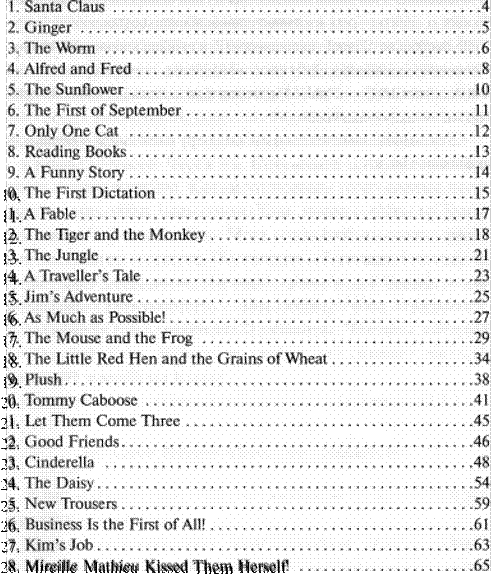
ПереаоДы
 1, Дел Мороз,
2. Рыжик .
З. Червяк „
4. Альфред и Фред
5. Подсолнух
6. Первое сентября
7. Только один кот
8. Чтение книг , „ . ,
9, Забавная история 10. Первый диктант l l. Басня
12. Тигр и Обезьяна
13. Джунгли „
19. Плюшка ,
20, Томми Кэбус
23. Золушка
24, Ромашка ,
25. Новые брюки ,



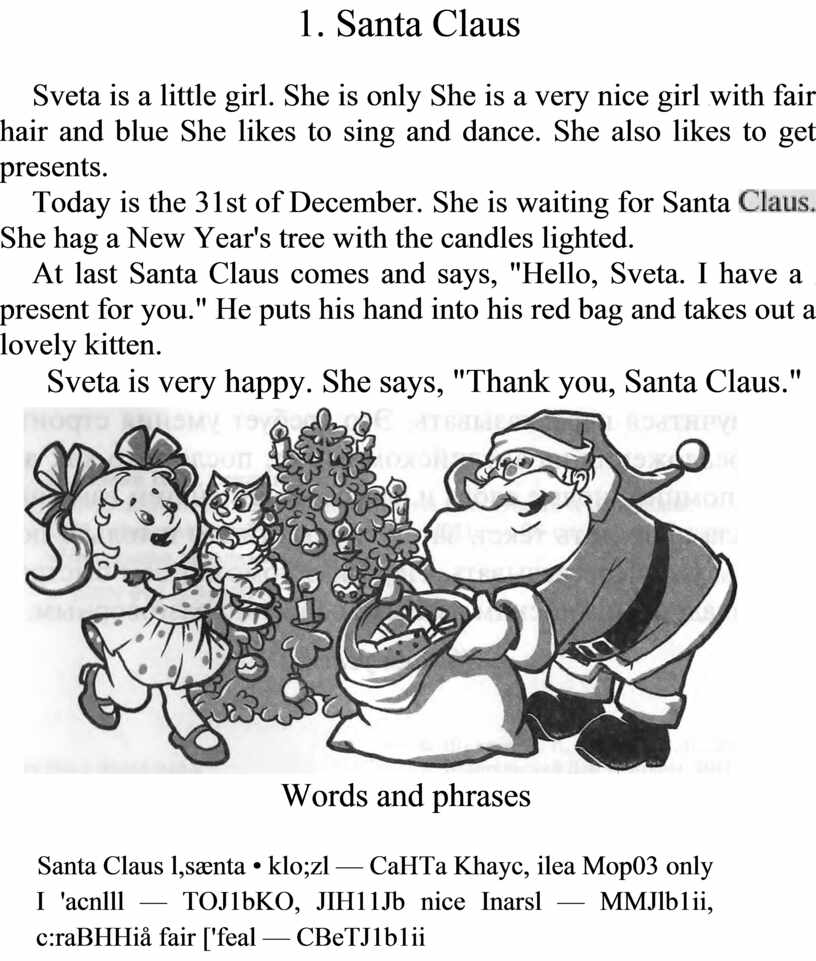
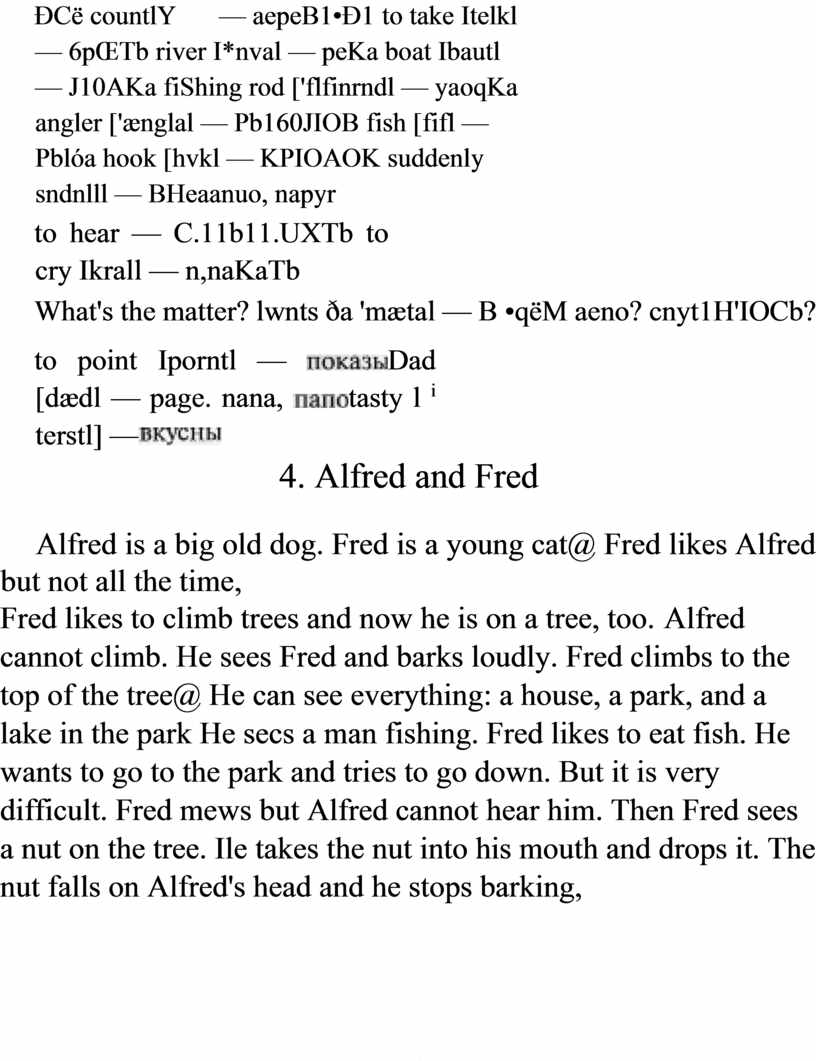
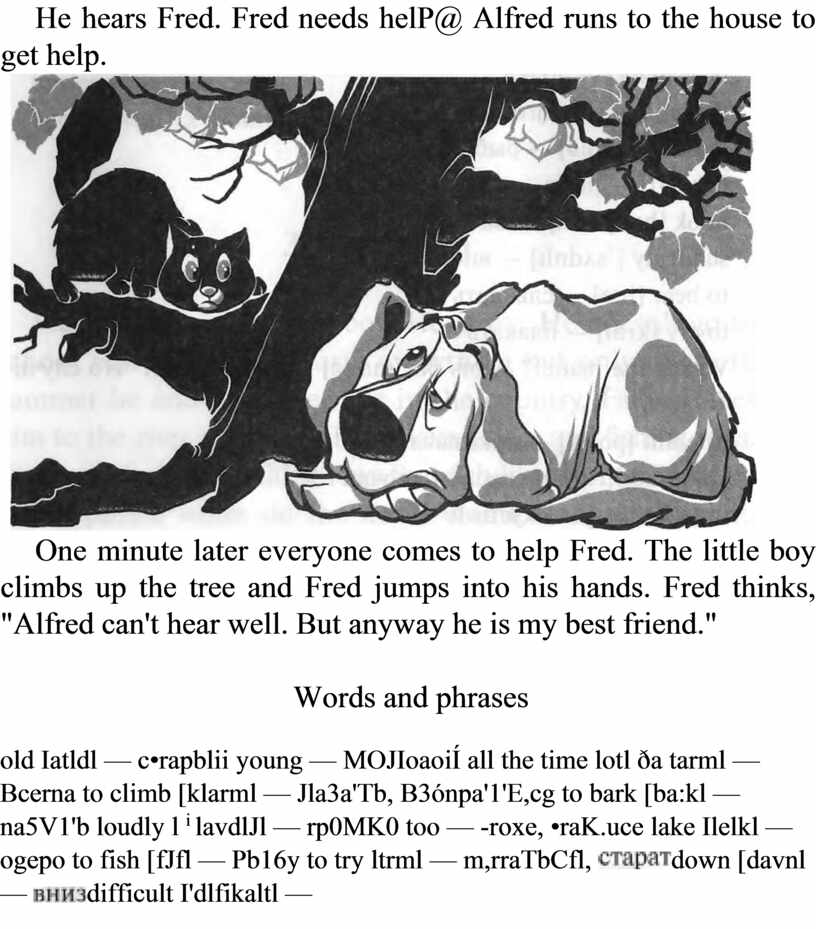
![I 'kleva] — YMHb1ii to do Idu:l — pa6ŒraTb, 3,aHHMaTbcq much —](https://fs.znanio.ru/d5af0e/e2/fc/d4572c435f64366b01283265cebfad761c.jpg)
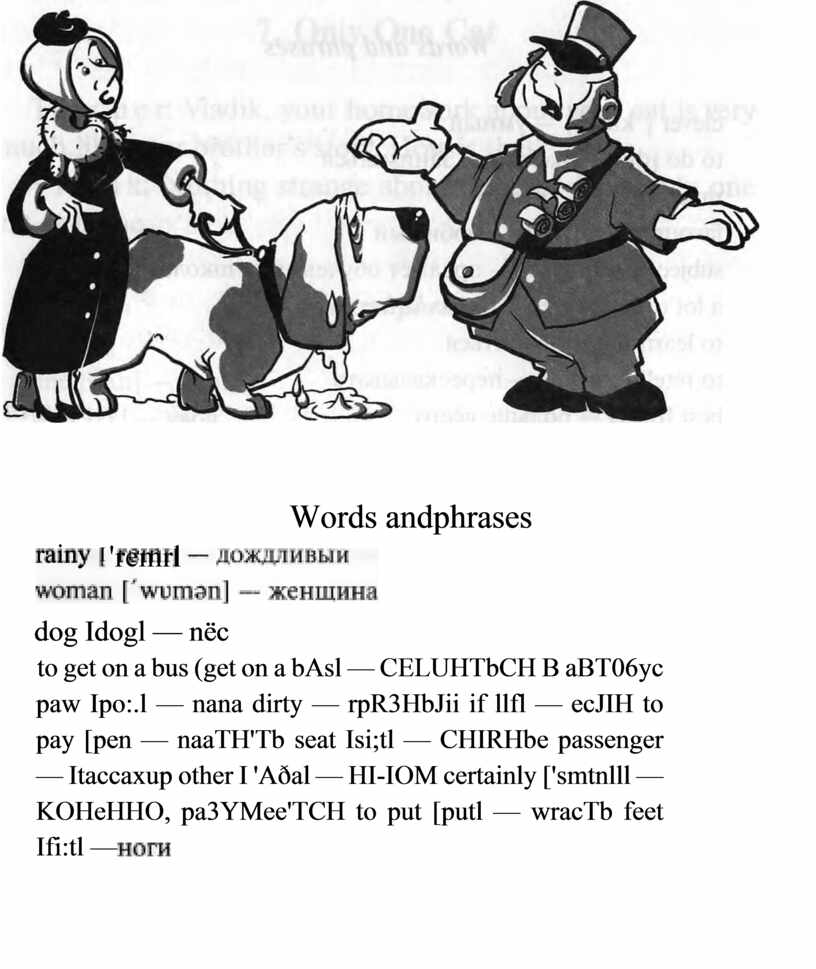
![OAHa*Ab1, KaK-TO pag alphabet l'ælfabltl — atacþaB}tT many ['mem] —](https://fs.znanio.ru/d5af0e/c1/ac/8ac03d7d6e9f9a8b7997ea45f6d6f7e601.jpg)
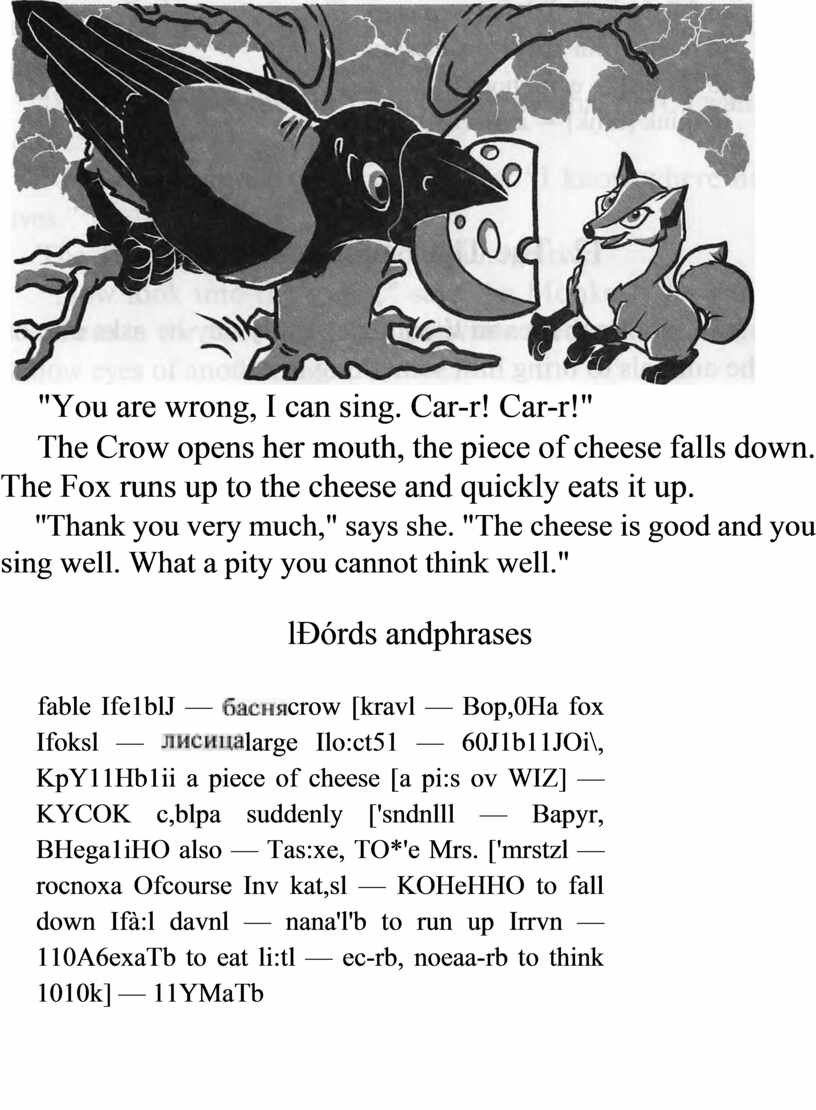
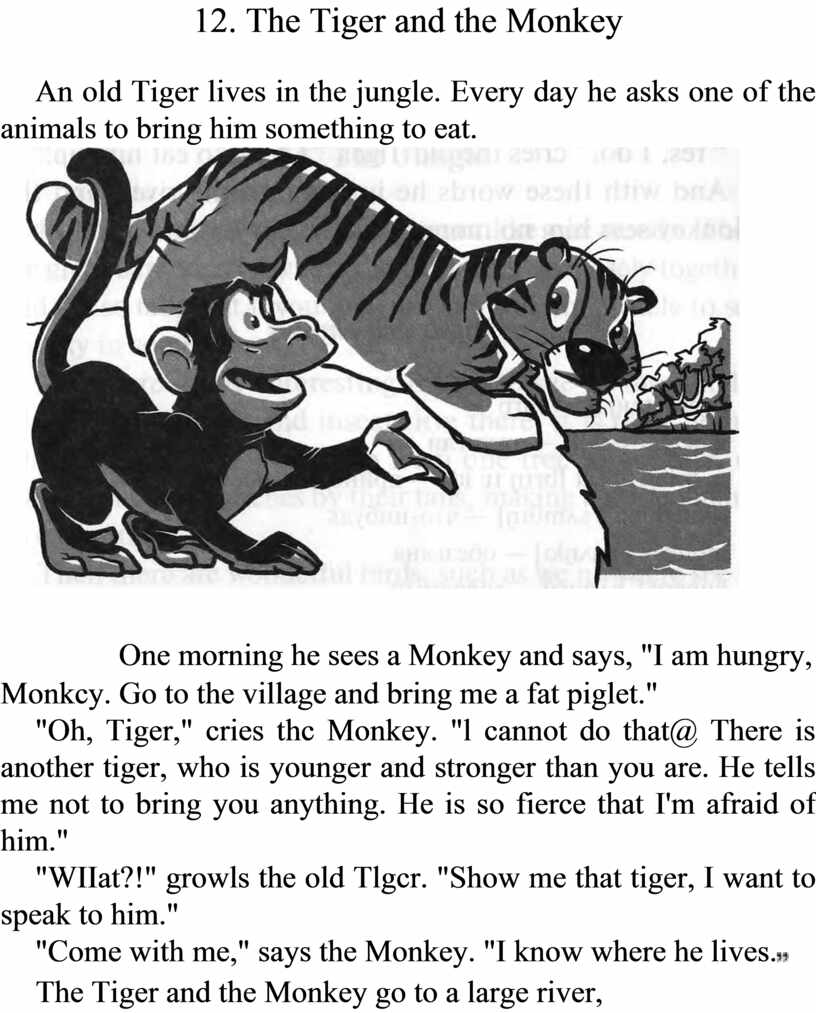

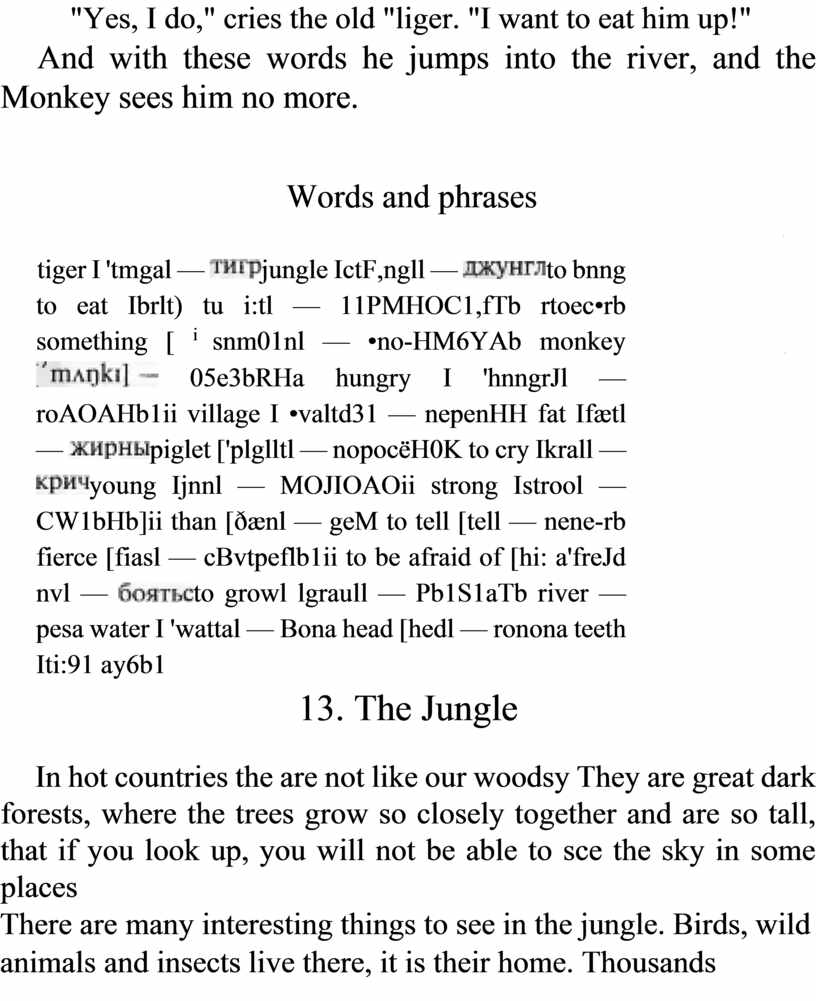
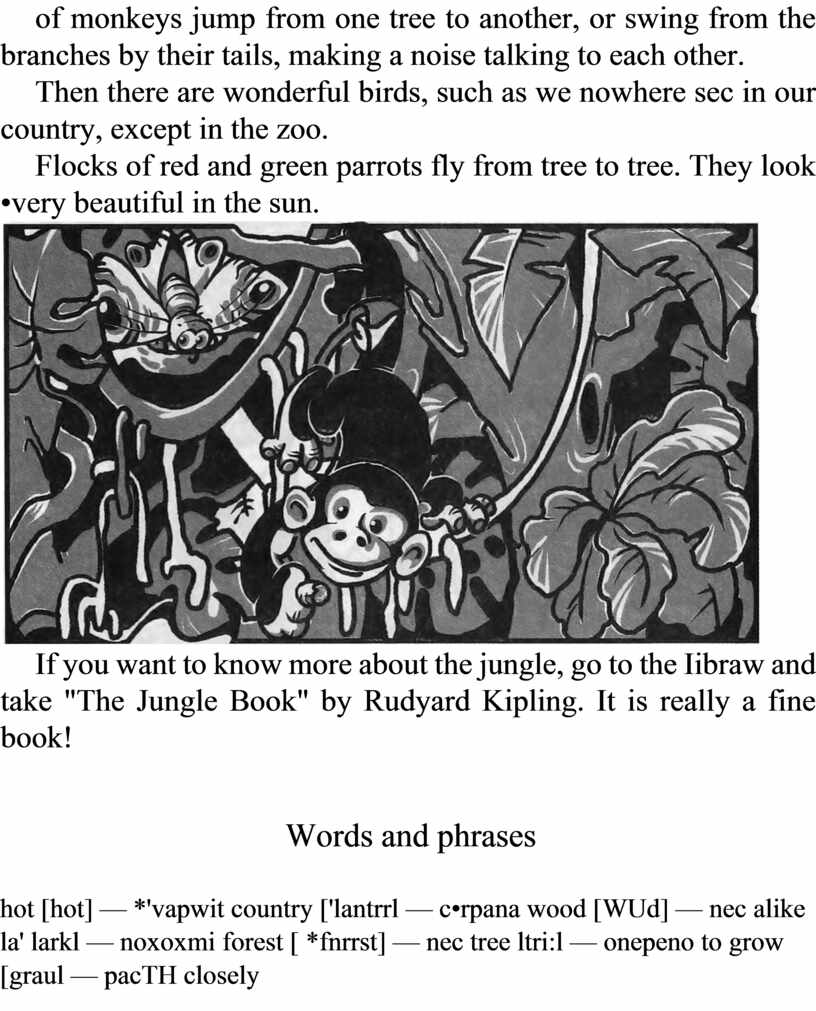
![Jl — -recero able leibll — YMe10LLIHii wild animal [walld •æmmal] — 3Bepb insect](https://fs.znanio.ru/d5af0e/29/58/f3771613f6e05c30f5f31b1aa3a4280cd7.jpg)
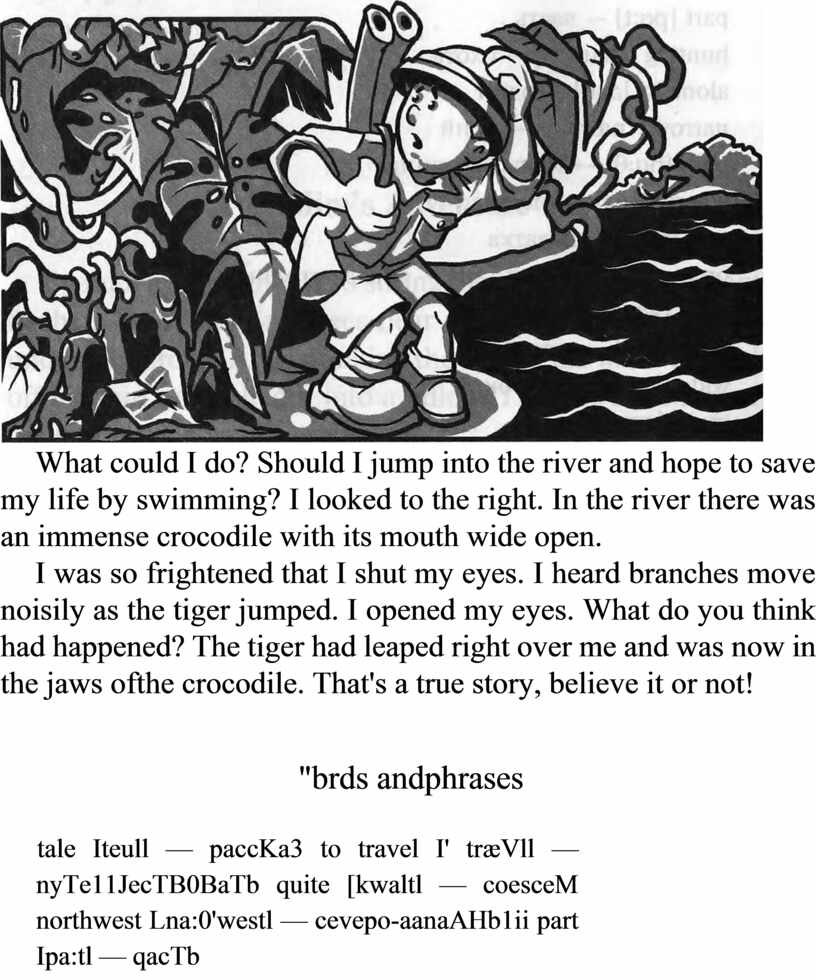
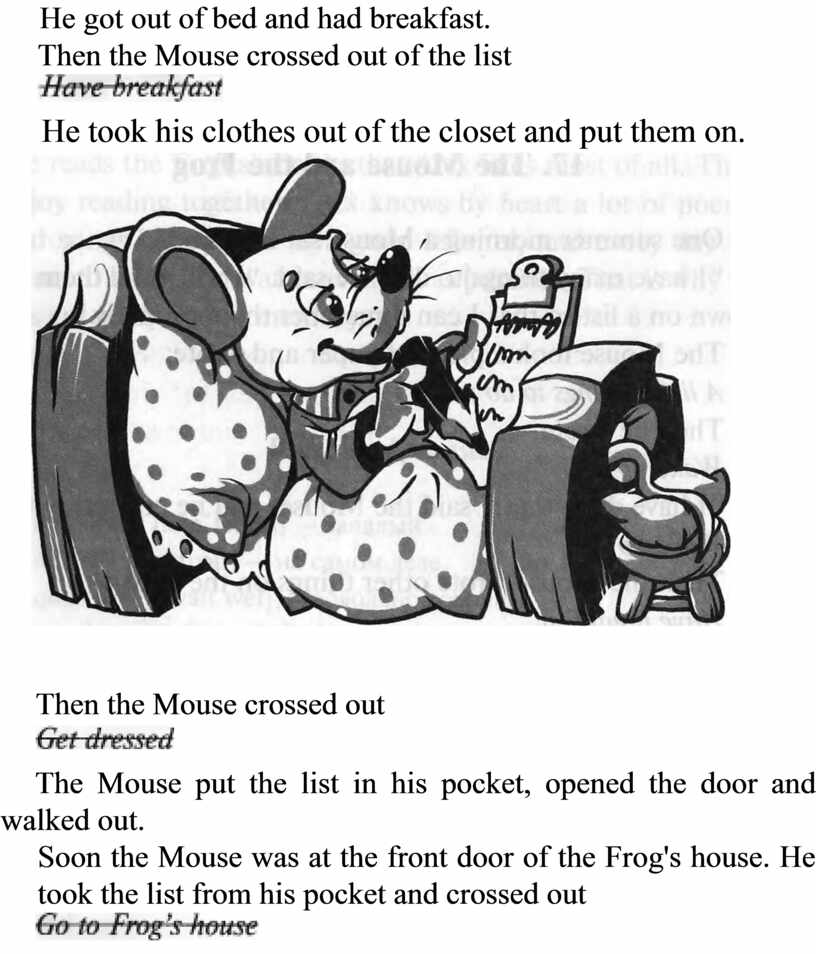
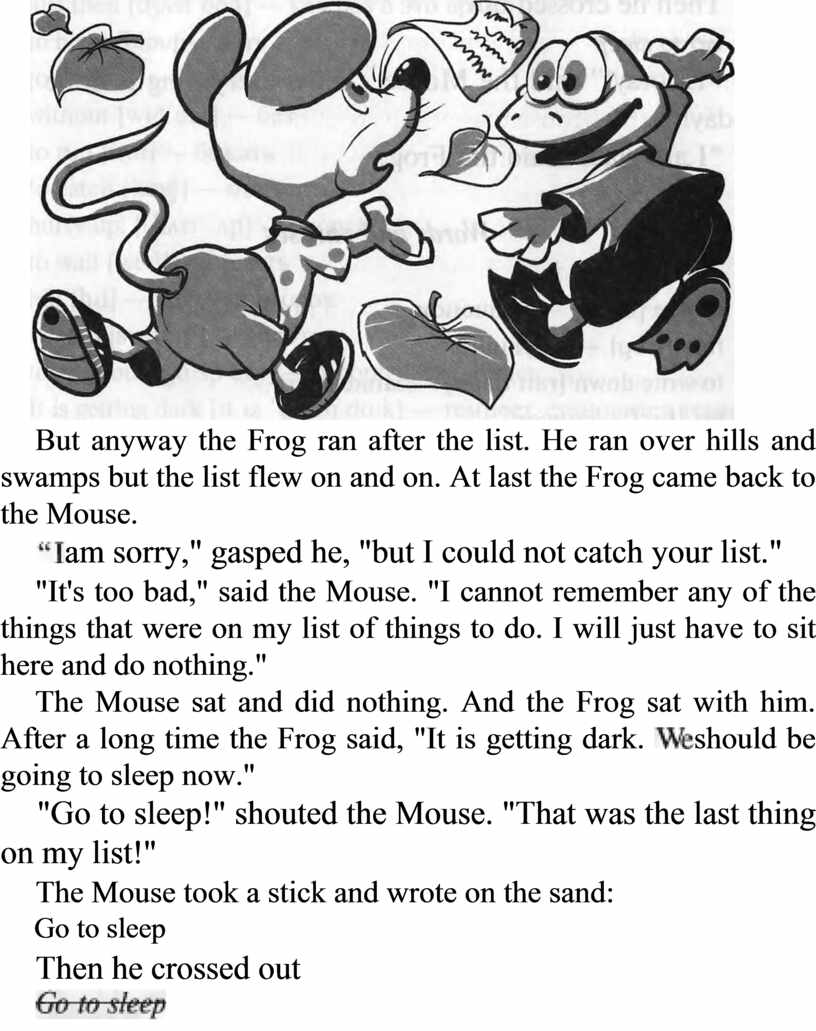
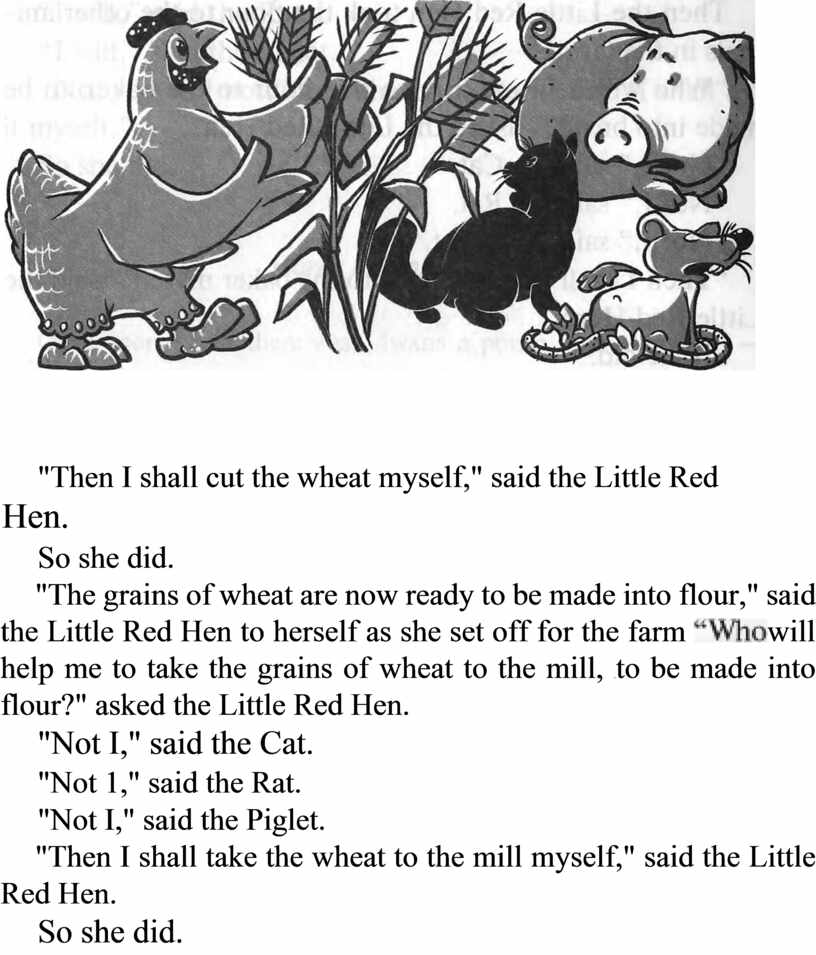
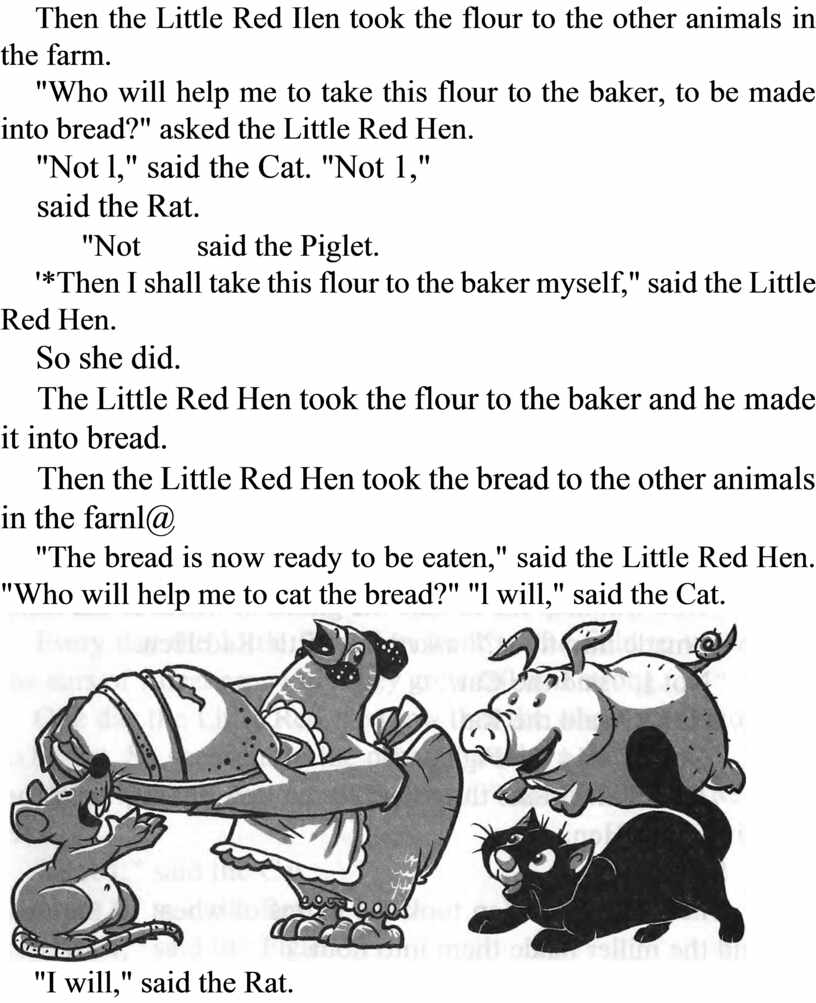
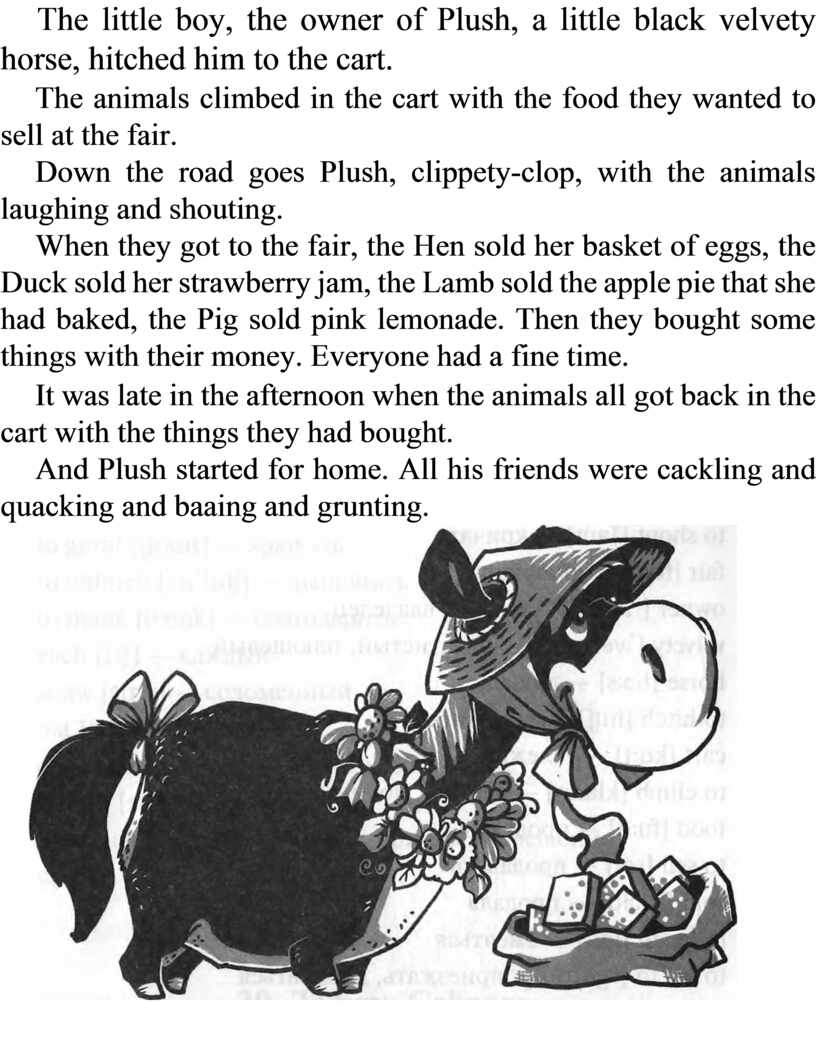
![BCHOK to decide [dl*sald] — pewaTb, npHHHMa1'b penuemoe enough 11' nr,fl — aocra•roqH0 20](https://fs.znanio.ru/d5af0e/81/4c/25239f0a225d4c8254979f961030790af5.jpg)
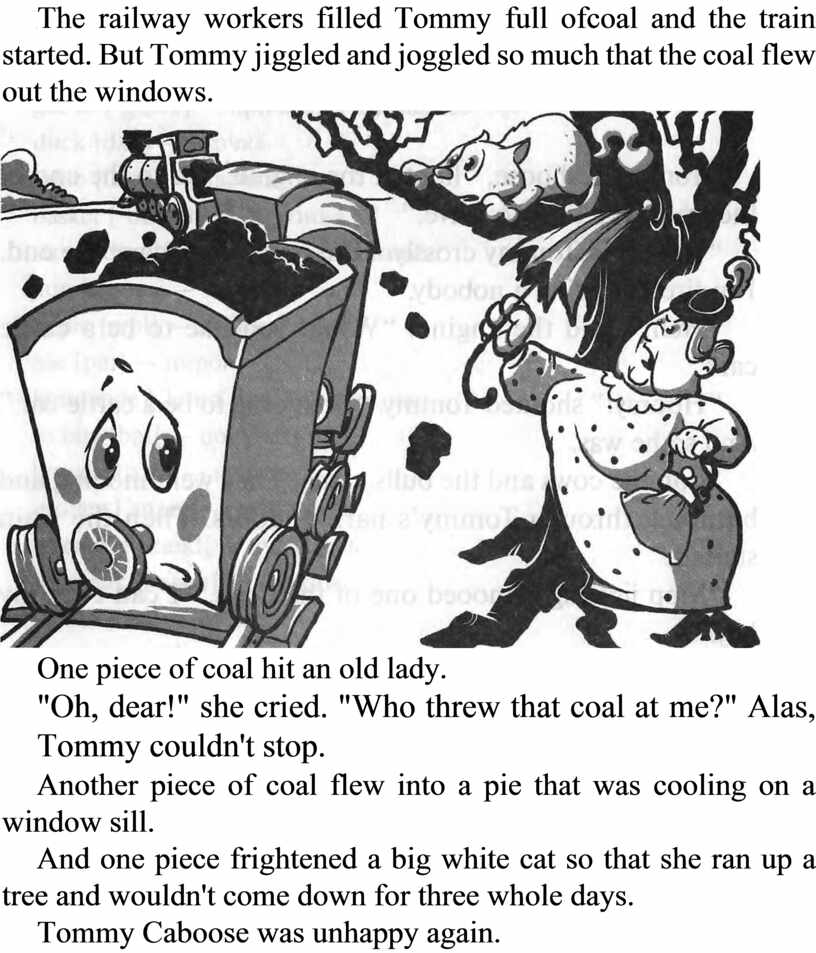
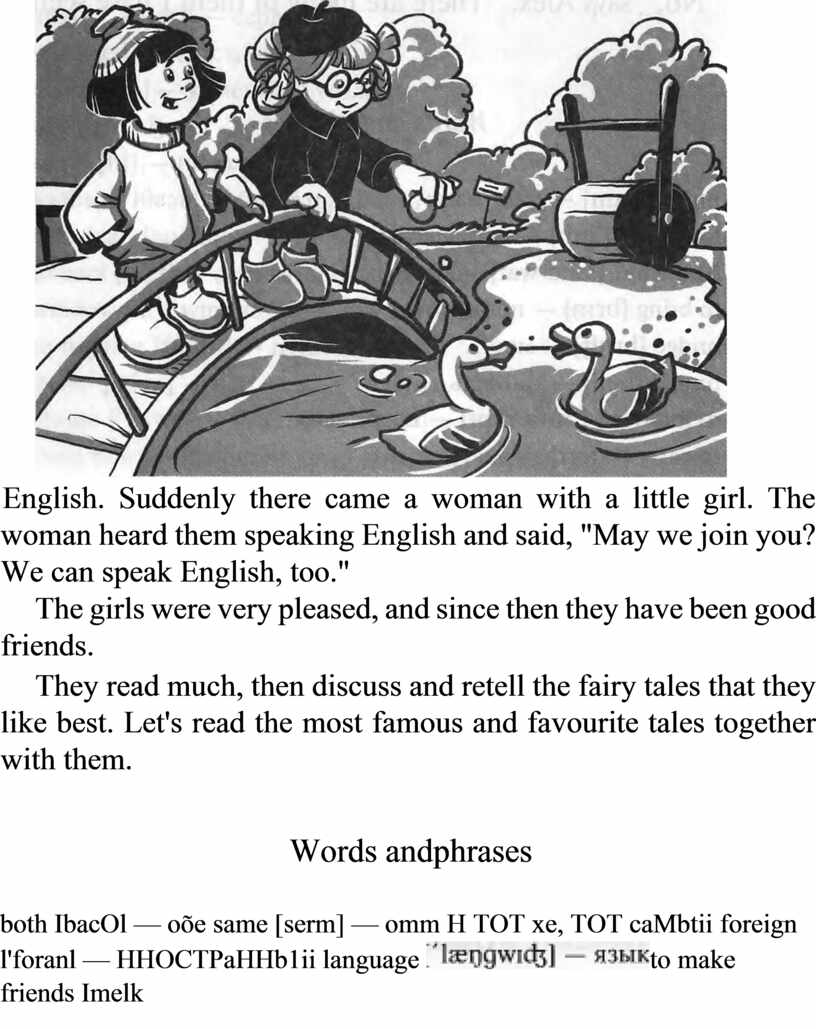
![KHTbCfl garden Iga:dnl — can pond [pond] — rapya to hear lhlal —](https://fs.znanio.ru/d5af0e/d7/f2/26beabc00e70c819ed4db1fee580004964.jpg)
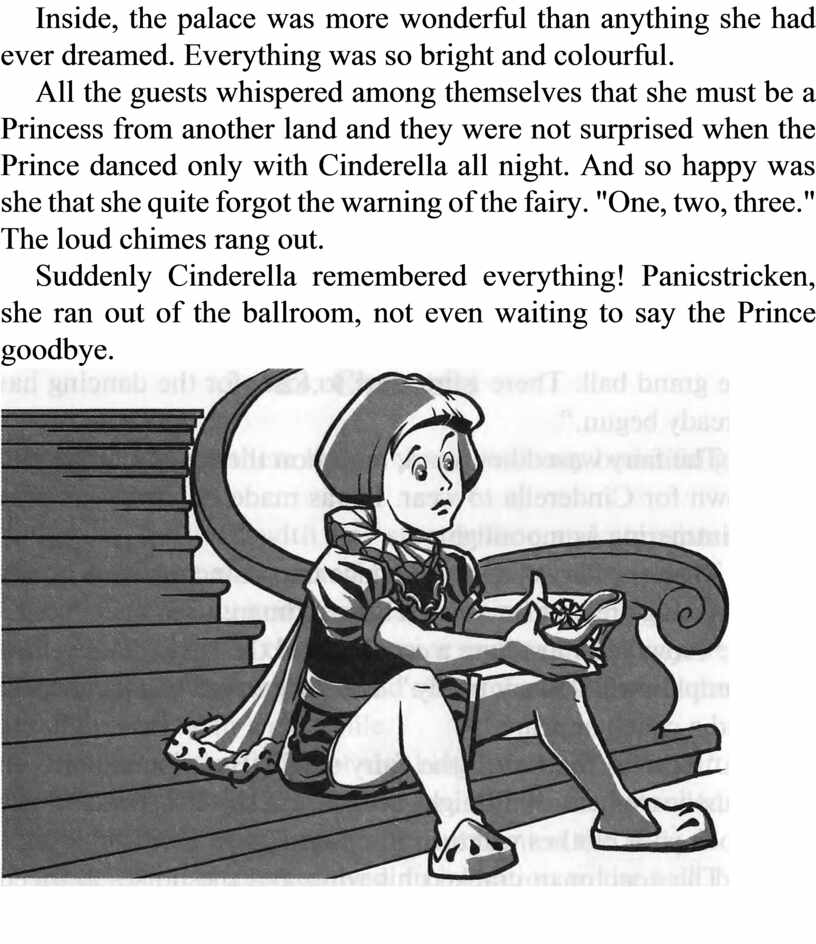
Материалы на данной страницы взяты из открытых источников либо размещены пользователем в соответствии с договором-офертой сайта. Вы можете сообщить о нарушении.


