Поделиться


 Презентация к английскому.pdf
|
|
|
Completed by students of group
 |
 |
Moscow2025 Kozyar V. V.

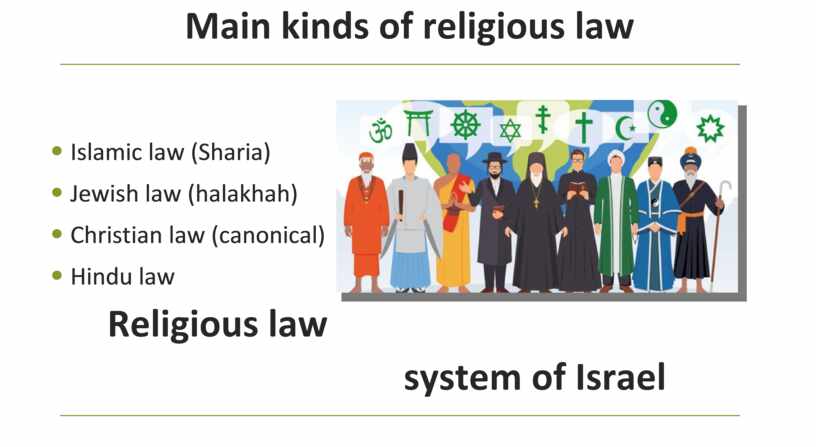
• 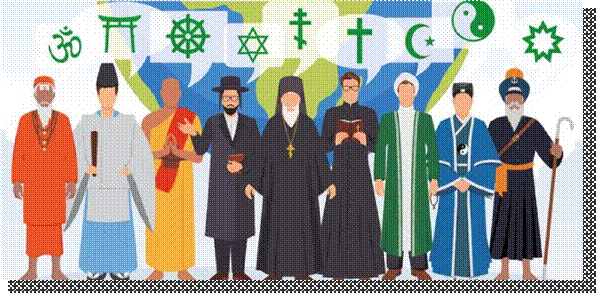 Islamic law (Sharia)
• Jewish law (halakhah)
• Christian law (canonical)
• Hindu law

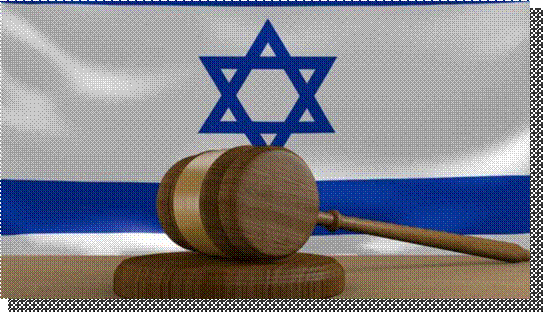 Nowadays,
when a court needs to make a decision on a matter, it first looks for a
solution among the laws of the State of Israel, then among the laws of the
British Mandate, and finally among the Jewish
Nowadays,
when a court needs to make a decision on a matter, it first looks for a
solution among the laws of the State of Israel, then among the laws of the
British Mandate, and finally among the Jewish
primary sources (Talmud, Halacha,
etc.)

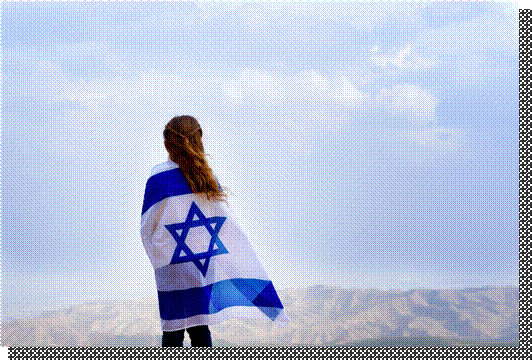 The area
in which religious law has been fully incorporated is personal status.
Religious courts have jurisdiction over civil status matters (marriage,
divorce, burial). Rabbinical courts also have jurisdiction over conversions.
There are also matters that can be heard by religious courts by mutual consent
of the parties. Religious courts, however, fall under the jurisdiction of the
High Court of Justice of Israel. The principles of Halacha have partially
influenced immigration law (Law of Return).
The area
in which religious law has been fully incorporated is personal status.
Religious courts have jurisdiction over civil status matters (marriage,
divorce, burial). Rabbinical courts also have jurisdiction over conversions.
There are also matters that can be heard by religious courts by mutual consent
of the parties. Religious courts, however, fall under the jurisdiction of the
High Court of Justice of Israel. The principles of Halacha have partially
influenced immigration law (Law of Return).
• Religion in Egypt occupies an important place in the social life of the country and is protected by the law
•  Egypt's religious
history stretches back centuries, experiencing a transformation from ancient
polytheism to Christianity and then to Islam. This religion, shaped by both
local traditions and external influences, has had a significant impact on
Egyptian society.
Egypt's religious
history stretches back centuries, experiencing a transformation from ancient
polytheism to Christianity and then to Islam. This religion, shaped by both
local traditions and external influences, has had a significant impact on
Egyptian society.

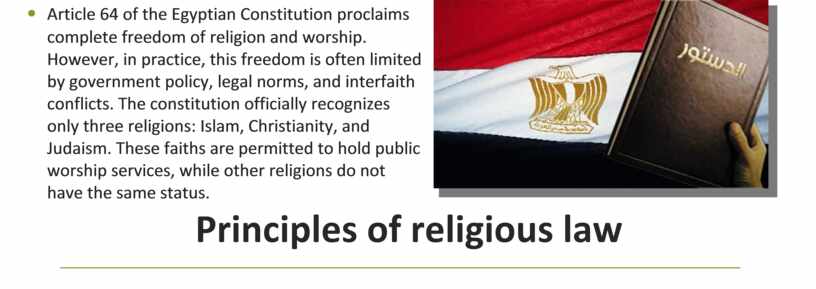
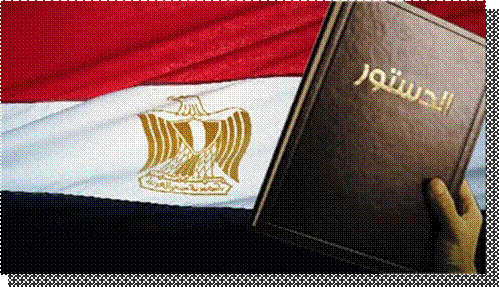 • Article 64 of the
Egyptian Constitution proclaims complete freedom of religion and worship.
However, in practice, this freedom is often limited by government policy, legal
norms, and interfaith conflicts. The constitution officially recognizes only
three religions: Islam, Christianity, and Judaism. These faiths are permitted
to hold public worship services, while other religions do not have the same
status.
• Article 64 of the
Egyptian Constitution proclaims complete freedom of religion and worship.
However, in practice, this freedom is often limited by government policy, legal
norms, and interfaith conflicts. The constitution officially recognizes only
three religions: Islam, Christianity, and Judaism. These faiths are permitted
to hold public worship services, while other religions do not have the same
status.

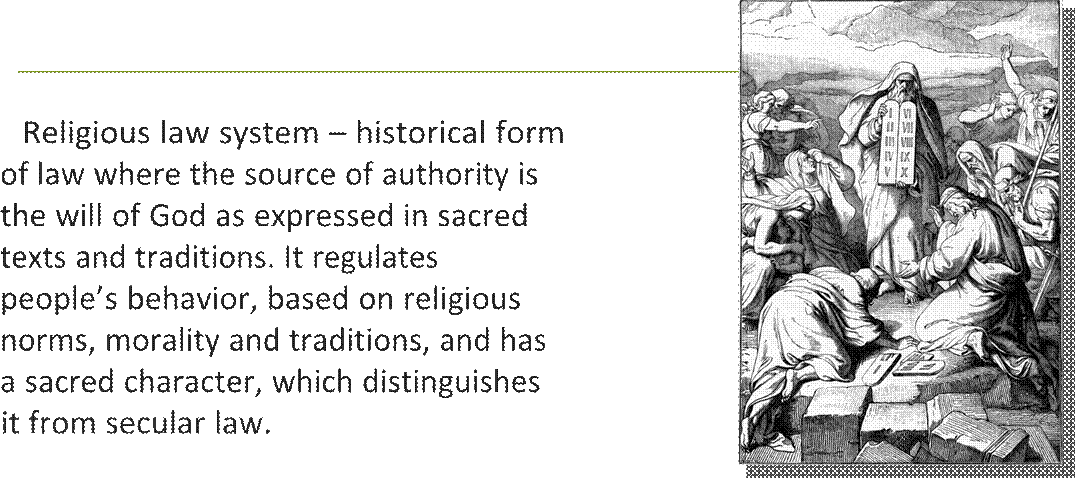
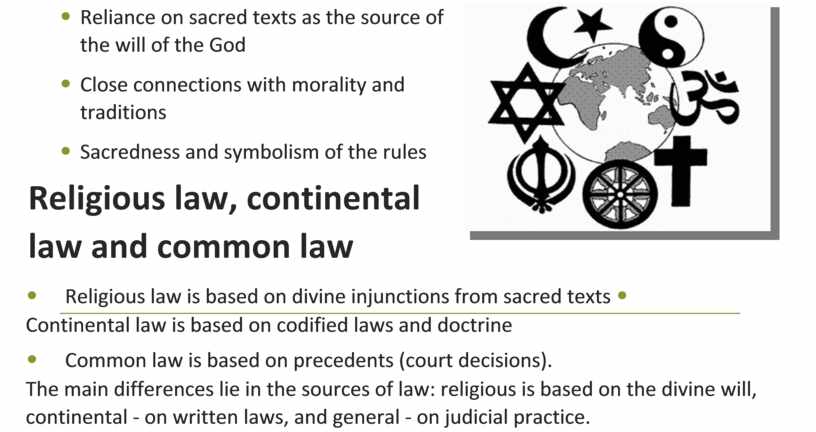
• 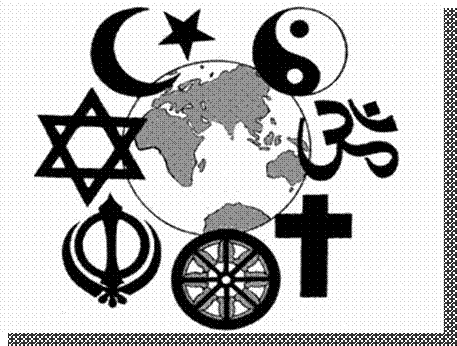 Reliance on sacred
texts as the source of the will of the God
Reliance on sacred
texts as the source of the will of the God
• Close connections with morality and traditions
• Sacredness and symbolism of the rules
•
 Religious law is based on divine
injunctions from sacred texts • Continental law is based on codified laws and doctrine
Religious law is based on divine
injunctions from sacred texts • Continental law is based on codified laws and doctrine
• Common law is based on precedents (court decisions).
The main differences lie in the sources of law: religious is based on the divine will, continental - on written laws, and general - on judicial practice.

Thank you for your attention!


Материалы на данной страницы взяты из открытых источников либо размещены пользователем в соответствии с договором-офертой сайта. Вы можете сообщить о нарушении.