
Поделиться


 Методическая разработка Работа тур оператора.docx
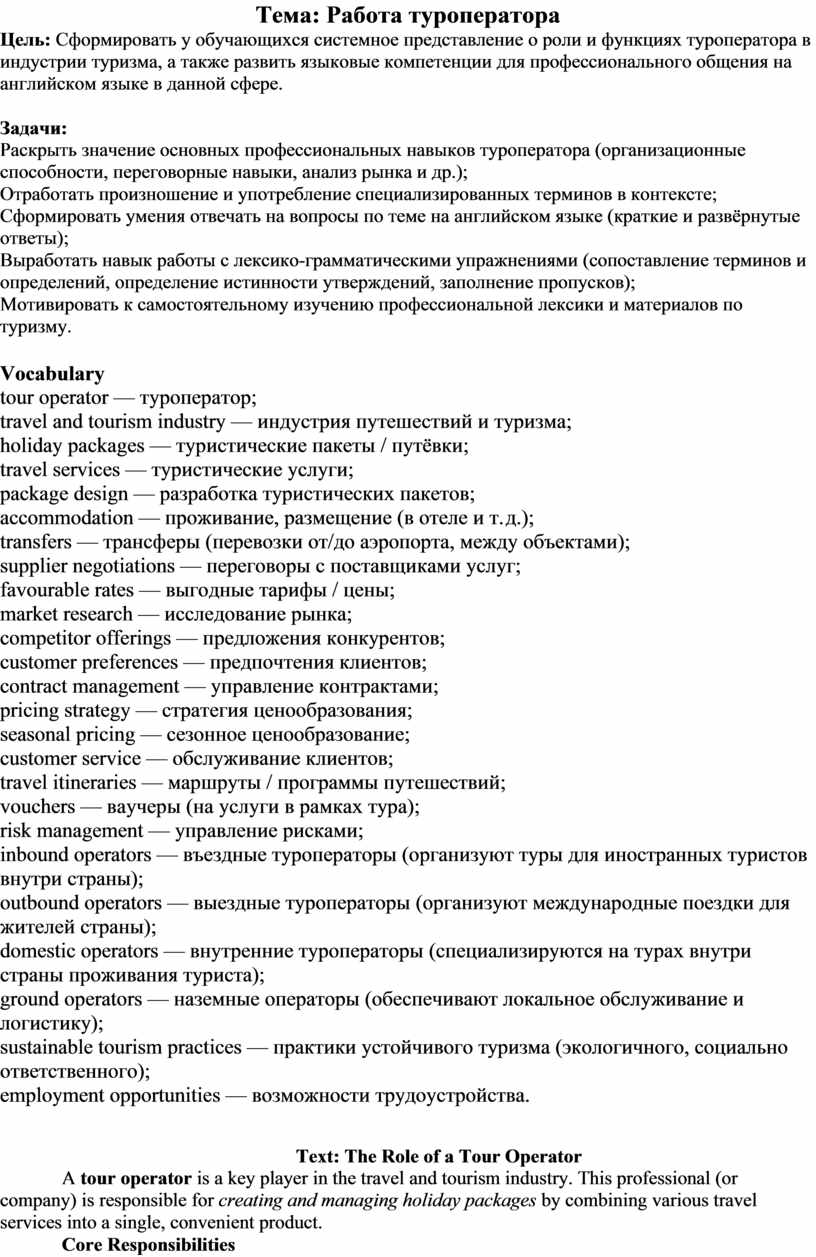
Тема: Работа туроператора
Цель: Сформировать у обучающихся системное представление о роли и функциях туроператора в индустрии туризма, а также развить языковые компетенции для профессионального общения на английском языке в данной сфере.
Задачи:
1. Раскрыть значение основных профессиональных навыков туроператора (организационные способности, переговорные навыки, анализ рынка и др.);
2. Отработать произношение и употребление специализированных терминов в контексте;
3. Сформировать умения отвечать на вопросы по теме на английском языке (краткие и развёрнутые ответы);
4. Выработать навык работы с лексико‑грамматическими упражнениями (сопоставление терминов и определений, определение истинности утверждений, заполнение пропусков);
5. Мотивировать к самостоятельному изучению профессиональной лексики и материалов по туризму.
Vocabulary
1. tour operator — туроператор;
2. travel and tourism industry — индустрия путешествий и туризма;
3. holiday packages — туристические пакеты / путёвки;
4. travel services — туристические услуги;
5. package design — разработка туристических пакетов;
6. accommodation — проживание, размещение (в отеле и т. д.);
7. transfers — трансферы (перевозки от/до аэропорта, между объектами);
8. supplier negotiations — переговоры с поставщиками услуг;
9. favourable rates — выгодные тарифы / цены;
10. market research — исследование рынка;
11. competitor offerings — предложения конкурентов;
12. customer preferences — предпочтения клиентов;
13. contract management — управление контрактами;
14. pricing strategy — стратегия ценообразования;
15. seasonal pricing — сезонное ценообразование;
16. customer service — обслуживание клиентов;
17. travel itineraries — маршруты / программы путешествий;
18. vouchers — ваучеры (на услуги в рамках тура);
19. risk management — управление рисками;
20. inbound operators — въездные туроператоры (организуют туры для иностранных туристов внутри страны);
21. outbound operators — выездные туроператоры (организуют международные поездки для жителей страны);
22. domestic operators — внутренние туроператоры (специализируются на турах внутри страны проживания туриста);
23. ground operators — наземные операторы (обеспечивают локальное обслуживание и логистику);
24. sustainable tourism practices — практики устойчивого туризма (экологичного, социально ответственного);
25. employment opportunities — возможности трудоустройства.
Text: The Role of a Tour Operator
A tour operator is a key player in the travel and tourism industry. This professional (or company) is responsible for creating and managing holiday packages by combining various travel services into a single, convenient product.
Core Responsibilities
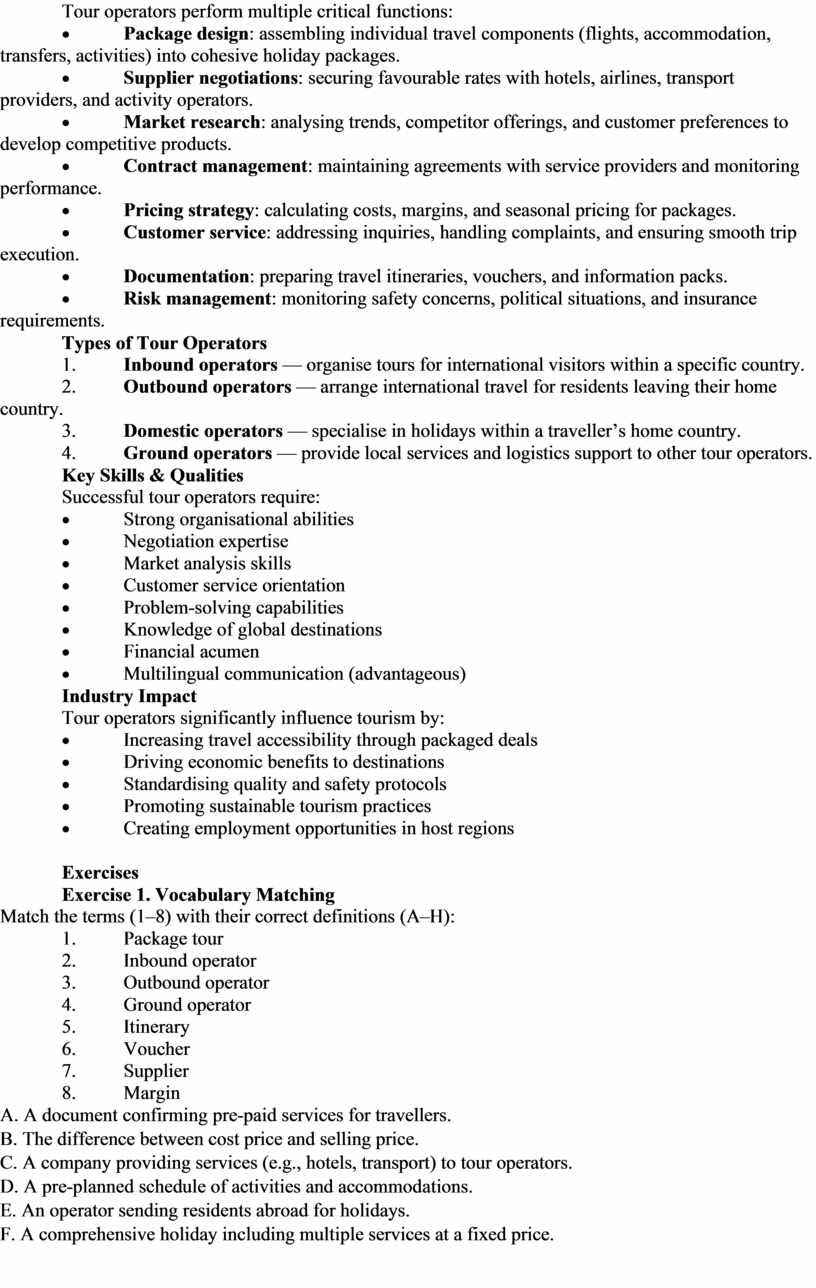
Tour operators perform multiple critical functions:
· Package design: assembling individual travel components (flights, accommodation, transfers, activities) into cohesive holiday packages.
· Supplier negotiations: securing favourable rates with hotels, airlines, transport providers, and activity operators.
· Market research: analysing trends, competitor offerings, and customer preferences to develop competitive products.
· Contract management: maintaining agreements with service providers and monitoring performance.
· Pricing strategy: calculating costs, margins, and seasonal pricing for packages.
· Customer service: addressing inquiries, handling complaints, and ensuring smooth trip execution.
· Documentation: preparing travel itineraries, vouchers, and information packs.
· Risk management: monitoring safety concerns, political situations, and insurance requirements.
Types of Tour Operators
1. Inbound operators — organise tours for international visitors within a specific country.
2. Outbound operators — arrange international travel for residents leaving their home country.
3. Domestic operators — specialise in holidays within a traveller’s home country.
4. Ground operators — provide local services and logistics support to other tour operators.
Key Skills & Qualities
Successful tour operators require:
· Strong organisational abilities
· Negotiation expertise
· Market analysis skills
· Customer service orientation
· Problem‑solving capabilities
· Knowledge of global destinations
· Financial acumen
· Multilingual communication (advantageous)
Industry Impact
Tour operators significantly influence tourism by:
· Increasing travel accessibility through packaged deals
· Driving economic benefits to destinations
· Standardising quality and safety protocols
· Promoting sustainable tourism practices
· Creating employment opportunities in host regions
Exercises
Exercise
1. Vocabulary Matching
Match the terms (1–8) with their correct definitions (A–H):
1. Package tour
2. Inbound operator
3. Outbound operator
4. Ground operator
5. Itinerary
6. Voucher
7. Supplier
8. Margin
A. A document
confirming pre‑paid services for travellers.
B. The difference between cost price and selling price.
C. A company providing services (e.g., hotels, transport) to tour operators.
D. A pre‑planned schedule of activities and accommodations.
E. An operator sending residents abroad for holidays.
F. A comprehensive holiday including multiple services at a fixed price.
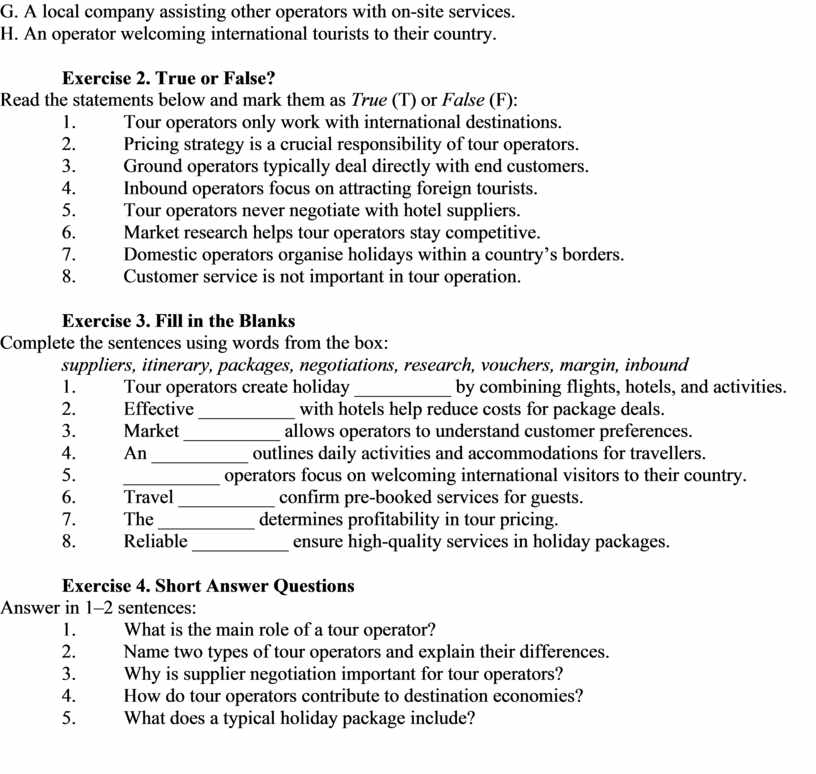
G. A local company assisting other operators with on‑site services.
H. An operator welcoming international tourists to their country.
Exercise
2. True or False?
Read the statements below and mark them as True (T) or False (F):
1. Tour operators only work with international destinations.
2. Pricing strategy is a crucial responsibility of tour operators.
3. Ground operators typically deal directly with end customers.
4. Inbound operators focus on attracting foreign tourists.
5. Tour operators never negotiate with hotel suppliers.
6. Market research helps tour operators stay competitive.
7. Domestic operators organise holidays within a country’s borders.
8. Customer service is not important in tour operation.
Exercise
3. Fill in the Blanks
Complete the sentences using words from the box:
suppliers, itinerary, packages, negotiations, research, vouchers, margin, inbound
1. Tour operators create holiday __________ by combining flights, hotels, and activities.
2. Effective __________ with hotels help reduce costs for package deals.
3. Market __________ allows operators to understand customer preferences.
4. An __________ outlines daily activities and accommodations for travellers.
5. __________ operators focus on welcoming international visitors to their country.
6. Travel __________ confirm pre‑booked services for guests.
7. The __________ determines profitability in tour pricing.
8. Reliable __________ ensure high‑quality services in holiday packages.
Exercise
4. Short Answer Questions
Answer in 1–2 sentences:
1. What is the main role of a tour operator?
2. Name two types of tour operators and explain their differences.
3. Why is supplier negotiation important for tour operators?
4. How do tour operators contribute to destination economies?
5. What does a typical holiday package include?
Материалы на данной страницы взяты из открытых источников либо размещены пользователем в соответствии с договором-офертой сайта. Вы можете сообщить о нарушении.


