Поделиться


 ЛБ_3 курс.docx

Chemists play a crucial role in modern society. They are scientists who study the composition, properties, and reactions of substances. Today, chemists work in various fields, including pharmaceuticals, environmental science, materials science, and food technology. Their work is essential for developing new medicines, creating sustainable materials, and improving food safety.
Importance of Chemists Today
- Healthcare: Chemists develop new drugs and vaccines to treat diseases and improve public health.
- Environmental Protection: They create solutions to reduce pollution and help in the development of green technologies.
- Food Safety: Chemists test food products to ensure they are safe for consumption and free from harmful substances.
The profession of a chemist is continually evolving, with new challenges and opportunities arising in various sectors. Their work is vital for advancing technology and improving the quality of life for people around the world.
1. Chemistry - the branch of science that studies substances and their interactions.
2. Pharmaceuticals - medicines and drugs developed through chemical processes.
3. Sustainability - the ability to be maintained at a certain rate or level, often focusing on environmental protection.
4. Reactions - processes in which substances interact to form new substances.
5. Materials Science - an interdisciplinary field focusing on the properties of materials and their applications.
1. What are some current challenges that chemists face in their work?
2. How do chemists contribute to sustainable development?
3. What roles do chemists play in the pharmaceutical industry?
4. In what ways can chemistry impact our daily lives?
5. What skills and education are necessary to become a successful chemist?
A laboratory chemist plays a crucial role in various industries, including pharmaceuticals, food safety, environmental science, and materials development. Their primary responsibility is to conduct experiments, analyze substances, and ensure quality control in the production of chemical products. Key Responsibilities:
1. Conducting Experiments:
- Designing and executing experiments to test hypotheses or to develop new products.
- Using various laboratory techniques and equipment, such as chromatography, titration, and spectroscopy.
2. Analyzing Chemical Substances:
- Identifying the composition and concentration of substances using analytical techniques.
- Interpreting data and making decisions based on the outcomes of analyses.
3. Maintaining Laboratory Equipment:
- Ensuring that all laboratory instruments are calibrated and functioning properly.
- Performing routine maintenance and troubleshooting equipment issues.
4. Ensuring Safety and Compliance:
- Adhering to safety protocols and regulations to ensure a safe working environment.
- Keeping up-to-date with environmental and safety standards relevant to chemical testing and handling.
5. Documenting Results and Reporting:
- Keeping detailed records of experiments, observations, and results.
- Writing reports and presenting findings to colleagues or stakeholders.
The role of a laboratory chemist involves a variety of professional actions that require a mix of technical skills, analytical thinking, and adherence to safety standards. Understanding these actions is essential for anyone interested in pursuing a career in chemistry or related fields.
- How does documentation contribute to the reliability of laboratory results?
- What challenges do chemists face when communicating their findings?
- What methods are commonly used for analyzing chemical substances?
- How important is data interpretation in the role of a laboratory chemist?
- What are the common challenges faced in maintaining laboratory equipment?
- How often should calibration be performed on laboratory instruments?
- What safety measures should laboratory chemists take while working?
- Why is compliance with regulations crucial in a laboratory setting?
- What types of experiments do laboratory chemists typically conduct?
- How do chemists ensure the accuracy of their experimental results?
- What skills are most valuable for a laboratory chemist to possess?
- How can laboratory chemists contribute to advancements in their field?
Laboratory glassware is essential for scientists and researchers to conduct experiments and analyze samples. It is designed to hold, mix, and heat various substances safely. In this topic, we will discuss common types of lab glassware, their uses, and related vocabulary.
Common Types of Laboratory Glassware:
1. Beaker
- Description: A cylindrical container with a spout, used for mixing and heating liquids.
- Use: Ideal for stirring and pouring liquids.
2. Erlenmeyer Flask
- Description: A conical flask with a flat bottom and narrow neck.
- Use: Used for mixing and heating liquids, minimizes evaporation.
3. Test Tube
- Description: A thin, cylindrical tube that is open at one end.
- Use: Used for holding small amounts of liquids or solids for experiments.
4. Pipette
- Description: A slender tube used to transport a specific volume of liquid.
- Use: Essential for precise measurement of liquids.
5. Graduated Cylinder
- Description: A tall, narrow container with marked measurements.
- Use: Used for accurately measuring the volume of liquids.
6. Burette
- Description: A long, graduated glass tube with a stopcock at the bottom.
- Use: Used for delivering precise volumes of liquid, often in titrations.
7. Watch Glass
- Description: A circular, curved piece of glass.
- Use: Used to cover beakers or as a shallow dish to evaporate liquids.
8. Desiccator
- Description: A glass container with an airtight seal and desiccant.
- Use: Used to keep substances dry and free from moisture.
Laboratory glassware is a fundamental part of scientific experimentation, providing the necessary tools for measurement, mixing, and heating. Understanding the different types of glassware and their specific uses is crucial for conducting successful experiments in the lab.
- Heating: The process of raising the temperature of a substance.
- Mixing: Combining two or more substances.
- Measurement: The process of determining the size, amount, or degree of something.
- Evaporation: The process of a liquid turning into vapor.
- Precision: The quality of being exact and accurate.
1. What type of glassware would you use to accurately measure 50 mL of a liquid?
2. Why is it important to use a conical flask when heating liquids?
3. Describe a situation where you would use a pipette instead of a beaker.
4. How can you ensure safety when working with laboratory glassware?
5. What are the advantages of using a graduated cylinder over a beaker for measuring liquids?
6. Have you ever broken laboratory glassware? What happened?
In any laboratory setting, safety is of paramount importance. Following proper safety protocols not only protects you but also your colleagues and the environment. Here are some essential laboratory safety rules that everyone should follow.
1. Wear Appropriate Personal Protective Equipment (PPE)
- Always wear safety goggles to protect your eyes from chemical splashes.
- Use gloves to protect your hands from harmful substances.
- Lab coats should be worn to protect your clothing and skin.
2. Know Emergency Procedures
- Familiarize yourself with the location of safety equipment, such as eyewash stations, safety showers, and fire extinguishers.
- Know the emergency exits and evacuation routes.
- Understand how to respond in case of spills, accidents, or fires.
3. Keep the Laboratory Clean and Organized
- Maintain a clutter-free workspace to prevent accidents.
- Clean up spills immediately and properly dispose of waste.
- Label all chemicals and equipment clearly.
4. Use Equipment Properly
- Always read the manual before using any new equipment.
- Do not use faulty or damaged equipment; report any issues immediately.
- Never leave equipment running unattended.
5. Handle Chemicals with Care
- Read labels and Safety Data Sheets (SDS) before using any chemicals.
- Always add acid to water, not the other way around.
- Never taste or directly smell chemicals unless instructed to do so.
6. Avoid Eating or Drinking in the Lab
- Consuming food or drinks can lead to contamination.
- Store all personal items outside the lab to avoid accidents.
7. Report Any Accidents or Incidents
- Immediately report spills, accidents, or any unsafe conditions to your supervisor.
- Know who to contact in case of an emergency.
Following these laboratory safety rules is key to creating a safe working environment. Always prioritize safety, be aware of your surroundings, and never hesitate to ask questions if you are unsure about something. By adhering to these guidelines, you contribute to a safer lab for everyone.
1. What type of personal protective equipment do you need to wear in the lab?
2. Where can you find the nearest emergency exit?
3. Why is it important to keep the laboratory clean and organized?
4. What should you do if you accidentally spill a chemical?
5. How do you safely handle a piece of equipment you’ve never used before?
6. What is the proper way to dispose of hazardous waste in the lab?
Vocabulary
1. Emergency - A serious, unexpected situation requiring immediate action.
2. Safety Equipment - Devices designed to protect individuals from hazards (e.g., goggles, gloves, fire extinguishers).
3. Evacuation Plan - A plan outlining how to exit a building safely in case of an emergency.
4. First Aid - Immediate assistance given to a person suffering from an injury or illness.
5. Incident Report - A formal document that outlines the details of an incident that occurred in the laboratory.
6. Chemical Spill - An accidental release of hazardous substances, which needs immediate attention.
7. Fire Drill - A practice activity that prepares personnel for a potential fire emergency.
8. Personal Protective Equipment (PPE) - Clothing and equipment worn to minimize exposure to hazards.
Laboratories are environments where various chemicals, biological agents, and equipment are used.
Due to the nature of this work, emergencies can arise. It is crucial for everyone in the laboratory to understand the appropriate behaviors and measures to take during such situations to ensure safety.
Behavior During Emergencies
1. Stay Calm
- Keeping a level head can help you think clearly and follow safety protocols effectively.
2. Assess the Situation
- Identify the type of emergency. Is it a chemical spill, fire, or medical situation?
3. Alert Others
- Notify coworkers of the emergency and call for help if necessary.
4. Follow the Evacuation Plan
- Know the nearest exit and the established evacuation route. Move quickly and safely.
5. Use Safety Equipment
- If safe to do so, use necessary safety equipment, such as fire extinguishers or spill kits.
6. Administer First Aid
- If someone is injured and it is safe to provide aid, prioritize first aid measures.
7. Document the Incident
- After the emergency, fill out an incident report to provide details for future reference and analysis.
Being prepared and knowing how to behave during emergencies in the laboratory can save lives and prevent further incidents. Regular training and awareness about safety procedures create a safer working environment for everyone involved.
1. What are some common types of emergencies that can occur in a laboratory?
2. Why is it important to remain calm during an emergency?
3. What are the key components of an effective evacuation plan?
4. How can you prepare for a chemical spill before it happens?
5. What types of personal protective equipment (PPE) should be available in a lab?
6. How often should fire drills be conducted in a laboratory setting?
7. What steps should be taken if someone is injured during a laboratory emergency?
8. Why is it important to report incidents, even if they seem minor?
Vocabulary
1. Element - A substance that cannot be broken down into simpler substances by chemical means.
2. Periodic Table - A tabular arrangement of chemical elements, organized by increasing atomic number.
3. Atomic Number - The number of protons in the nucleus of an atom, which determines the element's identity.
4. Symbol - A one or two-letter abbreviation for a chemical element (e.g., H for Hydrogen, O for Oxygen).
5. Group - A vertical column in the periodic table that contains elements with similar chemical properties.
6. Period - A horizontal row in the periodic table; elements in the same period have the same number of electron shells.
7. Metal - Elements that are typically shiny, good conductors of heat and electricity, and malleable.
8. Nonmetal - Elements that are generally poor conductors of heat and electricity and have varied physical properties.
9. Metalloid - Elements with properties intermediate between metals and nonmetals.
10. Alkali Metals - Group 1 elements (except for Hydrogen) that are highly reactive and have one electron in their outer shell.
11. Noble Gases - Group 18 elements that are colorless, odorless, and extremely unreactive due to their full valence shell.
1. What is the significance of the atomic number in the periodic table?
2. How are elements arranged in the periodic table?
3. What are the main differences between metals, nonmetals, and metalloids?
4. Can you name the first three elements in the periodic table and their symbols?
5. What group do the noble gases belong to, and why are they unique?
6. Why are alkali metals highly reactive?
7. How do periods in the periodic table differ from groups?
8. What is the role of the periodic table in chemistry?
9. Can you explain what a chemical symbol represents?
10. What property differentiates metalloids from metals and nonmetals?
The Periodic Table of Elements is one of the most significant achievements in the field of chemistry. It organizes all known chemical elements in a way that highlights their relationships and properties. The table was first created by Russian chemist Dmitri Mendeleev in the 19th century.
Before Mendeleev, several scientists had begun to categorize elements based on their properties. In the early 1800s, John Dalton proposed the atomic theory, which laid the groundwork for understanding elements and compounds. By this time, many elements had been discovered, and scientists were trying to find a systematic way to organize them.
In 1869, Mendeleev published his version of the Periodic Table. He arranged the elements in order of increasing atomic mass and grouped them according to similar chemical properties. Mendeleev's unique approach allowed him to predict the existence of undiscovered elements. For instance, he left gaps in his table for elements that had not yet been discovered, such as gallium and germanium, predicting their properties accurately.
Mendeleev's table had rows and columns that made it easy to see trends in elemental properties:
- Rows (Periods): Elements were arranged in horizontal rows based on increasing atomic
mass.
- Columns (Groups): Elements with similar chemical properties were placed in the same
vertical columns.
Mendeleev's Periodic Table was groundbreaking because it:
1. Allowed for the classification of elements based on their properties.
2. Helped predict the properties of unknown elements.
3. Established the foundation for future advancements in chemistry.
Mendeleev's work was initially met with skepticism, but as more elements were discovered, his predictions were validated. The modern Periodic Table has evolved to reflect the atomic number rather than atomic mass, which was a key development made by later scientists.
Dmitri Mendeleev's Periodic Table has had a lasting impact on the field of chemistry and science as a whole. It remains an essential tool for understanding the relationships between elements and their behaviors.
1. Periodic Table - A chart that organizes all known chemical elements.
2. Element - A substance that cannot be broken down into simpler substances.
3. Atomic Mass - The mass of an atom, typically measured in atomic mass units.
4. Chemical Properties - Characteristics of a substance that are observed during a chemical reaction.
5. Predicted - To say what will happen in the future based on knowledge or evidence.
1. Who was Dmitri Mendeleev, and what is his significance in chemistry?
2. How did Mendeleev organize the elements in his Periodic Table?
3. Why was Mendeleev's ability to predict undiscovered elements important?
4. What changes have been made to the Periodic Table since Mendeleev's time?
5. How does the modern Periodic Table differ from Mendeleev's original table?
Chemical elements are the basic building blocks of matter. Each element has unique properties and characteristics that determine its behavior and interactions with other elements. There are 118 recognized elements, but some are more common and essential for life and various industries.
Key Chemical Elements
1. Hydrogen (H)
- Symbol: H
- Atomic Number: 1
- Key Facts: The lightest and most abundant element in the universe. It is a key component of water (H₂O) and organic compounds.
2. Oxygen (O)
- Symbol: O
- Atomic Number: 8
- Key Facts: Essential for respiration in living organisms. It is also a part of water and many organic molecules.
3. Carbon (C)
- Symbol: C
- Atomic Number: 6
- Key Facts: The basis of all known life. It forms the backbone of organic molecules, including proteins, fats, and carbohydrates.
4. Nitrogen (N)
- Symbol: N
- Atomic Number: 7
- Key Facts: Makes up about 78% of the Earth's atmosphere. It is an essential component of amino acids and nucleic acids.
5. Calcium (Ca)
- Symbol: Ca
- Atomic Number: 20
- Key Facts: Important for bone health and muscle function. It is commonly found in nature, especially in minerals like limestone.
6. Iron (Fe)
- Symbol: Fe
- Atomic Number: 26
- Key Facts: A key component of hemoglobin, which carries oxygen in the blood. Iron is widely used in construction and manufacturing.
Understanding the main chemical elements is essential for studying chemistry, biology, and environmental science. These elements play crucial roles in various processes, from supporting life to being vital in industrial applications.
1. Element - a substance that cannot be broken down into simpler substances.
2. Abundant - existing in large quantities; plentiful.
3. Organic - relating to or derived from living matter.
4. Component - a part or element of a larger whole.
5. Molecule - a group of atoms bonded together.
1. What is the most abundant element in the universe?
2. Why is carbon considered the basis of life?
3. What role does oxygen play in respiration?
4. How does nitrogen contribute to the atmosphere?
5. Why is calcium important for humans?
6. Can you name a common use of iron in everyday life?
Key Words:
1. Element - A pure substance that cannot be broken down into simpler substances.
2. Discovery - The act of finding or learning something for the first time.
3. Etymology - The study of the origin of words and how their meanings have changed.
4. Symbol - A one- or two-letter abbreviation of an element’s name.
5. History - The study of past events, particularly in human affairs.
The names of chemical elements often have fascinating origins, reflecting their properties, the individuals who discovered them, or the places where they were found. This topic explores the history behind some well-known element names.
Examples of Element Names:
1. Hydrogen: The name comes from the Greek words "hydro" (water) and "genes" (creator), meaning "water producer". It was named because when hydrogen burns, it produces water.
2. Oxygen: From the Greek "oxys" (acid) and "genes" (creator), oxygen was named because it was believed to be essential for the formation of acids.
3. Copernicium: Named in honor of the astronomer Nicolaus Copernicus, who formulated a model of the universe that placed the Sun at the center, rather than the Earth.
4. Einsteinium: Named after the physicist Albert Einstein. This element was discovered in the debris of the first hydrogen bomb explosion.
5. Francium: Named after France, the country where it was discovered.
By exploring the history and origin of chemical element names, we gain a better understanding of their significance and the stories behind the science.
1. What do you think is the most interesting origin of an element's name? Why?
2. How does the name of an element reflect its properties or history?
3. Are there any elements named after scientists? Can you name a few?
4. Do you think element names should reflect their discovery or their properties? Why or why not?
5. How might the naming of elements change in the future? What factors could influence this?
1. Water (H₂O)
- Description: A colorless, tasteless liquid essential for life.
- Uses: Drinking, cooking, irrigation, industrial processes.
2. Carbon Dioxide (CO₂)
- Description: A colorless gas produced by respiration and combustion.
- Uses: Used in carbonation of beverages, extinguishing fires, and as a refrigerant.
3. Sodium Chloride (NaCl)
- Description: Commonly known as table salt, it is a white crystalline solid.
- Uses: Flavoring food, preserving food, and in various industrial processes.
4. Glucose (C₆H₁₂O₆)
- Description: A simple sugar and an important energy source.
- Uses: Energy source for living organisms and in baking and cooking.
5. Hydrochloric Acid (HCl)
- Description: A strong acid formed by the dissolution of hydrogen chloride in water.
- Uses: Used in cleaning, pH regulation, and chemical synthesis.
- Compound: A substance formed from two or more elements chemically bonded together.
- Molecule: The smallest particle in a chemical element or compound that has the chemical properties of that element or compound.
- Solvent: A substance that dissolves a solute, resulting in a solution.
- Acid: A substance that donates protons or hydrogen ions and/or accepts electrons.
- Base: A substance that accepts protons or donates electron pairs.
1. What is the chemical formula of water?
2. What are the uses of sodium chloride?
3. How is glucose important for living organisms?
4. What happens when hydrochloric acid reacts with a base?
5. Can carbon dioxide be found in nature? If so, where?
Vocabulary:
1. Substance - A particular kind of matter with uniform properties.
2. Matter - Anything that has mass and takes up space.
3. Element - A pure substance that cannot be broken down into simpler substances by chemical means.
4. Compound - A substance formed when two or more elements are chemically bonded together.
5. Mixture - A combination of two or more substances that are not chemically bonded.
6. Homogeneous Mixture - A mixture that has a uniform composition throughout (e.g., salt water).
7. Heterogeneous Mixture - A mixture that consists of visibly different substances or phases (e.g., salad).
8. Physical Properties - Characteristics that can be observed without changing the substance's chemical identity (e.g., color, boiling point).
9. Chemical Properties - Characteristics that can only be observed during a chemical reaction (e.g., flammability, reactivity).
10. Solvent - A substance that dissolves a solute, forming a solution.
11. Solute - A substance that is dissolved in a solvent.
1. What is the difference between an element and a compound?
2. Can you give an example of a homogeneous mixture and a heterogeneous mixture?
3. How do physical properties differ from chemical properties? Can you provide examples of each?
4. Why is it important to classify substances in chemistry?
5. What are some common methods used to separate mixtures into their components?
6. How would you define a solvent and a solute in a solution?
7. Can elements exist in different forms? If so, provide examples.
8. How do the properties of compounds differ from the properties of their constituent elements?
9. What are some real-life applications of understanding the classification of substances?
10. How does the state (solid, liquid, gas) of a substance affect its classification
The International Chemical Safety Card (ICSC) is an essential resource for providing information about the hazards of chemical substances and how to handle them safely. These cards are developed by the World Health Organization (WHO) and the International Labour Organization (ILO) in collaboration with other agencies. The ICSC aims to promote safe use of chemicals around the world by providing concise and accessible information.
Understanding the information provided in the International Chemical Safety Card is vital for anyone who handles chemical substances in their work or daily life. Educating yourself about the hazards and safety measures associated with these substances can significantly reduce the risk of accidents and ensure a safer environment.
1. Chemical Substance - A material with a definite chemical composition.
2. Hazard - A potential source of harm or adverse effect.
3. Exposure - Contact with a chemical substance.
4. Toxicity - The degree to which a substance can harm humans or animals.
5. Safety Precautions - Steps taken to prevent harm or accidents.
6. First Aid - Initial care given to a person suffering from an injury or illness.
7. Personal Protective Equipment (PPE) - Equipment worn to minimize exposure to hazards.
8. Emergency Procedures - Steps to follow in case of accidents or spills.
1. What is the purpose of the International Chemical Safety Card (ICSC)?
2. What types of information can you find on an ICSC?
3. Why is it important to understand the toxicity of a chemical?
4. What personal protective equipment (PPE) is recommended when working with hazardous chemicals?
5. What steps should be taken in case of a chemical spill?
6. How can exposure to hazardous chemicals be minimized in the workplace?
7. What information is critical to include in first aid responses for chemical exposure?
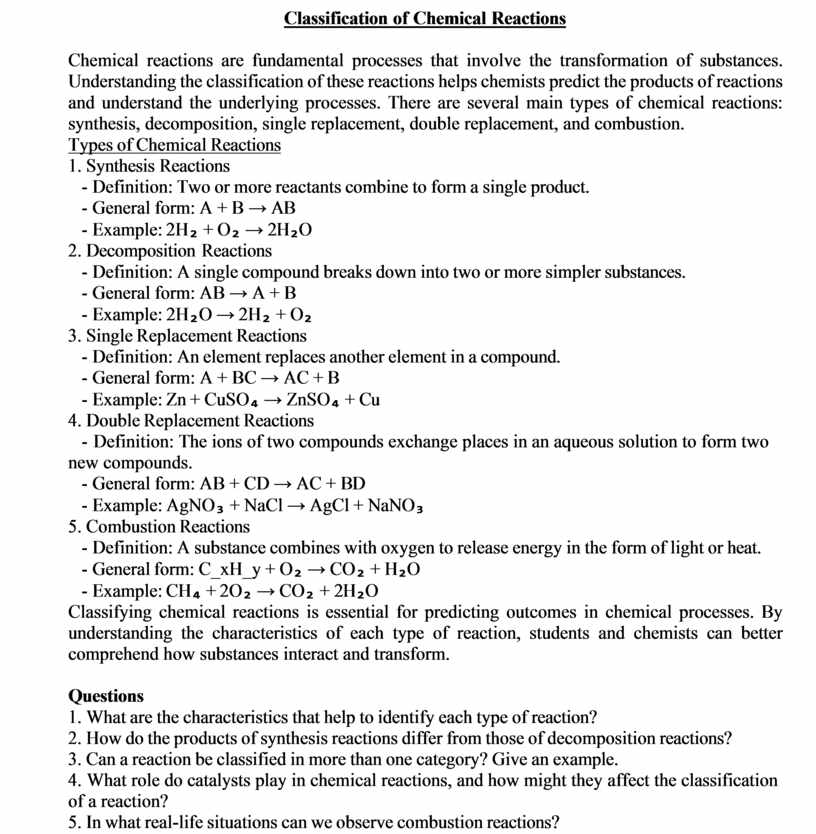
Chemical reactions are fundamental processes that involve the transformation of substances. Understanding the classification of these reactions helps chemists predict the products of reactions and understand the underlying processes. There are several main types of chemical reactions: synthesis, decomposition, single replacement, double replacement, and combustion.
Types of Chemical Reactions
1. Synthesis Reactions
- Definition: Two or more reactants combine to form a single product.
- General form: A + B → AB
- Example: 2H₂ + O₂ → 2H₂O
2. Decomposition Reactions
- Definition: A single compound breaks down into two or more simpler substances.
- General form: AB → A + B
- Example: 2H₂O → 2H₂ + O₂
3. Single Replacement Reactions
- Definition: An element replaces another element in a compound.
- General form: A + BC → AC + B
- Example: Zn + CuSO₄ → ZnSO₄ + Cu
4. Double Replacement Reactions
- Definition: The ions of two compounds exchange places in an aqueous solution to form two new compounds.
- General form: AB + CD → AC + BD
- Example: AgNO₃ + NaCl → AgCl + NaNO₃
5. Combustion Reactions
- Definition: A substance combines with oxygen to release energy in the form of light or heat.
- General form: C_xH_y + O₂ → CO₂ + H₂O
- Example: CH₄ + 2O₂ → CO₂ + 2H₂O
Classifying chemical reactions is essential for predicting outcomes in chemical processes. By understanding the characteristics of each type of reaction, students and chemists can better comprehend how substances interact and transform.
1. What are the characteristics that help to identify each type of reaction?
2. How do the products of synthesis reactions differ from those of decomposition reactions?
3. Can a reaction be classified in more than one category? Give an example.
4. What role do catalysts play in chemical reactions, and how might they affect the classification of a reaction?
5. In what real-life situations can we observe combustion reactions?
Chemical reactions are processes where substances, known as reactants, are transformed into new substances, called products. This transformation involves changes in the molecular structure and energy. Understanding chemical reactions is fundamental in chemistry, and we often describe them using various scientific terms and concepts.
1. Reactants: Substances that undergo a change in a chemical reaction.
2. Products: New substances formed as a result of a chemical reaction.
3. Catalyst: A substance that speeds up a chemical reaction without being consumed.
4. Exothermic Reaction: A reaction that releases energy, usually in the form of heat.
5. Endothermic Reaction: A reaction that absorbs energy from its surroundings.
6. Balancing Equations: The process of ensuring that the number of atoms for each element is the same on both sides of the equation.
7. Synthesis Reaction: A type of reaction where two or more reactants combine to form a single product.
8. Decomposition Reaction: A reaction where one compound breaks down into two or more products.
9. Single Replacement Reaction: A reaction where one element replaces another in a compound.
10. Double Replacement Reaction: A reaction where parts of two compounds exchange places to form two new compounds.
1. What are the main components of a chemical reaction?
2. How can you differentiate between an exothermic and an endothermic reaction?
3. What is the purpose of a catalyst in a chemical reaction?
4. Why is it important to balance chemical equations?
5. Can you give an example of a synthesis reaction?
6. What happens during a decomposition reaction?
7. In a single replacement reaction, what typically occurs?
Chemical analysis is a critical aspect of chemistry, allowing scientists to determine the composition and properties of substances. There are several methods for analyzing chemical substances, and these methods can be broadly classified into two main categories: qualitative and quantitative analysis.
1. Qualitative Analysis
Qualitative analysis is aimed at identifying the components of a substance or mixture. It answers questions such as "What is present in the sample?" and involves various techniques, including:
- Spot Tests: Simple tests that provide quick qualitative results.
- Chromatography: A technique used to separate and identify compounds in a mixture. Common types include gas chromatography (GC) and high-performance liquid chromatography (HPLC).
- Spectroscopy: Techniques such as infrared (IR) and nuclear magnetic resonance (NMR) that help identify molecular structures based on interaction with light or magnetic fields.
- What are the main substances present in the sample?
- How can we differentiate between similar compounds?
- Which method is most suitable for identifying unknown compounds?
2. Quantitative Analysis
Quantitative analysis focuses on determining the exact amount or concentration of a substance within a sample. This involves answering questions like "How much of a substance is present?" Common quantitative methods include:
- Gravimetric Analysis: Measuring the mass of a substance to determine its quantity.
- Titration: A technique where a reagent of known concentration is used to determine the concentration of an unknown solution.
- Spectrophotometry: Measuring the amount of light absorbed by a solution to determine concentration using Beer-Lambert law.
- What is the concentration of the analyte in the sample?
- How accurate and precise is our measurement?
- Which calibration method should be used for this analysis?
3. Other Considerations in Chemical Analysis
- Instrumentation: Many modern methods rely on sophisticated instruments, such as mass spectrometers, which can provide both qualitative and quantitative data.
- Sample Preparation: Proper sample handling and preparation significantly impact the accuracy and reliability of the analysis.
- Regulatory Standards: Compliance with local and international standards (e.g., ISO, EPA) is crucial in analytical chemistry.
- What are the advantages and disadvantages of each analytical method?
- How do we ensure the reliability and validity of analytical results?
- In what scenarios would we prefer qualitative over quantitative analysis, or vice versa?
In conclusion, the classification of chemical analysis methods into qualitative and quantitative categories helps researchers choose the appropriate techniques for their specific needs, ensuring accurate understanding and measurement of chemical substances.
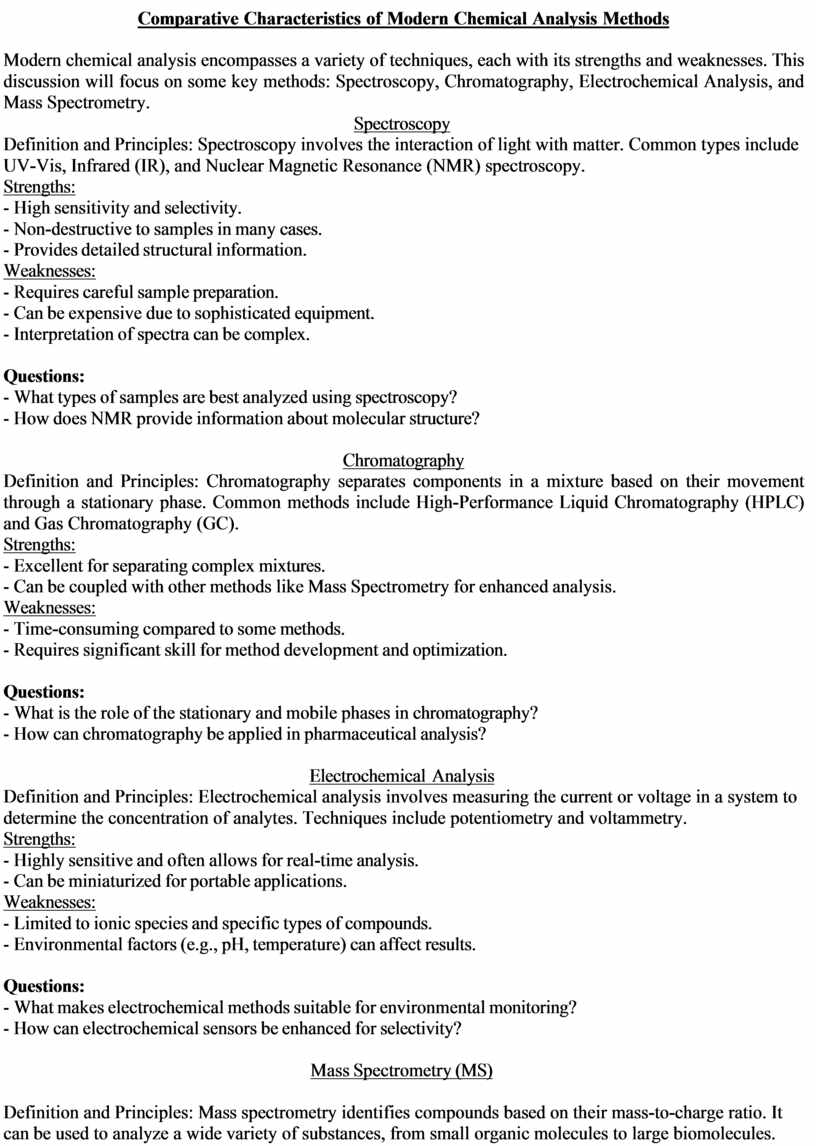
Modern chemical analysis encompasses a variety of techniques, each with its strengths and weaknesses. This discussion will focus on some key methods: Spectroscopy, Chromatography, Electrochemical Analysis, and Mass Spectrometry.
Spectroscopy
Definition and Principles: Spectroscopy involves the interaction of light with matter. Common types include UV-Vis, Infrared (IR), and Nuclear Magnetic Resonance (NMR) spectroscopy.
Strengths:
- High sensitivity and selectivity.
- Non-destructive to samples in many cases.
- Provides detailed structural information. Weaknesses:
- Requires careful sample preparation.
- Can be expensive due to sophisticated equipment.
- Interpretation of spectra can be complex.
- What types of samples are best analyzed using spectroscopy?
- How does NMR provide information about molecular structure?
Chromatography
Definition and Principles: Chromatography separates components in a mixture based on their movement through a stationary phase. Common methods include High-Performance Liquid Chromatography (HPLC) and Gas Chromatography (GC).
Strengths:
- Excellent for separating complex mixtures.
- Can be coupled with other methods like Mass Spectrometry for enhanced analysis. Weaknesses:
- Time-consuming compared to some methods.
- Requires significant skill for method development and optimization.
- What is the role of the stationary and mobile phases in chromatography?
- How can chromatography be applied in pharmaceutical analysis?
Electrochemical Analysis
Definition and Principles: Electrochemical analysis involves measuring the current or voltage in a system to determine the concentration of analytes. Techniques include potentiometry and voltammetry.
Strengths:
- Highly sensitive and often allows for real-time analysis.
- Can be miniaturized for portable applications. Weaknesses:
- Limited to ionic species and specific types of compounds.
- Environmental factors (e.g., pH, temperature) can affect results.
- What makes electrochemical methods suitable for environmental monitoring?
- How can electrochemical sensors be enhanced for selectivity?
Mass Spectrometry (MS)
Definition and Principles: Mass spectrometry identifies compounds based on their mass-to-charge ratio. It can be used to analyze a wide variety of substances, from small organic molecules to large biomolecules.
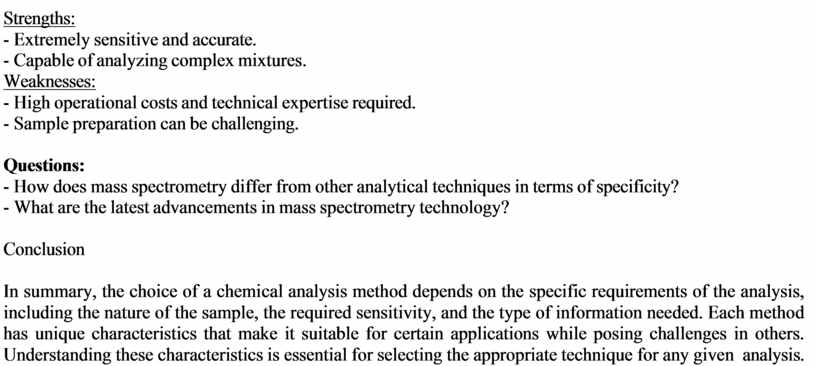
Strengths:
- Extremely sensitive and accurate.
- Capable of analyzing complex mixtures. Weaknesses:
- High operational costs and technical expertise required.
- Sample preparation can be challenging.
- How does mass spectrometry differ from other analytical techniques in terms of specificity?
- What are the latest advancements in mass spectrometry technology? Conclusion
In summary, the choice of a chemical analysis method depends on the specific requirements of the analysis, including the nature of the sample, the required sensitivity, and the type of information needed. Each method has unique characteristics that make it suitable for certain applications while posing challenges in others. Understanding these characteristics is essential for selecting the appropriate technique for any given analysis.
Метод тетрирования
(или титрования) используется для количественного определения концентрации растворов. Подход, в котором используются титры, может быть дополнен различными вопросами и пояснениями на английском языке
1. Titration: A technique to determine the concentration of a solution.
2. Titrant: The solution of known concentration used in a titration.
3. Analyte: The solution of unknown concentration being measured.
4. End Point: The point at which the titration is complete, often indicated by a color change.
5. Indicator: A substance that changes color at a specific pH level and is used to signal the end point of the titration.
6. Burette: A piece of laboratory equipment used to dispense precise volumes of liquid during titration.
7. Equivalence Point: The point at which the number of moles of titrant equals the number of moles of analyte.
1. What is the purpose of titration?
2. How do you choose an appropriate indicator for a titration?
3. What safety precautions should be taken during titration?
4. How do you calculate the concentration of the analyte?
5. What factors can affect the accuracy of a titration?
6. Why is it important to swirl the flask during titration?
7. What is the difference between the end point and the equivalence point in titration?
8. What are some common types of titrations?
Example of a Titration Procedure
1. Prepare the Solutions:
- Measure a specific volume of the analyte into a clean flask.
2. Add the Indicator:
- Add a few drops of the chosen indicator to the analyte solution.
3. Fill the Burette:
- Fill the burette with the titrant solution of known concentration.
4. Titrate:
- Slowly add the titrant to the analyte while constantly swirling the flask until you reach the end point (the color change).
5. Record Data:
- Note the volume of titrant used to reach the end point.
6. Calculate Concentration:
- Use the titration data to calculate the concentration of the analyte.
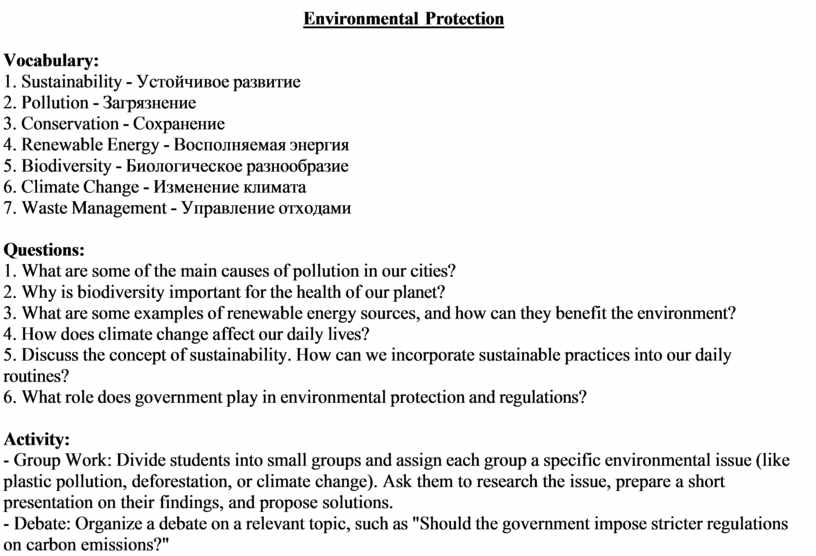
Vocabulary:
1. Sustainability - Устойчивое развитие
2. Pollution - Загрязнение
3. Conservation - Сохранение
4. Renewable Energy - Восполняемая энергия
5. Biodiversity - Биологическое разнообразие
6. Climate Change - Изменение климата
7. Waste Management - Управление отходами
1. What are some of the main causes of pollution in our cities?
2. Why is biodiversity important for the health of our planet?
3. What are some examples of renewable energy sources, and how can they benefit the environment?
4. How does climate change affect our daily lives?
5. Discuss the concept of sustainability. How can we incorporate sustainable practices into our daily routines?
6. What role does government play in environmental protection and regulations?
- Group Work: Divide students into small groups and assign each group a specific environmental issue (like plastic pollution, deforestation, or climate change). Ask them to research the issue, prepare a short presentation on their findings, and propose solutions.
- Debate: Organize a debate on a relevant topic, such as "Should the government impose stricter regulations on carbon emissions?"
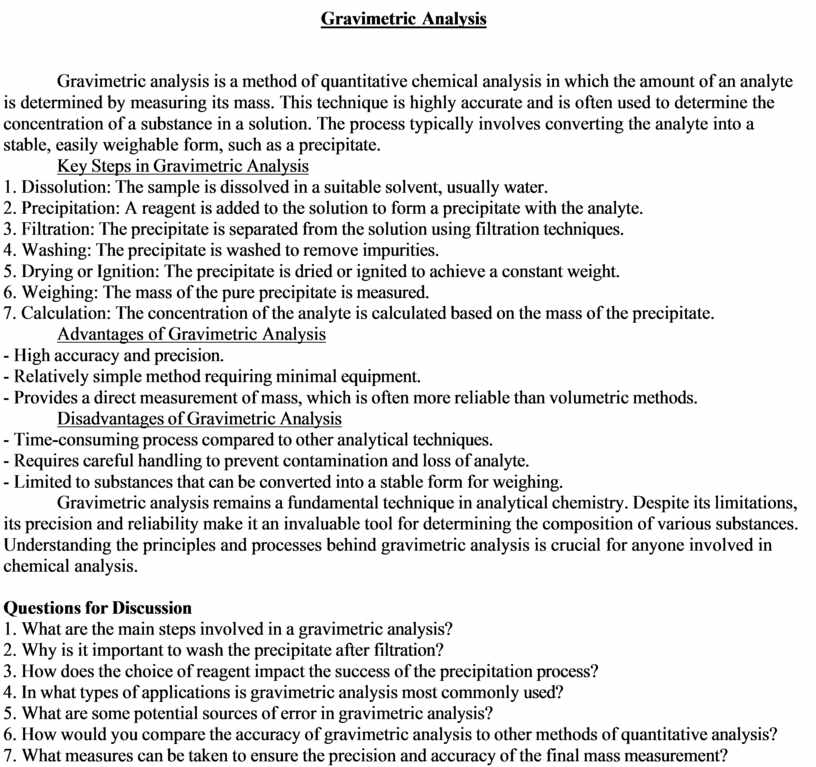
Gravimetric analysis is a method of quantitative chemical analysis in which the amount of an analyte is determined by measuring its mass. This technique is highly accurate and is often used to determine the concentration of a substance in a solution. The process typically involves converting the analyte into a stable, easily weighable form, such as a precipitate.
Key Steps in Gravimetric Analysis
1. Dissolution: The sample is dissolved in a suitable solvent, usually water.
2. Precipitation: A reagent is added to the solution to form a precipitate with the analyte.
3. Filtration: The precipitate is separated from the solution using filtration techniques.
4. Washing: The precipitate is washed to remove impurities.
5. Drying or Ignition: The precipitate is dried or ignited to achieve a constant weight.
6. Weighing: The mass of the pure precipitate is measured.
7. Calculation: The concentration of the analyte is calculated based on the mass of the precipitate. Advantages of Gravimetric Analysis
- High accuracy and precision.
- Relatively simple method requiring minimal equipment.
- Provides a direct measurement of mass, which is often more reliable than volumetric methods.
Disadvantages of Gravimetric Analysis
- Time-consuming process compared to other analytical techniques.
- Requires careful handling to prevent contamination and loss of analyte.
- Limited to substances that can be converted into a stable form for weighing.
Gravimetric analysis remains a fundamental technique in analytical chemistry. Despite its limitations, its precision and reliability make it an invaluable tool for determining the composition of various substances. Understanding the principles and processes behind gravimetric analysis is crucial for anyone involved in chemical analysis.
1. What are the main steps involved in a gravimetric analysis?
2. Why is it important to wash the precipitate after filtration?
3. How does the choice of reagent impact the success of the precipitation process?
4. In what types of applications is gravimetric analysis most commonly used?
5. What are some potential sources of error in gravimetric analysis?
6. How would you compare the accuracy of gravimetric analysis to other methods of quantitative analysis?
7. What measures can be taken to ensure the precision and accuracy of the final mass measurement?
The gravimetric method is a classic analytical technique used in chemistry to determine the quantity of an analyte based on its mass. It is highly regarded for its accuracy and reliability when performed correctly. This method involves converting the analyte into a stable solid compound, which can then be weighed.
Key Features of the Gravimetric Method:
1. Precision and Accuracy:
- The gravimetric method is known for its high precision and accuracy compared to other methods. This is mainly due to the fact that it relies on mass measurement, which can be determined with a high degree of reliability using analytical balances.
2. Sample Preparation:
- Sample preparation is critical in gravimetric analysis. Proper dissolution and filtration must be performed to isolate the analyte from impurities. Mistakes in this process can lead to significant errors in the final result.
3. Conversion to a Solid:
- The analyte must be converted into a pure and stable solid compound (precipitate) that can be easily separated from the solution. Common methods include precipitation reactions and crystallization.
4. Weighing Techniques:
- The weight of the solid compound is measured after drying or calcination. It is important to ensure that the sample is dry and free of moisture for an accurate measurement.
5. Temperature Control:
- Temperature can affect solubility and precipitation. Therefore, maintaining a constant temperature during the analysis is essential for reproducibility.
6. Chemical Reactions:
- Knowledge of the chemical reactions involved in the precipitation process is necessary to predict and control the formation of the desired product.
Advantages of the Gravimetric Method:
- High accuracy and precision.
- Relatively simple and low-cost equipment.
- Minimal susceptibility to interferences from other species in the sample.
Disadvantages of the Gravimetric Method:
- Can be time-consuming compared to other methods (e.g., titration).
- Requires skilled personnel for proper execution.
- Not suitable for all types of analytes, particularly those that do not form stable solids.
The gravimetric method remains a fundamental technique in analytical chemistry due to its reliability and precision. By understanding its characteristics, advantages, and limitations, chemists can effectively utilize this method in various analytical applications.
1. What factors can influence the accuracy of gravimetric analysis?
2. How can one ensure proper sample collection and preparation for gravimetric methods?
3. Which types of compounds are commonly analyzed using gravimetric methods, and why?
4. What are the best practices for achieving high-quality precipitates?
5. How does the choice of a precipitating agent affect the outcome of the analysis?
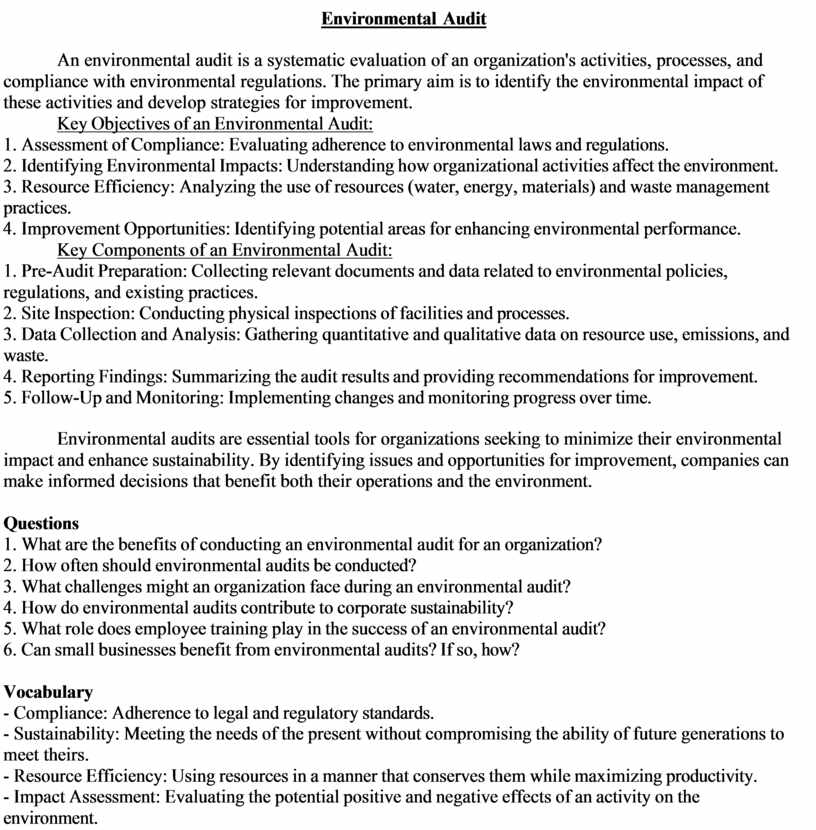
An environmental audit is a systematic evaluation of an organization's activities, processes, and compliance with environmental regulations. The primary aim is to identify the environmental impact of these activities and develop strategies for improvement.
Key Objectives of an Environmental Audit:
1. Assessment of Compliance: Evaluating adherence to environmental laws and regulations.
2. Identifying Environmental Impacts: Understanding how organizational activities affect the environment.
3. Resource Efficiency: Analyzing the use of resources (water, energy, materials) and waste management practices.
4. Improvement Opportunities: Identifying potential areas for enhancing environmental performance. Key Components of an Environmental Audit:
1. Pre-Audit Preparation: Collecting relevant documents and data related to environmental policies, regulations, and existing practices.
2. Site Inspection: Conducting physical inspections of facilities and processes.
3. Data Collection and Analysis: Gathering quantitative and qualitative data on resource use, emissions, and waste.
4. Reporting Findings: Summarizing the audit results and providing recommendations for improvement.
5. Follow-Up and Monitoring: Implementing changes and monitoring progress over time.
Environmental audits are essential tools for organizations seeking to minimize their environmental impact and enhance sustainability. By identifying issues and opportunities for improvement, companies can make informed decisions that benefit both their operations and the environment.
1. What are the benefits of conducting an environmental audit for an organization?
2. How often should environmental audits be conducted?
3. What challenges might an organization face during an environmental audit?
4. How do environmental audits contribute to corporate sustainability?
5. What role does employee training play in the success of an environmental audit?
6. Can small businesses benefit from environmental audits? If so, how?
- Compliance: Adherence to legal and regulatory standards.
- Sustainability: Meeting the needs of the present without compromising the ability of future generations to meet theirs.
- Resource Efficiency: Using resources in a manner that conserves them while maximizing productivity.
- Impact Assessment: Evaluating the potential positive and negative effects of an activity on the environment.
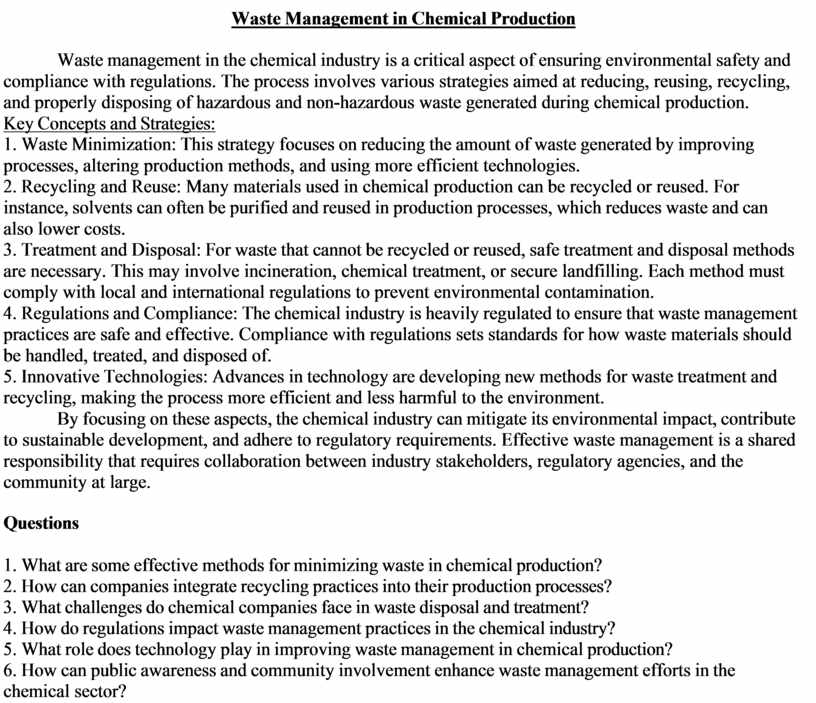
Waste management in the chemical industry is a critical aspect of ensuring environmental safety and compliance with regulations. The process involves various strategies aimed at reducing, reusing, recycling, and properly disposing of hazardous and non-hazardous waste generated during chemical production.
Key Concepts and Strategies:
1. Waste Minimization: This strategy focuses on reducing the amount of waste generated by improving processes, altering production methods, and using more efficient technologies.
2. Recycling and Reuse: Many materials used in chemical production can be recycled or reused. For instance, solvents can often be purified and reused in production processes, which reduces waste and can also lower costs.
3. Treatment and Disposal: For waste that cannot be recycled or reused, safe treatment and disposal methods are necessary. This may involve incineration, chemical treatment, or secure landfilling. Each method must comply with local and international regulations to prevent environmental contamination.
4. Regulations and Compliance: The chemical industry is heavily regulated to ensure that waste management practices are safe and effective. Compliance with regulations sets standards for how waste materials should be handled, treated, and disposed of.
5. Innovative Technologies: Advances in technology are developing new methods for waste treatment and recycling, making the process more efficient and less harmful to the environment.
By focusing on these aspects, the chemical industry can mitigate its environmental impact, contribute to sustainable development, and adhere to regulatory requirements. Effective waste management is a shared responsibility that requires collaboration between industry stakeholders, regulatory agencies, and the community at large.
1. What are some effective methods for minimizing waste in chemical production?
2. How can companies integrate recycling practices into their production processes?
3. What challenges do chemical companies face in waste disposal and treatment?
4. How do regulations impact waste management practices in the chemical industry?
5. What role does technology play in improving waste management in chemical production?
6. How can public awareness and community involvement enhance waste management efforts in the chemical sector?
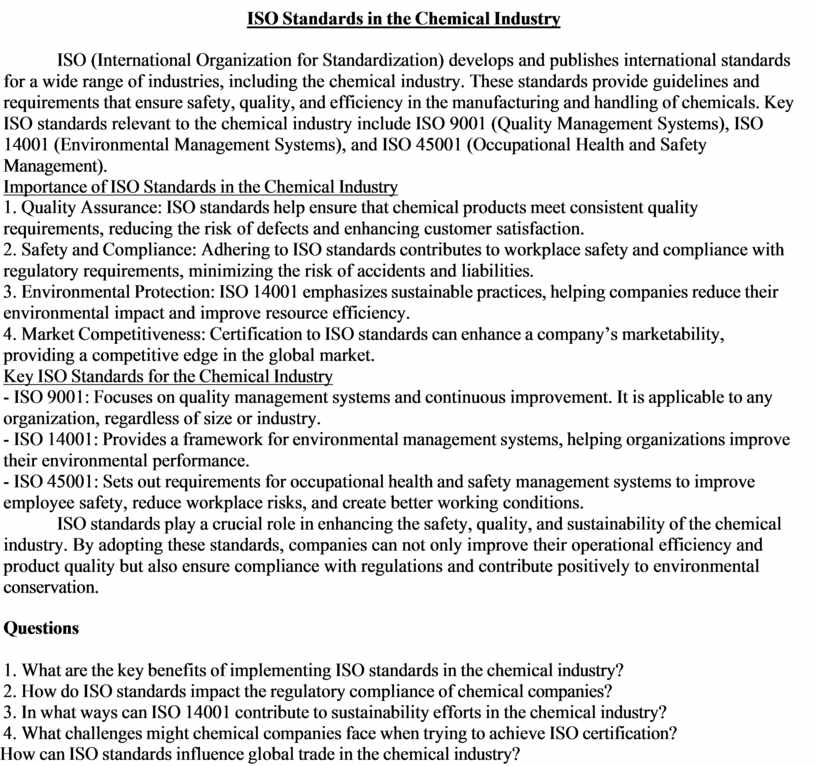
ISO (International Organization for Standardization) develops and publishes international standards for a wide range of industries, including the chemical industry. These standards provide guidelines and requirements that ensure safety, quality, and efficiency in the manufacturing and handling of chemicals. Key ISO standards relevant to the chemical industry include ISO 9001 (Quality Management Systems), ISO 14001 (Environmental Management Systems), and ISO 45001 (Occupational Health and Safety Management).
Importance of ISO Standards in the Chemical Industry
1. Quality Assurance: ISO standards help ensure that chemical products meet consistent quality requirements, reducing the risk of defects and enhancing customer satisfaction.
2. Safety and Compliance: Adhering to ISO standards contributes to workplace safety and compliance with regulatory requirements, minimizing the risk of accidents and liabilities.
3. Environmental Protection: ISO 14001 emphasizes sustainable practices, helping companies reduce their environmental impact and improve resource efficiency.
4. Market Competitiveness: Certification to ISO standards can enhance a company’s marketability, providing a competitive edge in the global market.
Key ISO Standards for the Chemical Industry
- ISO 9001: Focuses on quality management systems and continuous improvement. It is applicable to any organization, regardless of size or industry.
- ISO 14001: Provides a framework for environmental management systems, helping organizations improve their environmental performance.
- ISO 45001: Sets out requirements for occupational health and safety management systems to improve employee safety, reduce workplace risks, and create better working conditions.
ISO standards play a crucial role in enhancing the safety, quality, and sustainability of the chemical industry. By adopting these standards, companies can not only improve their operational efficiency and product quality but also ensure compliance with regulations and contribute positively to environmental conservation.
1. What are the key benefits of implementing ISO standards in the chemical industry?
2. How do ISO standards impact the regulatory compliance of chemical companies?
3. In what ways can ISO 14001 contribute to sustainability efforts in the chemical industry?
4. What challenges might chemical companies face when trying to achieve ISO certification?
5. How can ISO standards influence global trade in the chemical industry?
6.







Материалы на данной страницы взяты из открытых источников либо размещены пользователем в соответствии с договором-офертой сайта. Вы можете сообщить о нарушении.