Поделиться


 plany_na_8_klass.doc
8 form Lesson 1 Date:
|
Theme: The aim: Tasks:
Grammar material:
Org. moment:
Warm-up:
The main part:
H/w:
Reflection.
Marks.
|
Revision. Present Tenses (Повторение. Настоящее время) Revision and consolidation of the present tenses. 1. Teach pupils to use tenses correctly. 2. Develop pupils’ grammar skills. 3. Bring up pupils to respect each other opinions.
Tenses of the verb.
The procedure of the lesson: T: Good morning, dear children! Sit down! Who is on duty today? What date is it today? Who is absent today? Who can tell me, what day is it today? Ok, you are right! What season is it now? How do you do? I hope that you are fine! Are you ready for this lesson? That’s great!
Your task is to make a phrase and show it to your classmates without any words. Their task is to guess what it means (an yellow fish, a big house, a long road, etc.) Today we are going to review the tenses of the verb. What are they? Yes, that’s right. It is Present Indefinite, Present Continuous, Present Perfect, Past Indefinite, Past Continuous, Future Indefinite and Present Perfect Continuous. First, let’s review the grammar rules. And now I’m giving you a table with all tenses and we’ll do some exercises using this table. The table of tenses
Exercise 1. Finish the sentences. 1. I have just … (Present Perfect) 2. We have been … (Present Perfect Progressive) 3. He often … (Present Simple) 4. Are you … ? (Present Progressive) 5. What is Oleg … ? (Present Progressive) 6. Olga has already… (Present Perfect) 7. Tomorrow I … (Future Simple) 8. Next Sunday my parents … (Future Simple) 9. At 6 p.m. tomorrow I … (Future Progressive) 10.I had already … (Past Perfect) Exercise 2. Translate the sentences from Russian into English. Я уже три дня об этом думаю.
Моя
сестра пьет кофе без сахара. А я всегда предпочитала с молоком. Мы очень
рады вас видеть. Мы вас ждали целый месяц. Вы все еще читаете эту книгу? Сколько
времени вы ее уже читаете? Моя
сестра занимается танцами уже пять лет. Я ищу
тебя весь вечер. Где ты был все это время? Они пишут экзамен уже два часа. Мы знаем
друг друга уже пять лет. Я всегда
хотела изучать английский язык. Где она?
— Она уже два часа дома. Где
дети? — Они все еще играют во дворе. Мой брат
уже три года дизайнер. Мой друг
изучает английский с детства. Я уже
полчаса читаю эту книжку. Repeat the rules about present tenses. Make ex.1 in the appendix.
What was the theme of our lesson? Have you understand it? What was difficult for you? The marks for the lesson are… The lesson is over! Good-bye!
|
8 Form Lesson 2 Date:
|
Unite: Theme: The aim: Tasks:
Vocabulary:
Org. moment:
Warm-up:
Checking up h/w:
The main part:
H/w:
Reflection.
Marks.
|
Me and my favourite sport. Advantages and disadvantages. Familiarization with the vocabulary “Advantages and disadvantages” 1) Help pupils to understand the new vocabulary. 2) Develop pupils' interest in the language. 3) Develop speaking skills. Advantage, to sit up late, to boss somebody around, sense of humour, to confide, to go mountain climbing, to be through with something, common.
The procedure of the lesson: T: Good morning, dear children! Sit down! Who is on duty today? What date is it today? Who is absent today? What day is it today? What’s the weather like today? Pronunciation. Ex.1 p.3 Practise reading and saying the words. Example: [ei] rain, main, brain [ i:] tree, sea , etc… Ex.2 p. 3 Match the words that rhyme. rain all fall sea tree ships trips main around crowd
Give me your copybooks!
The theme of the first unit is “Me and my favourite sport”. And today we are going to learn the vocabulary on this topic. Open your books at page 3 ex.3 Listen to the poem “rain”. Let’s translate it. Now listen to the poem again and then repeat after me. Individual reading. Answer the questions (ex.4p.4): What do you feel after you have read the poem? How do you feel about rain in general? Ex.2 p.4 Read the sentences to know how to understand and use the new words. Ex.III p. 5 Write some sentences using the new words. For example: I sometimes sit up late and watch TV. Ex.1 p. 5 Answer the questions about advantages and disadvantages. Ex.4 p. 5 Is it advantage or disadvantage? Ex.5 p.6 Group work. Discuss the following topics in groups and report your conclusion to the class. Ex.6 p.6 Read and translate the dialogue. Ex.7p.6 Put the sentences in the dialogues in the correct order and then role play them.
Learn the poem “Rain” and the new words.
What was the theme of our lesson? Was it difficult for you? Have you understand it? Do you have any questions?
The marks for the lesson are… The lesson is over! Good-bye!
|
8 Form Lesson 4 Date:
|
Theme: The aim: Tasks:
Grammar:
Org. moment:
Warm-up:
Checking up h/w:
The main part:
H/w:
Reflection.
Marks.
|
Reading of the text “Me” (Чтение текста «Я») Improvement pupils' knowledge on the theme “My family and me”. 1) Help pupils to understand and remember the new lexis and grammar points. 2) Form love and respect to the family. 3) Develop reading skills. Phrasal verb “to go”.
The procedure of the lesson: T: Good morning, dear children! Sit down! Who is on duty today? What date is it today? Who is absent today? What is your name? Where are you from? How old are you? How many members of the family do you have? What is your hobby? What do you do in your free time? Your hometask was to learn the tongue-twister. Who wants to say it the first?
The theme of our lesson is “Me”. Today we are going to read the text about one boy. His name is Daniel. And at the end of the lesson you will write the similar texts about yourselves. Open your books at page 7 and let’s start reading the text. Translate the text. Ex. I p.8 Answer the questions to the text. Ex. II p. 8 Find the English equivalents in the text. Phrasal verb “go” Study the diagram at page 9. Write down the following phrases into your vocabularies. Go down – падать Go in for – заниматься Go through – испытывать Go out of – выходить Go back – возвращаться Go off – убежать Go on – продолжать Go away – уйти Go round – вращаться Ex. IV p. 9 Complete the sentences using an appropriate phrase with “go” paying attention to the tense. Eg.: Those skirts went out of fashion years ago. Ex.III p. 8 Write a text about yourselves answering the questions.
Ex. VI p. 9
What was the theme of our lesson? Was it difficult for you? What was it? The marks for the lesson are… The lesson is over! Good-bye! |
8 Form Lesson 4 Date:
|
Unite: Theme: The aim: Tasks:
Grammar:
Org. moment:
Warm-up: Checking up h/w:
The main part:
H/w:
Marks. |
Me and my favourite sport. Test. Проверка знаний учащихся по теме: «Времена глагола» 1) Проверить знания учащихся по данной теме. 2) Воспитывать внимательность. 3) Развивать навыки работы с таблицей времен. Tenses of the verb.
The procedure of the lesson: T: Good morning, dear children! Sit down! Who is on duty today? What date is it today? Who is absent today? How are you today? What’s the weather like today?
Ex. VI p. 9 Give me your copybooks!
And now open your copybooks for tests and write a test.
Revision.
The marks for the test are … The lesson is over! Good-bye!
|
8 Form Lesson 5 Date:
|
Unite: Theme: The aim: Tasks:
Grammar:
Org. moment:
Warm-up:
Checking up h/w:
The main part:
H/w:
Reflection. Marks.
|
Me and my favourite sport. Grammar lesson. Формирование знаний учащихся по теме «Будущее Длительное время» 1) Обеспечить в ходе урока усвоение учащимися данной темы. 2) Воспитывать у учащихся внимательность. 3) Развивать навыки составления предложений. Future Indefinite Tense.
The procedure of the lesson: T: Good morning, dear children! Sit down! Who is on duty today? What date is it today? Who is absent today? How are you today? What’s the weather like today? Now I’ll show you the verb and you should translate it and name the three forms of this verb. Eg.: come – came – come (приходить)
Tell me about yourselves.
The Future Continuous Tense. Оно обозначает действие предмета, которое будет происходить в будущем в конкретный момент. Оно образуется при помощи вспомогательного глагола will (shall), глагола be и смыслового глагола с окончанием ing. Eg.: I will be watching TV at 6 o’clock tomorrow. Чтобы задать вопрос мы должны перенести will (shall) на 1 место. Eg.: Will you be watching TV at 6 o’clock tomorrow? В отрицательных предложениях мы должны поставить после глаголов will (shall) отрицательную частицу not. Eg.: I will not be watching TV at 6 o’clock tomorrow. Open your books at page 9 and read grammar rules. Read the text about Tornado and find the sentences in the present Continuous Tense. Answer the questions below the text. Ex.: I p. 11 Read the sentences and comment on the use of the Future Continuous Tense. Ex. II p. 11 What will you be doing at this time tomorrow. Make sentences using the pictures. Eg.: I will be having dinner at 5 o’clock tomorrow. Ex.III p. 12 Writing. Write sentences about what people will be doing at a given moment in the future. Use the example. Ex. IV p.12 Pair work. Ask and answer the questions using the example. Ex. 7 p. 13 Act out a conversation using the Future Continuous and the vocabulary.
1.To learn grammar rules. 2.Ex. VII p. 13 What was the theme of our lesson? What have you learnt today? Was it difficult for you? What was difficult? The marks for the lesson are… The lesson is over! Good-bye!
|
8 Form Lesson 6 Date:
|
Unite: Theme: The aim: Tasks:
Vocabulary:
Org. moment:
Warm-up:
Checking up h/w:
The main part:
H/w:
Reflection. Marks.
|
Me and my favourite sport. Hobby. Формирование знаний учащихся по теме «Хобби и спорт». 1) Обеспечить в ходе урока усвоение учащимися новой лексики. 2) Содействовать формированию у учащихся любви к спорту. 3) Развитие навыков чтения. Person, personality, to judge by, a bar, to bother, graduation, to break away, to inspire, to support, to retire, particularly, to do sport, coach, rigid, to observe, a draw, quotation, to keep fit, confidence, persistence, responsibility, quality.
The procedure of the lesson: T: Good morning, dear children! Sit down! Who is on duty today? What date is it today? Who is absent today? How are you today? What’s the weather like today? Now let’s remember the words connected with sport.
Your home task was Ex. VII p. 13. Give me your copybooks! Grammar rules (фронтальный опрос).
Today we are going to learn the new words connected with sport. But first listen to the extract from “Othello”. Now open your books and read it by yourselves. Translate it into Russian. Answer the questions after the extract. Ex. II p. 14 Read and remember how to use the words. Write them down into your vocabularies with the translation. Ex. III p. 14 Reading. Read and translate the texts. What do you think about Ann and Mark. Do there hobbies help them in life. How do you think why people need hobbies? Ex. IV p. 15 Read the proverbs and translate them. Say the Russian equivalents to these proverbs. What English proverbs do you think can be used in the situations of Ann and Mark? Ex. V p. 15 Reading. And now let’s read and translate the text about one teenager who changed his name. Answer the questions under the text. Do you know what your name means and why it is given to you? Ex. VII p. 16 Read and translate the new words. Write them down into your vocabularies. 1.Learn the new words. 2. Write a small text about your hobby and explain why you like it. What was the theme of our lesson? What interesting things have you learnt today? The marks for the lesson are… The lesson is over! Good-bye! |
8 Form Lesson 7 Date:
|
Unite: Theme: The aim: Tasks:
Vocabulary:
Org. moment:
Warm-up:
Checking up h/w:
The main part:
H/w:
Reflection. Marks.
|
Me and my favourite sport. My favourite sport. Закрепление лексики по теме «Спорт». 1) Обеспечить в ходе урока закрепление учащимися лексики по данной теме. 2) Содействовать формированию у учащихся любви к спорту. 3) Развивать навыки диалогической речи. To be eager, to throw, tournaments, to take up sport. The procedure of the lesson: T: Good morning, dear children! Sit down! Who is on duty today? What date is it today? Who is absent today? How are you today? What’s the weather like today? Find the words connected with sport:
Your home task was Ex. VII p. 13. Give me your copybooks! Grammar rules (фронтальный опрос).
Today we are going to read texts and talk about your favourite kind of sport. Open your books at page 17. Let’s read, translate and discuss the text “My favourite kind of sport”. Ex. II p. 17 Group work. Divide into groups of 4. Make up 5 questions about Daniel’s favourite sport. Then change over and discuss these questions with the other partners. Ex. III p. 17 Listen to the dialogue, then read it. Answer the questions. Role play the dialogue. Ex. IV p. 18 Read and translate the dialogue. What can you say about Phil? Ex. V p. 18 Pair work. Make up your own dialogues about your favourite sport using ex. IV. Writing. Write a short story about your favourite kind of sport.
1.Learn the new words. 2. Ex. VI p. 18. What was the theme of our lesson? What interesting things have you learnt today? The marks for the lesson are… The lesson is over! Good-bye! |
8 Form Lesson 8 Date:
|
Unite: Theme: The aim: Tasks:
Vocabulary:
Org. moment:
Warm-up:
Checking up h/w:
The main part:
H/w:
Reflection. Marks.
|
Me and my favourite sport. Sport in Kazakhstan and in my life. Закрепление лексики по теме «Спорт». 1) Обеспечить в ходе урока закрепление учащимися лексики по данной теме. 2) Содействовать формированию у учащихся любви к спорту. 3) Развивать навыки чтения и говорения. To invent, to doubt, championship, fashionable, to allow. The procedure of the lesson: T: Good morning, dear children! Sit down! Who is on duty today? What date is it today? Who is absent today? How are you today? What’s the weather like today? What is your favourite sport? Why do we need to go in for sport?
Your home task was Ex. VI p. 18. Give me your copybooks! Words. (фронтальный опрос).
Today we are going to read texts and talk about sport in Kazakhstan and about Wimbledon. Open your books at page 18. Let’s read, translate and discuss the text “Sport in Kazakhstan and in my life”. Ex. 1 p. 19 Answer the questions to the text. Ex. 2 p. 20 Complete the sentences. Example: Many sports are popular in Kazakhstan. Ex. I p. 20 Work in two groups. Write on a separate piece of paper what is known about Wimbledon and the other group what you want to ask about it. Ex. II p. 20 Read the text and look the unknown words up in the dictionary. Ex. III p. 21 Comprehension check.
To write a composition “Sport in our life” using the plan: 1.The meaning of sport. 2.Sport in Kazakhstan. 3. Sport in my life. What was the theme of our lesson? What interesting things have you learnt today? What kinds of sport are popular in Kazakhstan? The marks for the lesson are… The lesson is over! Good-bye! |
8 Form Lesson 9 Date:
|
Unite: Theme: The aim: Tasks:
Vocabulary:
Org. moment:
Warm-up:
Checking up h/w:
The main part:
H/w:
Reflection.
Marks.
|
Me and my favourite sport. Health: illness and disease. Формирование знаний учащихся по теме «Здоровье и болезни». 1) Обеспечить в ходе урока усвоение учащимися лексики по данной теме. 2) Содействовать формированию у учащихся ЗОЖ. 3) Развивать навыки чтения и говорения. To prescribe a medicine for, ache, pain, to hurt, injured, painful, painless, a virus, injection, asthma, a cough, to sneeze. The procedure of the lesson: T: Good morning, dear children! Sit down! Who is on duty today? What date is it today? Who is absent today? How are you today? What’s the weather like today? Look at the pictures on page 21. What can you see? Read and translate the sentences under the pictures.
Your home task was to write a composition “Sport in our life”. Give me your copybooks!
Today we are going to talk about health and illnesses. Ex. 1 p. 22 Read and remember how to use these words. Write down the new words into your vocabularies, consult their meaning with the dictionary. Ex. II p. 23 1)Look at the table and make up short dialogues with your partners using the key words and sentences. Example: What’s the matter? I have a cold. … 2) Look at the picture and write what happened using the words in the box. Example: One day I had a terrible toothache. … Ex. III p. 23 Fill in blanks with the appropriate word. Example: I hit my hand on the desk, and now it really hurts. Ex. IV p. 24 Answer the questions. Ex. V p. 24 Read and give the Russian equivalents to the proverbs about health.
1.To learn the new words. 2.Ex. VI p. 24 What was the theme of our lesson? What interesting things have you learnt today? The marks for the lesson are… The lesson is over! Good-bye! |
8 Form Lesson 10 Date:
|
Unite: Theme: The aim: Tasks:
Vocabulary:
Org. moment:
Warm-up:
Checking up h/w:
The main part:
H/w: Reflection.
Marks. |
Me and my favourite sport. At the doctor’s. Закрепление и совершенствование знаний учащихся по теме «Здоровье и болезни». 1) Обеспечить в ходе урока усвоение учащимися лексики по данной теме. 2) Содействовать формированию у учащихся ЗОЖ. 3) Развивать навыки чтения и говорения. To fall ill, splitting headache, to strip to the waist, to keep to the bed, a slip for x-ray, to recover, to examine, to take temperature, to feel pulse.
The procedure of the lesson: T: Good morning, dear children! Sit down! Who is on duty today? What date is it today? Who is absent today? How are you today? What’s the weather like today? Find the words connected with illnesses:
Your home task was Ex. VI p. 24 Explain the statements.
The theme of our lesson is “At the doctor’s”. We are going to read texts and make up dialogues. Ex. VIII p. 24 Read the new words. Write down the new words into your vocabularies, consult their meaning with the dictionary. Ex. VII p. 24 Read the text and find out what was the matter with Daniel’s sister. Ex. IX p. 24 Pair work. Read, translate and role-play the dialogue. Ex. X p. 25 Tell when you were at the doctor’s last. Read the sayings. Translate them. Are there any similar Russian sayings. Write them down. Ex. XI p. 25 Read and translate the new words. Read the text and try to get the main idea of it. Answer the questions.
1.To learn the new words; 2.Ex. 3 p. 26 What was the theme of our lesson? What interesting things have you learnt today? The marks for the lesson are… The lesson is over! Good-bye! |
8 Form Lesson 11 Date:
|
Unite: Theme: The aim: Tasks:
Grammar:
Org. moment:
Warm-up:
Checking up h/w:
The main part:
H/w: Reflection.
Marks. |
Me and my favourite sport. Reported speech. Формирование знаний учащихся по теме «Косвенная речь» 1) Обеспечить в ходе урока усвоение учащимися данной темы. 2) Воспитывать у учащихся внимательность. 3) Развивать навыки составления предложений. Reported speech. The procedure of the lesson: T: Good morning, dear children! Sit down! Who is on duty today? What date is it today? Who is absent today? How are you today? What’s the weather like today? Now I’ll show you the verb and you should translate it and name the three forms of this verb. Eg.: be - … - …. (быть, находиться, являться)
Your home task was Ex. 3 p. 26 Answer the questions.
The theme of our lesson is “Reported speech”. Now you are going to watch a presentation. (Учащиеся смотрят презентацию.) Прямая и косвенная речь Прямая речь – это речь какого-нибудь лица, передаваемая без изменений, непосредственно так, как она была произнесена. Косвенная речь передает слова говорящего не слово в слово, а лишь по содержанию, в виде дополнительного придаточного предложения. Обращение прямой речи в косвенную Повествовательное предложение При обращении прямой речи в косвенную производятся следующие изменения: 1 Запятая, стоящая после слов, вводящих прямую речь, а также кавычки, в которые заключена прямая речь, опускаются. Косвенная речь вводится союзом that что, который, однако, часто опускается. Если в словах, вводящих прямую речь, употреблен глагол to say без дополнения, указывающего на лицо, к которому обращаются с речью, то to say сохраняется. Если же после to say имеется дополнение (обязательно с предлогом to, например – said to me), то to say заменяется глаголом to tell (далее дополнение без предлога to) 2 Личные и притяжательные местоимения прямой речи заменяются по смыслу, как и в русском языке. 3 Если глагол, вводящий косвенную речь (главное предложение), употреблен в настоящем или будущем времени – Present Indefinite, Present Perfect, Future Indefinite, то глагол в косвенной речи (придаточное предложение) остается в том же времени, в каком он был в прямой речи. 4 Если глагол, вводящий косвенную речь (главное предложение), употреблен в одном из прошедших времен, то время глагола прямой речи заменяется в косвенной речи (придаточном предложении) другим временем, согласно правилу согласования времен. Смотри: "Морфология. Глагол. Согласование времен". а) Если в прямой речи было одно из настоящих времен (Present), то в косвенной речи оно меняется на соответствующее ему прошедшее (Past) время. б) Если в прямой речи было прошедшее неперфектное время (Past Indefinite или Continuous), то в косвенной речи оно меняется на соответствующее перфектное время. Примечание 1: Эти времена могут оставаться без изменения если указано время совершения действия. Примечание 2: Однако с такими указаниями времени, как the day before, two years before и т. п., время заменяется на Perfect. в) Если в прямой речи было прошедшее перфектное время (Past Perfect или Perfect Continuous), то в косвенной речи оно остается без изменения. г) Если в прямой речи было одно из будущих времен (Future), то в косвенной речи оно меняется на соответствующее ему будущее в прошедшем (Future in the Past). Если помните, то shall/will просто заменяются на should/would соответственно. г) Если в прямой речи было одно из будущих времен (Future), то в косвенной речи оно меняется на соответствующее ему будущее в прошедшем (Future in the Past). Если помните, то shall/will просто заменяются на should/would соответственно. 7 Указательные местоимения и наречия времени и места в прямой речи заменяются в косвенной речи по смыслу другими словами, как и в русском языке:
Open your books on page 27. Read the information in the table and do exercise after the table. Example: Where are you from? He asked her where she was from. Ex. III p. 28 Complete the reported questions. Use a wh-word or how. Example: I asked her where she was going and she said she was going to the beach.
Ex. 1 p. 28; to learn grammar rules. What was the theme of our lesson? What is reported speech? The marks for the lesson are… The lesson is over! Good-bye! |
8 Form Lesson 12 Date:
|
Unite: Theme: The aim: Tasks:
Grammar:
Org. moment:
Warm-up:
Checking up h/w:
The main part:
H/w: Reflection.
Marks. |
Me and my favourite sport. Reported speech. Повторение и закрепление знаний учащихся по теме «Косвенная речь» 1) Обеспечить в ходе урока закрепление учащимися данной темы. 2) Воспитывать у учащихся внимательность. 3) Развивать навыки составления предложений. Reported speech. The procedure of the lesson: T: Good morning, dear children! Sit down! Who is on duty today? What date is it today? Who is absent today? How are you today? What’s the weather like today? What was your home task?
Ex. 1 p. 28 Read the sentences! What is Reported speech? The theme of our lesson is “Reported speech”. Today we are going to practice in using reported speech. Open your books on page 31 ex. II. Read the story and then retell it using reported speech. Say and tell Tell + smth Tell + smb + smth I told Sam the truth. Say + to smb + object clause I said to Sam that he was … Ex. 3 p. 31 Do we say or tell the following things? Example: We tell the truth, lies. Ex. IV p. 32 Complete the gaps in the following sentences with the correct form of say or tell. Example: Can you tell me something about your last holiday? Ex. V p. 32 Listen to the questions and report them. Ex. VI p. 32 Four of the sentences have mistakes. Find the mistakes and correct them. Ex. VII p. 32 Fill in the gaps with say or tell in the adequate form. Example: Mary said she was very busy yesterday. Ex. VIII p. 33 Make up a list of 5 things you say and things you tell. Read them out to the class. Ex. IX p. 33 Listen to the dialogues, then read them. Ex. X p. 33 Pair work. Role-play the dialogues. Ex. XI p. 34 Complete the conversation.
Ex. XII. p. 34 What was the theme of our lesson? What is reported speech? When do we use say and tell? The marks for the lesson are… The lesson is over! Good-bye! |
8 Form Lesson 13 Date:
|
Unite: Theme: The aim: Tasks:
Vocabulary:
Org. moment:
Warm-up:
Checking up h/w:
The main part:
H/w: Reflection.
Marks. |
Me and my favourite sport. Health: injuries. Закрепление и совершенствование знаний учащихся по теме «Здоровье и болезни». 1) Обеспечить в ходе урока усвоение учащимися лексики по данной теме. 2) Содействовать формированию у учащихся ЗОЖ. 3) Развивать навыки чтения и говорения. An injury, unconscious, an ambulance, a bruise, wound.
The procedure of the lesson: T: Good morning, dear children! Sit down! Who is on duty today? What date is it today? Who is absent today? How are you today? What’s the weather like today? Find the words connected with illnesses:
Your home task was Ex. 12 p. 34 Role play.
The theme of our lesson is “Injuries”. We are going to read texts and do exercises. Ex. I p. 34 Look at the pictures! What’s happened with these people? Ex. II p. 35 Read and remember how to use the new words. Write them down into your vocabularies. Read the table. Read the sentences about hospital treatment. Read about the difference between wounds and injuries. Ex. III p. 36 Complete the table. Ex. VI p. 36 Match the injuries and the causes. Example: He burned his finger . – He touched a hot burner on the stove. Ex. VI p. 36 Discussion. Ex. VII p. 36 Listen and read the dialogue! Ex. VIII p. 37 Answer the questions to the dialogue! Ex. IX p. 37 Fill in the missing words. Practise saying the conversation with your partner.
1.To learn the new words; 2.Ex. XI p. 38 What was the theme of our lesson? What interesting things have you learnt today? The marks for the lesson are… The lesson is over! Good-bye! |
8 Form Lesson 14 Date:
|
Unite: Theme: The aim: Tasks:
Vocabulary:
Org. moment:
Warm-up:
Checking up h/w:
The main part:
H/w: Reflection.
Marks. |
Me and my favourite sport. Sport stars. Закрепление и совершенствование знаний учащихся по теме «Спорт». 1) Обеспечить в ходе урока закрепление учащимися лексики по данной теме. 2) Содействовать формированию у учащихся ЗОЖ. 3) Развивать навыки чтения и говорения. Words connected with sport.
The procedure of the lesson: T: Good morning, dear children! Sit down! Who is on duty today? What date is it today? Who is absent today? How are you today? What’s the weather like today? What kinds of sport do you know? What is your favourite kind of sport?
Your home task was Ex. XI p. 38. Give me your copybooks.
The theme of our lesson is “Sport stars”. We are going to read texts about famous sport stars. Ex. I p. 32 Read and translate the text. Ex. 1 p. 32 Comprehension check. Ex. 2 p. 33 What do you think of Sharron Davies? Example: I think that Sharron Davies is … . Ex. II, III p. 33 Read and translate the texts about Famous people and the food we eat. Ex. IV p. 34 Read the text and answer the questions: 1)What were Mr. Strongfort’s instructions? 2)Did the author follow them? 3)Did the boy think much of himself? 4)How do you know that he did? Ex. V p. 35 Answer the questions. Ex. VI p. 36 Do you know the best of the best? Read and fill in blanks.
Ex. VII p. 36 What was the theme of our lesson? What interesting things have you learnt today? The marks for the lesson are… The lesson is over! Good-bye! |
8 Form Lesson 15 Date:
|
Unite: Theme: The aim: Tasks:
Vocabulary:
Grammar:
Org. moment:
Warm-up:
Checking up h/w:
The main part:
H/w:
Reflection.
Marks. |
A modern family in Kazakhstan and the UK. Living with an English family. Формирование знаний учащихся по теме «Семейные традиции». 1) Обеспечить в ходе урока усвоение учащимися лексики по данной теме. 2) Содействовать формированию представления о жизни в Англии. 3) Развивать навыки чтения и говорения. Exchange-programme, host-family, dark-haired, broad-shouldered, good-looking, multinational, fire-place. Real Conditional.
The procedure of the lesson: T: Good morning, dear children! Sit down! Who is on duty today? What date is it today? Who is absent today? How are you today? What’s the weather like today? Where is England? What can you tell about it? Do you want to go there?
Ex. VII p. 36 Give me your copybooks!
The theme of our lesson is “Living with an English family”. Open your books on page 37. Ex. I p. 37 Practise reading the words before reading the text. Guess their meaning. Ex. II p. 37 Reading and speaking. Ex. 1 p. 37 Read the text and say why they are a happy family. Ex. 2 p. 37 Answer the questions to the text. Ex. III p. 38 Combine the two sentences into one using “if”-clause. Example: Perhaps I’ll find the book. Then I’ll give it to you. If I find the book I’ll give it to you. Ex. IV p. 39 Read and discuss the text paying attention to the Conditional. Write out the Conditional sentences. Example: If he (plant) it near the road, strangers (steal) the fruit. If he didn’t plant it near the road, strangers wouldn’t steal the fruit.
Ex. 2 p. 38; to learn the new words.
What was the theme of our lesson? What interesting things have you learnt today? The marks for the lesson are… The lesson is over! Good-bye! |
8 Form Lesson 16 Date:
|
Unite: Theme: The aim: Tasks:
Grammar:
Org. moment:
Warm-up:
Checking up h/w:
The main part:
H/w:
Reflection.
Marks. |
A modern family in Kazakhstan and the UK. Family traditions. Формирование знаний учащихся по теме «Unreal Conditional». 1) Обеспечить в ходе урока усвоение учащимися данной темы. 2) Воспитывать у учащихся внимательность. 3) Развивать навыки составления предложений. Unreal Conditional.
The procedure of the lesson: T: Good morning, dear children! Sit down! Who is on duty today? What date is it today? Who is absent today? How are you today? What’s the weather like today? Ex. 1 p. 45 Practice saying the letters!
Ex. 2 p. 38 Give me your copybooks!
The theme of our lesson is “Family traditions”. We are going to talk about family traditions in England and learn the theme “ unreal conditional”. Ex. I p. 39 Read the following text and make up a diagram about English traditions. First let’s watch the presentation “Unreal Conditional” (Учащиеся смотрят презентацию и разбирают правила с учителем) Ex. 1 p. 39 Read the sentences to understand how to use the Unreal Conditional. Ex. 2 p. 40 Say 3 things using the Unreal Conditionals. Example: If I were rich I would buy a big house. Ex. 3 p. 40 Jig-saw reading. Divide into the groups of 4. Read the sentences and make a complete story of them. Think of a title for the story. Ex. 4 p. 40 Now write this story using the Unreal Conditional and tell the story to the class. III. Reading and speaking. Ex. 1, 2 p. 40 Read the text and answer the questions.
1.To learn grammar rules; 2.Write about one of your family tradition.
What was the theme of our lesson? What interesting things have you learnt today? Let’s review grammar rules. The marks for the lesson are… The lesson is over! Good-bye! |
8 Form Lesson 17 Date:
|
Unite: Theme: The aim: Tasks:
Grammar:
Org. moment:
Warm-up: Checking up h/w:
The main part:
H/w:
Marks. |
A modern family in Kazakhstan and the UK. Test. Проверка знаний учащихся по теме: «Времена глагола» 1) Проверить знания учащихся по данной теме. 2) Воспитывать внимательность. 3) Развивать навыки составления предложений. Tenses of the verb.
The procedure of the lesson: T: Good morning, dear children! Sit down! Who is on duty today? What date is it today? Who is absent today? How are you today? What’s the weather like today?
Your home task was to write about one of your family traditions. Tell it to the class!
And now open your copybooks for tests and write a test.
Revision.
The marks for the test are … The lesson is over! Good-bye!
|
8 Form Lesson 18 Date:
|
Unite: Theme: The aim: Tasks:
Vocabulary:
Org. moment:
Warm-up:
The main part:
H/w:
Reflection.
Marks. |
A modern family in Kazakhstan and the UK. Family traditions in the UK and Kazakhstan. Формирование знаний учащихся по теме «Семейные традиции в Великобритании и Казахстане». 1) Обеспечить в ходе урока усвоение учащимися лексики по данной теме. 2) Содействовать формированию у учащихся уважения к традициям и обычаям. 3) Развивать навыки чтения и говорения. Pompon Teddy Bear, Sparkling Wreath, Holiday Hearth, Iridescent Bird, Holly heart, Twinkling Star, Felt Stocking, Wooden Angel, Glitter Ball, Painted House.
The procedure of the lesson: T: Good morning, dear children! Sit down! Who is on duty today? What date is it today? Who is absent today? How are you today? What’s the weather like today? Find the words connected with HOLIDAYS:
The theme of our lesson is “Traditions”. Ex. 1 p. 41 Listen to the poems first. Read and learn the poems. Ex. 2 p. 41 Divide into groups of four. Talk about Christmas Day and write your associations with it. Present it to the other groups. Ex. 3 p. 41 Study the new words. In groups write a letter of thanks for one of these things Reading and speaking. Ex. 1 p. 42 What do you know about Nauryz? Read the text and answer the questions.
Ex. 3 p. 43; to learn the new words.
What was the theme of our lesson? What interesting things have you learnt today? Let’s review the new words. The marks for the lesson are… The lesson is over! Good-bye! |
8 Form Lesson 19 Date:
|
Unite: Theme: The aim: Tasks:
Vocabulary:
Org. moment:
Warm-up:
Checking up h/w:
The main part:
H/w:
Reflection.
Marks. |
A modern family in Kazakhstan and the UK. Meals and meal times in the UK. Формирование знаний учащихся по теме «Приемы пищи в Великобритании». 1) Обеспечить в ходе урока повторение и изучение учащимися лексики по данной теме. 2) Воспитывать у учащихся уважение к традициям других народов. 3) Развивать навыки чтения и говорения. Meal time, to make a wish, a candle, to try dishes.
The procedure of the lesson: T: Good morning, dear children! Sit down! Who is on duty today? What date is it today? Who is absent today? How are you today? What’s the weather like today? What kinds of meals do you know? When do we have breakfast (dinner, supper)?
Ex. 3 p. 43 Tell to the class about the celebration of Nauryz!
The theme of our lesson is “Meals in the UK”. We are going to talk about meals and meal times in our country and in the UK. Group work. Divide into the groups of 5. Make posters about meals in our country. Use as many words as possible. Present your work to the class. Let’s watch the presentation about meals in the UK. Open your vocabularies. Look through the text on page 43 and write out the new words. Ex. I p. 43 Read the following text and make up a diagram about meals in the UK. Ex. II p. 44 Compare your diagram with the others. Ex. III p. 44 Read the text and discuss the question: 1. When and how do people in the UK celebrate their birthdays?
1.To learn the new words; 2.Write about your last birthday party.
What was the theme of our lesson? What interesting things have you learnt today? The marks for the lesson are… The lesson is over! Good-bye! |
8 Form Lesson 20 Date:
|
Unite: Theme: The aim: Tasks:
Vocabulary:
Org. moment:
Warm-up:
Checking up h/w:
The main part:
H/w:
Reflection.
Marks. |
A modern family in Kazakhstan and the UK. The farmer and the apple tree. Закрепление знаний учащихся по теме «Семейные отношения». 1) Обеспечить в ходе урока закрепление учащимися пройденной лексики. 2) Воспитывать у учащихся уважение к традициям других народов. 3) Развивать навыки чтения и говорения. To be pleased, proper, a soil, withered, to die, to criticize, neighbor, a stranger, bitterly, to steal, to rob, to destroy.
The procedure of the lesson: T: Good morning, dear children! Sit down! Who is on duty today? What date is it today? Who is absent today? How are you today? What’s the weather like today? What kinds of meals do you know? Who are you? Let’ try to answer this question at the beginning of the lesson and then at the end. Then we’ll see the difference.
Tell to the class about your birthday party!
The theme of our lesson is “The farmer and the apple tree”. We are going to read text, to talk about yourselves and then we will write a test. Ex. I p. 44 Answer the questions. Ex. II p. 45 Read the second part of the story and open the brackets. Pay attention to the Unreal Conditional related to the Past. Ex. IV p. 45 Express your attitude to the farmer. Ex. 5 p. 45 You probably know more about yourself than other people. Who are you? This doesn’t mean what your name is. But it means even more: What kind of person you are? Let’s look at the diagram and tell what we are. At home you should make a project “All about myself” using this diagram. Write a test on page 46 and give yourself a score.
1.To make a project “All about myself” – ex. V p. 45
What was the theme of our lesson? What interesting things have you learnt today? The marks for the lesson are… The lesson is over! Good-bye! |
8 Form Lesson 21 Date:
|
Unite: Theme: The aim: Tasks:
Vocabulary:
Org. moment:
Warm-up:
Checking up h/w:
The main part:
H/w:
Reflection.
Marks. |
Outstanding writers and poets. Abai, a great Kazakh poet. Формирование знаний учащихся по теме «Абай Кунанбаев». 1) Обеспечить в ходе урока усвоение учащимися новой лексики. 2) Воспитывать у учащихся уважение к традициям своей страны. 3) Развивать навыки чтения и говорения. World, a settlement, a masterpiece, strict.
The procedure of the lesson: T: Good morning, dear children! Sit down! Who is on duty today? What date is it today? Who is absent today? How are you today? What’s the weather like today? What famous writers do you know? Do you know any Kazakh writers?
Your home task was to make a project “All about myself” – ex. V p. 45. Tell to the class about yourself!
The theme of our lesson is “Abai Kunanbaev”. We are going to read text, to talk about this famous Kazakh writer. Ex. I p. 48 Open your vocabularies and write down the new words. Read the sentences to understand the using of the new words. Write your own sentences using the new words. Example: Our world is very big and interesting. Watch the presentation abour the famous writer Abai Kunanbaev. (учащиеся смотрят презентацию) Ex. IIa p. 48 Read and translate the text. Ex. IIb p. 49 Answer the questions in written form.
1.To retell the text; to learn the new words.
What was the theme of our lesson? What interesting things have you learnt today? The marks for the lesson are… The lesson is over! Good-bye! |
8 Form Lesson 22 Date:
|
Unite: Theme: The aim: Tasks:
Grammar:
Org. moment:
Warm-up:
Checking up h/w:
The main part:
H/w:
Reflection.
Marks. |
Outstanding writers and poets. The importance of literature in our life. Закрепление знаний учащихся по теме «Выдающиеся писатели», формирование знаний учащихся по грамматической теме «Модальный глагол «should»». 1) Обеспечить в ходе урока усвоение учащимися новой грамматической темы. 2) Воспитывать внимательность. 3) Развивать навыки чтения, говорения и составления предложений. Modal verb “should”.
The procedure of the lesson: T: Good morning, dear children! Sit down! Who is on duty today? What date is it today? Who is absent today? How are you today? What’s the weather like today? What famous writers do you know? Do you know any Kazakh writers?
Your home task was to retell the text about Abai Kunanbaev. Retell to the class!
The theme of our lesson is “The importance of literature in our life”. Today we are going to learn how to use the modal verb “should”. Ex. I p. 49 Read the following statements from Abai’s Book of Words and discuss them as a class. Ex. II p. 49 Should is used to express what the speaker thinks is right or the best thing to do. It expresses mild obligation, or advice. Make up sentences. Example: I should learn English better. You should read Abai’s poetry. Ex. 1 p. 50 Translate the sentences into your native language. Ex. II p. 50 What do you think? Tell your opinion. Ex. III p. 50 Read the sentences and say what we should and shouldn’t do. Ex. VI p. 51 Having fun with English. Ex. V p. 51 Group work. Make a poster: What we should do to improve ecology in our village?
Ex. IV p. 51; to learn the rules.
What was the theme of our lesson? What interesting things have you learnt today? The marks for the lesson are… The lesson is over! Good-bye! |
8 Form Lesson 23 Date:
|
Unite: Theme: The aim: Tasks:
Vocabulary:
Org. moment:
Warm-up:
Checking up h/w:
The main part:
H/w:
Reflection.
Marks. |
Outstanding writers and poets. William Shakespeare. Формирование знаний учащихся по теме «Вильям Шекспир ». 1) Обеспечить в ходе урока усвоение учащимися новой лексики. 2) Воспитывать у учащихся уважение к поэзии страны изучаемого языка. 3) Развивать навыки чтения и говорения. Fool, foolish, a coward, a playwright, respectable, to marry.
The procedure of the lesson: T: Good morning, dear children! Sit down! Who is on duty today? What date is it today? Who is absent today? How are you today? What’s the weather like today? What famous writers do you know? Do you know any English writers? What did they write?
Ex. IV p. 51 Read the sentences!
The theme of our lesson is “William Shakespeare”. We are going to read text and to talk about this famous English writer. Open your vocabularies and write down the new words. Watch the presentation about the famous English writer William Shakespeare. (учащиеся смотрят презентацию) Ex. II p. 52 Read and translate the text. Ex. III p. 52 Answer the questions. Ex. IV p. 53 Read and discuss the following information about William Shakespeare. Exercise. True or false?
1.To retell the text; to learn the new words.
What was the theme of our lesson? What interesting things have you learnt today? The marks for the lesson are… The lesson is over! Good-bye! |
Exercise.
True or false?
1. William Shakespeare was born on April,23,1564 in Stratford- on Avon.(True)
2. He was little known in England. (False)
3. His father was very poor. (False)
4. William Shakespeare was the youngest of eight children. (False)
5. William Shakespeare get married Ann Hathaway. (True)
6. They had 5 children. (False)
Exercise.
True or false?
1. William Shakespeare was born on April,23,1564 in Stratford- on Avon.(True)
2. He was little known in England. (False)
3. His father was very poor. (False)
4. William Shakespeare was the youngest of eight children. (False)
5. William Shakespeare get married Ann Hathaway. (True)
6. They had 5 children. (False)
Exercise.
True or false?
Exercise.
True or false?
Exercise.
True or false?
8 Form Lesson 24 Date:
|
Unite: Theme: The aim: Tasks:
Vocabulary:
Org. moment:
Warm-up:
Checking up h/w:
The main part:
H/w:
Reflection.
Marks. |
Outstanding writers and poets. Charles Dickens. Формирование знаний учащихся по теме «Чарльз Диккенс». 1) Обеспечить в ходе урока усвоение учащимися новой лексики. 2) Воспитывать у учащихся уважение к поэзии страны изучаемого языка. 3) Развивать навыки чтения и говорения. To create, to move, to marry, include, popular, career.
The procedure of the lesson: T: Good morning, dear children! Sit down! Who is on duty today? What date is it today? Who is absent today? How are you today? What’s the weather like today? What famous writers do you know? Do you know any English writers? What did they write?
Retell the text about William Shakespeare!
The theme of our lesson is “Charles Dickens”. We are going to read text and to talk about this famous English writer. Open your vocabularies and write down the new words. Watch the presentation about the famous English writer Charles Dickens. (учащиеся смотрят презентацию) Ex. I p. 53 Read and translate the text. Use the correct form of the verbs in brackets. Ex. I b p. 54 Answer the questions. Ex. II p. 54 Speak about one of the books that you have read. Ex. III p. 54 Write a short essay about your favourite writer.
Ex. IV p. 54; to learn the new words.
What was the theme of our lesson? What interesting things have you learnt today? The marks for the lesson are… The lesson is over! Good-bye! |
8 Form Lesson 25 Date:
|
Unite: Theme: The aim: Tasks:
Vocabulary:
Org. moment:
Warm-up:
Checking up h/w:
The main part:
H/w:
Reflection.
Marks. |
The Youth. Youth in today’s world. Формирование знаний учащихся по теме «Молодежь сегодня». 1) Обеспечить в ходе урока усвоение учащимися новой лексики. 2) Воспитывать у учащихся уважение к традициям, сознательность. 3) Развивать навыки чтения и говорения. Over praised, to mean, opportunity, rich, poor, to deceive, to hope, to wear, besides, appearance, excited, accessory.
The procedure of the lesson: T: Good morning, dear children! Sit down! Who is on duty today? What date is it today? Who is absent today? How are you today? What’s the weather like today? What famous writers do you know? Do you know any English writers? What did they write?
Retell the text about William Shakespeare!
The theme of our lesson is “Charles Dickens”. We are going to
Ex. VII p. 59; to learn the new words.
What was the theme of our lesson? What interesting things have you learnt today? The marks for the lesson are… The lesson is over! Good-bye! |
8 Form Lesson 26 Date:
|
Unite: Theme: The aim: Tasks:
Vocabulary:
Grammar:
Org. moment:
Warm-up:
Checking up h/w:
The main part:
H/w:
Reflection.
Marks. |
The Youth. Youth organizations. Формирование знаний учащихся по теме «Молодежные организации». 1) Обеспечить в ходе урока усвоение учащимися новой лексики. 2) Воспитывать у учащихся уважение к традициям, сознательность. 3) Развивать навыки чтения и говорения. Youth movement, important factor, organization, to deal with, to protect, environment, nuclear weapon test, church, to unite, bird watching. Future in the Past.
The procedure of the lesson: T: Good morning, dear children! Sit down! Who is on duty today? What date is it today? Who is absent today? How are you today? What’s the weather like today? What famous youth organizations do you know? Do you know any youth organizations in our country?
Ex. VII p. 59 Read your paragraphs!
The theme of our lesson is “Youth organizations”. We are going to read text and to talk about youth organizations. Ex. I p. 59 Read the article. Write out the new words into your vocabularies. Ex. II p. 59 Change the following sentences by using Future in the Past. Example: He says that we shall meet tomorrow. He said that we should meet the next day. Ex. III p. 60 Translate into English. Ex. IV p. 60 Act out the dialogue. Ex. V p. 60 Make up new words using suffixes. Example: confide – confidence. Write 5 sentences using the new words.
Ex. VI p. 61; to learn the new words.
What was the theme of our lesson? What interesting things have you learnt today? The marks for the lesson are… The lesson is over! Good-bye! |
8 Form Lesson 27 Date:
|
Unite: Theme: The aim: Tasks:
Grammar:
Org. moment:
Warm-up:
Checking up h/w:
The main part:
H/w: Reflection.
Marks. |
The Youth. Teenagers’ free-time fun. Повторение и закрепление знаний учащихся по теме «Развлечения подростков». 1) Обеспечить в ходе урока повторение и закрепление учащимися лексики по данной теме, повторение темы «Согласование времен» 2) Воспитывать у учащихся ЗОЖ, сознательность. 3) Развивать навыки чтения и говорения. Sequence of tenses.
The procedure of the lesson: T: Good morning, dear children! Sit down! Who is on duty today? What date is it today? Who is absent today? How are you today? What’s the weather like today? How do you spend your free time? Do you know something about teenagers in other countries? What do they do?
Ex. VI p. 61 Word dictation!
The theme of our lesson is “Teenagers’ free-time fun”. We are going to read text and to talk about it. Ex. I p. 61 Group work. Associations “Our free time”. Ex. II p. 61 Read the text and share your ideas. Ex. III p. 62 Write down 5 questions based on the text. Ask them to the class. Example: What does Jack like to do in the Central park? Ex. IV p. 62 Repeat the degrees of comparison. Ex. V p. 62 Read and remember. Ex. VI p. 62 Answer the questions. Ex. VIII p. 62 Translate into English. Example: Я знаю русский язык лучше, чем английский. I know Russian better than English. Ex. IX p. 63 Read the grammar rules. Ex. X p. 63 Complete the sentences. Example: Kate entered the classroom when John was standing at the blackboard.
Ex. XI p. 64; to learn the new words. What was the theme of our lesson? What interesting things have you learnt today? The marks for the lesson are… The lesson is over! Good-bye! |
8 Form Lesson 28 Date:
|
Unite: Theme: The aim:
Tasks:
Vocabulary:
Org. moment:
Warm-up:
Checking up h/w:
The main part:
H/w: Reflection.
Marks. |
The Youth. Music in our life. Teenagers and their idols of music. Повторение и совершенствование знаний учащихся по теме «Музыка». 1) Обеспечить в ходе урока усвоение учащимися лексики по данной теме. 2) Воспитывать у учащихся любовь к музыке. 3) Развивать навыки чтения и говорения. Concert-goer, light classical music, chamber music, symphony, sonata, suite, to search, a rifle, to advise, religious, to influence, to record, potential, to be impressed.
The procedure of the lesson: T: Good morning, dear children! Sit down! Who is on duty today? What date is it today? Who is absent today? How are you today? What’s the weather like today? How do you spend your free time? Do you like music? What kind of music do you like?
Ex. XI p. 64 Answer the questions!
The theme of our lesson is “Music”. We are going to read text and to talk about music and about teenagers’ idols in music. Ex. I p. 64 Pronunciation. Give opposites by adding “un-“ Example: usual – unusual Ex. 3 p. 64 Read and study the topical vocabulary. Ex. 4 p. 65 Answer the questions using the topical vocabulary. Ex. 5 p. 65 Read the text and say why people cannot live without music. Ex. 6 p. 65 Answer the questions. Ex. 7 p. 65 Pair work. Speak on the following situations. Ex. I p. 66 Read the text about Elvis Presley. Ex. II p. 67 Answer the questions.
Ex. III p. 67; to learn the new words. What was the theme of our lesson? What interesting things have you learnt today? The marks for the lesson are… The lesson is over! Good-bye! |
8 Form Lesson 29 Date:
|
Unite: Theme: The aim: Tasks:
Grammar:
Org. moment:
Warm-up: Checking up h/w:
The main part:
H/w:
Marks. |
The Youth. Test. Проверка знаний учащихся по теме: «Косвенная речь» 1) Проверить знания учащихся по данной теме. 2) Воспитывать внимательность. 3) Развивать навыки составления предложений. Reported speech.
The procedure of the lesson: T: Good morning, dear children! Sit down! Who is on duty today? What date is it today? Who is absent today? How are you today? What’s the weather like today?
Ex. 3 p. 67 Read your sentences!
And now open your copybooks for tests and write a test.
Revision.
The marks for the test are … The lesson is over! Good-bye!
|
8 Form Lesson 30 Date:
|
Unite: Theme: The aim:
Tasks:
Vocabulary:
Org. moment:
Warm-up:
The main part:
H/w: Reflection.
Marks. |
The Youth. Young people are music lovers. Повторение и совершенствование знаний учащихся по теме «Музыка». 1) Обеспечить в ходе урока усвоение учащимися лексики по данной теме. 2) Воспитывать у учащихся любовь к музыке. 3) Развивать навыки чтения и говорения. Annual, Promenade concert, performance, decibel, senseless, to prove, doubt.
The procedure of the lesson: T: Good morning, dear children! Sit down! Who is on duty today? What date is it today? Who is absent today? How are you today? What’s the weather like today? How do you spend your free time? Do you like music?
The theme of our lesson is “Music”. We are going to read text and to talk about music and have a discussion. Answer the questions: 1. Do you like music? 2. What kind of music do you like to listen? 3. Why do you like this kind of music? 4. What is your favourite band? 5. What is your favourite singer? Ex. I(1) p. 68 Read the text and answer the question. Ex. I (2) p. 68 Pair work. Choose the musical event in your place and write about it using the plan. Ex. I (3) p. 68 Reading. Ex. II p. 68 Group discussion. Divide into two groups. The first group is for pop music. The second group is against pop music. Now work in your group and make your arguments. Now let’s have a discussion.
To write an essay “My favourite singer” What was the theme of our lesson? What interesting things have you learnt today? The marks for the lesson are… The lesson is over! Good-bye! |
8 Form Lesson 31 Date:
|
Unite: Theme: The aim:
Tasks:
Org. moment:
Warm-up:
Checking up h/w:
The main part:
H/w: Reflection.
Marks. |
The Youth. Young people and types of music. Повторение и совершенствование знаний учащихся по теме «Музыка». 1) Обеспечить в ходе урока закрепление учащимися лексики по данной теме. 2) Воспитывать у учащихся любовь к музыке. 3) Развивать навыки чтения и говорения.
The procedure of the lesson: T: Good morning, dear children! Sit down! Who is on duty today? What date is it today? Who is absent today? How are you today? What’s the weather like today? How do you spend your free time? Do you like music? What kind of music do you like?
Read your essays!
The theme of our lesson is “Music”. We are going to read text about Michael Jackson and to talk about music. Ex. 1 p. 69 Read and discuss the text. Ex. 2 p. 70 Answer the questions. Ex. II p. 70 Read different opinions about music. Which opinion can you share? Ex. III p. 70 Group discussion. Divide into two groups. The first group is for pop music. The second group is against pop music. Now work in your group and make your arguments. Now let’s have a discussion.
Ex. IV p. 71 What was the theme of our lesson? What interesting things have you learnt today? The marks for the lesson are… The lesson is over! Good-bye! |
8 Form Lesson 32 Date:
|
Unite: Theme: The aim:
Tasks:
Vocabulary:
Grammar:
Org. moment:
Warm-up:
Checking up h/w:
The main part:
H/w: Reflection.
Marks. |
The Youth. Teenage pastimes. Повторение и совершенствование знаний учащихся по теме «Занятия подростков». 1) Обеспечить в ходе урока закрепление и усвоение учащимися лексики по данной теме. 2) Воспитывать у учащихся культуру поведения. 3) Развивать навыки чтения и говорения. To stay out late, to prefer, to break into pieces, fair, tending, a herd, a jug. Conditionals.
The procedure of the lesson: T: Good morning, dear children! Sit down! Who is on duty today? What date is it today? Who is absent today? How are you today? What’s the weather like today? How do you spend your free time? What do you like to do? Do you like to go to discos? What kind of music do you prefer?
Ex. IV p. 71 Give me your copybooks!
The theme of our lesson is “Teenage pastimes”. We are going to read text and to talk about pastimes. Ex. I p. 71 Work in groups of four. Discuss the questions and then share your ideas with the other groups. Ex. II p. 71 Read the story and answer the questions. Ex. III p. 71 Try to retell the text to your partner paying attention to the use of the conditionals. Ex. IV p. 72 Comment on the situation. Use conditionals with “would”. Example: I can’t take a photo because I haven’t got a camera. If I had a camera I would take a photo.
Ex. V p. 72; to learn the new words. What was the theme of our lesson? What interesting things have you learnt today? The marks for the lesson are… The lesson is over! Good-bye! |
8 Form Lesson 33 Date:
|
Unite: Theme: The aim:
Tasks:
Vocabulary:
Org. moment:
Warm-up:
Checking up h/w:
The main part:
H/w: Reflection.
Marks. |
The Youth. My plans for Future. Повторение и совершенствование знаний учащихся по теме «Моя будущая профессия». 1) Обеспечить в ходе урока закрепление и усвоение учащимися лексики по данной теме. 2) Воспитывать у учащихся сознательное отношение к своему будущему. 3) Развивать навыки чтения и говорения. To dream, unusual, to discover, for certain, to prepare, to solve.
The procedure of the lesson: T: Good morning, dear children! Sit down! Who is on duty today? What date is it today? Who is absent today? How are you today? What’s the weather like today? Have you ever thought about your future? What professions do you like?
Ex. V p. 72 Give me your copybooks!
The theme of our lesson is “My plans for Future”. We are going to read texts and to talk about your future plans. Ex. I (1) p. 72 Read the text. Have you ever asked yourselves the same question? What do you think about jobs in Future? Do you have the same meaning? Ex. I (2) p. 73 Say in English: Example: трудно ответить – difficult to answer. Ex. I (3) p. 73 Answer the questions. Ex. II p. 73 Read the following texts. Discuss them in groups of four. Present your ideas to the class. Ex. III p. 74 Pair work. Make up short dialogues about your future plans. Ex. IV p. 74 Start writing a composition in Russian using the words below.
Ex. IV p. 74; to learn the new words. What was the theme of our lesson? What interesting things have you learnt today? The marks for the lesson are… The lesson is over! Good-bye! |
8 Form Lesson 34 Date:
|
Unite: Theme: The aim: Tasks:
Vocabulary:
Org. moment:
Warm-up:
Checking up h/w:
The main part:
H/w: Reflection.
Marks. |
The Youth. Young peoples’ pastimes and hobbies. Повторение и закрепление знаний учащихся по теме «Хобби». 1) Обеспечить в ходе урока закрепление учащимися лексики по данной теме. 2) Воспитывать у учащихся культуру поведения. 3) Развивать навыки чтения и говорения. Detective, adventure story.
The procedure of the lesson: T: Good morning, dear children! Sit down! Who is on duty today? What date is it today? Who is absent today? How are you today? What’s the weather like today? What hobbies do you know? How do you spend your free time?
Ex. IV p. 74 Give me your copybooks!
The theme of our lesson is “Hobbies and pastimes”. We are going to read texts and to talk about it. Ex. I (1) p. 75 Read the following words. Ex. I (2) p. 75 Read the proverb and explain it’s meaning. Ex. II p. 75 Listen, read and role-play the dialogues. Discuss the following questions. Ex. III (1) p. 76 Read the text. Ex. III (2) p. 76 Discuss the following questions. Did you read any of his books?
Ex. III p. 76(to retell the text); to learn the new words. What was the theme of our lesson? What interesting things have you learnt today? The marks for the lesson are… The lesson is over! Good-bye! |
8 Form Lesson 35 Date:
|
Unite: Theme: The aim:
Tasks:
Grammar:
Org. moment:
Warm-up:
Checking up h/w:
The main part:
H/w:
Reflection.
Marks. |
The Youth. Poetry in our life. Повторение и совершенствование знаний учащихся по теме «Поэзия в нашей жизни». 1) Обеспечить в ходе урока закрепление учащимися лексики по данной теме. 2) Воспитывать у учащихся любовь к поэзии. 3) Развивать навыки чтения и говорения. Unreal Conditional.
The procedure of the lesson: T: Good morning, dear children! Sit down! Who is on duty today? What date is it today? Who is absent today? How are you today? What’s the weather like today? How do you spend your free time? Do you like music? What kind of music do you like?
Retell the text about Arthur Conan Doyle!
The theme of our lesson is “Poetry in our life”. We are going to read a poem and review Unreal Conditional. Ex. 1 p. 77 Read the words that rhymes. Ex. 2 p. 77 Read the poem. Express your feelings. What do you fell about it? Answer the questions. Ex. II p. 78 Read the letters. Express your opinion. Ex. III p. 78 Write some problems and think of their solution. Ex. IV (1) p. 78 Complete the sentences using Unreal Conditional. Ex. IV (2) p. 79 Write 3 sentences using Unreal Conditional.
Ex. IV (3) p. 79
What was the theme of our lesson? What interesting things have you learnt today? The marks for the lesson are… The lesson is over! Good-bye! |
8 Form Lesson 53 Date:
|
Unite: Theme: The aim:
Tasks:
Vocabulary:
Org. moment:
Warm-up:
Checking up h/w:
The main part:
H/w:
Reflection.
Marks. |
Modern schools. Schools in our country. Закрепление и совершенствование знаний учащихся по теме «Образование». 1) Обеспечить в ходе урока усвоение учащимися лексики по данной теме. 2) Формировать у учащихся желание учиться. 3) Развивать навыки чтения и говорения. Infant, junior, private, uniform, to attend, strange, science, modern schools, grammar schools, comprehensive schools, core, blazer.
The procedure of the lesson: T: Good morning, dear children! Sit down! Who is on duty today? What date is it today? Who is absent today? How are you today? What’s the weather like today? Why do people need to study? Do you like to study?
Ex. IV p. 110 Give me your copybooks!
The theme of our lesson is “Schools in our country”. First let’s talk about your school. Ex. I p. 112 Answer the questions about your school. Ex. II p. 112 Complete the sentences Example: Our school has got three stores. Ex. III p. 112 Say these sentences in English. Ex. IV p. 113 Pair work. Make up a dialogue. Ex. V p. 113 Complete the sentences with the correct preposition. Ex. IX p. 113 Study the new words and write them down into your vocabularies. Ex. VI p. 113 Write a letter about your school to your pen-friend abroad (not less than 10 sentences). Read it to the class.
Ex. X p. 114; to learn the new words.
What was the theme of our lesson? What interesting things have you learnt today? The marks for the lesson are… The lesson is over! Good-bye! |
8 Form Lesson 54 Date:
|
Unite: Theme: The aim:
Tasks:
Vocabulary:
Org. moment:
Warm-up:
Checking up h/w:
The main part:
H/w:
Reflection.
Marks. |
Modern schools. Schools in Great Britain. Формирование знаний учащихся по теме «Образование». 1) Обеспечить в ходе урока усвоение учащимися данной темы. 2) Формировать у учащихся представления об образовании в стране изучаемого языка. 3) Развивать навыки чтения и говорения. Further, higher.
The procedure of the lesson: T: Good morning, dear children! Sit down! Who is on duty today? What date is it today? Who is absent today? How are you today? What’s the weather like today? Do you like your school? What can you tell about it?
Ex. X p. 114 Give me your copybooks!
The theme of our lesson is “Schools in Great Britain”. Today we are going to read text and talk about education in Great Britain. Ex. I p. 115 Listen and read the text. Let’s translate it paying attention to the names of English schools. Ex. 2 p. 116 Look at the chart and remember how long education lasts in different types of schools. Ex. II p. 116 Answer the questions. Example: When does compulsory education begin? Compulsory education begins at the age of 5. Ex. V p. 116 Correct the sentences. Example: Primary education lasts for Primary education lasts for 6 years. Ex. VI p. 117 Group work. Divide into 3 groups. Choose a type of school and discuss it. Present your ideas to the class.
Ex. IV p. 116; to learn the new words.
What was the theme of our lesson? What interesting things have you learnt today? How many types of schools are there in Great Britain? What are they? The marks for the lesson are… The lesson is over! Good-bye! |
8 Form Lesson 19 Date:
|
Unite: Theme: The aim: Tasks:
Grammar:
Org. moment:
Warm-up:
Checking up h/w:
The main part:
H/w: Reflection.
Marks. |
World around us. Grammar lesson. Формирование знаний учащихся по теме “Future in the Past”. 1) Обеспечить в ходе урока усвоение учащимися данной темы. 2) Воспитывать у учащихся внимательность. 3) Развивать навыки составления предложений. Future in the Past.
The procedure of the lesson: T: Good morning, dear children! Sit down! Who is on duty today? What date is it today? Who is absent today? How are you today? What’s the weather like today?
Your home task was to learn the new words. Prepare the sheets of paper to write a word dictation.
The theme of our lesson is “Future in the Past”. We are going to study the new grammar theme. Future in the past Если глагол в главном предложении стоит в прошедшем времени, то глагол в придаточном предложении (если мы говорим о будущем) должен стоять во времени будущее в прошедшем. В этом времени используются вспомогательные глаголы should / would. “Should” ставится вместо “shall”, а “would” – вместо “will”. Example: 1.He knows that I shall come here again tomorrow. He knew that I should come here again the next day. 2.She promises they will finish the work soon. She promised they would finish the work soon. Ex. II p. 48 Change the following sentences by using Future in the Past. Example: 1.He says that we shall meet tomorrow. He said that we should meet the next day. Ex. III p. 48 Express the same idea in English. Example: Айдар рассказал нам, что он будет делать летом в деревне. Aidar told us what he would do in the village in summer.
1.To learn grammar rules; 2. Card. What was the theme of our lesson? What have you learnt today? Let’s review grammar rules. The marks for the lesson are… The lesson is over! Good-bye! |
8 Form Lesson 20 Date:
|
Unite: Theme: The aim: Tasks:
Vocabulary:
Org. moment:
Warm-up:
Checking up h/w:
The main part:
H/w: Reflection.
Marks. |
Geography. Countries of the world. Topical vocabulary. Знакомство с лексикой по теме «Страны и континенты». 1) Обеспечить в ходе урока усвоение учащимися лексики по данной теме. 2) Содействовать расширению кругозора учащихся. 3) Развивать навыки чтения. Planet, system, ocean, continent, nationality, Asia, Europe, Australia, Antarctic, solar system, round, space, to separate, size, anthem, custom, nationality. The procedure of the lesson: T: Good morning, dear children! Sit down! Who is on duty today? What date is it today? Who is absent today? How are you today? What’s the weather like today? Find the words connected with the theme “Countries”:
Cards. Grammar rules (фронтальный опрос)
The theme of our lesson is “Countries and continents”. We are going to learn new words and know how to use them. Ex. I p. 104 Read and guess what these words mean. Ex. II p. 104 Listen, read and pronounce correctly the names of the continents and their adjectives. Ex. III p. 104 Read the new words and write them down into your vocabularies consulting their meaning with the dictionary. Ex. IV p. 105 Translate the following sentences into Russian. Near and about Near в качестве прилагательного – ближний. Example: My near friend. About в качестве предлога – о. Example: How about visiting Asel? Near и about в качестве наречий – около. Example: My mother is about 40. The sun is near setting. Ex. VI p. 106 Say in English.
To learn the new words, Ex. V p. 106. What was the theme of our lesson? What interesting things have you learnt today? Let’s review the new words. The marks for the lesson are… The lesson is over! Good-bye! |
8 Form Lesson 21 Date:
|
Unite: Theme: The aim: Tasks:
Vocabulary:
Org. moment:
Warm-up: Checking up h/w:
The main part:
H/w: Reflection.
Marks. |
Geography. Countries and continents of the world. Закрепление и совершенствование знаний учащихся по теме «Страны и континенты». 1) Обеспечить в ходе урока усвоение учащимися лексики по данной теме. 2) Содействовать расширению кругозора учащихся. 3) Развивать навыки чтения и говорения. The names of continents and countries. Nationalities and languages. The procedure of the lesson: T: Good morning, dear children! Sit down! Who is on duty today? What date is it today? Who is absent today? How are you today? What’s the weather like today?
Ex. 6 p. 106 New words (фронтальный опрос)
The theme of our lesson is “Countries and continents”. Today we are going to continue to study new words on this theme. Open your books on page 106. Ex. I p. 106 Listen and read aloud the names of some countries, their capitals and nationalities. Ex. II p. 107 Learn what languages are spoken in these countries. Ex. III p. 109 Read the text. Look at the map of the world and show and name the biggest countries in the world. Ex. IV p. 109 Answer the questions. Ex. I p. 110 Make up questions which will be appropriate to the answers below. Example: Is the sun the center of solar system? Yes, the sun is the centre of solar system. Ex. III p. 110 Answer the questions. Ex. V p. 110 Ask your partner about the capitals of the countries. Example: What is the capital of England? The capital of England is London. Ex. VI p. 110 Change the false statements into true ones. Example: Spain is in Asia. Its capital is Paris. Spain is not in Asia. It is in Europe. Its capital is Madrid. Ex. VII p. 111 Look through the Reference Material and name the countries where English is spoken.
To learn the new words, Ex. VIII, IX p. 111. What was the theme of our lesson? What have you learnt today? Let’s review the new words. The marks for the lesson are… The lesson is over! Good-bye! |
8 Form Lesson 22 Date:
|
Unite: Theme: The aim: Tasks:
Vocabulary:
Org. moment:
Warm-up:
Checking up h/w:
The main part:
H/w: Reflection.
Marks. |
Geography. Grammar lesson. Формирование знаний учащихся по теме “Perfect Passive”. 1) Обеспечить в ходе урока усвоение учащимися данной темы. 2) Воспитывать у учащихся внимательность. 3) Развивать навыки составления предложений. Perfect Passive.
The procedure of the lesson: T: Good morning, dear children! Sit down! Who is on duty today? What date is it today? Who is absent today? How are you today? What’s the weather like today? Now I’ll show you the verb and you should translate it and name the three forms of this verb. Eg.: come – came – come (приходить)
New words (фронтальный опрос), Ex. VIII, IX p. 111.
The theme of our lesson is “Perfect Passive”. Open your books on page 111 and read grammar rules. Perfect Passive. There are three forms of Perfect Passive: Present Perfect Passive, Past Perfect Passive, Future Perfect Passive. They are formed by the verb “to be” in Present Perfect, Past Perfect and Future Perfect Tense + Past Participle of the main verb. have been + Past Participle Example: She has been told to come to the meeting today.
Ex. I p. 111 Read the examples. Ex. II p. 111 Translate the following sentences into English using Present Perfect Passive. Ex. IV p. 112 Act out the dialogue in pairs. Ex. V, VI p. 112 Review and read the following numbers. Write then into your copybooks. Ex. VI II p. 112 Yes or No? Correct the wrong sentences. Example: Russia is in the southern hemisphere. No, Russia is in the northern hemisphere. Ex. 9 p. 113 What directions do the red arrow and the blue one show?
To learn grammar rules, Ex. III p. 112 What was the theme of our lesson? What interesting things have you learnt today? Let’s review the new words. The marks for the lesson are… The lesson is over! Good-bye! |
8 Form Lesson 23 Date:
|
Unite: Theme: The aim: Tasks:
Vocabulary:
Org. moment:
Warm-up:
Checking up h/w:
The main part:
H/w:
Reflection.
Marks. |
Geography. Great Britain. Topical vocabulary. Знакомство с лексикой по теме «Великобритания». 1) Обеспечить в ходе урока усвоение учащимися лексики по данной теме. 2) Содействовать расширению кругозора учащихся. 3) Развивать навыки чтения. The United Kingdom, the Atlantic ocean, Scotland, Wales, Northern Ireland, the British Isles, the English Channel, the Strait of Dover, the Gulf Stream, the Severn, the Thames, situated, island, coast, suburb, resource, oil, wheat, flora, fauna, care.
The procedure of the lesson: T: Good morning, dear children! Sit down! Who is on duty today? What date is it today? Who is absent today? How are you today? What’s the weather like today? Words connected with countries (фронтальный опрос).
Ex. III p. 112 (copybooks)
Today we are going to learn new words on the theme “Great Britain” and know how to use them. Ex. I p. 113 Learn to read the proper names. Ex. II p. 113 Read the new words and guess what they mean. Ex. III p. 114 Read the new words and write them down into your vocabularies consulting their meaning with the dictionary. Read the sentences to know how to use these words. Now write your own sentences using the new words Example: The United Kingdom of Great Britain and Northern Ireland is washed by the Atlantic Ocean. Ex. IV p. 114 Answer the questions.
To learn the new words, Ex. V p. 115.
What was the theme of our lesson? What interesting things have you learnt today? Let’s review the new words. The marks for the lesson are… The lesson is over! Good-bye! |
8 Form Lesson 24 Date:
|
Unite: Theme: The aim: Tasks:
Org. moment:
Warm-up: Checking up h/w:
The main part:
H/w:
Reflection.
Marks. |
Geography. Great Britain. Формирование знаний учащихся по теме «Великобритания». 1) Обеспечить в ходе урока закрепление учащимися лексики по данной теме. 2) Содействовать расширению кругозора учащихся. 3) Развивать навыки чтения и говорения.
The procedure of the lesson: T: Good morning, dear children! Sit down! Who is on duty today? What date is it today? Who is absent today? How are you today? What’s the weather like today?
Ex. V p. 115 New words (фронтальный опрос)
The theme of our lesson is “Great Britain”. Today we are going to continue to study new words on this theme and will talk about Great Britain. Open your books on page 115. Ex. I p. 115 Read and translate the text. Ex. II p. 117 Read the text again for yourself as quickly as you can trying to remember the main facts. Ex. III p. 117 Look at the map of Great Britain, find and name the parts of it. Ex. IV p.117 Answer the questions. Ex. V p. 117 Put the correct numbers into the gaps in the sentences. Example: There are some 5 500 islands on which the UK situated. Ex. VI p. 117 Agree or disagree with the following statements. Ex. VII p. 117 Ask your partner 6 questions about Great Britain. Example: What are the main rivers in Great Britain? Ex. VIII p. 117 Draw a map of Great Britain and write the names of the main parts and ocean and seas washing the coasts of Great Britain.
Ex. IX p. 117; to retell the text.
What was the theme of our lesson? What new things have you learnt today? What was interesting for you? The marks for the lesson are… The lesson is over! Good-bye! |
8 Form Lesson 25 Date:
|
Unite: Theme: The aim: Tasks:
Vocabulary:
Org. moment:
Warm-up:
Checking up h/w:
The main part:
H/w:
Reflection.
Marks. |
Geography. Kazakhstan. Topical vocabulary. Знакомство с лексикой по теме «Казахстан». 1) Обеспечить в ходе урока усвоение учащимися лексики по данной теме. 2) Содействовать расширению кругозора учащихся, воспитывать чувство патриотизма. 3) Развивать навыки чтения. Central Asia, Caspian Sea, Siberia, republic, continental, sovereign, to extend, flat, plain, desert, to border, sudden, to cover, to suffer, corn, millet, cotton, eagle, stripe, to frame, hoist.
The procedure of the lesson: T: Good morning, dear children! Sit down! Who is on duty today? What date is it today? Who is absent today? How are you today? What’s the weather like today? Words connected with countries (фронтальный опрос).
Ex. IX p. 117 (copybooks)
Today we are going to learn new words on the theme “Kazakhstan” and know how to use them. Ex. I p. 118 Learn to read the proper names. Ex. II p. 118 Say the following numbers Example: 1900 – one thousand nine hundred Ex. III p. 118 Read the new words and guess what they mean. Ex. IV p. 118 Look up the following words in your dictionary. Ex. V p. 118 Read the new words and write them down into your vocabularies consulting their meaning with the dictionary. Read the sentences to know how to use these words. Now write your own sentences using the new words Example: Kazakhstan is situated in the Central Asia. Ex. VII p. 114 Study the difference in colours.
To learn the new words, Ex. VI p. 120.
What was the theme of our lesson? What interesting things have you learnt today? Let’s review the new words. The marks for the lesson are… The lesson is over! Good-bye! |
8 Form Lesson 26 Date:
|
Unite: Theme: The aim: Tasks:
Org. moment:
Warm-up: Checking up h/w:
The main part:
H/w:
Reflection.
Marks. |
Geography. Kazakhstan. Формирование знаний учащихся по теме «Казахстан». 1) Обеспечить в ходе урока закрепление учащимися лексики по данной теме. 2) Содействовать расширению кругозора учащихся, воспитывать чувство патриотизма у учащихся. 3) Развивать навыки чтения и говорения.
The procedure of the lesson: T: Good morning, dear children! Sit down! Who is on duty today? What date is it today? Who is absent today? How are you today? What’s the weather like today?
Ex. V p. 115 New words (фронтальный опрос)
The theme of our lesson is “Kazakhstan”. Today we are going to continue to study new words on this theme and will talk about our country. Open your books on page 120. Ex. I p. 120 Pre-reading task. What can you say about Kazakhstan? Ex. II p. 120 Read and translate the text. Read the text again for yourself as quickly as you can trying to remember the main facts. Ex. III p. 122 Answer the questions. Ex. IV p.122 Look at the map of Kazakhstan and say what states it borders. Ex. V p. 122 Answer the questions using the map. Ex. VI p. 122 Ask your partner 6 questions about Kazakhstan. Example: What are the main rivers in Kazakhstan? Ex. VII p. 122 Talk about the climate of the country using the text. Ex. VIII p. 122 Answer the following questions. Ex. IX p. 122 Draw and describe the national flag of the republic. Ex. XI p. 123 Answer the questions using the geographical knowledge. Ex. XII p. 123 Write a composition about your country. Imagine that you are writing a letter to your English pen-friend.
Ex. X p. 123; to retell the text.
What was the theme of our lesson? What new things have you learnt today? What was interesting for you? The marks for the lesson are… The lesson is over! Good-bye! |
8 Form Lesson 27 Date:
|
Unite: Theme: The aim: Tasks:
Vocabulary:
Org. moment:
Warm-up:
Checking up h/w:
The main part:
H/w:
Reflection.
Marks. |
Geography. London. Знакомство с лексикой по теме «Лондон». 1) Обеспечить в ходе урока усвоение учащимися лексики по данной теме. 2) Содействовать расширению кругозора учащихся, воспитывать уважительное отношение к стране изучаемого языка. 3) Развивать навыки чтения и говорения. Westminster, Stock Exchange, Oxford street, financial, office, market, abbey, government.
The procedure of the lesson: T: Good morning, dear children! Sit down! Who is on duty today? What date is it today? Who is absent today? How are you today? What’s the weather like today? Words connected with countries (фронтальный опрос).
Ex. X p. 123 (copybooks) Retelling of the text “Kazakhstan” The topic of our lesson is “London”. You are going to know about the capital of Great Britain. Ex. I p. 124 Learn to read the proper names. Ex. II p. 124 Read the new words and guess what they mean. Ex. III p. 125 Pay attention to the different meanings of the word bank. Ex. IV p. 125 Listen and read the text. Ex. V p. 125 Read the text again and learn how to answer the questions. Ex. VIII p. 127 Fill in blanks. Example: London is the capital of Great Britain. Ex. IX p. 127 Ask about London using general and “Wh” questions. Example: Is London the capital of the UK? – Yes, it is. Is London the capital of France? – No, it isn’t. It is the capital of the UK. To retell the text, Ex. VI, VII p. 126.
What was the theme of our lesson? What interesting things have you learnt today? Let’s review the new words. The marks for the lesson are… The lesson is over! Good-bye! |
8 Form Lesson 28 Date:
|
Unite: Theme: The aim: Tasks:
Vocabulary:
Org. moment:
Warm-up:
Checking up h/w:
The main part:
H/w:
Reflection.
Marks. |
Geography. Travelling. Знакомство с лексикой по теме «Путешествия». 1) Обеспечить в ходе урока усвоение учащимися лексики по данной теме. 2) Содействовать расширению кругозора учащихся. 3) Развивать навыки чтения и говорения. Tour, coach, to prefer, advantage, nearby, to choose, to improve.
The procedure of the lesson: T: Good morning, dear children! Sit down! Who is on duty today? What date is it today? Who is absent today? How are you today? What’s the weather like today? Words connected with countries (фронтальный опрос).
Ex. VI, VII p. 126 (copybooks) Retelling of the text “London” The topic of our lesson is “Travelling”. You are going to know about the ways of travelling. Ex. I p. 128 Listen, read and learn the following words. Ex. II p. 128 Listen and read the text and try to remember what is said about travelling. Ex. III p. 129 Answer the questions. Ex. V p. 130 Work in pairs. Use the map and ask your partner questions. Example: What continent would you like to travel to? What sights of interest would you like to travel to? Ex. VI p. 130 Act out a dialogue. Ex. VII p. 130 Read and translate the text about London Zoo. Ex. VIII p. 131 Read and write down the new words. Ex. IX p. 131 Answer the questions. Ex. X p. 132 Read the text about Astana and answer the questions.
To learn the new words, Ex. IV p. 129.
What was the theme of our lesson? What interesting things have you learnt today? Let’s review the new words. The marks for the lesson are… The lesson is over! Good-bye! |
8 Form Lesson 29 Date:
|
Unite: Theme: The aim: Tasks:
Vocabulary:
Org. moment:
Warm-up: Checking up h/w:
The main part:
H/w:
Marks. |
Geography. Test. Проверка знаний учащихся по теме: «Страны и континенты» 1) Проверить знания учащихся по данной теме. 2) Воспитывать внимательность. 3) Развивать навыки составления предложений. Countries and continents.
The procedure of the lesson: T: Good morning, dear children! Sit down! Who is on duty today? What date is it today? Who is absent today? How are you today? What’s the weather like today?
Ex. IV p. 129 (copybooks).
And now open your copybooks for tests and write a test.
Revision.
The marks for the test are … The lesson is over! Good-bye!
|
8 Form Lesson 30 Date:
|
Unite: Theme: The aim: Tasks:
Vocabulary:
Org. moment:
Warm-up:
The main part:
H/w:
Reflection.
Marks. |
The world around us. The Earth is in danger. Формирование знаний учащихся по теме «Земля в опасности» 1) Обеспечить в ходе урока закрепление учащимися лексики по данной теме. 2) Воспитывать бережное отношение к окружающей среде. 3) Развивать навыки чтения и говорения. World, around, source, drinkable, harm, to protect, conditions, environment.
The procedure of the lesson: T: Good morning, dear children! Sit down! Who is on duty today? What date is it today? Who is absent today? How are you today? What’s the weather like today? Find the words:
The topic of our lesson is “The Earth is in danger”. Today we will read text and talk about the pollution of the environment. Ex. I p. 50 Put the questions to the sentences below. Example: The sun is the centre of the world. What is the centre of the world? Ex. II p. 51 Write the new words, then read them aloud. Ex. III p. 51 Write your own sentences using the expressions. Example: at the same time – We came home at the same time. Ex. IV p. 51Read the text and try to get the main idea. Ex. V p. 52 Read the text for yourself. Ex. VI p. 52 Work in pairs. Ask each other questions and answer them.
To learn the new words, Ex. VII p. 52
What was the theme of our lesson? What interesting things have you learnt today? Let’s review the new words. The marks for the lesson are… The lesson is over! Good-bye! |
8 Form Lesson 31 Date:
|
Unite: Theme: The aim: Tasks:
Vocabulary:
Grammar:
Org. moment:
Warm-up: Checking up h/w:
The main part:
H/w:
Reflection.
Marks. |
The world around us. Grammar lesson. Topical vocabulary. Знакомство с лексикой по теме «Окружающая среда», изучение отрицательных приставок. 1) Обеспечить в ходе урока усвоение учащимися лексики по данной теме и отрицательных приставок. 2) Воспитывать бережное отношение к окружающей среде. 3) Развивать навыки чтения, говорения и образования новых слов. Worry, surround, surroundings, resource, purpose, to upset, soil, to face, policy, state, to concern. Negative prefixes. The procedure of the lesson: T: Good morning, dear children! Sit down! Who is on duty today? What date is it today? Who is absent today? How are you today? What’s the weather like today?
Ex. VII p. 52 New words (фронтальный опрос)
The topic of our lesson is “The Environment”. Today we will learn the new words. Ex. IV p. 54 Guess what these words mean. Ex. V p. 54 Look the following words up in your dictionary. Write them down. Ex. VI p. 54 Read the sentences to know how to understand and use the new words. Ex. 1 p. 53 Look at the picture of living and non-living things. Use your dictionary to find the English names for those you don’t know. Ex. II p. 53 Fill in the chart. Example:
Negative prefixes of adjectives. Un-, in-, im-, ir-, non, il-.
Ex. III p. 53 Read the following words and translate them into Russian.
To learn the new words; Ex. VII p. 56
What was the theme of our lesson? What interesting things have you learnt today? Let’s review the new words. The marks for the lesson are… The lesson is over! Good-bye! |
8 Form Lesson 32 Date:
|
Unite: Theme: The aim: Tasks:
Grammar:
Org. moment:
Warm-up: Checking up h/w:
The main part:
H/w: Reflection.
Marks. |
The world around us. The environment and you. Обсуждение проблем окружающей среды, изучение суффиксов. 1) Обеспечить в ходе урока закрепление учащимися лексики по данной теме. 2) Воспитывать бережное отношение к окружающей среде. 3) Развивать навыки чтения, говорения и образования новых слов. Suffixes.
The procedure of the lesson: T: Good morning, dear children! Sit down! Who is on duty today? What date is it today? Who is absent today? How are you today? What’s the weather like today?
Ex. VII p. 56 New words (word dictation) The topic of our lesson is “The Environment and you”. Today we will read and talk about the environment. Open your books on page 57. Listen to the text and try to understand why the problem of environment worries the people. Read and translate this text. Ex. II p. 57 Answer the questions to the text. Ex. IV p. 58 Pair work. Make up a dialogue answering the questions. Example: -What is environment? -Environment is all living and non-living things. Ex. V p. 58 Fill in the missing letters on each line to find out the most important word of the topic. Ex. VI p. 59 Look at the picture and tell what they are going to do. Ex. VII p. 59 Tell to the class about things which surrounds your house, street, village. Use your dictionaries. Suffixes. Nouns: -ment, -ness, -sion, -tion, -ty, -al. Adjectives: -ful, -ic, -able, -ous, -y, -ive, -al. Verbs: -ize /ise. Ex. IX p. 59 Complete the chart. Use your dictionary to find other parts of speech. Ex. X p. 59 Discuss the following questions.
Ex. III p. 58 What was the theme of our lesson? What interesting things have you learnt today? Let’s name the main environmental problems. The marks for the lesson are… The lesson is over! Good-bye! |
8 Form Lesson 33 Date:
|
Unite: Theme: The aim: Tasks:
Grammar:
Org. moment:
Warm-up: Checking up h/w:
The main part:
H/w: Reflection.
Marks. |
The world around us. Grammar lesson. Изучение грамматической темы «Реальные условные предложения» 1) Обеспечить в ходе урока усвоение учащимися данной темы. 2) Воспитывать внимательность. 3) Развивать навыки составления предложений. Real Conditional.
The procedure of the lesson: T: Good morning, dear children! Sit down! Who is on duty today? What date is it today? Who is absent today? How are you today? What’s the weather like today?
Ex. III p. 58 Give me your copybooks!
The theme of our lesson is Real Conditional. Look at the blackboard! (Учащиеся смотрят презентацию с пояснениями учителя) Real Conditional Употребляются, когда действие относится к настоящему или будущему времени и оно реально выполнимо. If the weather is fine we will go hiking. Придаточное Главное Present Simple FutureSimple На русский язык переводится будущим временем. Если будет хорошая погода, мы пойдем в поход. Translate into Russian: 1. If you help me I’ll do my homework. 2. If your mother asks you you’ll go shopping. 3. If you train hard you’ll get good results. 4. I’ll help you if you ask me. 5. Mum will understand if she explains everything to her. 6. Our team will win if everybody plays well. Put the verb in the right form: 1. If the weather permits the ship ___ tomorrow. (start) 2. I __ you this book if you come. (give) 3. If you take the new road you ___ in Rome in two hours. (be) 4. I’ll take my umbrella with me if it ___.(rain) 5. If the weather __ not fine the children won’t go for a walk. (be) 6. If I __ to St. Petersburg I’ll visit the Hermitage.
Ex. I, II p. 59-60 Read grammar rules. Ex. III p. 61 Read what Aidar and Kate hope will happen in the future. Make up sentences using if …, will… . Example: If I learn new words, I will learn English better. If I know English better, I will read English books. If I read English books, I will get much new information about England. Ex. IV p. 61 Ask and answer the questions. Ex. V p. 61 Translate the sentences into Russian.
1)To learn grammar rules 2) Write 6 sentences in real conditional. What was the theme of our lesson? What interesting things have you learnt today? Let’s review grammar rules. The marks for the lesson are… The lesson is over! Good-bye! |
8 Form Lesson 34 Date:
|
Unite: Theme: The aim: Tasks:
Vocabulary:
Org. moment:
Warm-up:
Checking up h/w:
The main part:
H/w:
Reflection.
Marks. |
The world around us. The environment. Topical vocabulary. Знакомство с лексикой по теме «Окружающая среда». 1) Обеспечить в ходе урока усвоение учащимися лексики по данной теме. 2) Воспитывать бережное отношение к окружающей среде. 3) Развивать навыки чтения, говорения. Effect, to preserve, preservation, to educate, educated, likely, influence, to improve, improvement, to deal with, relationship, to include, organism, to depend on, interaction.
The procedure of the lesson: T: Good morning, dear children! Sit down! Who is on duty today? What date is it today? Who is absent today? How are you today? What’s the weather like today? What is environment? Name all living and non-living things you know.
Read your sentences! Grammar rules (фронтальный опрос)
The topic of our lesson is “The Environment”. Today we will learn the new words and do some exercises. Ex. I p. 62 Guess what these words mean. Ex. II p. 62 Look up the following words in your dictionaries. Ex. III p. 62 Read the new words and consult their meaning with the dictionary. Write them down into your vocabularies. Read the sentences to know how to use them. Ex. IV p. 63 Answer the questions. Ex. V p. 63 Put the words of another part of speech into the blanks. Example: improvement – to improve Ex. VI p. 63 Put if or when into each gap. Example: I’ll pay money back when I see you again. I’ll come to bed when this TV programme ends. Come on! If we hurry we’ll catch the bus. Ex. VII p. 64 Practice saying the words. Ex. VIII p. 64 Write these words to know their spelling.
1)To learn the new words; 2) Ex. IX p. 64
What was the theme of our lesson? What interesting things have you learnt today? Let’s review the new words. The marks for the lesson are… The lesson is over! Good-bye! |
8 Form Lesson 35 Date:
|
Unite: Theme: The aim: Tasks:
Grammar:
Org. moment:
Warm-up: Checking up h/w:
The main part:
H/w: Reflection.
Marks. |
The world around us. The environment and you. Обсуждение проблем окружающей среды, изучение суффиксов. 1) Обеспечить в ходе урока закрепление учащимися лексики по данной теме. 2) Воспитывать бережное отношение к окружающей среде. 3) Развивать навыки чтения, говорения и составления предложений Modal verb “should”.
The procedure of the lesson: T: Good morning, dear children! Sit down! Who is on duty today? What date is it today? Who is absent today? How are you today? What’s the weather like today?
Ex. IX p. 64 New words (word dictation) The topic of our lesson is “The Environment and you”. Today we will read and talk about the environment. Open your books on page 64. Listen and read the poem. Read and translate this text. Ex. II p. 65 Answer the following questions. Ex. III p. 65 Read the text for yourself and learn about an environment education, ecology and ecologists. Try to read briskly (as quick, as you can). Ex. IV p. 65 Work in pairs. Answer the questions. Ex. V p. 66 Listen to the poem. What do you feel while listening this poem? Let’s translate this poem. Read it by yourselves. Ex. VI p. 66 Read the rules. Should is used to express what the speaker thinks is right or the best thing to do. It expresses mild obligation, or advice. Read the examples: I should learn English better. You should learn English better. He / she should learn English better. Ex. VII p. 66 Translate the following sentences into Russian.
Ex. VIII p. 66 What was the theme of our lesson? What interesting things have you learnt today? Let’s name the main environmental problems. The marks for the lesson are… The lesson is over! Good-bye! |
8 Form Lesson 36 Date:
|
Unite: Theme: The aim: Tasks:
Vocabulary:
Org. moment:
Warm-up: Checking up h/w:
The main part:
H/w:
Reflection.
Marks. |
The world around us. The problem of Ecology. Обсуждение проблем окружающей среды. 1) Обеспечить в ходе урока закрепление учащимися лексики по данной теме. 2) Воспитывать бережное отношение к окружающей среде. 3) Развивать навыки чтения, говорения. Industrialization, threat, to threaten, to deprive.
The procedure of the lesson: T: Good morning, dear children! Sit down! Who is on duty today? What date is it today? Who is absent today? How are you today? What’s the weather like today?
Ex. VIII p. 66 Give me your copybooks!
The topic of our lesson is “The problem of Ecology”. Today we will read and talk about the ecological problems. Open your books on page 67. Read and learn the new words. Write them down into your vocabularies. Ex. I p. 67 Read and translate the text. Ex. II p. 68 Answer the following questions. Tell your opinion. Ex. III p. 68 Read the sentences below which will tell you what we should and shouldn’t do to protect our environment. Translate them. Ex. IV p. 68 Work in pairs. Discuss: What should we do to improve ecology in our village? Ex. V p. 68 Let’s talk about environment. Read and translate the dialogue. What would you do in that situation? Ex. VI p. 69 Write and read the sentences in reported speech. Example: The teacher of biology says: “Ecology is a new important science. It concerns everybody”. The teacher of biology says that ecology is a new important science. It concerns everybody”.
Ex. IV p. 68 (in written)
What was the theme of our lesson? What interesting things have you learnt today? Let’s name the main environmental problems. The marks for the lesson are… The lesson is over! Good-bye! |
8 Form Lesson 37 Date:
|
Unite: Theme: The aim:
Tasks:
Vocabulary:
Org. moment:
Warm-up: Checking up h/w:
The main part:
H/w:
Reflection.
Marks. |
The world around us. English around us. Формирование знаний учащихся по теме «Английский вокруг нас». 1) Обеспечить в ходе урока закрепление учащимися лексики по данной теме. 2) Формировать у учащихся уважение и понятие значимости изучения английского языка. 3) Развивать навыки чтения, говорения. Frequent, affair, to solve, sign, software, sweat shirt, magic, to enrich, to influence, to integrate.
The procedure of the lesson: T: Good morning, dear children! Sit down! Who is on duty today? What date is it today? Who is absent today? How are you today? What’s the weather like today?
Ex. IV p. 68 (in written) Give me your copybooks!
The topic of our lesson is “English is around us”. Today we will read and talk about the importance of learning English language. Open your books on page 69. Ex. I p. 69 Guess the meaning of the following words. Ex. II p. 69 Learn how to understand the new words. Write them down into your vocabularies. Ex. III p. 70 Listen, read and translate the text. Answer the questions: 1)In which countries English is the official language? 2) Why do some people say that English should be an international language? 3) Where can we meet English language? 4) Why is learning English becoming important for everyone? Ex. IV p. 71 Translate sentences into Russian. Ex. V p. 72 Say in English. Ex. VI p. 72 Answer the questions. Ex. VII p. 72 Role-play the dialogue.
Test on page 73.
What was the theme of our lesson? What interesting things have you learnt today? Why should we know English? The marks for the lesson are… The lesson is over! Good-bye! |
8 Form Lesson 38 Date:
|
Unite: Theme: The aim: Tasks:
Vocabulary: Grammar:
Org. moment:
Warm-up: Checking up h/w:
The main part:
H/w:
Reflection Marks |
The pleasure of life. The pleasure of life. Формирование знаний учащихся по теме «Удовольствия жизни». 1) Обеспечить в ходе урока усвоение учащимися лексики по данной теме, закрепление грамматической темы «Страдательный залог». 2) Обеспечить формирование у учащихся правильного отношения к жизни. 3) Развивать навыки чтения, говорения и письма. Pleasure, satisfied, pathless, a rapture, to intrude, roar. Passive voice. The procedure of the lesson: T: Good morning, dear children! Sit down! Who is on duty today? What date is it today? Who is absent today? How are you today? What’s the weather like today?
Test on page 73. Give me your copybooks!
The topic of our lesson is “The pleasure of life”. Today we will read and talk about the pleasure of life. First open your vocabularies and write down the new words. Repeat after me in chorus! Open your books on page 77. How do you think what is pleasure? Pleasure is a state of feeling of being happy or satisfied. Ex. I p. 77 Read and remember the phrases expressing pleasure. Translate them into Russian. Ex. II p. 77 Listen to the poem, then read it. Say: What was the greatest pleasure for the poet? What is the greatest pleasure for you? What do you like doing the most? Ex. I p. 78 Change into passive. Example: The gardener has planted some trees. – Some trees have been planted by the gardener. Ex. II p. 78 Ask questions to the underlined words using Passive. Example: They speak Italian in Italy. – What language is spoken in Italy? Ex. III p. 78 Put the verbs in brackets into Present Perfect Passive or Past Perfect Passive. Example: She said the medicine had been prescribed by the doctor. Ex. IV p. 78 Look at the following sentences and ask questions using the passive form. Example: Why was George taken to the hospital? Ex. VI p. 79 Turn the following sentences into the passive voice. Example: People always admire this picture. – This picture is always admired by people.
Ex. III p. 78, Ex. V p. 78.
What was the theme of our lesson? Let’s review grammar rules. The marks for the lesson are… The lesson is over! Good-bye! |
8 Form Lesson 39 Date:
|
Unite: Theme: The aim: Tasks:
Vocabulary:
Org. moment:
Warm-up: Checking up h/w: The main part:
H/w: Reflection Marks |
The pleasure of life. Holidays. Формирование знаний учащихся по теме «Праздники». 1) Обеспечить в ходе урока усвоение учащимися лексики по данной теме. 2) Содействовать расширению кругозора.. 3) Развивать навыки чтения, говорения. To decorate, ornaments, formal, informal, triumph, to design, skeleton, promenade, audience, decibel, permanent, enthusiastically, portable, civilization, temporary, commemorate, to deliver, annual, nomadic, message, commonwealth, amazing, dedication, intelligence. The procedure of the lesson: T: Good morning, dear children! Sit down! Who is on duty today? What date is it today? Who is absent today? How are you today? What’s the weather like today?
Ex. III p. 78, Ex. V p. 78. Give me your copybooks! The topic of our lesson is “Holidays”. Today we will read and talk about different holidays. Open your books on page 79. Ex. I p. 79 Guess the meaning of the following words. Ex. II p. 80 Open your vocabularies and write down the new words. Read the sentences to know how to use the words below. Ex. III p. 80 Let’s talk. 1 p. 80 Look at the following postcards, read them and answer the questions 2 p. 81 Examine the following table and answer the question. 3 p. 82 Imagine that you have been sent one of the following things as a Christmas present from your foreign pen-friend. Write a letter of thanks. Ex. IV p. 83 Read the texts and poems below and speak about traditions connected with Christmas. Answer the questions: -When do people celebrate Christmas? -What does this holiday mean? -What are the main Christmas traditions? -Do you celebrate Christmas? Ex. I p. 84 Read and translate the text about Nauryz. Answer the following questions.
Ex. 1, 2 p. 85; to learn the new words. What was the theme of our lesson? What are the main holidays? How do people celebrate them? The marks for the lesson are… The lesson is over! Good-bye! |

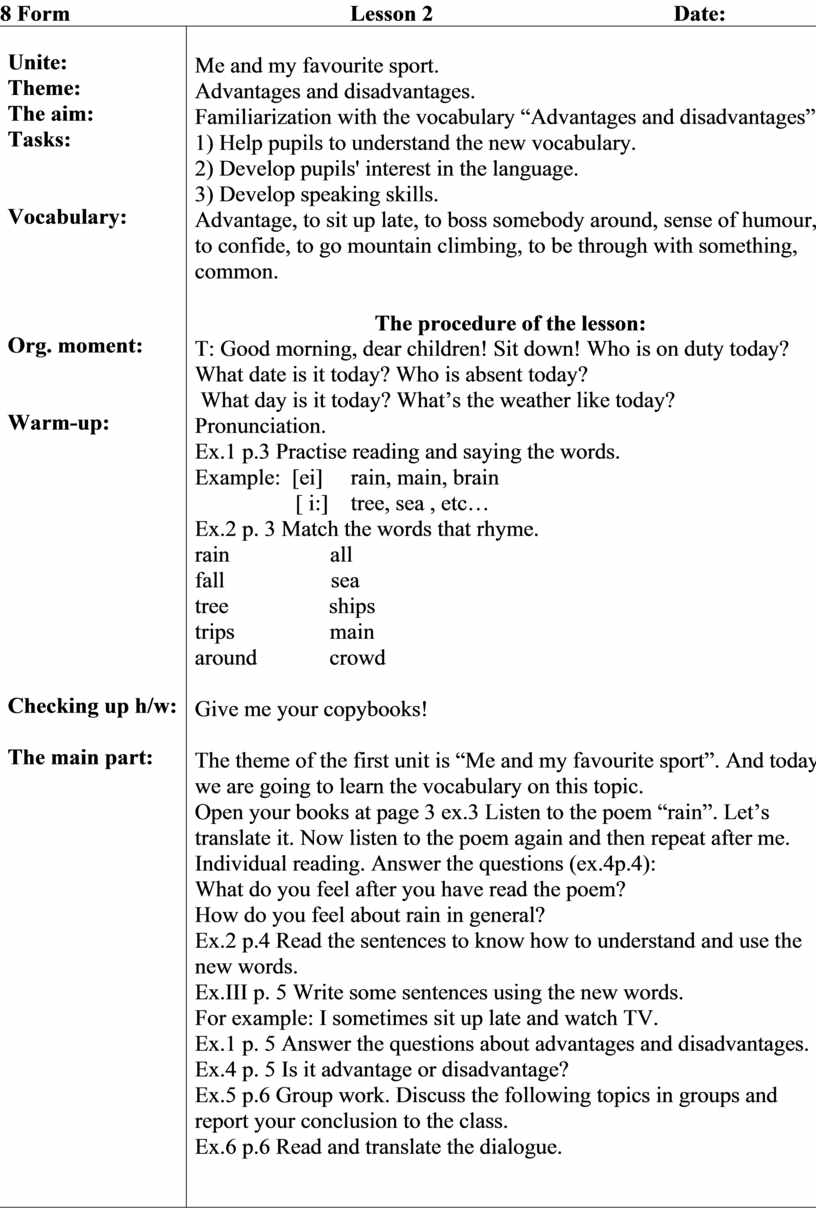
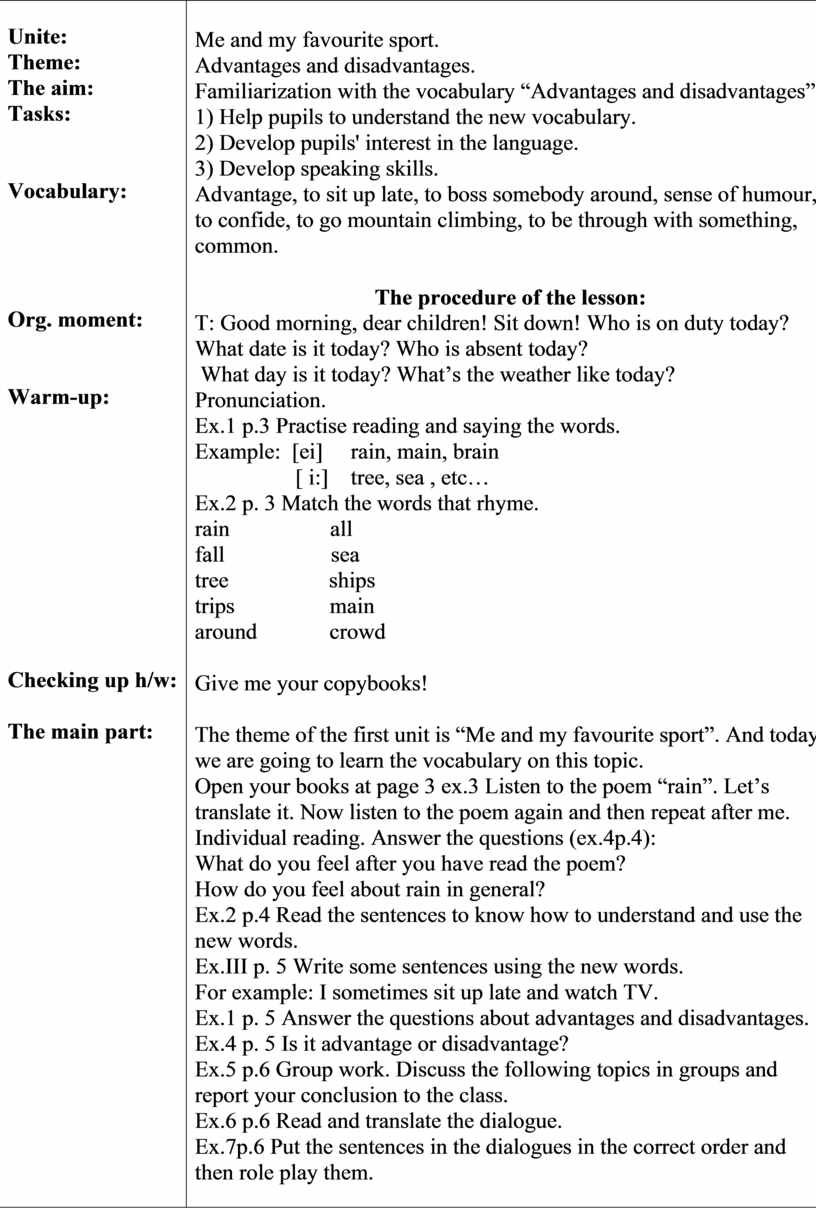
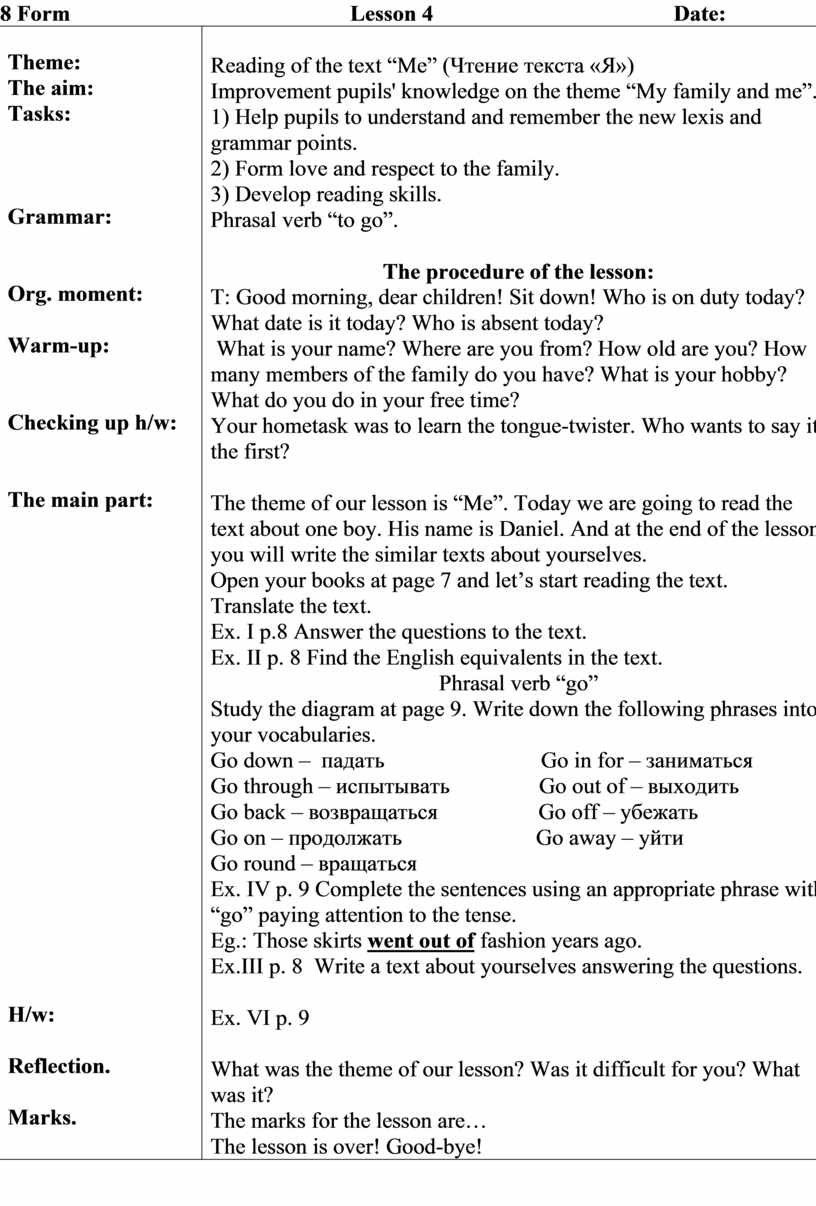
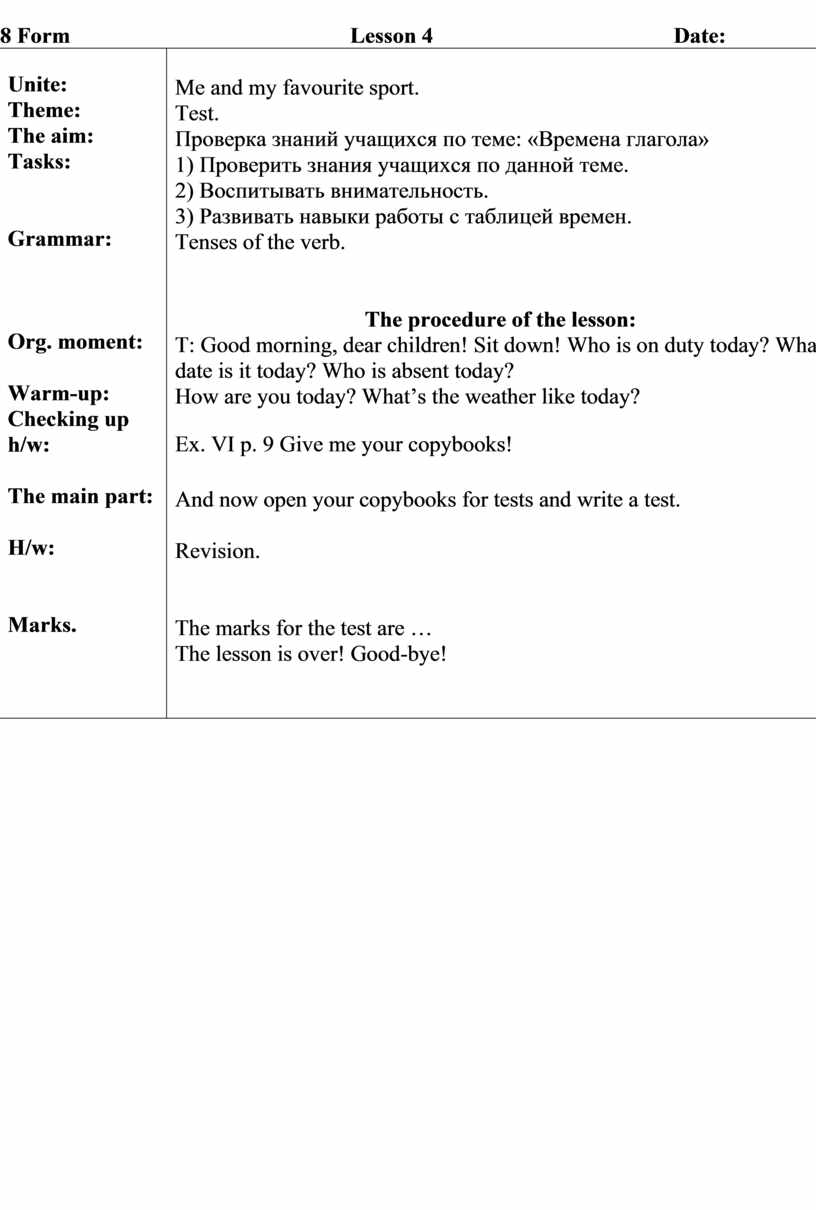

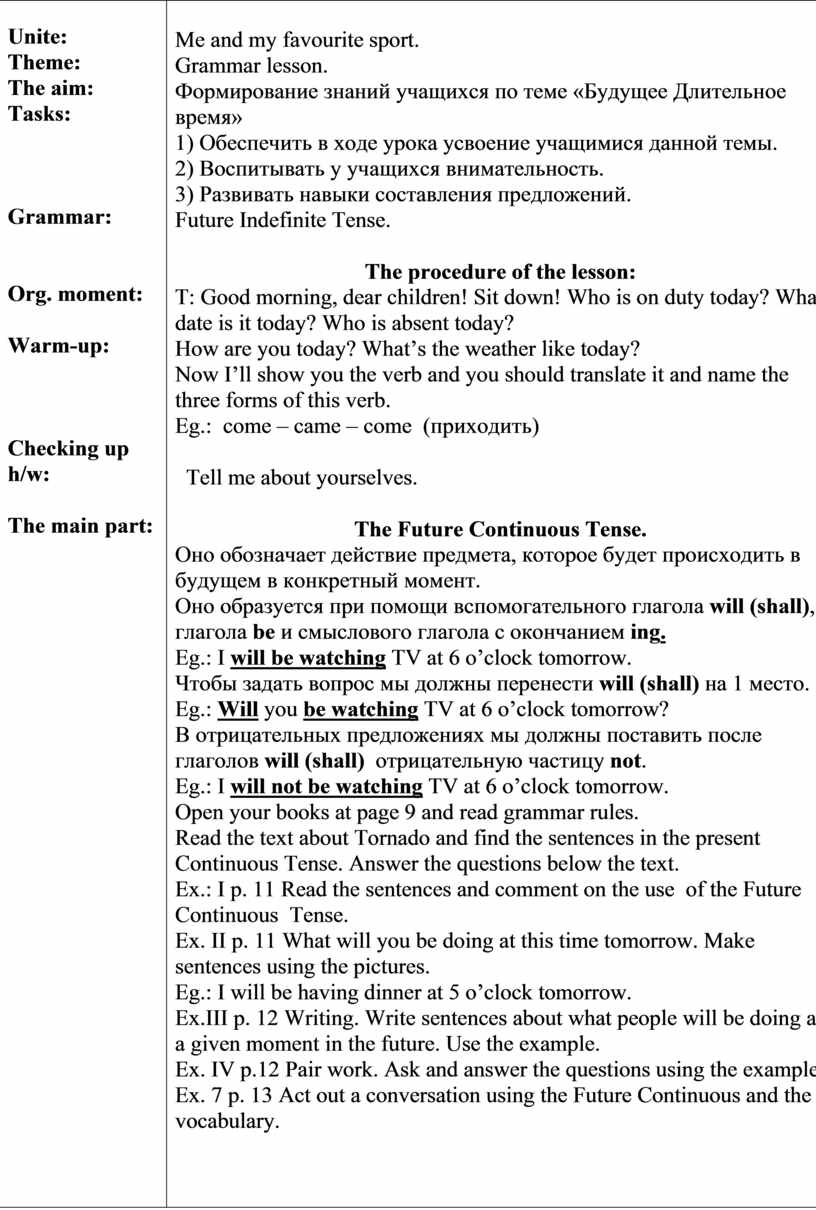
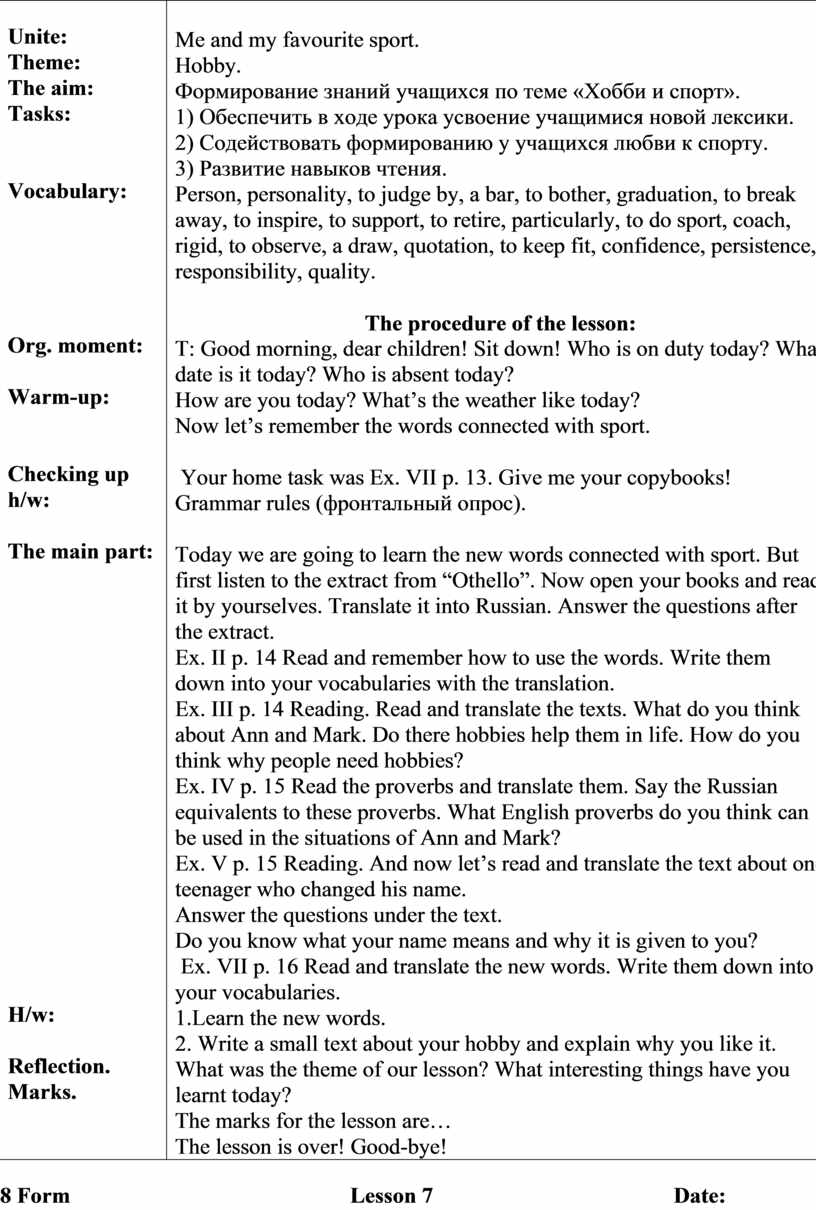
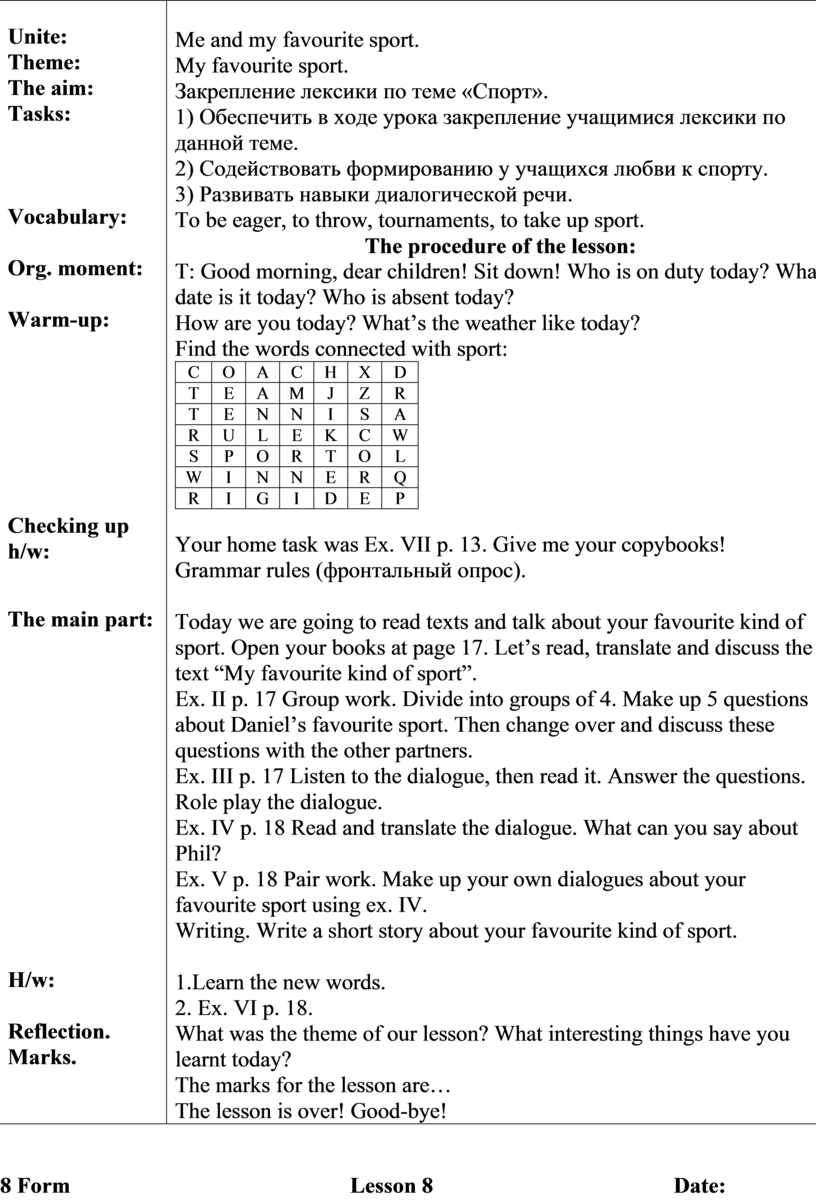
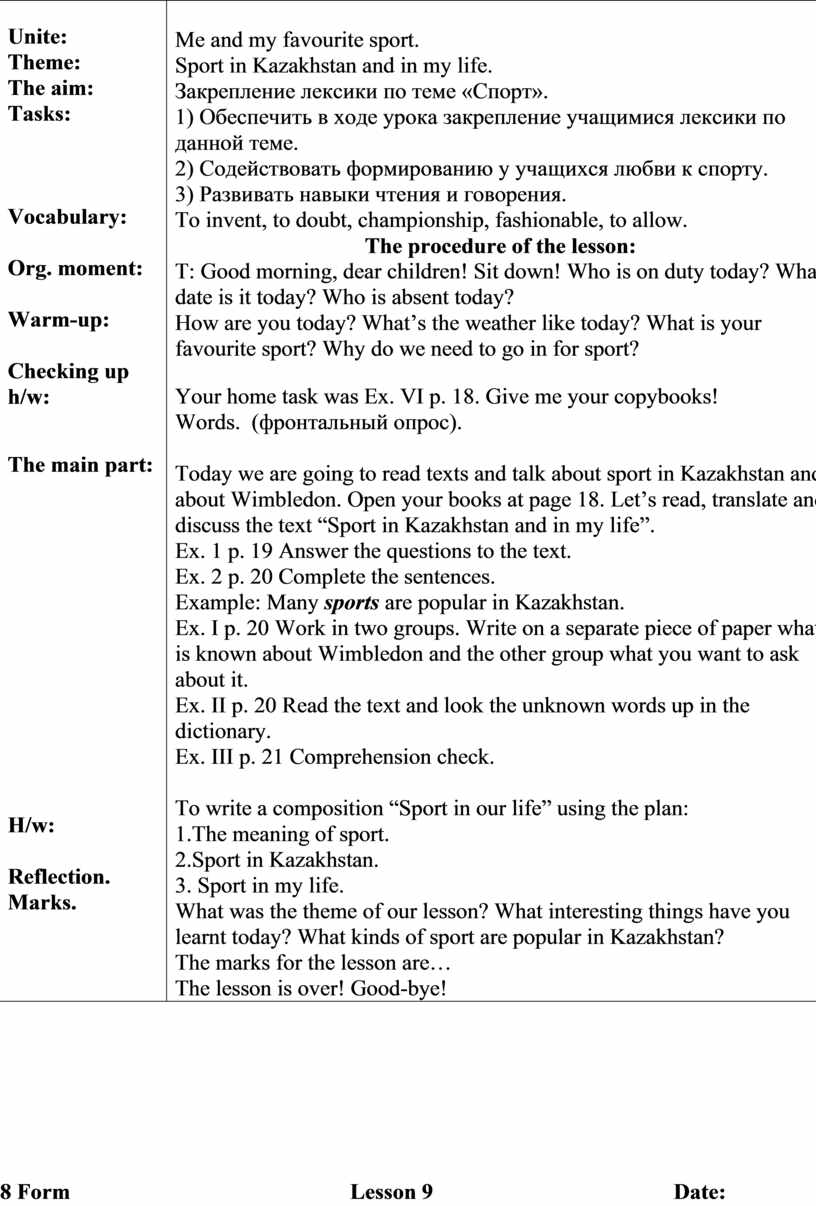
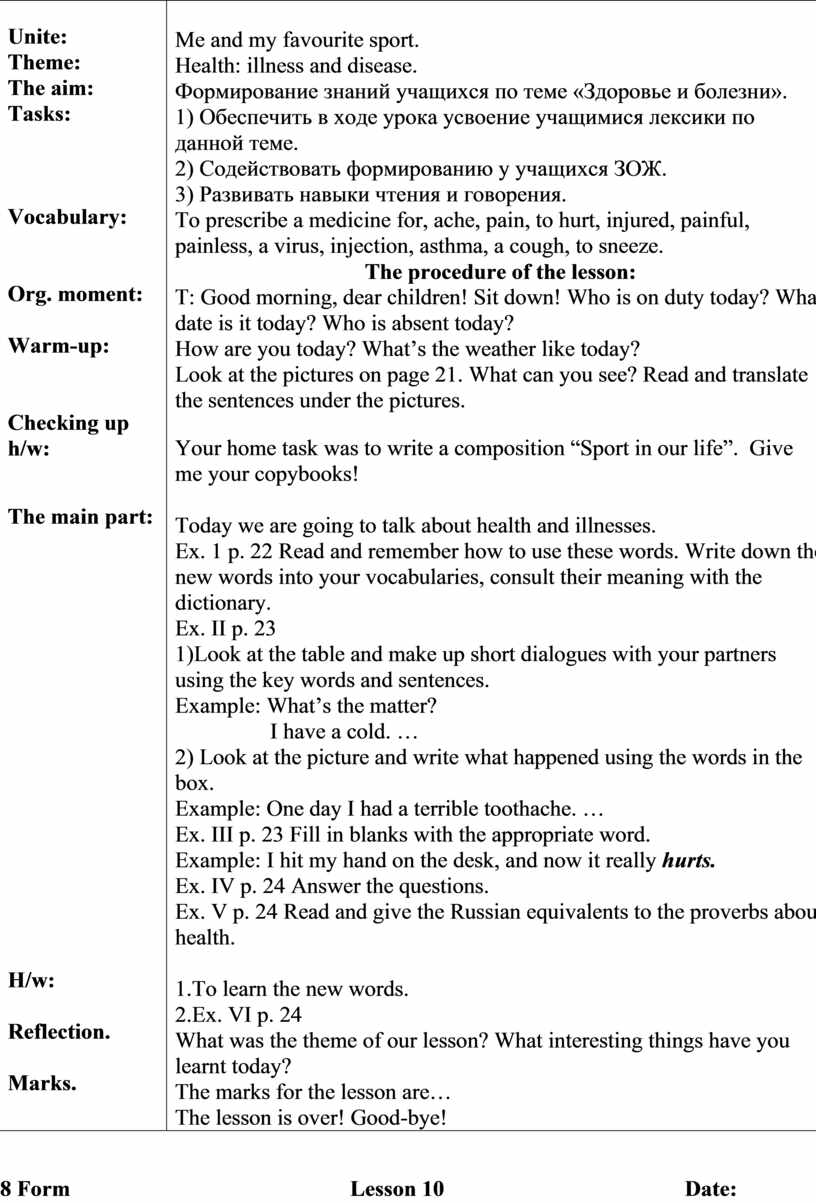
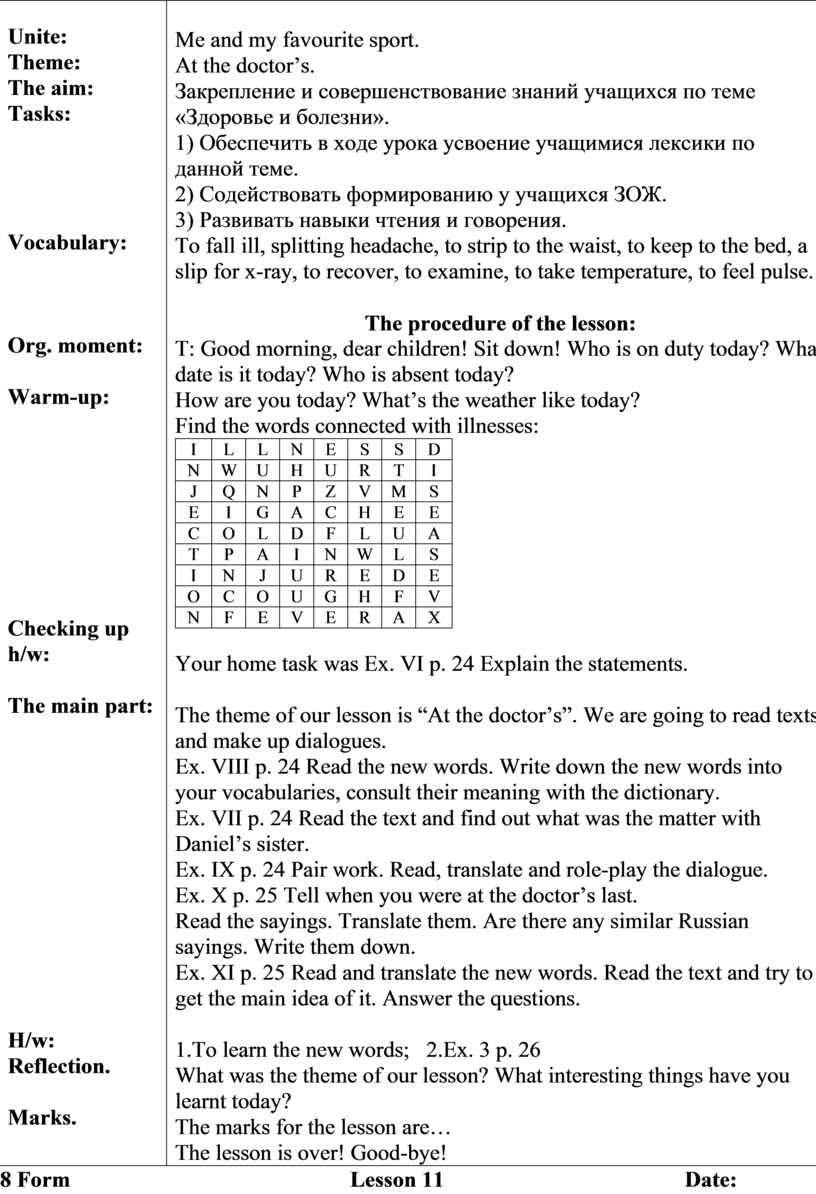


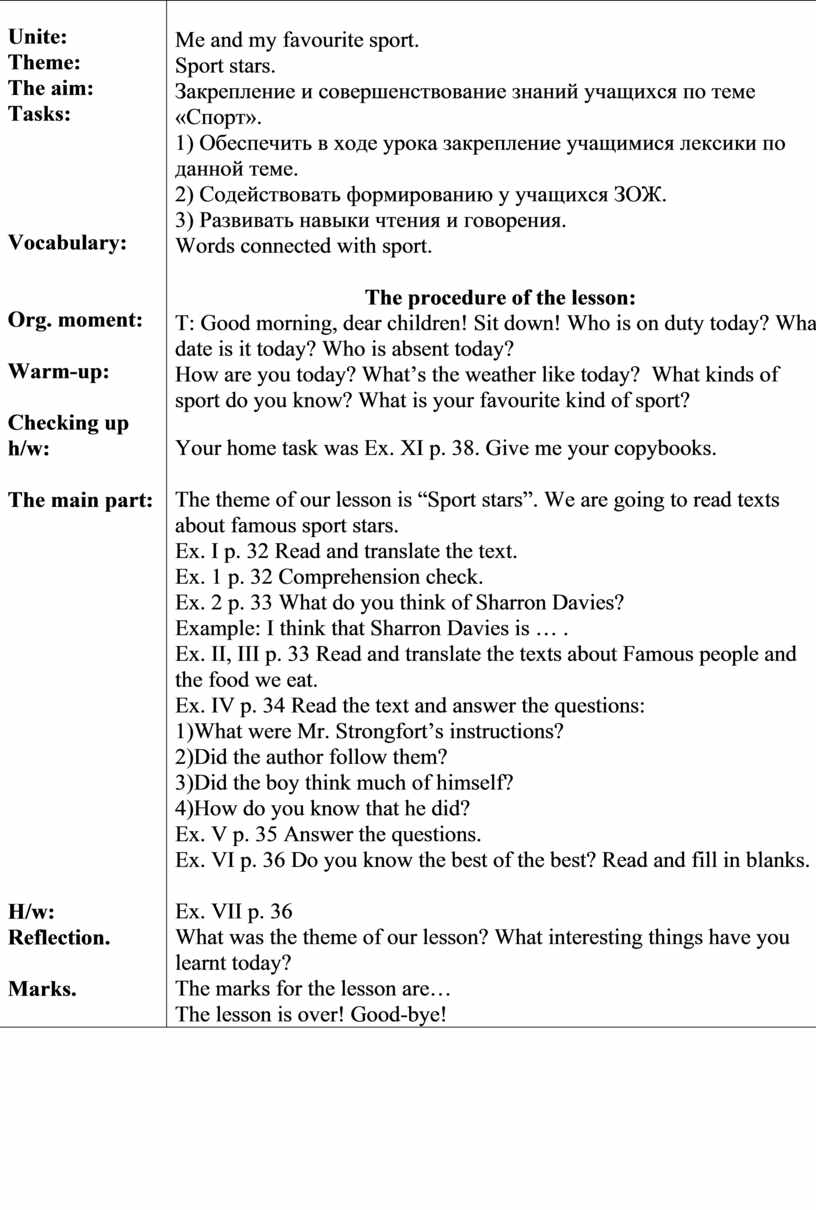

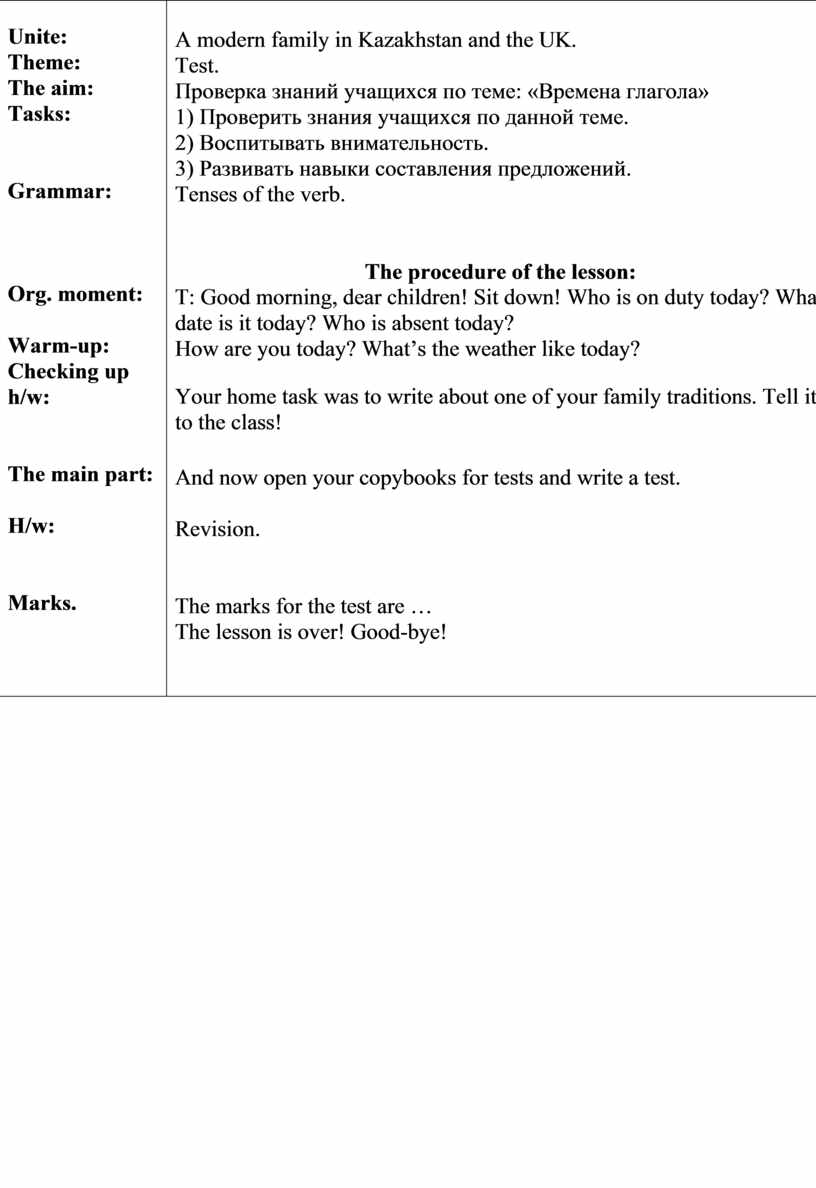

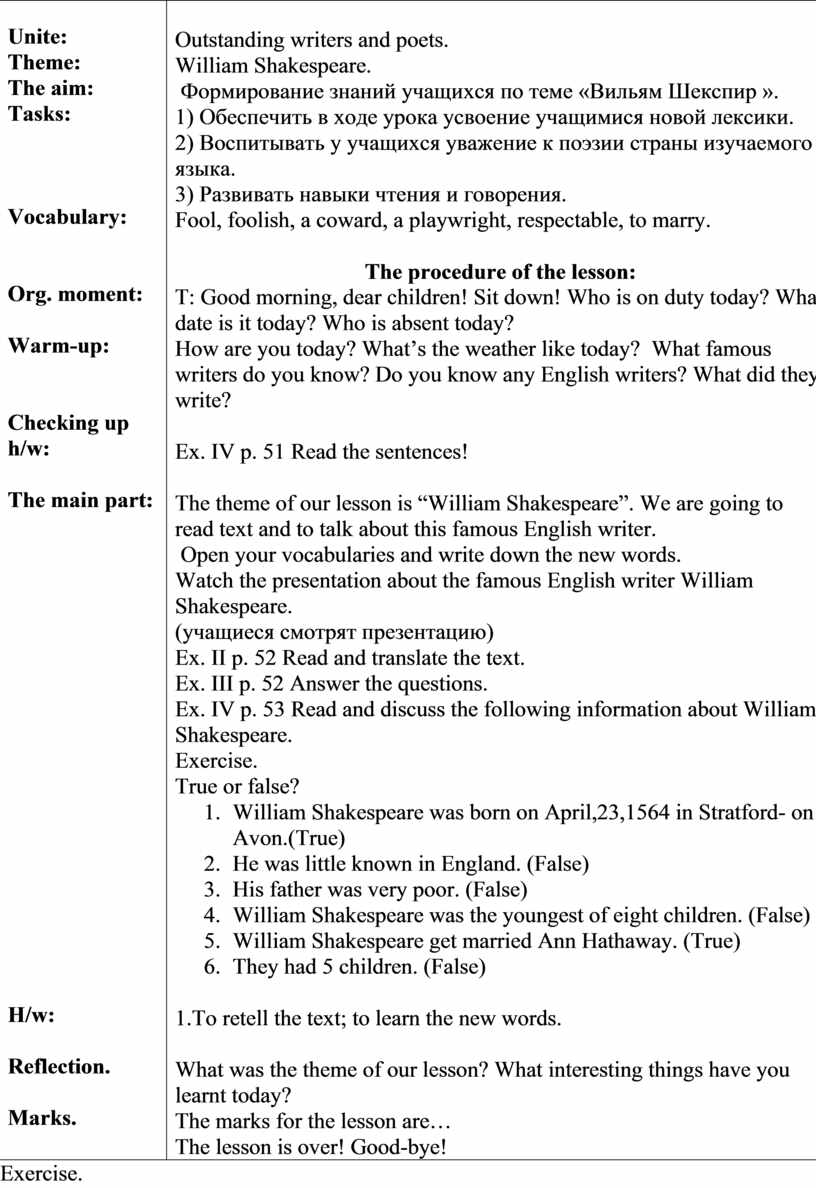

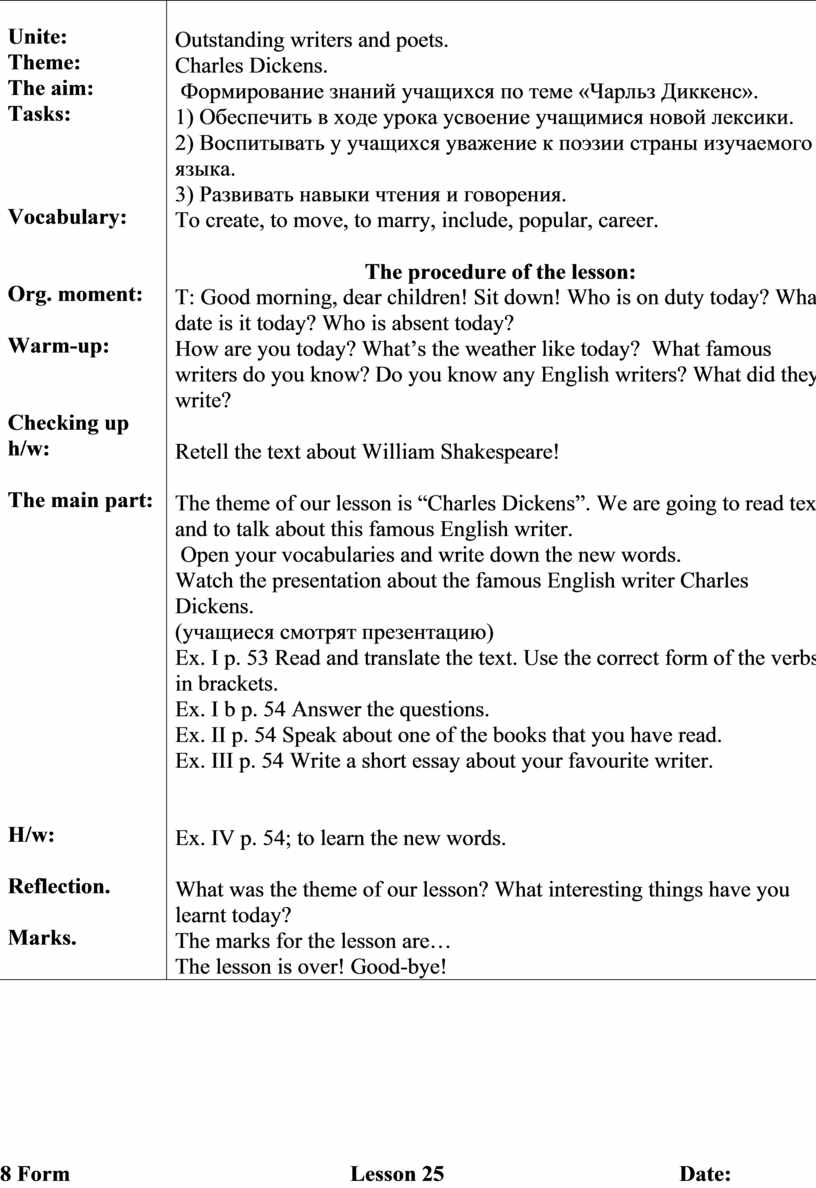


Материалы на данной страницы взяты из открытых источников либо размещены пользователем в соответствии с договором-офертой сайта. Вы можете сообщить о нарушении.