
Поделиться


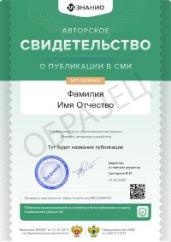
 Sharopov Sh.Sh Xalqaro impakt-faktor.pdf
Sharopov Sherzod Shirinboy o‘g‘li
Buxoro davlat pedagogika instituti,
Ingliz tili va adabiyoti kafedrasi o‘qituvchisi p.f.f.d., (PhD)
Abstract. Information gap activities are a dynamic and interactive approach to learning that fosters communication, collaboration, and critical thinking. These activities are designed to create situations where participants hold different pieces of information, requiring them to exchange details to complete a task or solve a problem. By intentionally creating an "information gap," learners are motivated to engage in meaningful dialogue, ask questions, and actively listen to their peers. Widely used in language teaching, team-building exercises, and problem-solving scenarios, information gap activities not only enhance communication skills but also promote creativity, empathy, and cooperation. This article explores the concept, benefits, and practical applications of information gap activities, highlighting their effectiveness in diverse educational and professional settings.
Keywords: communicative skills, information gap activities, language skills, communicative competence, motivation, real-life communication, authentic activity, meaning-focused activity, reasoning gap, opinion gap, fluency, accuracy.
The Information Gap activity is a useful activity in teaching English language, where one person has certain information that must be shared with others in order to solve a problem, gather information or make a decision. These types of activities are extremely effective in teaching english. They give every student the opportunity to speak in the target language for an extended period of time and students naturally produce more speech than they would normally do. So, the aim of this activity is exchange information and share ideas between two students, because this activity is mostly done in pairs, with each student having a part of the information. The two students will be asking each other questions to which they don’t know the answer. Moreover, while talking in pairs learners will not be embarrassed and share their ideas easily, and they will talk more willingly to solve a problem of the task, or give the needed information to the classmates. If we can assess that information gap activities are communicative activities for two or more learners. They involve learners having different bits of information, that they have to convey orally to each other. These types of activities necessitate accurate use of language by the giver of the information, and careful listening by the recipient.
In the real world, information gaps are very common. One person – the speaker – wants to ask a question and the other person – the listener – tries to answer it. In the classroom, we can use information gaps to give the students a chance to communicate with each other, just like people do in real life. We can use a wide variety of different materials in the classroom to design an information gap. Sometimes, we can use a picture, which one student tries to describe to another student. Sometimes, we can use a written text with information that students must pass to each other. An information gap can involve the different skills of reading, listening, writing and speaking. An information gap needs careful organization. Additionally, the teacher must think carefully about the instructions he or she will give to students so that they are very clear about what they have to do. Sometimes it’s useful to practise the activity before starting. At the end of the activity, the teacher can give students feedback on how well they did in the activity. The teacher can also point out any errors the students made, but it is important to remember that the teacher should do this after the activity and should not interrupt the pair work. According to Aleksey Ulko, an information gap is useful in the classroom because it gives students a reason to communicate with each other. Sometimes, the teacher can decide the kind of language that the students will use. Sometimes, the language can be very free and the students decide what kind of language they will use. We can use an information gap to practise grammar, especially verb forms such as the past simple or present continuous. We can also practise vocabulary: in fact, anything you choose. The teacher’s job is to organize the activity, and, while the students are working together, to monitor. This means that the teacher listens carefully, and makes a careful note of any errors the students make. The teacher tries not to interfere while the students are working together. For an information gap to work well, it needs to have a purpose. The students’ purpose is to bridge the gap by asking and answering questions.
As a component of classroom communication, information gap refers to planned output activities, which are crucial for teaching foreign language speaking because they closely resemble real-world scenarios. According to Prabhu “Information gap activities involve a transfer of given information from one person to another or from one form to another or from one place to another generally calling for the decoding or encoding of information from or into language”, while Harmer states that this type of activity is labeled as a meaning-focused activity as well as “reasoning gap” and “opinion gap”. The gap is the incomplete information two speakers have about a conversation topic.
➢ Reasoning gap activity involves comprehending and conveying information, and language learners do filling the gaps in a schedule or timetable and completing the picture;
➢ Opinion gap activity involves identifying and articulating a personal preference, feeling or attitude in response to a given situation. Learners do storycompletion tasks and take part in the discussions of a social issue.
Furthermore, Willis notes that this kind of approach is also used to prioritize meaning above accuracy in order to increase fluency. As previously mentioned, information gap exercises are a component of the communicative approach and are helpful in encouraging students to engage and improve their fluency. Brown states that information gap activities have two characteristics:
➢ the first one is that information gap focuses on the information and not to language forms;
➢ the second, information gap prioritize the communicative interaction in order to reach the objective.
Finding specific information, whether about the other person or connected to a particular activity, is the aim of information gap activities, which simulate genuine contact. Students must use these exercises to share information by asking and responding, and only by effectively communicating, they can obtain the information needed to do the assignment. Students must collaborate, ask questions, and share information in order to complete the assignment.
Turning to types of information gap activities divided into several activities including barrier games and jigsaw activities. Through information gap activities, students can get an opportunity for the development of effective questioning, answering, and note-taking. Information exchange activities work well in a mainstream class when everyone takes part. They can be useful at any age and for learners at any stage of English language proficiency, from New to English to Fluent.
Barrier games:
In barrier games, a barrier is placed between two learners so they are looking at different texts, images or objects. An example is The Black Death in Europe, where two learners are given maps of Europe annotated with different information and have to ask each other questions to enable them to fill in the details that are missing on their map.
Jigsaw activities are where learners are given information or carry out a task in one group, then the groups are mixed up to form new groups where the learners pool their knowledge to complete a further task. An example of this is Victorian Child Labour, where learners are asked to listen for specific information while watching a video, and then pool their information in a group of three who were focusing on different aspects from each other.
We can identify that this kind of activities helps students to communicate with each other, to solve a problem or complete a task. In these activities, individual students do not have all of the information needed to achieve the activity’s goal, which creates a “gap” that can only be overcome by speaking with other students to exchange information. The missing information required to complete the activity can be facts, opinions, or details related to textual, audio, or visual content.
Information gap activities are highly effective in enhancing students' learning skills. They are particularly beneficial for students who struggle with confidence, have limited vocabulary, or feel shy about expressing their ideas or answering questions in front of the class. These activities provide a safe and supportive environment for such students to practice speaking. Additionally, information gap activities make the teaching and learning process more engaging, as they are conducted between students rather than between the teacher and students. In this setup, the teacher acts as a facilitator rather than a controller, demonstrating the activity as a model so that students can understand the instructions and complete the task independently. The students are not just sitting and listening to the teacher’s explanation, but they can interact with their friends, enhance their confidence. In information gap activities, the teacher’s role is to explain the task, provide necessary vocabulary, and give clear instructions. Once the setup is complete, students work independently to complete the task. Since the activity requires collaboration, every learner must participate actively, as the task cannot be finished without everyone’s involvement. These activities are often highly motivating due to the variety and interactive nature of the tasks, with problem-solving tasks being particularly effective. To ensure success, the teacher should select tasks that match the students’ proficiency level. If the task is introduced in advance, it can be adapted to suit any level. Information gap activities encourage students to apply linguistic forms and functions in real-time communication, requiring them to recall grammar rules and vocabulary learned in class. One of their greatest strengths is their flexibility; they can be tailored to fit almost any topic, vocabulary set, or lesson objective. For instance, they can be used to review new vocabulary, practice parts of speech, or rehearse topic-based dialogues, making them a versatile tool in teaching language.
In conclusion, based on our teaching experience, we can affirm that regardless of the children’s age, it is essential to create structured frameworks for speaking activities that motivate them to use English for genuine communication. We can also confirm that incorporating information gap activities is highly beneficial. However, when designing these activities, teachers must carefully consider the learners’ needs, age, and level of social, cognitive, and emotional development to ensure their effectiveness.
THE LIST OF USED LITERATURE:
1. Harmer, J. (2004). Teaching English as a second or foreign language. Boston: Newbury House.
2. Klippel, F. (1985). Keep talking communicative fluency activities for language teaching (1st ed.).
London, UK: Cambridge University Press.
3. Prabhu, N. (1987). Second Language Pedagogy. Oxford, UK: Oxford
4. Putri, A. (2014). Using Information Gap Activities to Improve the Speaking
Skills of Grade VIII
Young Learners. Yogyakarta State University, Indonesia.
5. Neu, H., & Reeser, T. W. (1997). Parle-moiunpeu!: Information Gap
activities for beginning
French classes. Boston: Heinle & Heinle.
6. Sharopov Sh.Sh. Hamkorlik prinsipining texnikaviy va lingvistik sharhi.Adabiyotshunoslik va tarjimashunoslikning dolzarb muammolari: adabiy jarayon, qiyosiy adabiyotshunoslik, uslubshunoslik va tilshunoslik masalalari.
Xalqaro miqyosdagi ilmiy-anjuman materiallari. Buxoro, 2024-yil. 4_may. B.25-28 7. Sharopov Sh.Sh. Grice maksimalarining qisqacha sharhi va mazmuni.
Zamonaviy ta’limda oliy ta’lim pedagogikasi: nazariya va amaliyot integratsiyasi xalqaro ilmiy-nazariy anjuman. Buxoro, 2024-yil 24-may. B. 265-266.
Материалы на данной страницы взяты из открытых источников либо размещены пользователем в соответствии с договором-офертой сайта. Вы можете сообщить о нарушении.


