Поделиться


 Lesson plan Semiconductors.docx
|
|
|
|
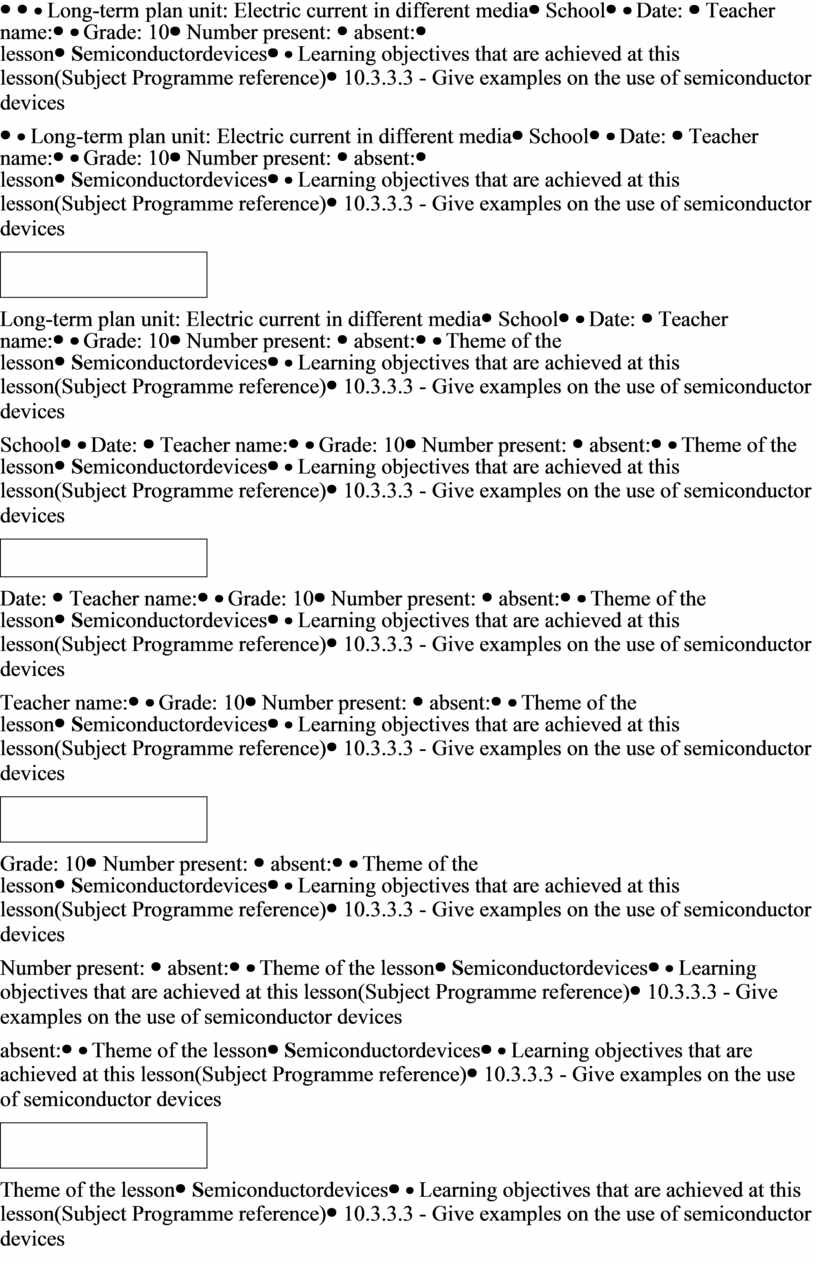
Long-term plan unit: Electric current in different media |
School |
||||||||||||||||||||||||||||||||||
|
Date: |
Teacher name: |
||||||||||||||||||||||||||||||||||
|
Grade: 10 |
Number present: |
absent: |
|||||||||||||||||||||||||||||||||
|
Theme of the lesson |
Semiconductordevices |
||||||||||||||||||||||||||||||||||
|
Learning objectives that are achieved at this lesson(Subject Programme reference) |
10.3.3.3 - Give examples on the use of semiconductor devices
|
||||||||||||||||||||||||||||||||||
|
Lesson objectives |
Be able to: ü know the types of semiconductor devices ü semiconductor property ü understand the operating principle of semiconductor devices ü know the scope of semiconductor devices in everyday life and technology |
||||||||||||||||||||||||||||||||||
|
Success criteria |
· Knows the types of semiconductor devices · Knows and understands the property of semiconductors · Understands the principle of semiconductor devices
|
||||||||||||||||||||||||||||||||||
|
Language objectives |
Subject-specific vocabulary & terminology: Students will use the following terms-
|
||||||||||||||||||||||||||||||||||
|
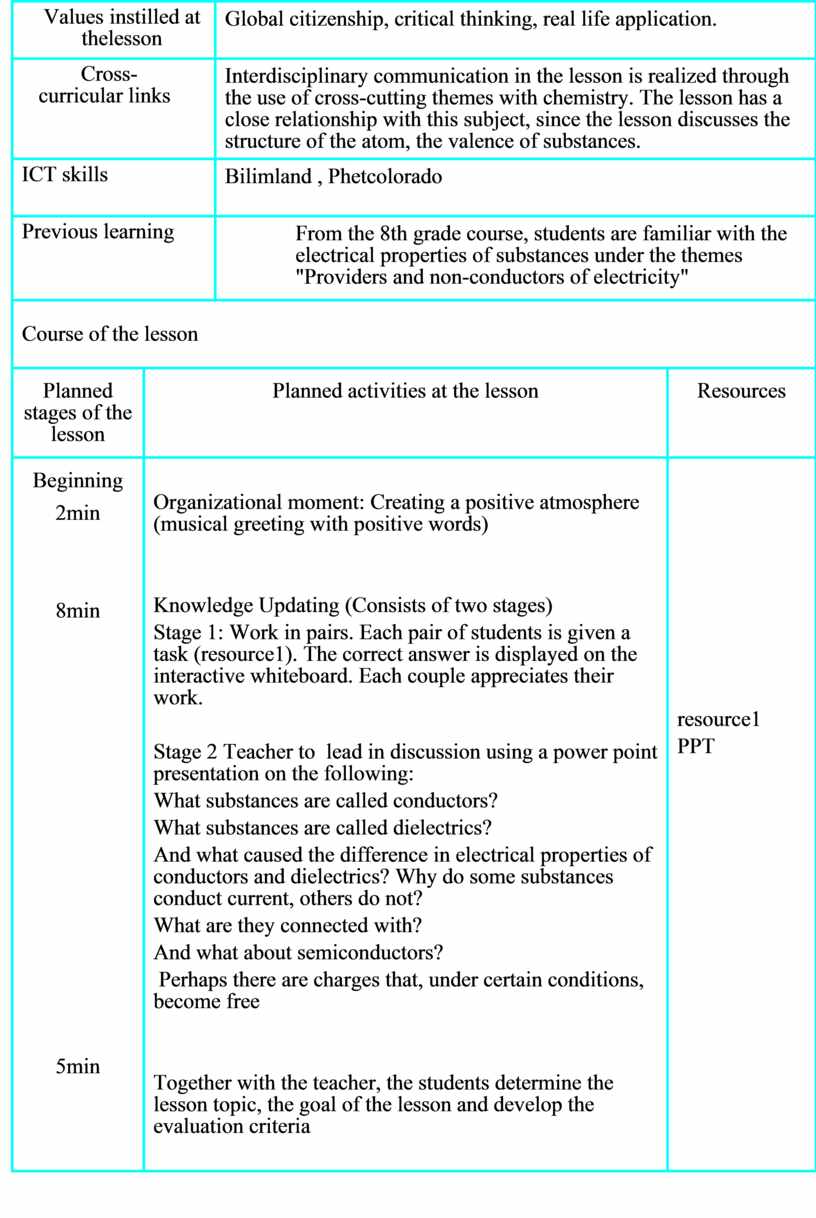
Values instilled at thelesson |
Global citizenship, critical thinking, real life application. |
||||||||||||||||||||||||||||||||||
|
Cross-curricular links |
Interdisciplinary communication in the lesson is realized through the use of cross-cutting themes with chemistry. The lesson has a close relationship with this subject, since the lesson discusses the structure of the atom, the valence of substances. |
||||||||||||||||||||||||||||||||||
|
ICT skills |
Bilimland , Phetcolorado |
||||||||||||||||||||||||||||||||||
|
Previous learning
|
From the 8th grade course, students are familiar with the electrical properties of substances under the themes "Providers and non-conductors of electricity" |
||||||||||||||||||||||||||||||||||
|
Course of the lesson |
|||||||||||||||||||||||||||||||||||
|
Planned stages of the lesson |
Planned activities at the lesson |
Resources |
|||||||||||||||||||||||||||||||||
|
Beginning 2min
8min
5min |
Organizational moment: Creating a positive atmosphere (musical greeting with positive words)
Knowledge Updating (Consists of two stages) Stage 1: Work in pairs. Each pair of students is given a task (resource1). The correct answer is displayed on the interactive whiteboard. Each couple appreciates their work.
Stage 2 Teacher to lead in discussion using a power point presentation on the following: What substances are called conductors? What substances are called dielectrics? And what caused the difference in electrical properties of conductors and dielectrics? Why do some substances conduct current, others do not? What are they connected with? And what about semiconductors? Perhaps there are charges that, under certain conditions, become free
Together with the teacher, the students determine the lesson topic, the goal of the lesson and develop the evaluation criteria
|
resource1 PPT |
|||||||||||||||||||||||||||||||||
|
Middle
20min
10мин
10min
5min
8min
7min
|
Division into 2 groups using colored stickers Problem situation (Practical work in a group (Laboratory equipment with instructions is given out to each group (Appendix No. 2). After performing practical work, each group prepares a report on the results of the experiment)
Group 1 Experiment with resistor and thermistor 2group Experiment with resistor and photoresistor
Teacher to lead in discussion using a power point presentation on the following:
* Based on the experiments done, what about semiconductors? *What are these substances? * Consider where these semiconductor properties can be used (for example, temperature dependence). * How can I use light dependency? * What is the reason for the change in resistance, the transition of a substance from the state of a dielectric to a conducting state? With what it can be connected? (Student Assumptions) * Where do the additional charge carriers come from, why are there more of them ?.
Studying a new topic (A teacher using video materials and a presentation gives information about the structure of semiconductors, about the mechanism of conductivity and the types of semiconductor devices used in engineering.)
Practical work in the group: "The study of the unilateral conductivity of a semiconductor diode"
Students to sit for a short formative assessment. (resource № 3) Students to do individual work.
Summing up (the teacher gives feedback on the work of the students for the lesson and each student shares his or her achievement of the learning objectives according to the evaluation criteria) At the end of the lesson, learners reflect on their learning: - What has been learned - What remained unclear - What is necessary to work on |
Laboratory equipment (photoresistor resistor, power supply, wires, current meters)
PPT
Laboratory equipment (photoresistor resistor, power supply, wires, current meters) Worksheet |
|||||||||||||||||||||||||||||||||
|
End 5min |
Reflection: Two stars and one wish (Determination of the effectiveness and usefulness of the class through the pupils' self-assessment) Homework: To consolidate the material covered, think over the following tasks and provide their solution: 1. How to use a semiconductor diode to protect radio equipment from polarity reversal? 2. There is an electrical circuit, which includes four series-connected elements - two light bulbs a and b and two switches A and B. In this case, each switch lights only one, only “its” light bulb. In order to light both bulbs, you need to simultaneously close both switches. |
|
|||||||||||||||||||||||||||||||||
|
Differentiation – how do you plan to give more support? How do you plan to challenge the more able learners? |
Assessment – how are you planning to check students’ learning? |
Health and safety regulations |
||||||||||||||||||||||||||||||||
|
All students will know substances related to semiconductors, about the mechanism of semiconductor conductivity, the scope of semiconductors. Idea generators (students with high motivation) will support their classmates in a group. Throughout the lesson the teacher will support the students. The following differentiation principles will be implemented: creativity, deepening of the topic, individual approach and differentiated approach when creating a pair and a group. |
In the beginning of the lesson: Oral feedback Differentiated feedback Differentiated scaffolding Self assessment Students have to assess their own work A teacher gives them Differentiated feedback
In the middle: Teacher comments on students worksheet1 and gives feedback if someone needs a help teacher gives a differentiated scaffolding
At the end of the lesson: Learners reflect on their learning: Students have to answer one of above questions in brief. If student prefers to write, they can use different stickers |
Students to place their bags in designated areas to avoid minor accidents.
During the work with the different materials (pen, pencil, spring, sharp objects) students must follow SAFETY RULES in the physics lab.
During the break time the lab assistant have to ventilate the classroom. |
||||||||||||||||||||||||||||||||
|
Reflection
Were the lesson objectives/learning objectives realistic? Did all learners achieve the LO? If not, why? Did my planned differentiation work well? Did I stick to timings? What changes did I make from my plan and why? |
Use the space below to reflect on your lesson. Answer the most relevant questions from the box on the left about your lesson. |
|||||||||||||||||||||||||||||||||
|
|
||||||||||||||||||||||||||||||||||
|
Summary evaluation
What two things went really well (consider both teaching and learning)? 1: What two things would have improved the lesson (consider both teaching and learning)? 1: what have I learned from this lesson about the class or achievements/difficulties of individuals that will inform my next lessons |
||||||||||||||||||||||||||||||||||
Материалы на данной страницы взяты из открытых источников либо размещены пользователем в соответствии с договором-офертой сайта. Вы можете сообщить о нарушении.