Поделиться


 PHY_10_49_V2_LP_Semiconductors.docx
|
Long-term plan unit: Current in different medium |
School: |
||||||||||||||||||||||
|
Date: |
Teacher name: |
||||||||||||||||||||||
|
Grade: 10 |
Number present: |
absent: |
|||||||||||||||||||||
|
Theme of the lesson |
Electric current in semiconductors. |
||||||||||||||||||||||
|
Learning objectives that are achieved at this lesson(Subject Program reference) |
10.4.3.3 - describe the electric current in semiconductors and explain the use of semiconductor devices;
|
||||||||||||||||||||||
|
Lesson objectives |
• To distinguish conductors and insulators; • To define semiconductors; • To distinguish intrinsic and extrinsic semiconductors; • To describe the productions of semiconductors; • To describes current flow in p type and n type of semiconductors; • Name examples of applications of a semiconductor
|
||||||||||||||||||||||
|
Assessment criteria |
Students can • Distinguish conductors and insulators; • Define semiconductors; • Distinguish intrinsic and extrinsic semiconductors; • Describe the productions of semiconductors; • Describes current flow in p type and n type of semiconductors; • List examples of applications of a semiconductor |
||||||||||||||||||||||
|
Language objectives |
|
||||||||||||||||||||||
|
Values instilled at the lesson |
Safety, Consideration to others, Co-operation, Opportunity for Life-Long Learning, Academic Integrity and Transparency, Respect for Self and Others |
||||||||||||||||||||||
|
Cross-curricular links |
Other subject links include Mathematics, IT |
||||||||||||||||||||||
|
ICT skills |
ICT links to use of computers, data loggers, scientific calculators and tablets etc. Making use of internet resources and encourage students to research information online as well as using ICT tools like professional presenter, use of smart board to aid learning. |
||||||||||||||||||||||
|
Previous learning
|
Electric current in metals |
||||||||||||||||||||||
|
Course of the lesson |
|||||||||||||||||||||||
|
Planned stages of the lesson |
Planned activities at the lesson |
Resources |
|||||||||||||||||||||
|
Beginning of the lesson 10 min |
Introduce students with the topic of the lesson and LO. Starter activity 1: Work in pairs Students asked questions from previous topics: What are the similarities between conductors and insulators What is the main difference between insulators and conductors in term of moving electrons Give examples of insulators Give examples of conductors Students discuss answers and teacher might ask questions. Based on the discussion, invite students to hypothesize how to change the conductivity in semiconductors. Aim of this activity to revise what they have learn and focus their attention to the new topic. Teacher might complete their answers with the slides. |
Slides Smartboard |
|||||||||||||||||||||
|
Middle 15 min
10 min
3 min |
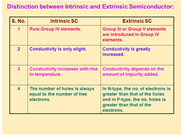
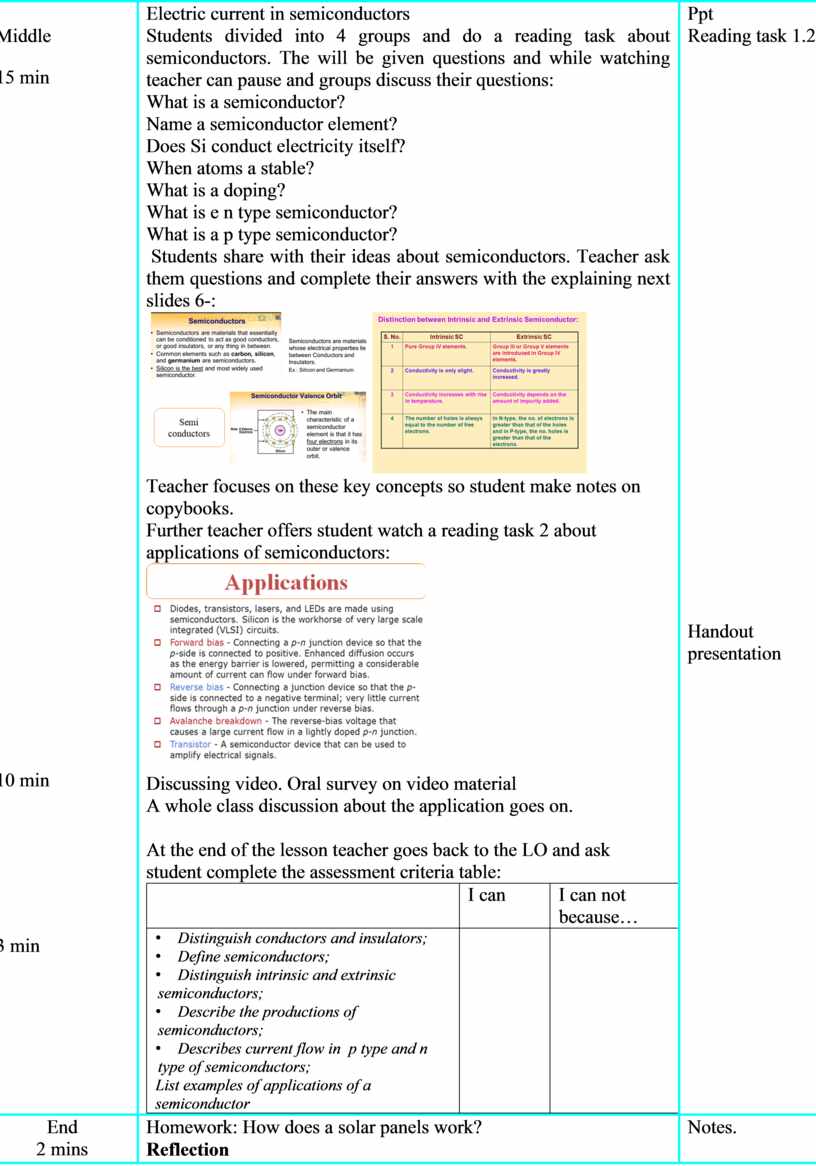
Electric current in semiconductors Students divided into 4 groups and do a reading task about semiconductors. The will be given questions and while watching teacher can pause and groups discuss their questions: What is a semiconductor? Name a semiconductor element? Does Si conduct electricity itself? When atoms a stable? What is a doping? What is e n type semiconductor? What is a p type semiconductor? Students share with their ideas about semiconductors. Teacher ask them questions and complete their answers with the explaining next slides 6-: Teacher focuses on these key concepts so student make notes on copybooks. Further teacher offers student watch a reading task 2 about applications of semiconductors:
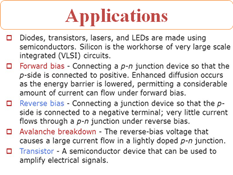
Discussing video. Oral survey on video material A whole class discussion about the application goes on.
At the end of the lesson teacher goes back to the LO and ask student complete the assessment criteria table:
|
Ppt Reading task 1.2
Handout presentation |
|||||||||||||||||||||
|
End 2 mins |
Homework: How does a solar panels work? Reflection Today I found out ... It was interesting … It was difficult… I understand that… |
Notes. |
|||||||||||||||||||||
|
Differentiation – how do you plan to give more support? How do you plan to challenge the more able learners? |
Assessment – how are you planning to check students’ learning?
|
Health and safety regulations
|
|||||||||||||||||||||
|
During watching video teacher might ask more able learners conceptual questions so it help others understand more |
By observing their reflection and answers |
All safety rules confirmed |
|||||||||||||||||||||
|
Reflection Were the lesson objectives/learning objectives realistic? Did all learners achieve the LO? If not, why? Did my planned differentiation work well? Did I stick to timings? What changes did I make from my plan and why? |
Use the space below to reflect on your lesson. Answer the most relevant questions from the box on the left about your lesson. |
||||||||||||||||||||||
|
|
|||||||||||||||||||||||
|
Summary evaluation What two things went really well (consider both teaching and learning)? 1: 2: What two things would have improved the lesson (consider both teaching and learning)? 1: 2: What have I learned from this lesson about the class orachievements/difficulties of individuals that will inform my next lesson? |
|||||||||||||||||||||||
Скачано с www.znanio.ru


Материалы на данной страницы взяты из открытых источников либо размещены пользователем в соответствии с договором-офертой сайта. Вы можете сообщить о нарушении.