Поделиться


 Б-36 Английский язык (налоги) (1).pptx
Taxation in Russia: A Global Perspective
Exploring how Russia's tax system compares with Europe and the United States, revealing a unique balance between fiscal policy and economic stimulus
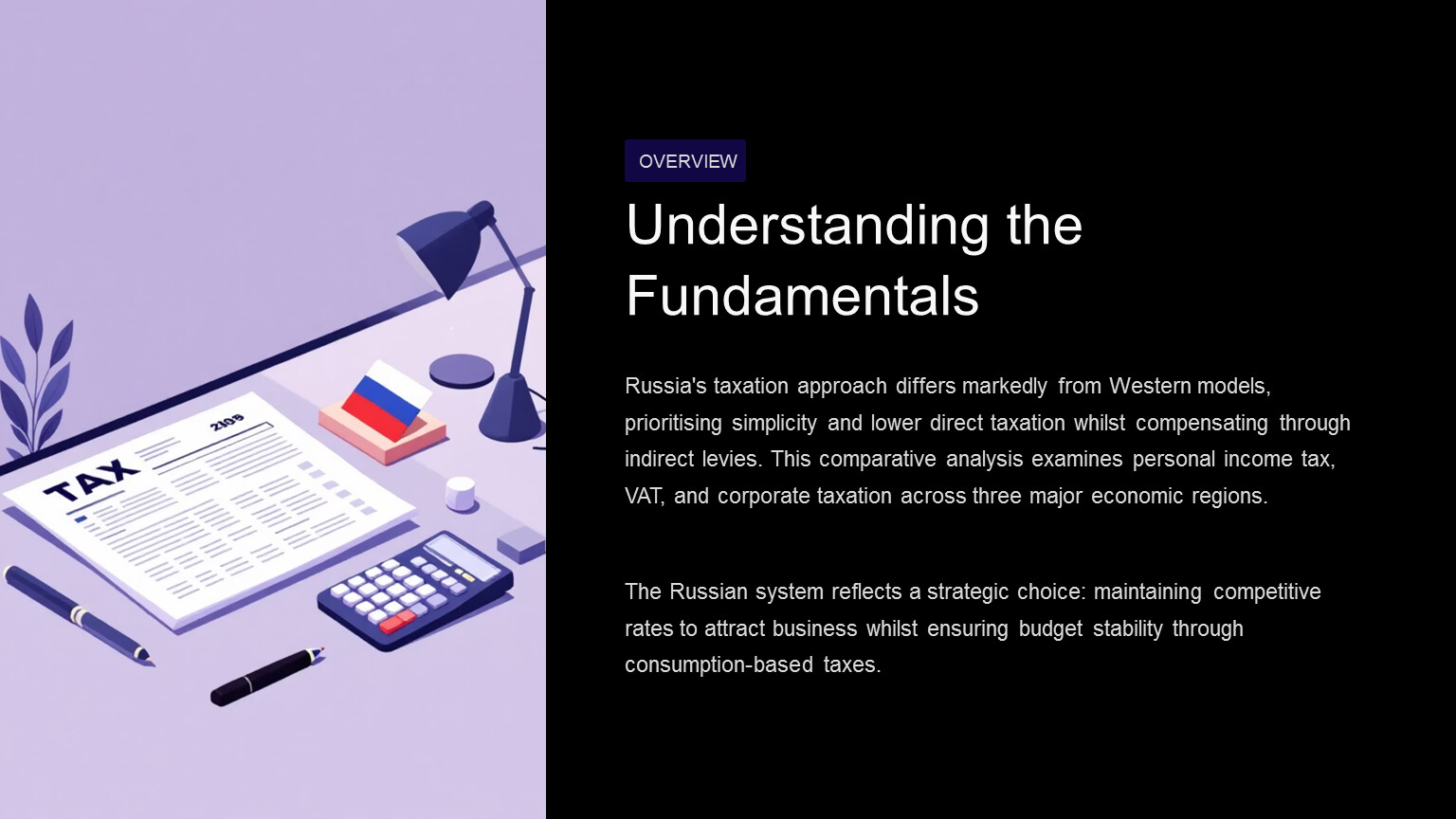
OVERVIEW
Understanding the Fundamentals
Russia's taxation approach differs markedly from Western models, prioritising simplicity and lower direct taxation whilst compensating through indirect levies. This comparative analysis examines personal income tax, VAT, and corporate taxation across three major economic regions.
The Russian system reflects a strategic choice: maintaining competitive rates to attract business whilst ensuring budget stability through consumption-based taxes.
PERSONAL INCOME TAX
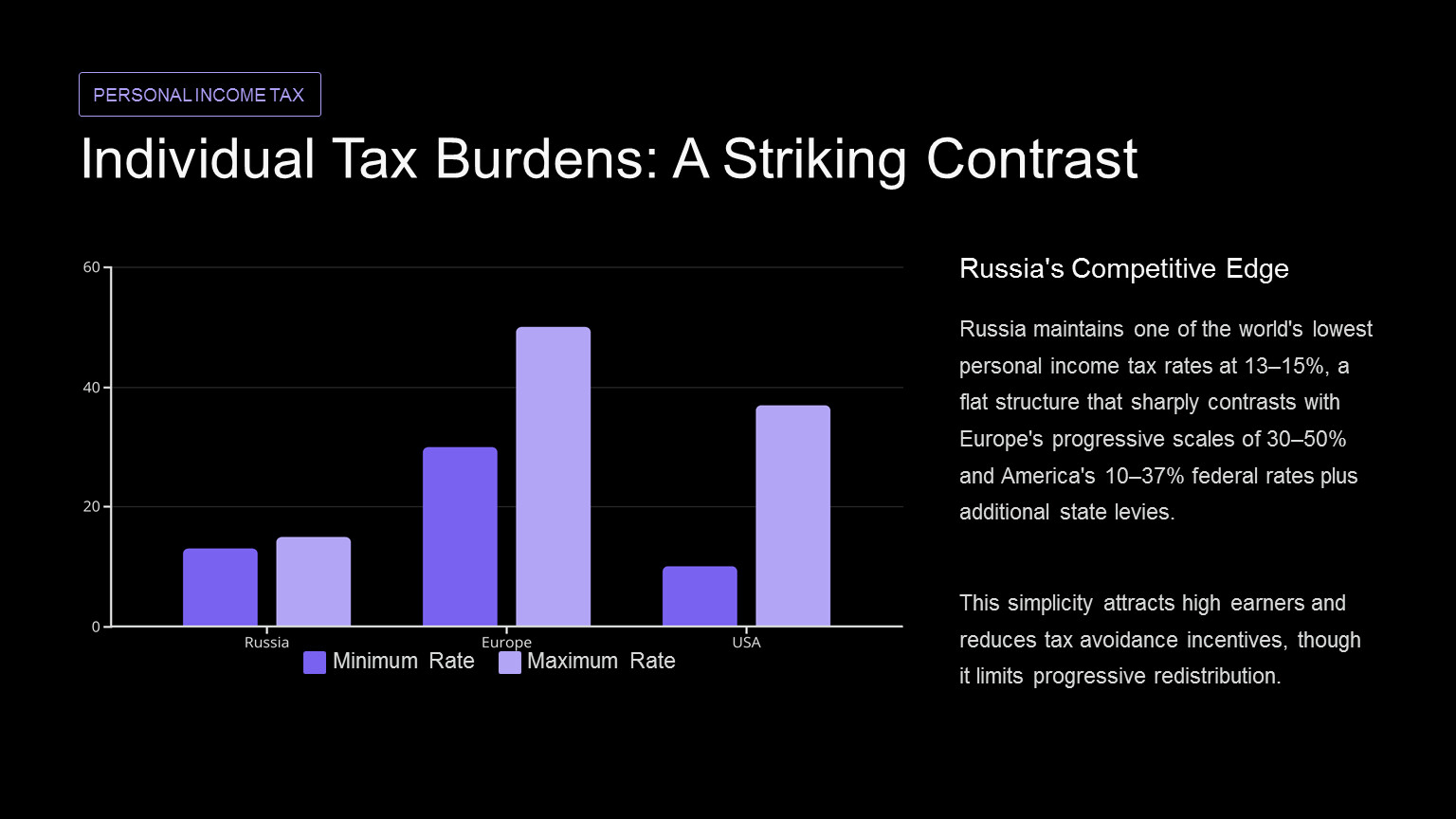
Individual Tax Burdens: A Striking Contrast
Minimum Rate
Maximum Rate
Russia's Competitive Edge
Russia maintains one of the world's lowest personal income tax rates at 13–15%, a flat structure that sharply contrasts with Europe's progressive scales of 30–50% and America's 10–37% federal rates plus additional state levies.
This simplicity attracts high earners and reduces tax avoidance incentives, though it limits progressive redistribution.
CONSUMPTION TAXES
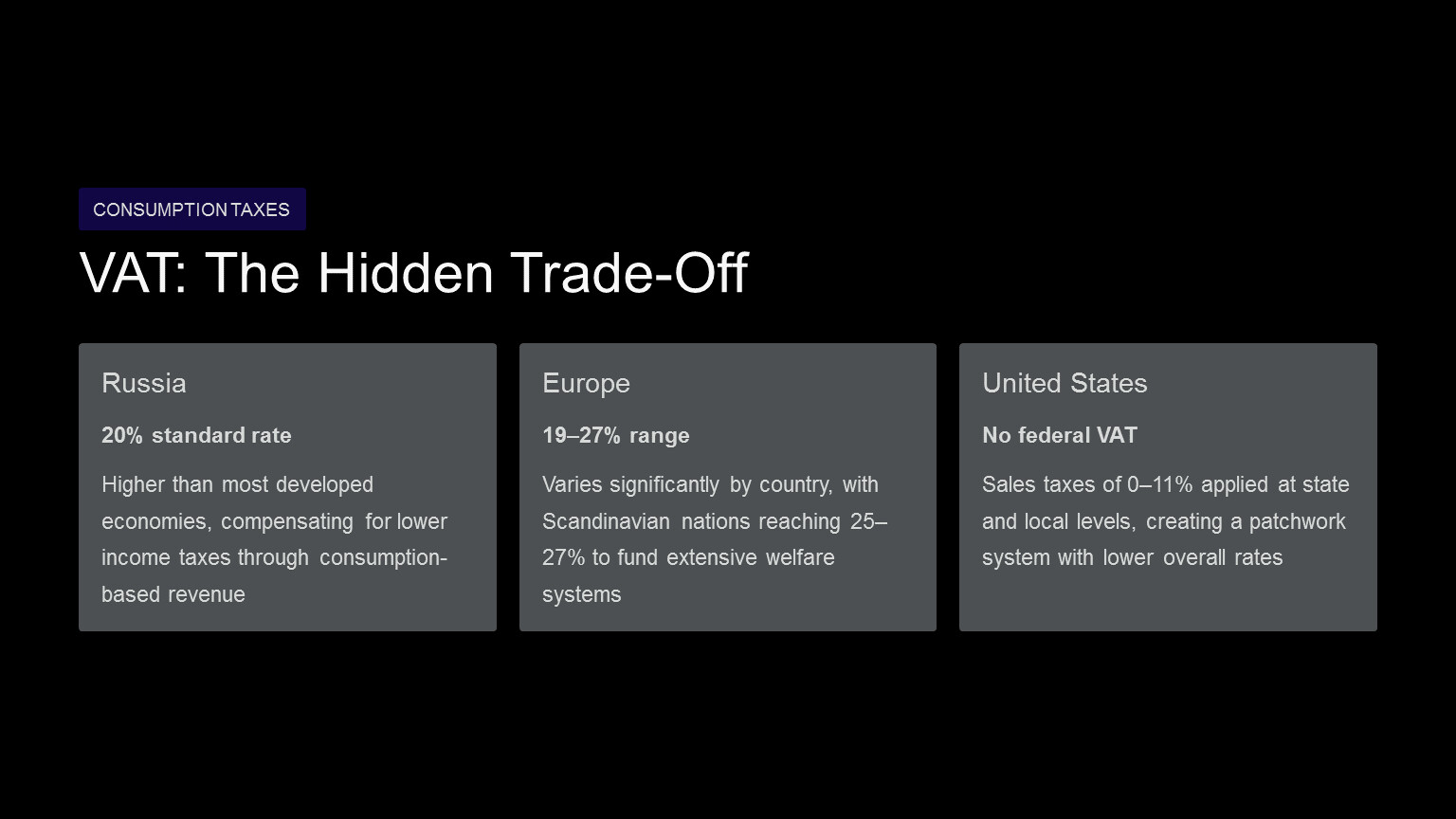
VAT: The Hidden Trade-Off
Russia
20% standard rate
Higher than most developed economies, compensating for lower income taxes through consumption-based revenue
Europe
19–27% range
Varies significantly by country, with Scandinavian nations reaching 25–27% to fund extensive welfare systems
United States
No federal VAT
Sales taxes of 0–11% applied at state and local levels, creating a patchwork system with lower overall rates
Corporate Taxation Landscape
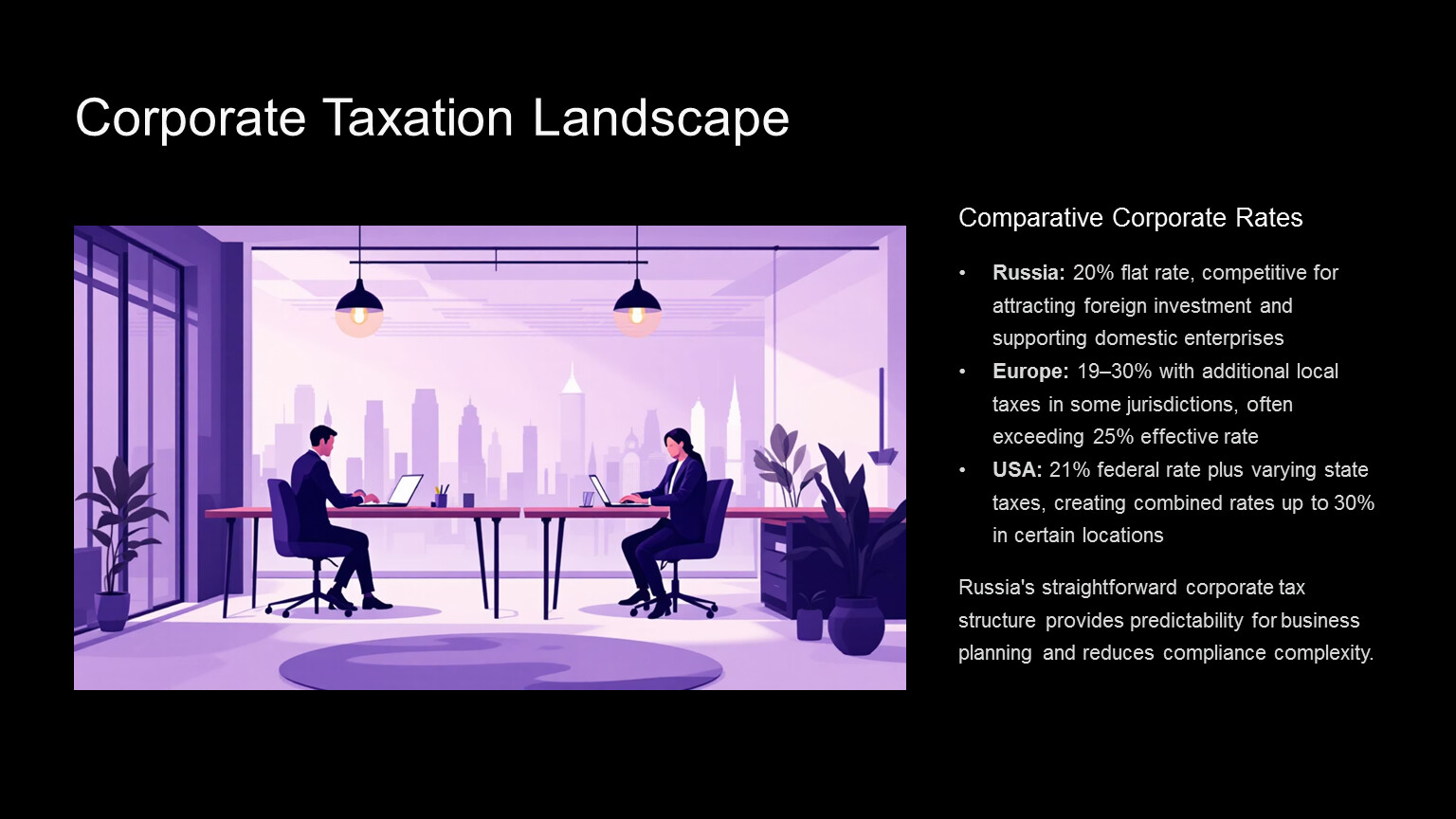
Comparative Corporate Rates
Russia: 20% flat rate, competitive for attracting foreign investment and supporting domestic enterprises
Europe: 19–30% with additional local taxes in some jurisdictions, often exceeding 25% effective rate
USA: 21% federal rate plus varying state taxes, creating combined rates up to 30% in certain locations
Russia's straightforward corporate tax structure provides predictability for business planning and reduces compliance complexity.
ADVANTAGES
Russia's Taxation Strengths
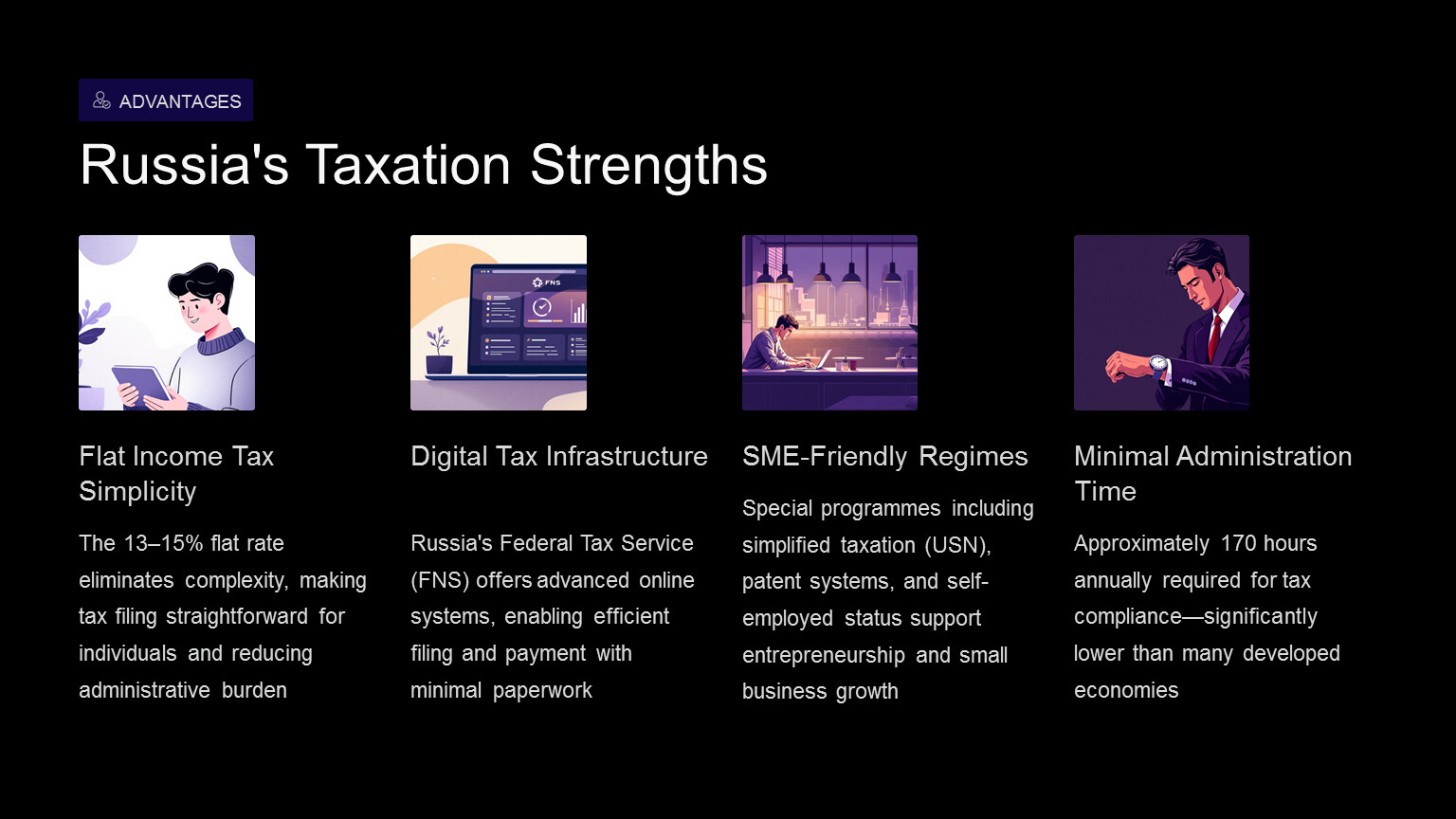
Flat Income Tax Simplicity
The 13–15% flat rate eliminates complexity, making tax filing straightforward for individuals and reducing administrative burden
Digital Tax Infrastructure
Russia's Federal Tax Service (FNS) offers advanced online systems, enabling efficient filing and payment with minimal paperwork
SME-Friendly Regimes
Special programmes including simplified taxation (USN), patent systems, and self-employed status support entrepreneurship and small business growth
Minimal Administration Time
Approximately 170 hours annually required for tax compliance—significantly lower than many developed economies
CONSIDERATIONS
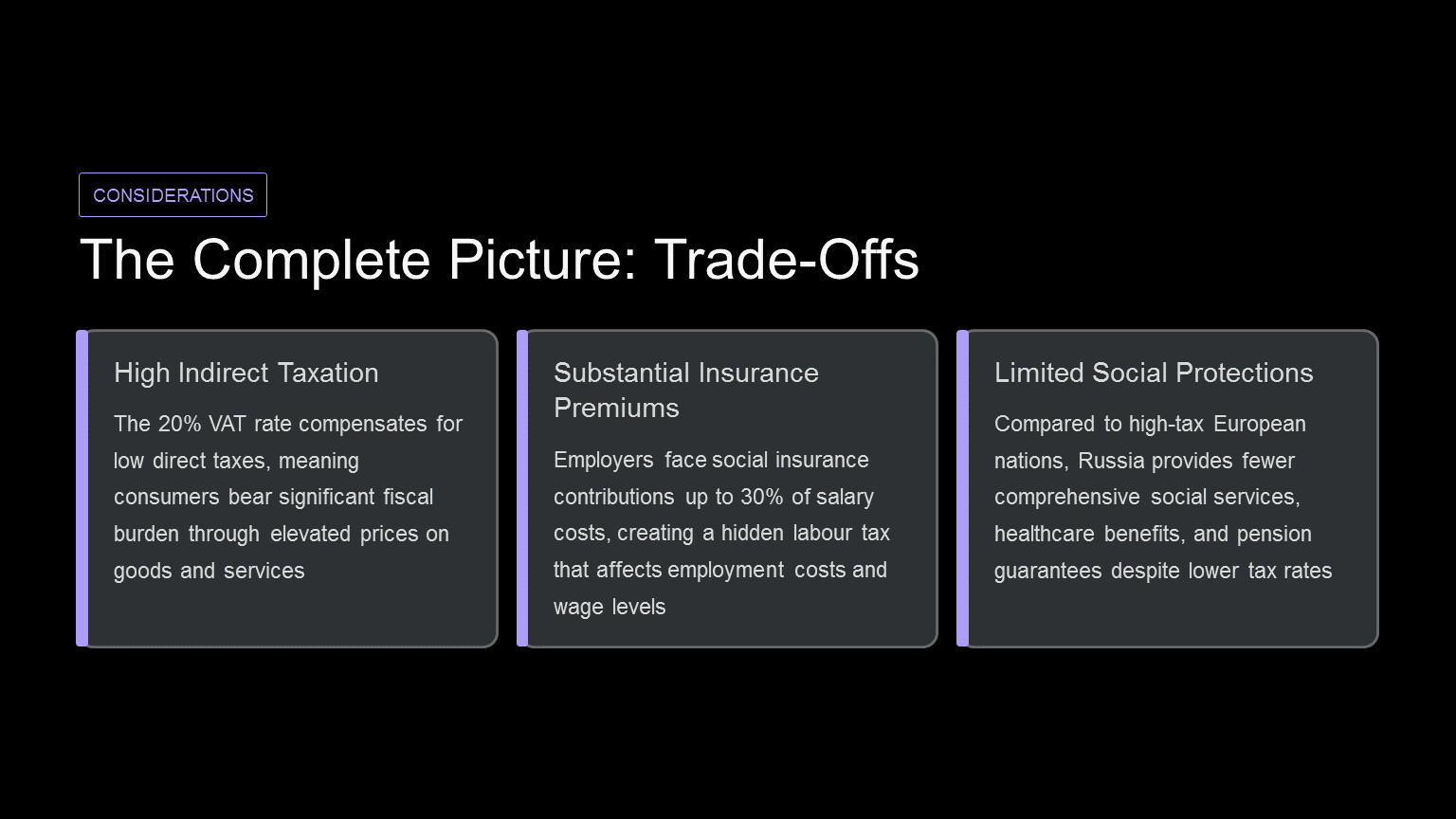
The Complete Picture: Trade-Offs
High Indirect Taxation
The 20% VAT rate compensates for low direct taxes, meaning consumers bear significant fiscal burden through elevated prices on goods and services
Substantial Insurance Premiums
Employers face social insurance contributions up to 30% of salary costs, creating a hidden labour tax that affects employment costs and wage levels
Limited Social Protections
Compared to high-tax European nations, Russia provides fewer comprehensive social services, healthcare benefits, and pension guarantees despite lower tax rates
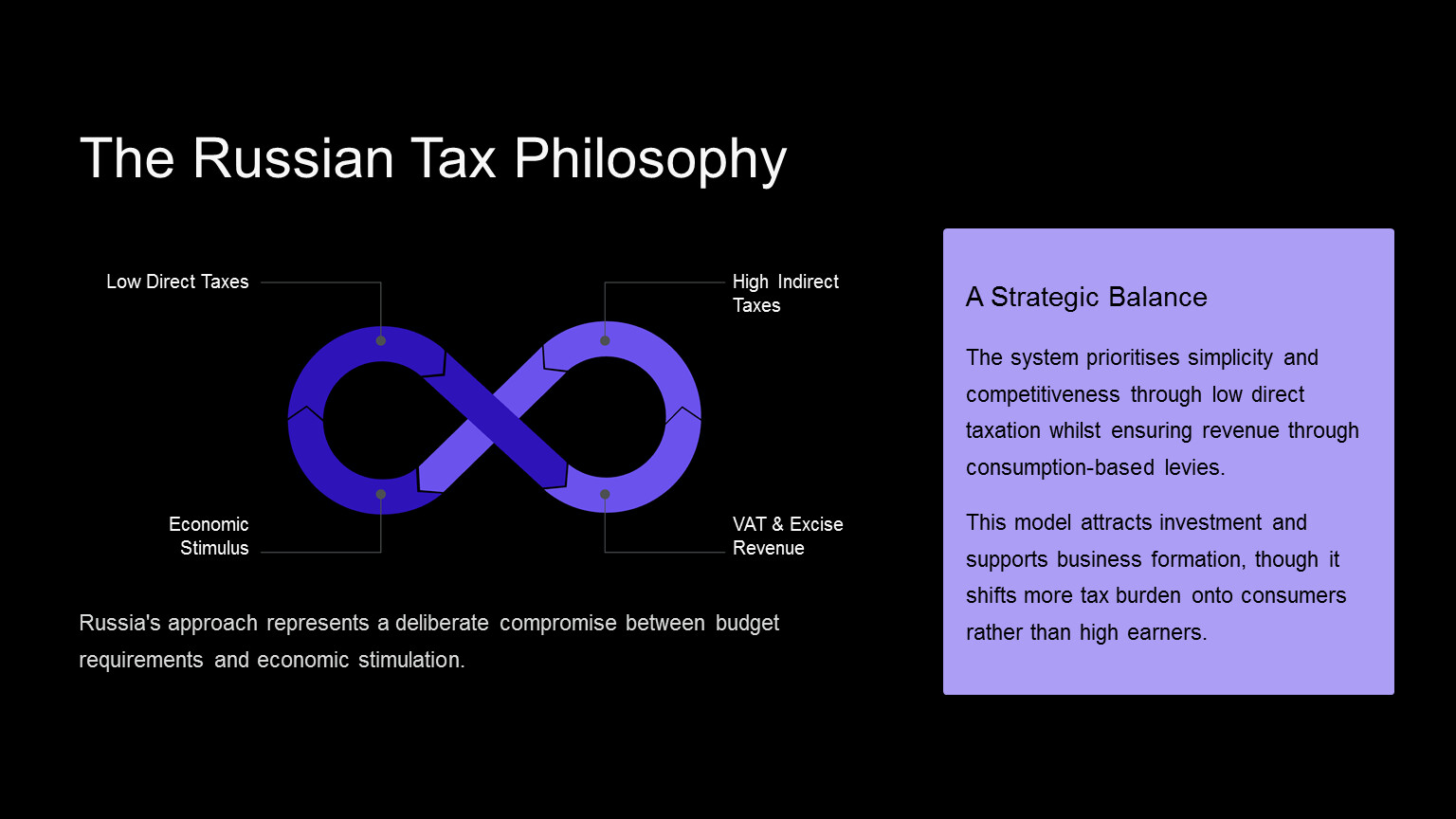
The Russian Tax Philosophy
Low Direct Taxes
High Indirect Taxes
VAT & Excise Revenue
Economic Stimulus
Russia's approach represents a deliberate compromise between budget requirements and economic stimulation.
A Strategic Balance
The system prioritises simplicity and competitiveness through low direct taxation whilst ensuring revenue through consumption-based levies.
This model attracts investment and supports business formation, though it shifts more tax burden onto consumers rather than high earners.
BUSINESS PERSPECTIVE
Competitive Conditions for Enterprise
Low Entry Barriers
Simplified tax regimes and moderate rates encourage new business formation and entrepreneurial activity
SME Support
Special programmes for small and medium enterprises provide flexibility and reduce compliance costs during growth phases
International Appeal
Competitive corporate rates and predictable structure attract foreign investment and multinational operations
SUMMARY
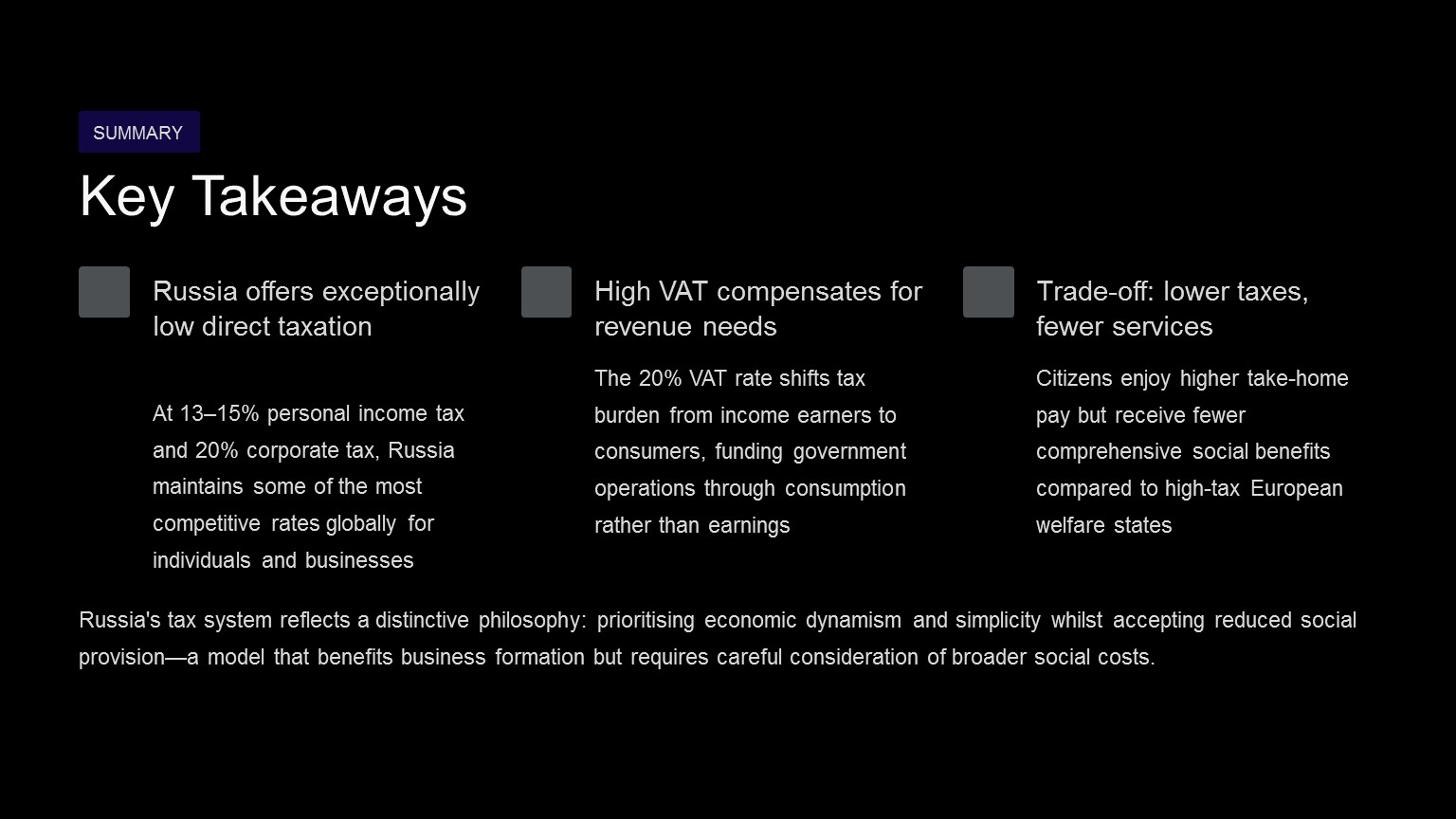
Key Takeaways
Russia offers exceptionally low direct taxation
At 13–15% personal income tax and 20% corporate tax, Russia maintains some of the most competitive rates globally for individuals and businesses
High VAT compensates for revenue needs
The 20% VAT rate shifts tax burden from income earners to consumers, funding government operations through consumption rather than earnings
Trade-off: lower taxes, fewer services
Citizens enjoy higher take-home pay but receive fewer comprehensive social benefits compared to high-tax European welfare states
Russia's tax system reflects a distinctive philosophy: prioritising economic dynamism and simplicity whilst accepting reduced social provision—a model that benefits business formation but requires careful consideration of broader social costs.
Материалы на данной страницы взяты из открытых источников либо размещены пользователем в соответствии с договором-офертой сайта. Вы можете сообщить о нарушении.