
Поделиться


 МетРекАнглЯз ОЗФО 1 26-27.docx
Частное учреждение
профессиональная образовательная организация
ТЕХНИКУМ «БИЗНЕС И ПРАВО»
Методические рекомендации
по выполнению контрольных работ по дисциплине
СГ.02 Иностранный язык в профессиональной деятельности
Специальность: 33.02.01. Фармация
Форма обучения: очно-заочная
Курс 1-2
г. Белореченск,2026
Разработчик методических рекомендаций:
Роор Н.А.– преподаватели иностранного языка ЧУПОО ТЕХНИКУМ «БИЗНЕС И ПРАВО»
Рецензенты:
Шевченко О.А. – преподаватель иностранного языка ЧУПОО ТЕХНИКУМ «БИЗНЕС И ПРАВО»
Обсуждено и одобрено:
цикловой комиссией общеобразовательных и гуманитарных дисциплин протокол № 2 от «15» сентября 2026 г.
Председатель цикловой комиссии ________________ О. А. Шевченко
Рассмотрено и рекомендовано к использованию в учебном процессе
педагогическим советом от «15» сентября 2026 г., протокол № 2
Заместитель директора по
методической работе_______________________ А.Н. Истомина
СОДЕРЖАНИЕ
|
ПОЯСНИТЕЛЬНАЯ ЗАПИСКА
|
4 |
|
Контрольная работа № 1 по теме «В терапевтическом отделении. В инфекционном отделении. Местоимения, множественное число существительных. Пациент нуждается в помощи. Гипертония. Работа человеческого сердца. Дифтерия. Столбняк»
|
6 |
|
Контрольная работа №2 по теме: «Основные лекарственные формы. Аптека. Фармация. Искусство составления и расфасовки лекарств. Таблетки. Глагол to be. Инфинитив. Образование отрицательных предложений.»
|
10 |
|
Контрольная работа №3 по теме «Внутренние органы и внешнее строение. Системы человеческого организма. Кровь. Сердце и его клапаны. Кровообращение. Опорно-двигательная система. Настоящее простое время» Контрольная работа №4 по теме «Первая медицинская помощью Ушибы. Кровотечения. Раны. Переломы. Ожоги. Обморок. Шок. Отравление. Солнечный удар. Прошедшее простое, будущее простое время.» Контрольная работа №5 по теме «Чтение и перевод профессионально ориентированных текстов. Чтение и перевод инструкций к медицинским препаратам» |
12
17
24
|
|
СПИСОК ИСПОЛЬЗОВАННЫХ ИСТОЧНИКОВ |
30 |
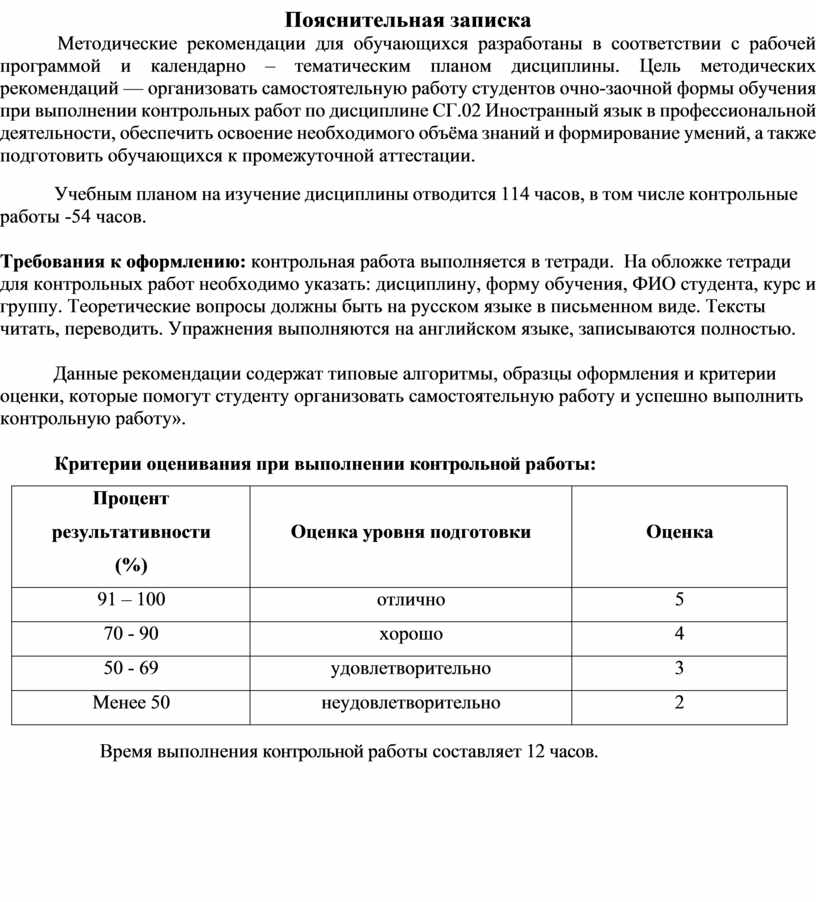
Пояснительная записка
Методические рекомендации для обучающихся разработаны в соответствии с рабочей программой и календарно – тематическим планом дисциплины. Цель методических рекомендаций — организовать самостоятельную работу студентов очно‑заочной формы обучения при выполнении контрольных работ по дисциплине СГ.02 Иностранный язык в профессиональной деятельности, обеспечить освоение необходимого объёма знаний и формирование умений, а также подготовить обучающихся к промежуточной аттестации.
Учебным планом на изучение дисциплины отводится 114 часов, в том числе контрольные
работы -54 часов.
Требования к оформлению: контрольная работа выполняется в тетради. На обложке тетради для контрольных работ необходимо указать: дисциплину, форму обучения, ФИО студента, курс и группу. Теоретические вопросы должны быть на русском языке в письменном виде. Тексты читать, переводить. Упражнения выполняются на английском языке, записываются полностью.
Данные рекомендации содержат типовые алгоритмы, образцы оформления и критерии оценки, которые помогут студенту организовать самостоятельную работу и успешно выполнить контрольную работу».
Критерии оценивания при выполнении контрольной работы:
|
Процент результативности (%) |
Оценка уровня подготовки |
Оценка |
|
91 – 100 |
отлично |
5 |
|
70 - 90 |
хорошо |
4 |
|
50 - 69 |
удовлетворительно |
3 |
|
Менее 50 |
неудовлетворительно |
2 |
Время выполнения контрольной работы составляет 12 часов.
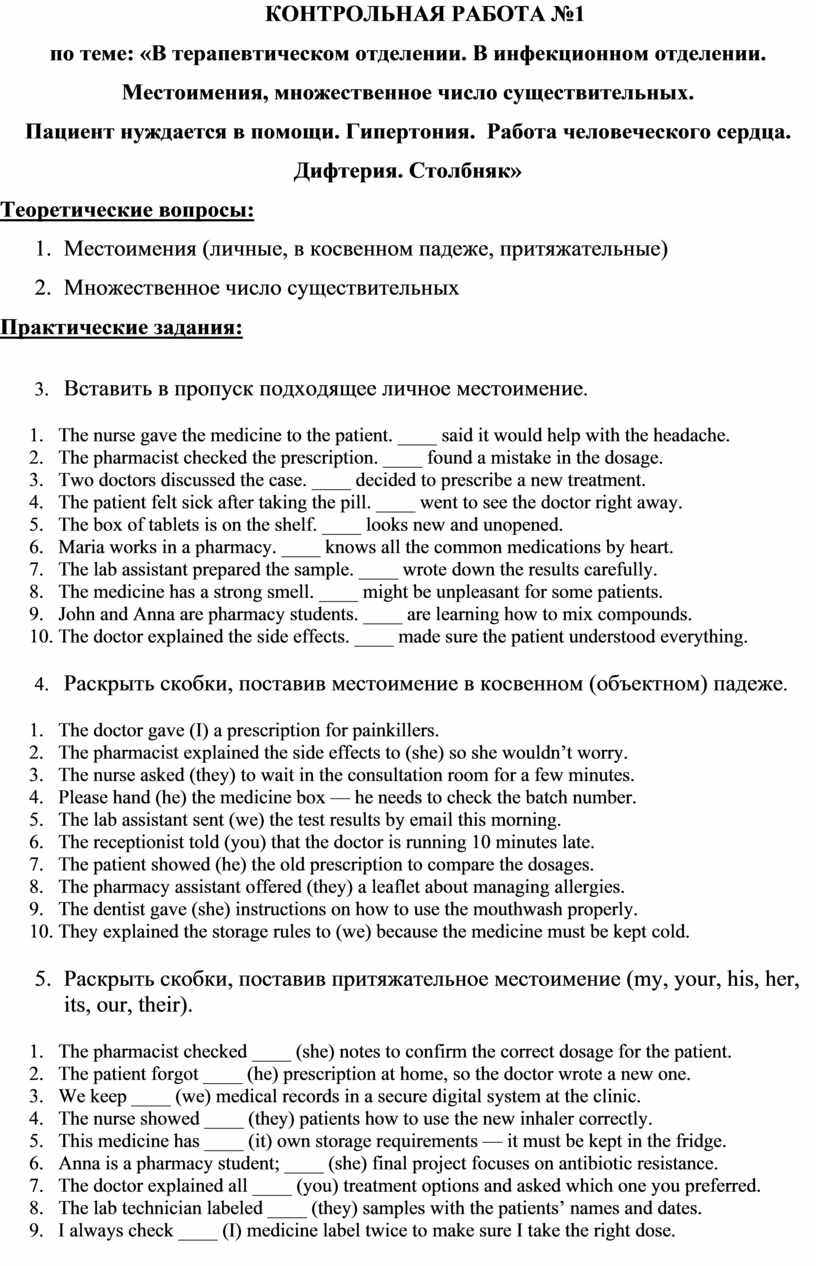
КОНТРОЛЬНАЯ РАБОТА №1
по теме: «В терапевтическом отделении. В инфекционном отделении. Местоимения, множественное число существительных.
Пациент нуждается в помощи. Гипертония. Работа человеческого сердца. Дифтерия. Столбняк»
Теоретические вопросы:
1. Местоимения (личные, в косвенном падеже, притяжательные)
2. Множественное число существительных
Практические задания:
3. Вставить в пропуск подходящее личное местоимение.
4. Раскрыть скобки, поставив местоимение в косвенном (объектном) падеже.
5. Раскрыть скобки, поставив притяжательное местоимение (my, your, his, her, its, our, their).
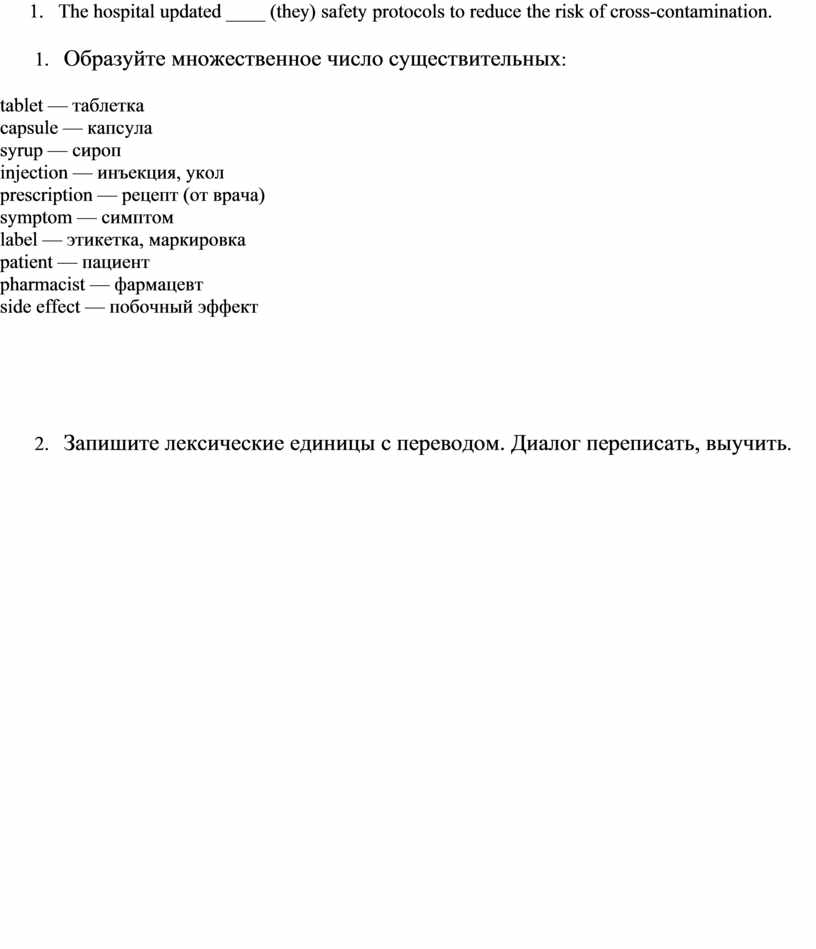
6. Образуйте множественное число существительных:
tablet — таблетка
capsule — капсула
syrup — сироп
injection — инъекция, укол
prescription — рецепт (от врача)
symptom — симптом
label — этикетка, маркировка
patient — пациент
pharmacist — фармацевт
side effect — побочный эффект
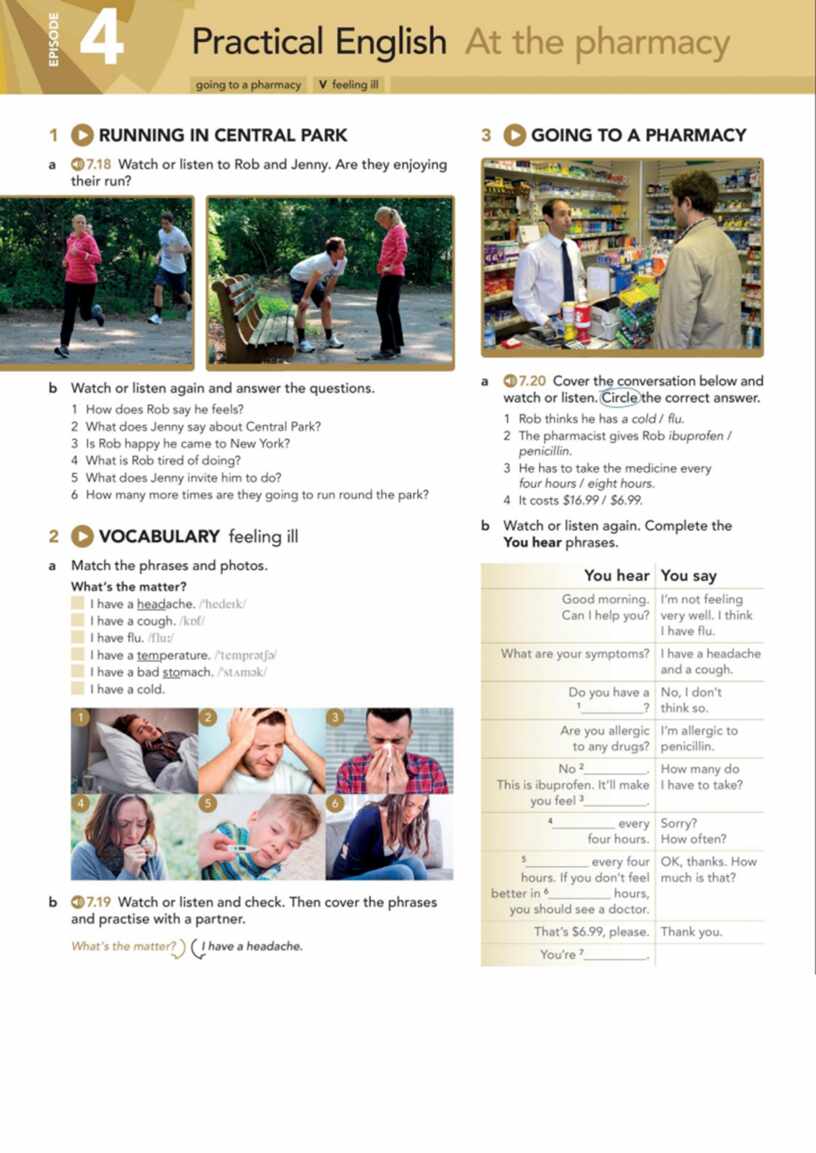
7. Запишите лексические единицы с переводом. Диалог переписать, выучить.
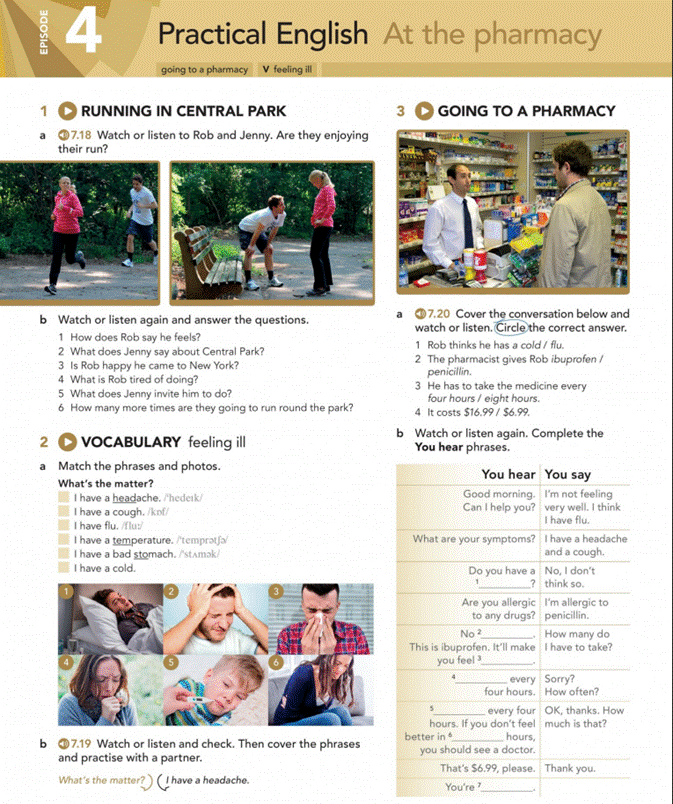
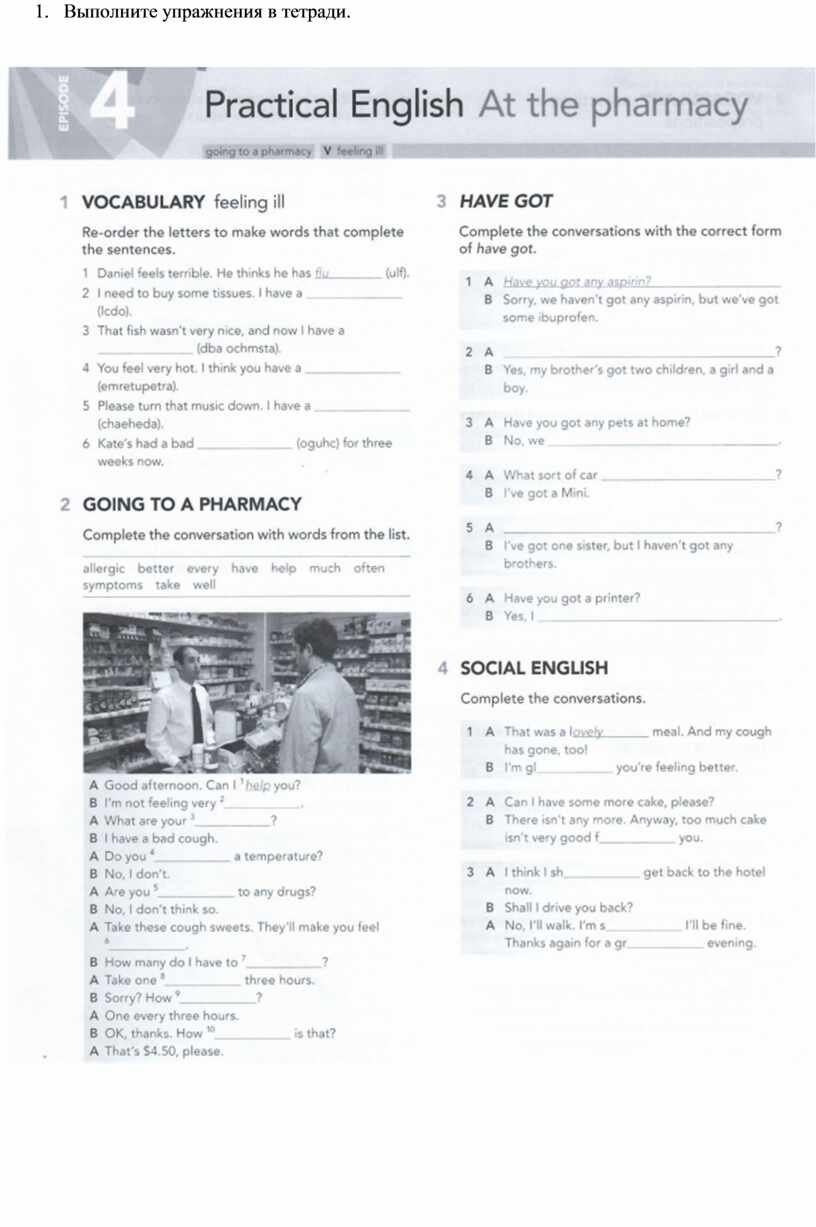
8. Выполните упражнения в тетради.
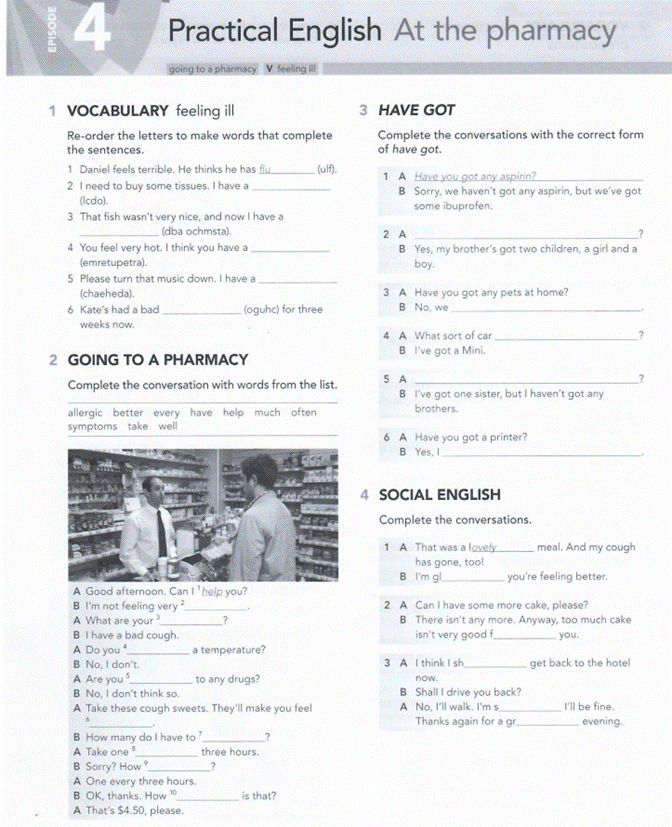
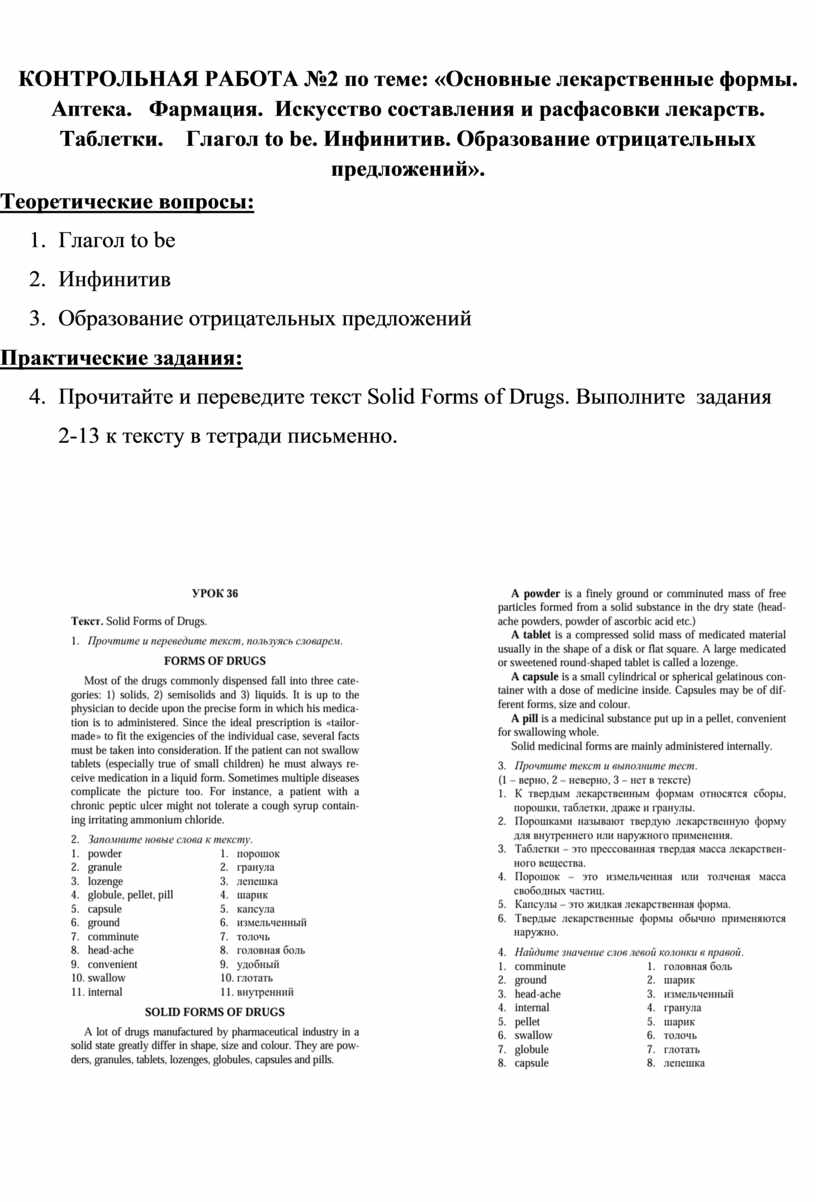
КОНТРОЛЬНАЯ РАБОТА №2 по теме: «Основные лекарственные формы. Аптека. Фармация. Искусство составления и расфасовки лекарств. Таблетки. Глагол to be. Инфинитив. Образование отрицательных предложений».
Теоретические вопросы:
1. Глагол to be
2. Инфинитив
3. Образование отрицательных предложений
Практические задания:
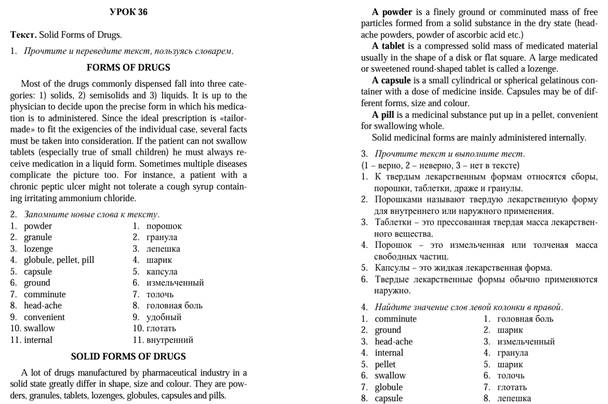
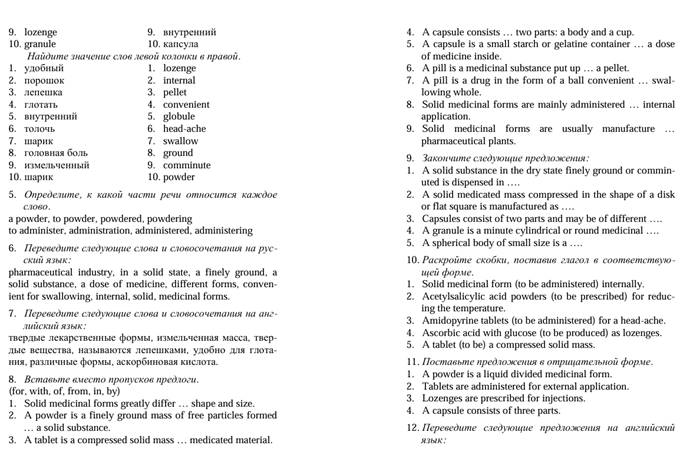
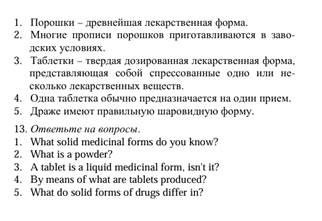
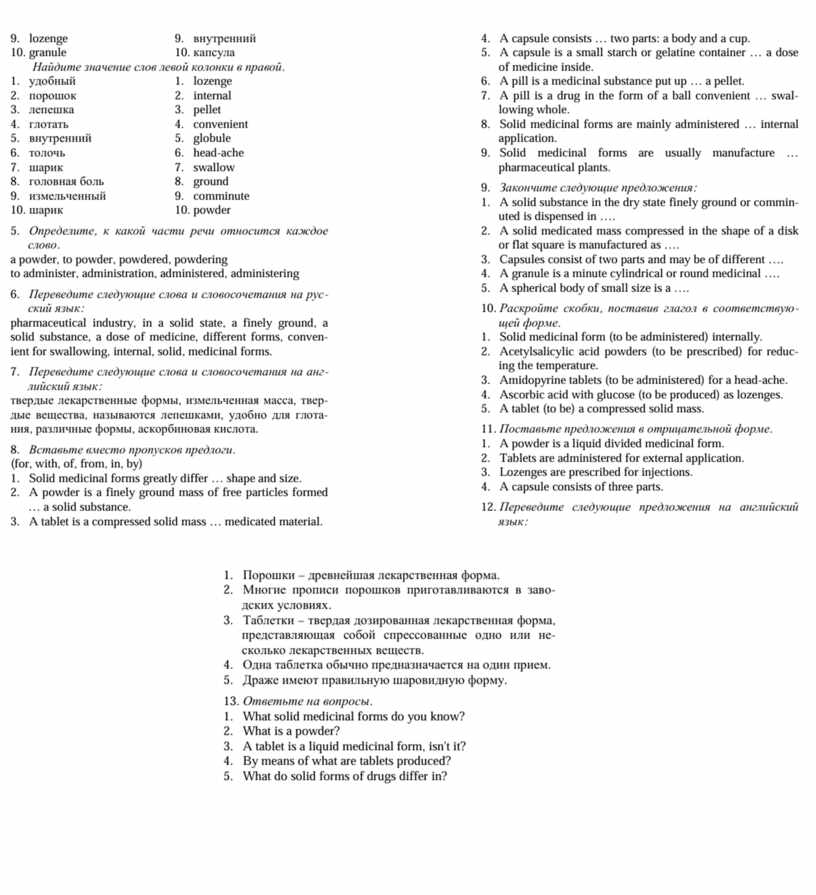
4. Прочитайте и переведите текст Solid Forms of Drugs. Выполните задания
2-13 к тексту в тетради письменно.
КОНТРОЛЬНАЯ РАБОТА №3
по теме «Внутренние органы и внешнее строение. Системы человеческого организма. Кровь. Сердце и его клапаны. Кровообращение. Опорно-двигательная система. Настоящее простое время»
Теоретические вопросы:
1. Настоящее простое время.
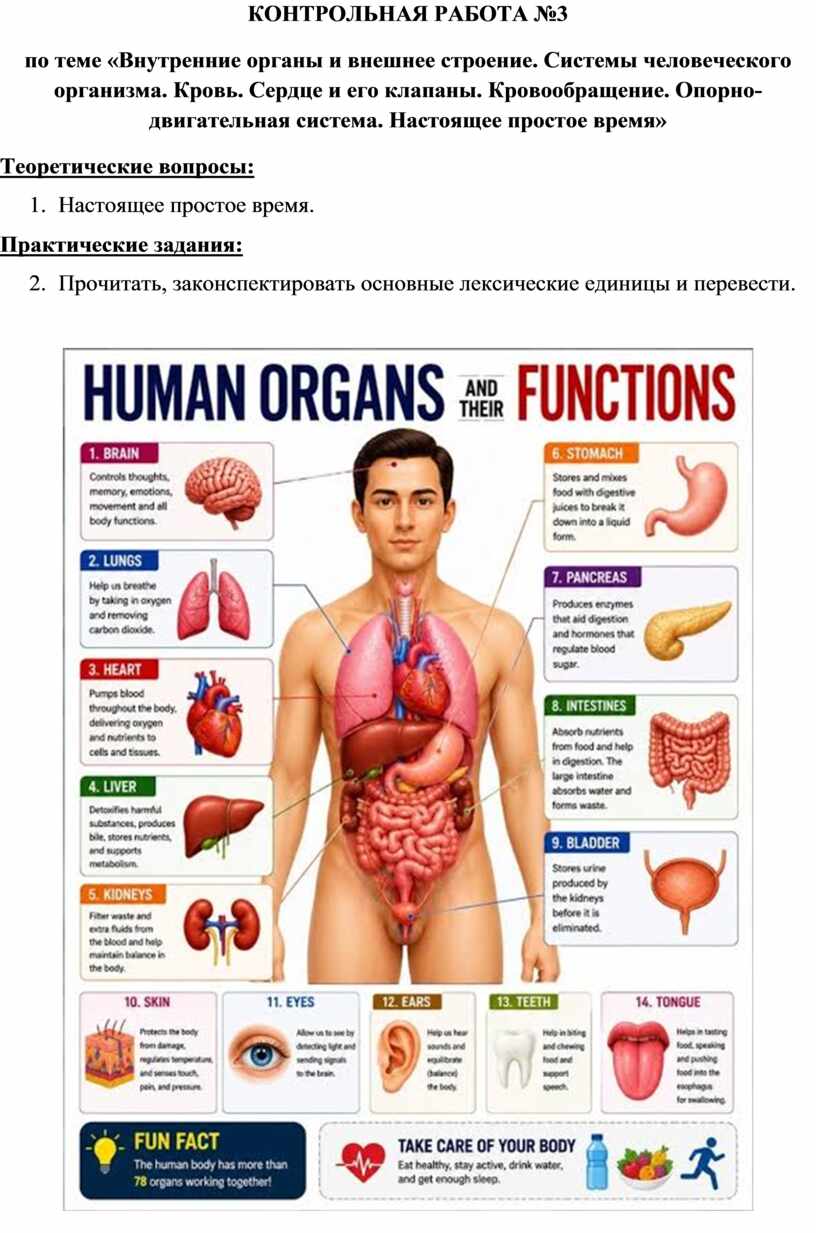
Практические задания:
2. Прочитать, законспектировать основные лексические единицы и перевести.
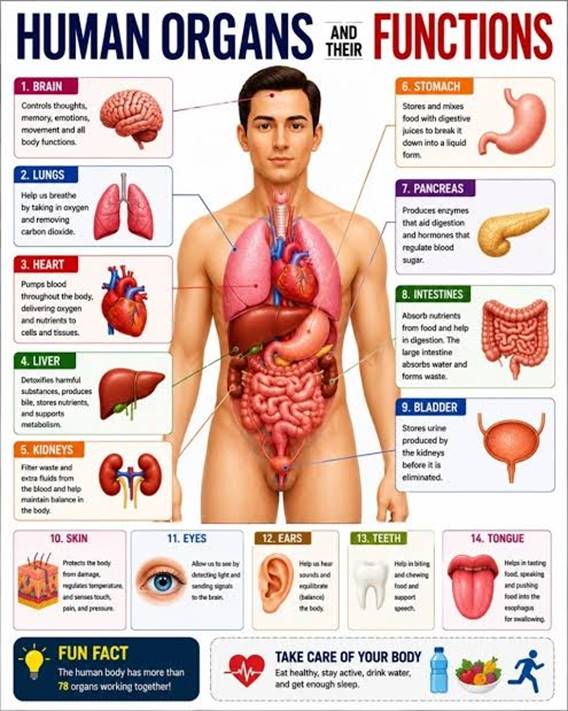
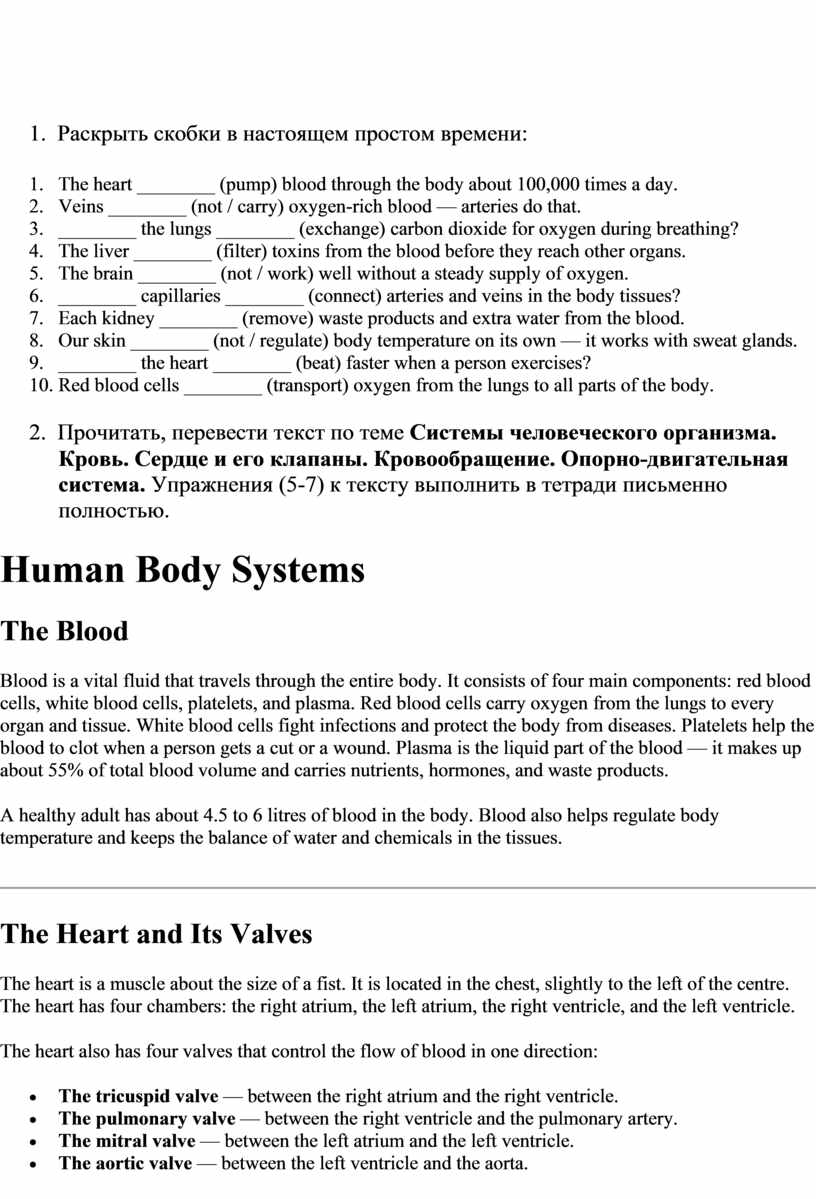
3. Раскрыть скобки в настоящем простом времени:
4. Прочитать, перевести текст по теме Системы человеческого организма. Кровь. Сердце и его клапаны. Кровообращение. Опорно-двигательная система. Упражнения (5-7) к тексту выполнить в тетради письменно полностью.
Human Body Systems
The Blood
Blood is a vital fluid that travels through the entire body. It consists of four main components: red blood cells, white blood cells, platelets, and plasma. Red blood cells carry oxygen from the lungs to every organ and tissue. White blood cells fight infections and protect the body from diseases. Platelets help the blood to clot when a person gets a cut or a wound. Plasma is the liquid part of the blood — it makes up about 55% of total blood volume and carries nutrients, hormones, and waste products.
A healthy adult has about 4.5 to 6 litres of blood in the body. Blood also helps regulate body temperature and keeps the balance of water and chemicals in the tissues.
The Heart and Its Valves
The heart is a muscle about the size of a fist. It is located in the chest, slightly to the left of the centre. The heart has four chambers: the right atrium, the left atrium, the right ventricle, and the left ventricle.
The heart also has four valves that control the flow of blood in one direction:
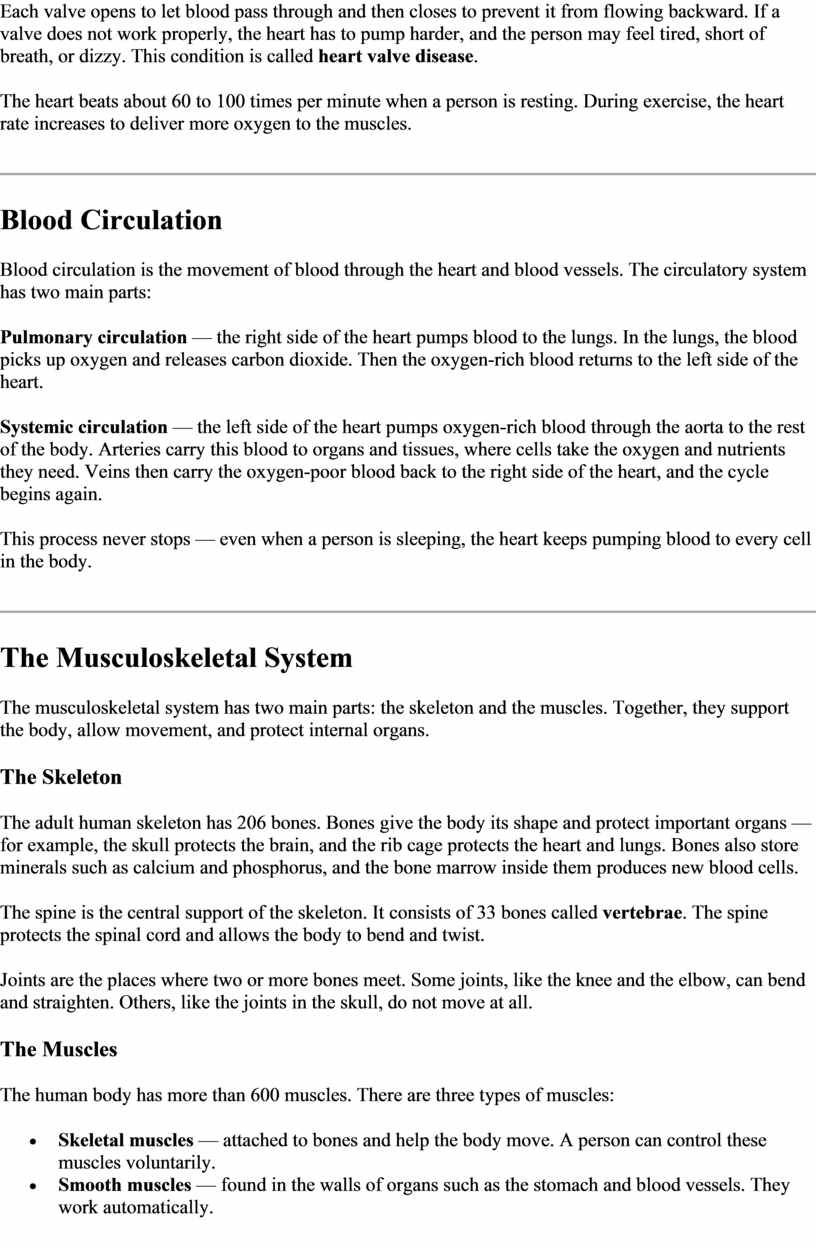
Each valve opens to let blood pass through and then closes to prevent it from flowing backward. If a valve does not work properly, the heart has to pump harder, and the person may feel tired, short of breath, or dizzy. This condition is called heart valve disease.
The heart beats about 60 to 100 times per minute when a person is resting. During exercise, the heart rate increases to deliver more oxygen to the muscles.
Blood Circulation
Blood circulation is the movement of blood through the heart and blood vessels. The circulatory system has two main parts:
Pulmonary circulation — the right side of the heart pumps blood to the lungs. In the lungs, the blood picks up oxygen and releases carbon dioxide. Then the oxygen-rich blood returns to the left side of the heart.
Systemic circulation — the left side of the heart pumps oxygen-rich blood through the aorta to the rest of the body. Arteries carry this blood to organs and tissues, where cells take the oxygen and nutrients they need. Veins then carry the oxygen-poor blood back to the right side of the heart, and the cycle begins again.
This process never stops — even when a person is sleeping, the heart keeps pumping blood to every cell in the body.
The Musculoskeletal System
The musculoskeletal system has two main parts: the skeleton and the muscles. Together, they support the body, allow movement, and protect internal organs.
The Skeleton
The adult human skeleton has 206 bones. Bones give the body its shape and protect important organs — for example, the skull protects the brain, and the rib cage protects the heart and lungs. Bones also store minerals such as calcium and phosphorus, and the bone marrow inside them produces new blood cells.
The spine is the central support of the skeleton. It consists of 33 bones called vertebrae. The spine protects the spinal cord and allows the body to bend and twist.
Joints are the places where two or more bones meet. Some joints, like the knee and the elbow, can bend and straighten. Others, like the joints in the skull, do not move at all.
The Muscles
The human body has more than 600 muscles. There are three types of muscles:
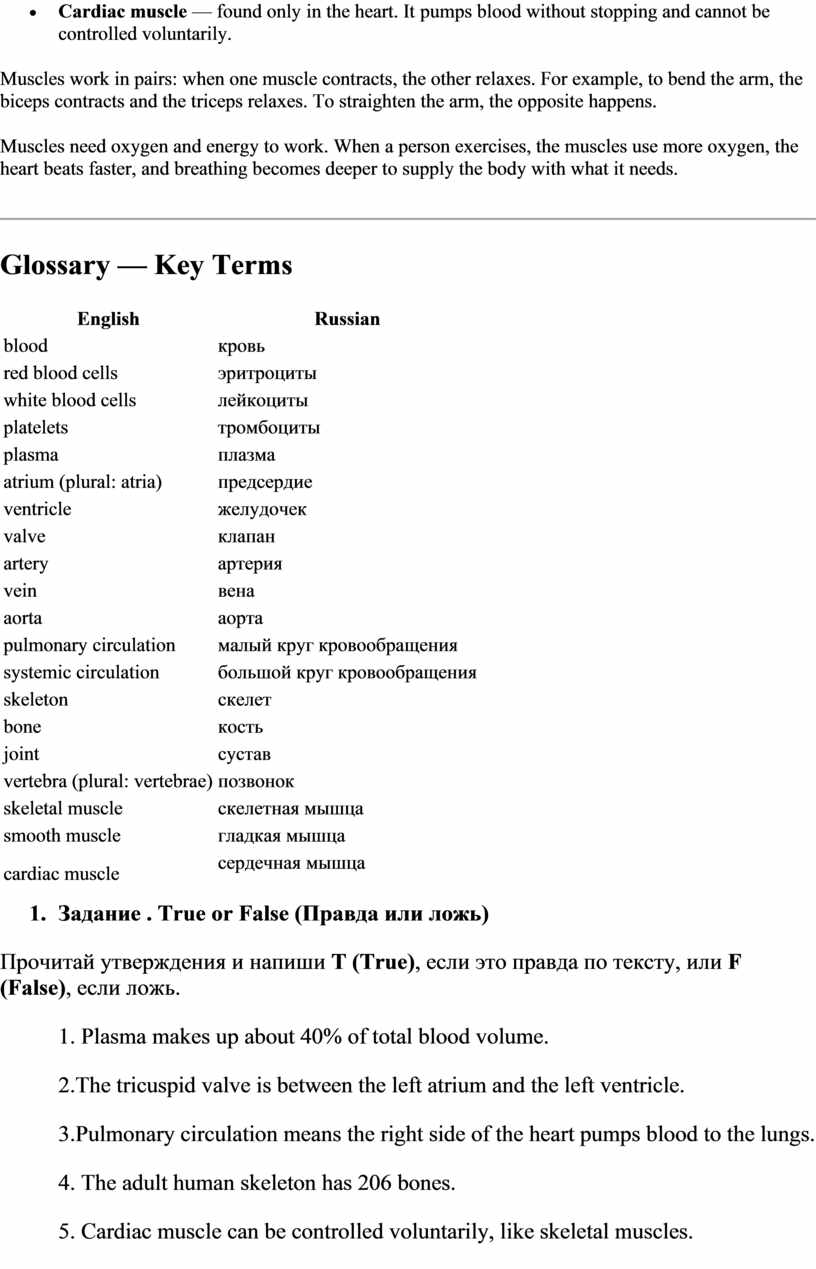
Muscles work in pairs: when one muscle contracts, the other relaxes. For example, to bend the arm, the biceps contracts and the triceps relaxes. To straighten the arm, the opposite happens.
Muscles need oxygen and energy to work. When a person exercises, the muscles use more oxygen, the heart beats faster, and breathing becomes deeper to supply the body with what it needs.
Glossary — Key Terms
|
English |
Russian |
|
blood |
кровь |
|
red blood cells |
эритроциты |
|
white blood cells |
лейкоциты |
|
platelets |
тромбоциты |
|
plasma |
плазма |
|
atrium (plural: atria) |
предсердие |
|
ventricle |
желудочек |
|
valve |
клапан |
|
artery |
артерия |
|
vein |
вена |
|
aorta |
аорта |
|
pulmonary circulation |
малый круг кровообращения |
|
systemic circulation |
большой круг кровообращения |
|
skeleton |
скелет |
|
bone |
кость |
|
joint |
сустав |
|
vertebra (plural: vertebrae) |
позвонок |
|
skeletal muscle |
скелетная мышца |
|
smooth muscle |
гладкая мышца |
|
cardiac muscle |
сердечная мышца |
Прочитай утверждения и напиши T (True), если это правда по тексту, или F (False), если ложь.
1. Plasma makes up about 40% of total blood volume.
2.The tricuspid valve is between the left atrium and the left ventricle.
3.Pulmonary circulation means the right side of the heart pumps blood to the lungs.
4. The adult human skeleton has 206 bones.
5. Cardiac muscle can be controlled voluntarily, like skeletal muscles.
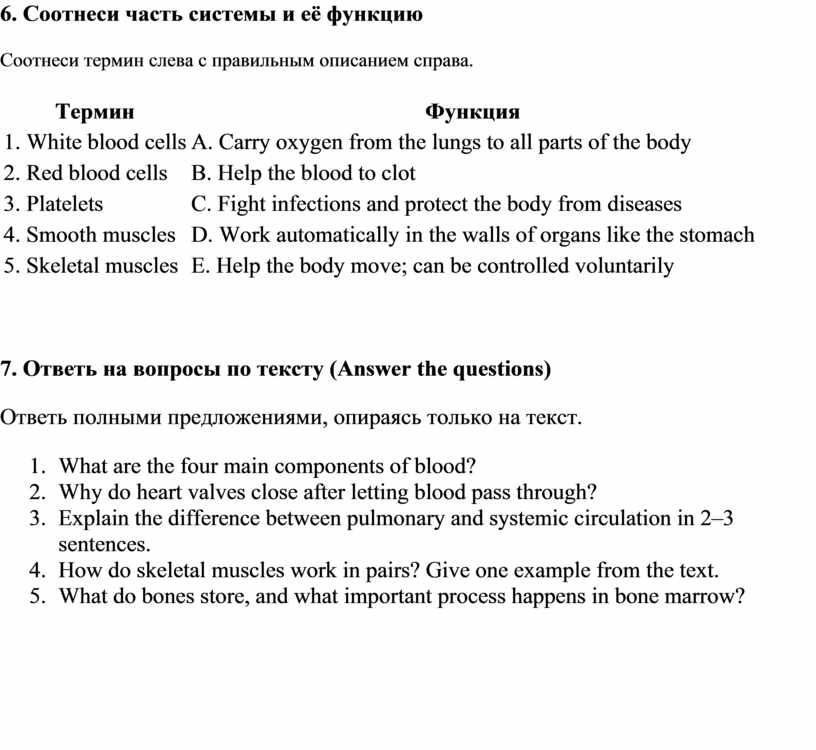
6. Соотнеси часть системы и её функцию
Соотнеси термин слева с правильным описанием справа.
|
Термин |
Функция |
|
1. White blood cells |
A. Carry oxygen from the lungs to all parts of the body |
|
2. Red blood cells |
B. Help the blood to clot |
|
3. Platelets |
C. Fight infections and protect the body from diseases |
|
4. Smooth muscles |
D. Work automatically in the walls of organs like the stomach |
|
5. Skeletal muscles |
E. Help the body move; can be controlled voluntarily |
7. Ответь на вопросы по тексту (Answer the questions)
Ответь полными предложениями, опираясь только на текст.
1. What are the four main components of blood?
2. Why do heart valves close after letting blood pass through?
3. Explain the difference between pulmonary and systemic circulation in 2–3 sentences.
4. How do skeletal muscles work in pairs? Give one example from the text.
5. What do bones store, and what important process happens in bone marrow?
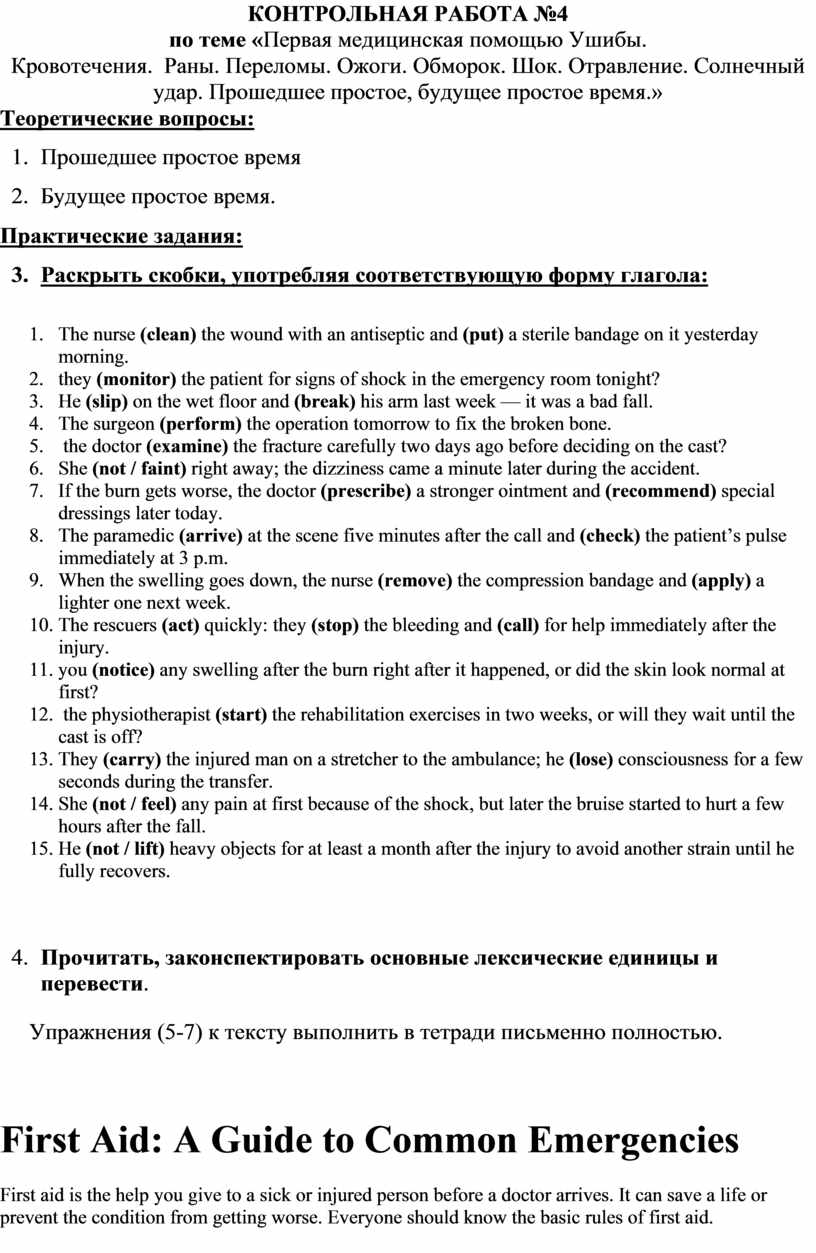
КОНТРОЛЬНАЯ РАБОТА №4
по теме «Первая медицинская помощью Ушибы.
Кровотечения. Раны. Переломы. Ожоги. Обморок. Шок. Отравление. Солнечный удар. Прошедшее простое, будущее простое время.»
Теоретические вопросы:
1. Прошедшее простое время
2. Будущее простое время.
Практические задания:
3. Раскрыть скобки, употребляя соответствующую форму глагола:
4. Прочитать, законспектировать основные лексические единицы и перевести.
Упражнения (5-7) к тексту выполнить в тетради письменно полностью.
First Aid: A Guide to Common Emergencies
First aid is the help you give to a sick or injured person before a doctor arrives. It can save a life or prevent the condition from getting worse. Everyone should know the basic rules of first aid.
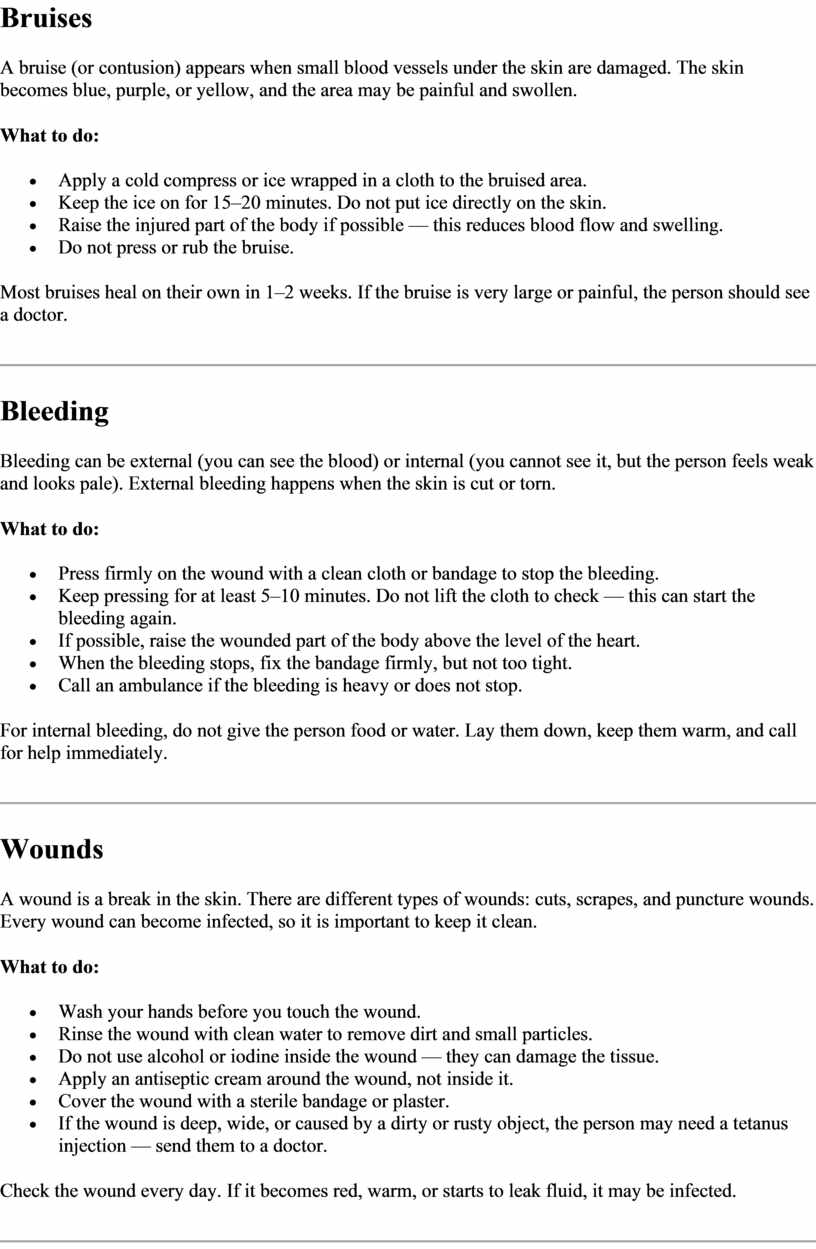
Bruises
A bruise (or contusion) appears when small blood vessels under the skin are damaged. The skin becomes blue, purple, or yellow, and the area may be painful and swollen.
What to do:
Most bruises heal on their own in 1–2 weeks. If the bruise is very large or painful, the person should see a doctor.
Bleeding
Bleeding can be external (you can see the blood) or internal (you cannot see it, but the person feels weak and looks pale). External bleeding happens when the skin is cut or torn.
What to do:
For internal bleeding, do not give the person food or water. Lay them down, keep them warm, and call for help immediately.
Wounds
A wound is a break in the skin. There are different types of wounds: cuts, scrapes, and puncture wounds. Every wound can become infected, so it is important to keep it clean.
What to do:
Check the wound every day. If it becomes red, warm, or starts to leak fluid, it may be infected.
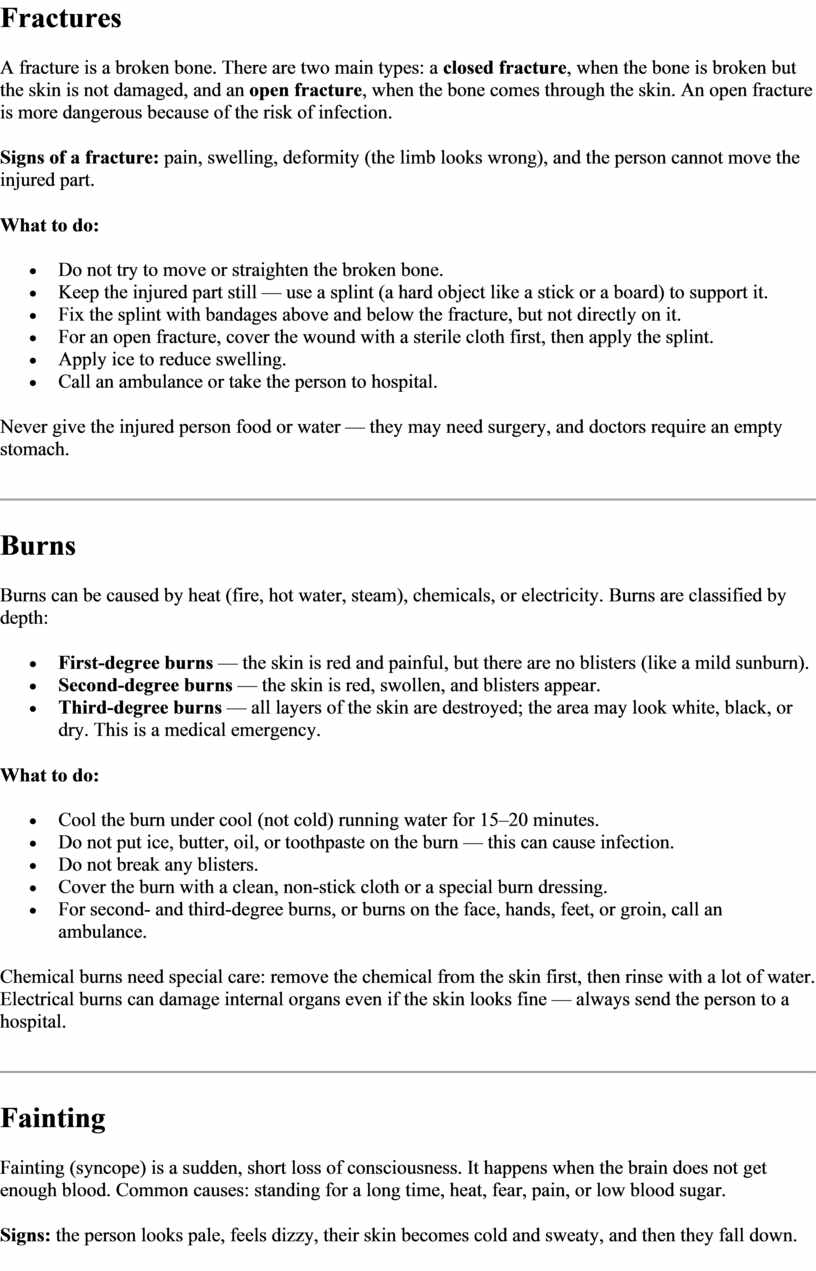
Fractures
A fracture is a broken bone. There are two main types: a closed fracture, when the bone is broken but the skin is not damaged, and an open fracture, when the bone comes through the skin. An open fracture is more dangerous because of the risk of infection.
Signs of a fracture: pain, swelling, deformity (the limb looks wrong), and the person cannot move the injured part.
What to do:
Never give the injured person food or water — they may need surgery, and doctors require an empty stomach.
Burns
Burns can be caused by heat (fire, hot water, steam), chemicals, or electricity. Burns are classified by depth:
What to do:
Chemical burns need special care: remove the chemical from the skin first, then rinse with a lot of water. Electrical burns can damage internal organs even if the skin looks fine — always send the person to a hospital.
Fainting
Fainting (syncope) is a sudden, short loss of consciousness. It happens when the brain does not get enough blood. Common causes: standing for a long time, heat, fear, pain, or low blood sugar.
Signs: the person looks pale, feels dizzy, their skin becomes cold and sweaty, and then they fall down.
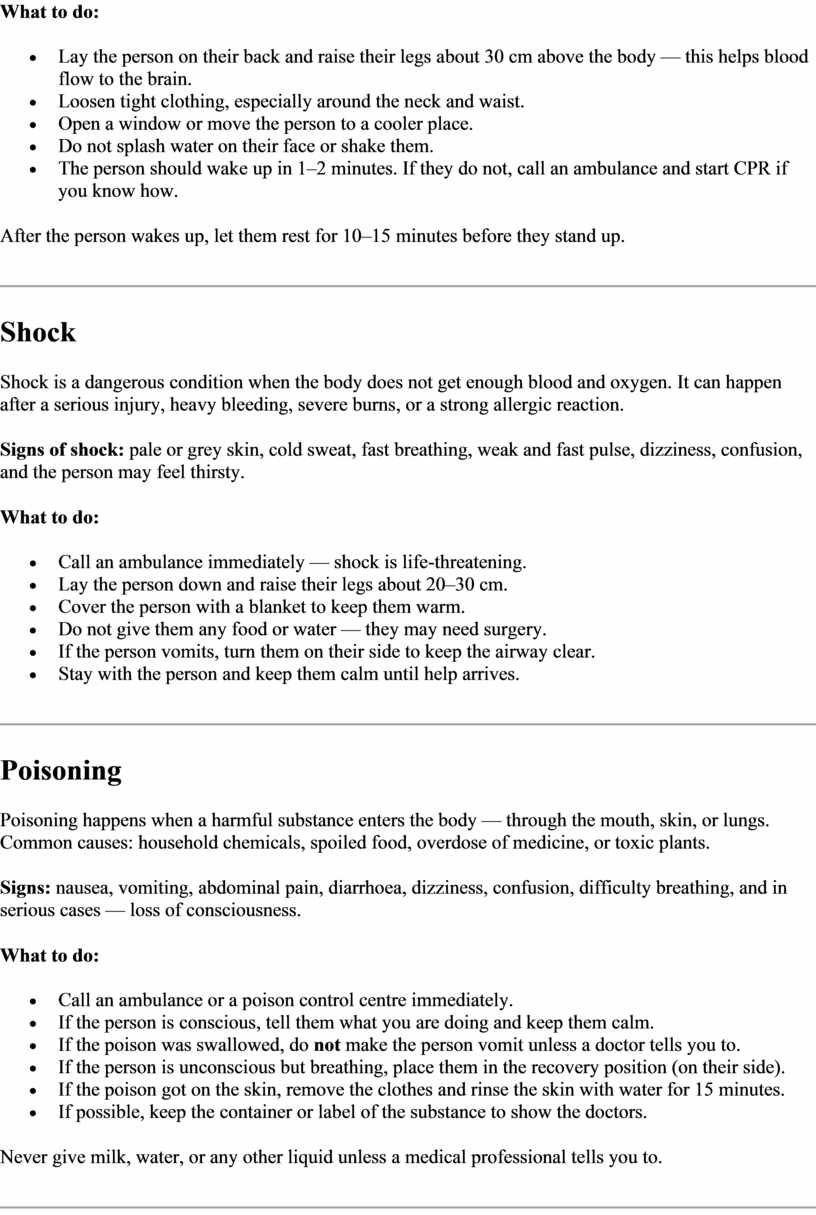
What to do:
After the person wakes up, let them rest for 10–15 minutes before they stand up.
Shock
Shock is a dangerous condition when the body does not get enough blood and oxygen. It can happen after a serious injury, heavy bleeding, severe burns, or a strong allergic reaction.
Signs of shock: pale or grey skin, cold sweat, fast breathing, weak and fast pulse, dizziness, confusion, and the person may feel thirsty.
What to do:
Poisoning
Poisoning happens when a harmful substance enters the body — through the mouth, skin, or lungs. Common causes: household chemicals, spoiled food, overdose of medicine, or toxic plants.
Signs: nausea, vomiting, abdominal pain, diarrhoea, dizziness, confusion, difficulty breathing, and in serious cases — loss of consciousness.
What to do:
Never give milk, water, or any other liquid unless a medical professional tells you to.
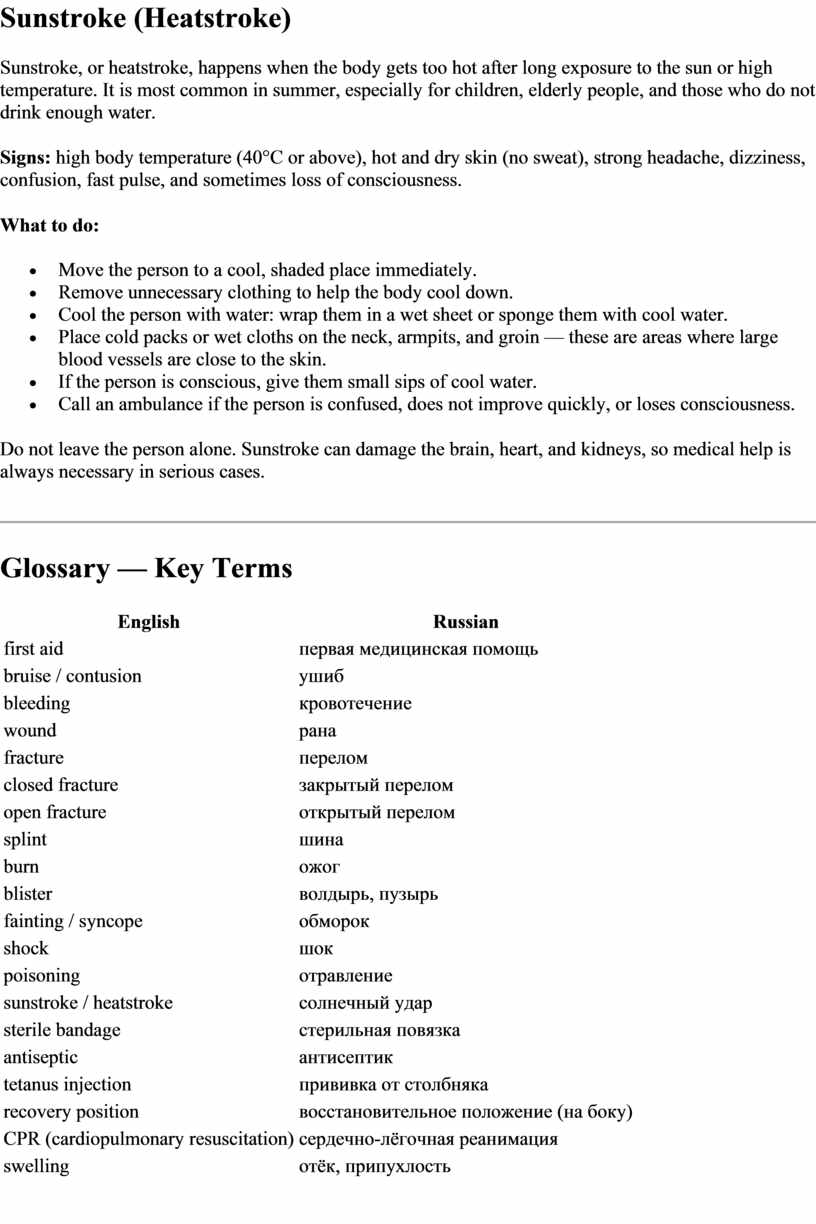
Sunstroke (Heatstroke)
Sunstroke, or heatstroke, happens when the body gets too hot after long exposure to the sun or high temperature. It is most common in summer, especially for children, elderly people, and those who do not drink enough water.
Signs: high body temperature (40°C or above), hot and dry skin (no sweat), strong headache, dizziness, confusion, fast pulse, and sometimes loss of consciousness.
What to do:
Do not leave the person alone. Sunstroke can damage the brain, heart, and kidneys, so medical help is always necessary in serious cases.
Glossary — Key Terms
|
English |
Russian |
|
first aid |
первая медицинская помощь |
|
bruise / contusion |
ушиб |
|
bleeding |
кровотечение |
|
wound |
рана |
|
fracture |
перелом |
|
closed fracture |
закрытый перелом |
|
open fracture |
открытый перелом |
|
splint |
шина |
|
burn |
ожог |
|
blister |
волдырь, пузырь |
|
fainting / syncope |
обморок |
|
shock |
шок |
|
poisoning |
отравление |
|
sunstroke / heatstroke |
солнечный удар |
|
sterile bandage |
стерильная повязка |
|
antiseptic |
антисептик |
|
tetanus injection |
прививка от столбняка |
|
recovery position |
восстановительное положение (на боку) |
|
CPR (cardiopulmonary resuscitation) |
сердечно-лёгочная реанимация |
|
swelling |
отёк, припухлость |
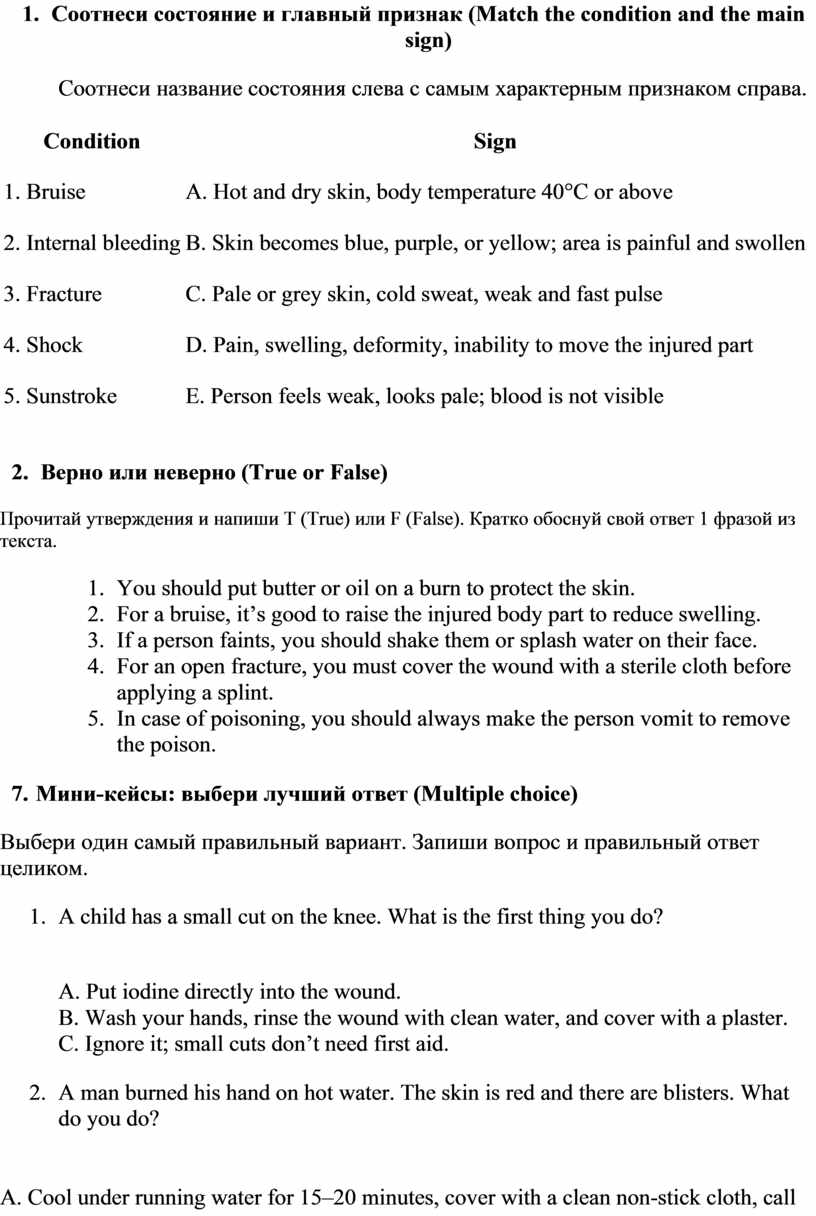
Соотнеси название состояния слева с самым характерным признаком справа.
|
Condition |
Sign |
|
1. Bruise |
A. Hot and dry skin, body temperature 40°C or above |
|
2. Internal bleeding |
B. Skin becomes blue, purple, or yellow; area is painful and swollen |
|
3. Fracture |
C. Pale or grey skin, cold sweat, weak and fast pulse |
|
4. Shock |
D. Pain, swelling, deformity, inability to move the injured part |
|
5. Sunstroke |
E. Person feels weak, looks pale; blood is not visible |
Прочитай утверждения и напиши T (True) или F (False). Кратко обоснуй свой ответ 1 фразой из текста.
1. You should put butter or oil on a burn to protect the skin.
2. For a bruise, it’s good to raise the injured body part to reduce swelling.
3. If a person faints, you should shake them or splash water on their face.
4. For an open fracture, you must cover the wound with a sterile cloth before applying a splint.
5. In case of poisoning, you should always make the person vomit to remove the poison.
Выбери один самый правильный вариант. Запиши вопрос и правильный ответ целиком.
1. A child has a small cut on the knee. What is the first thing you do?
A. Put iodine directly into the wound.
B. Wash your hands, rinse the wound with clean water, and cover with a plaster.
C. Ignore it; small cuts don’t need first aid.
2. A man burned his hand on hot water. The skin is red and there are blisters. What do you do?
A. Cool under running water for 15–20 minutes, cover with a clean non-stick
cloth, call an ambulance.
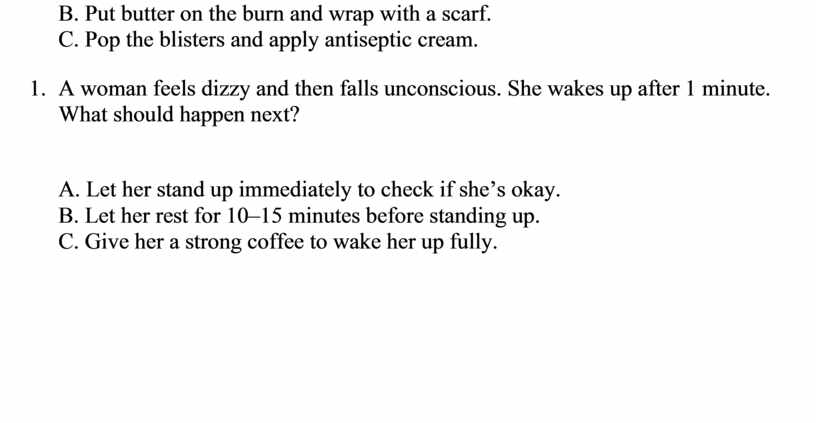
B. Put butter on the burn and wrap with a scarf.
C. Pop the blisters and apply antiseptic cream.
3. A woman feels dizzy and then falls unconscious. She wakes up after 1 minute. What should happen next?
A. Let her stand up immediately to check if she’s okay.
B. Let her rest for 10–15 minutes before standing up.
C. Give her a strong coffee to wake her up fully.
КОНТРОЛЬНАЯ РАБОТА №5
по теме «Чтение и перевод профессионально ориентированных текстов. Чтение и перевод инструкций к медицинским препаратам»
Практические задания:
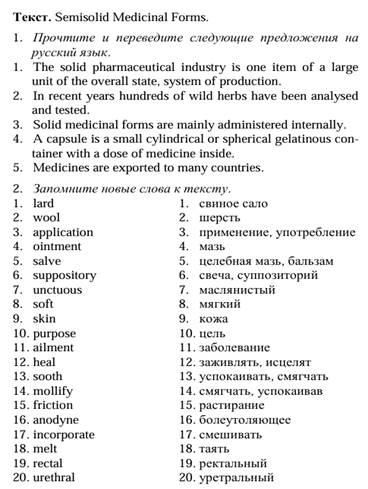
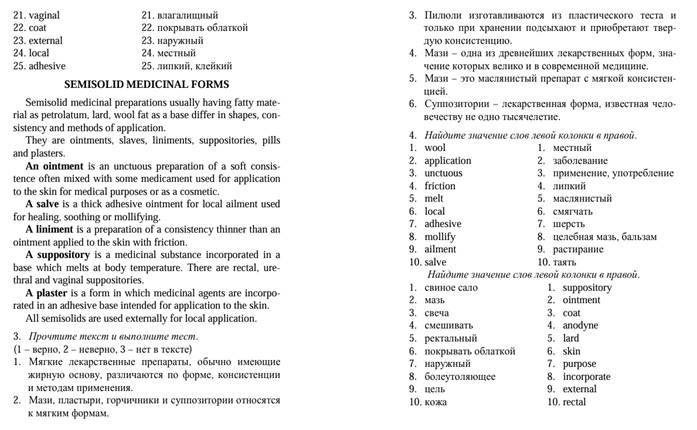
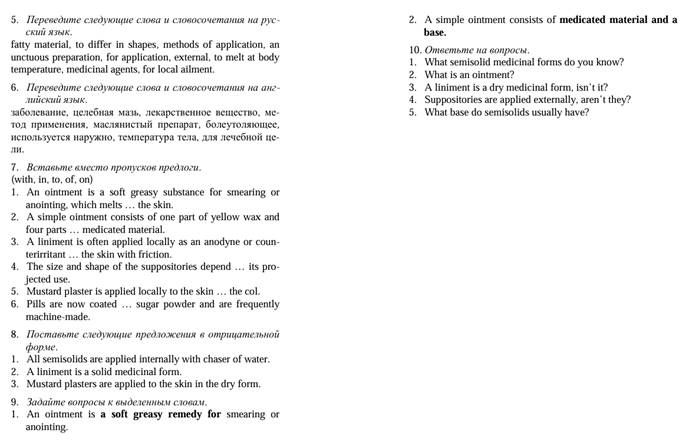
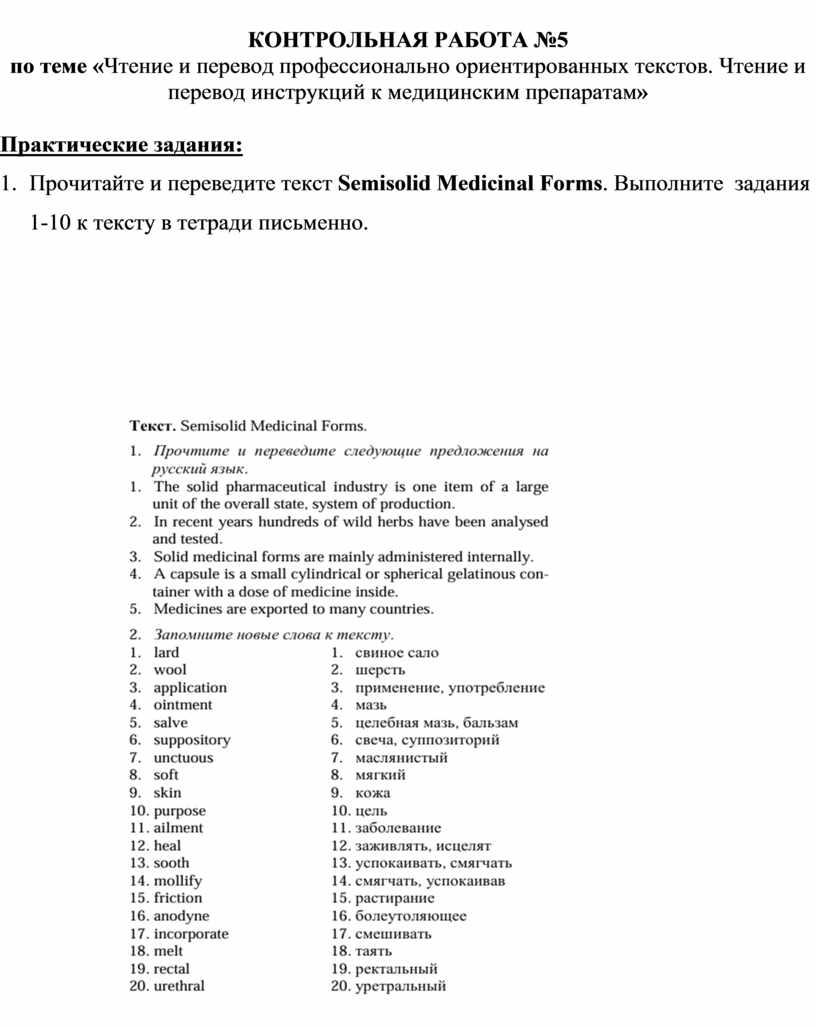
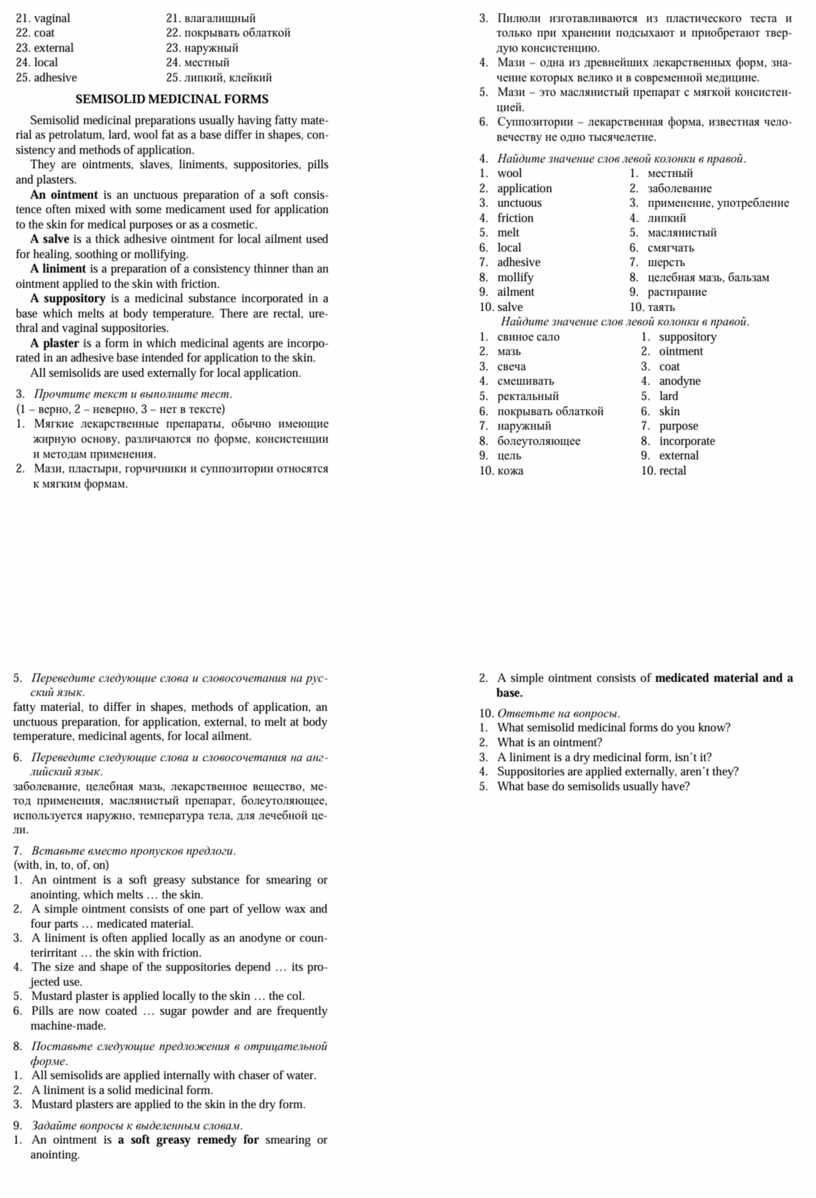
1. Прочитайте и переведите текст Semisolid Medicinal Forms. Выполните задания 1-10 к тексту в тетради письменно.
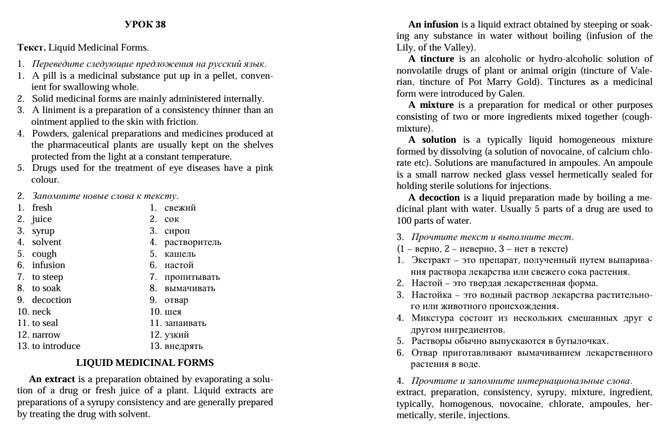
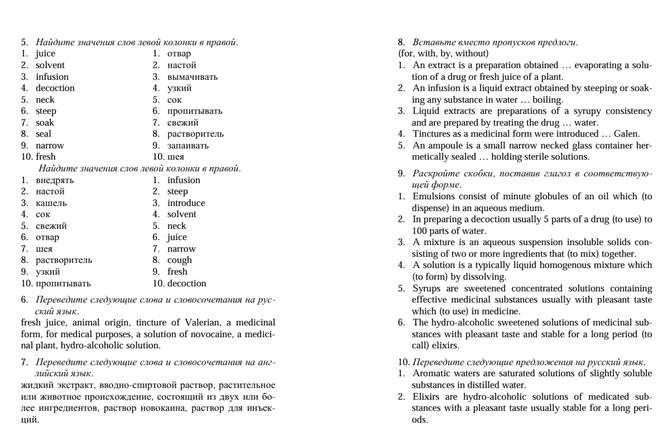
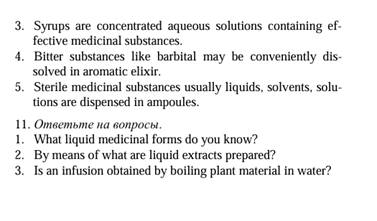
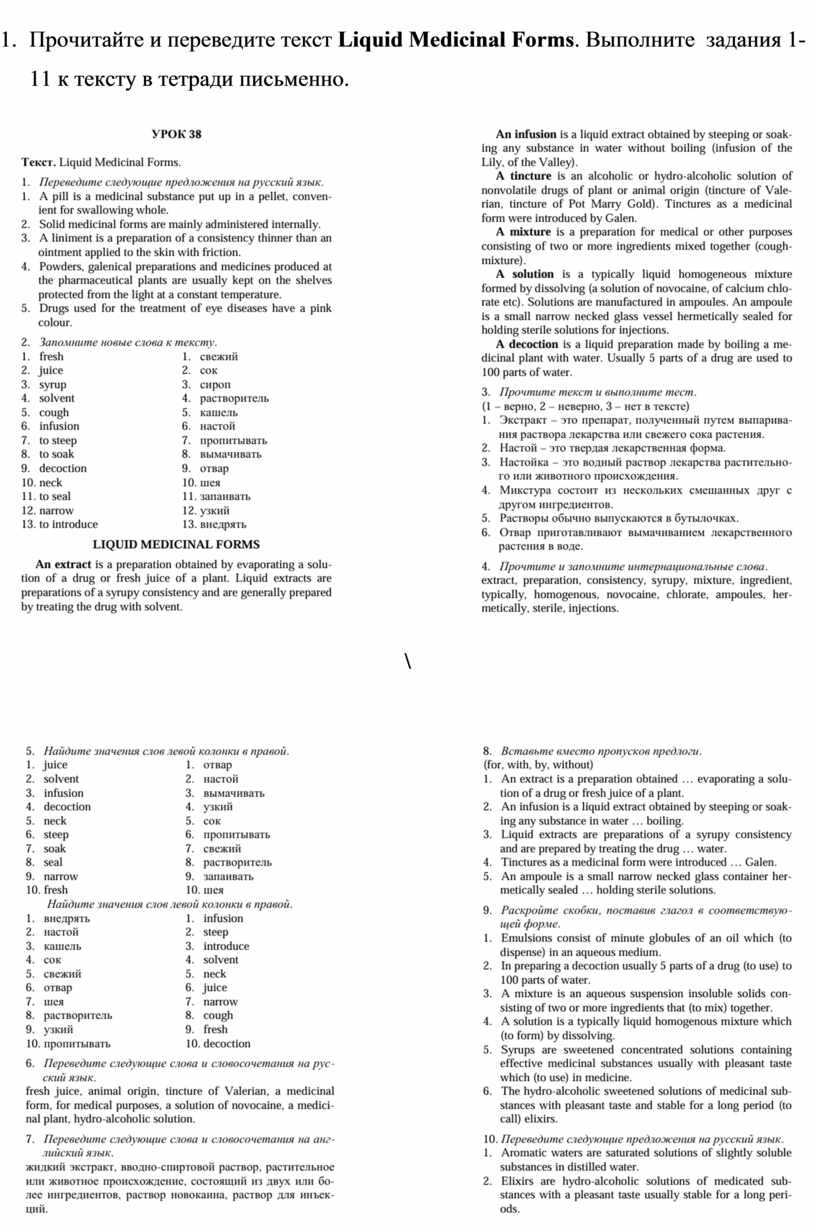
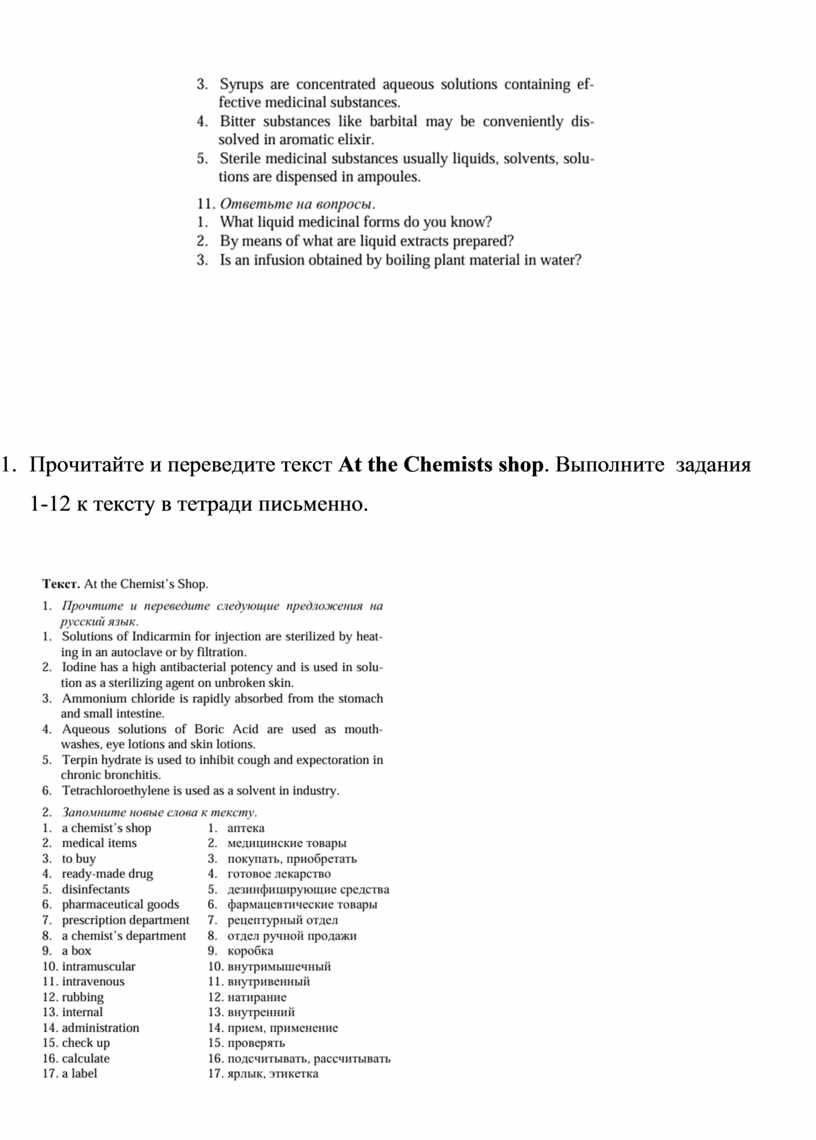
2. Прочитайте и переведите текст Liquid Medicinal Forms. Выполните задания 1-11 к тексту в тетради письменно.
\
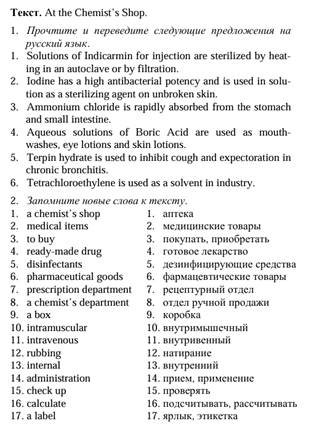
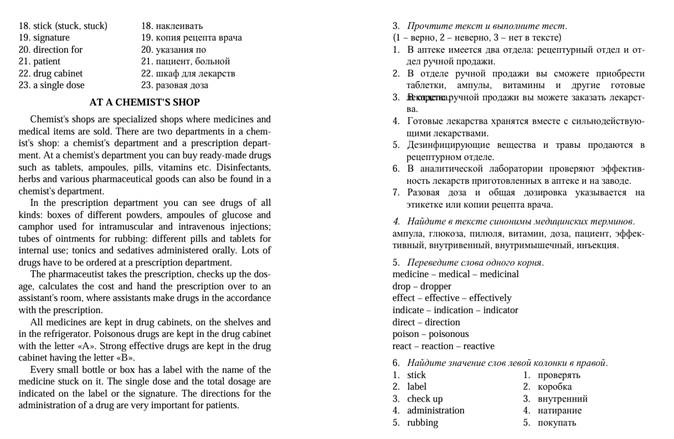
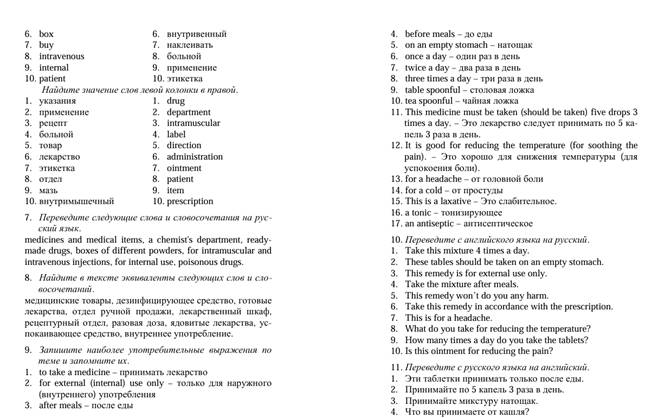
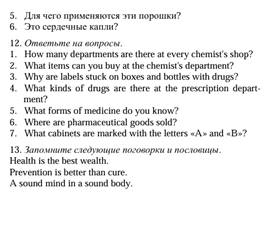
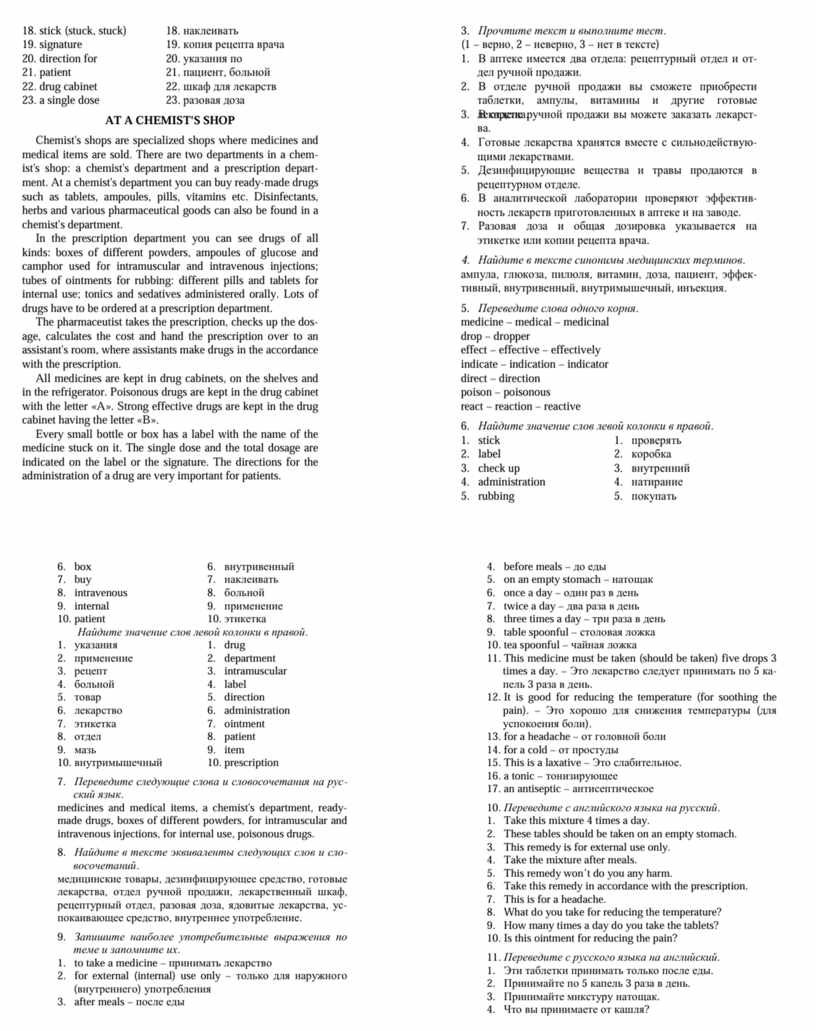
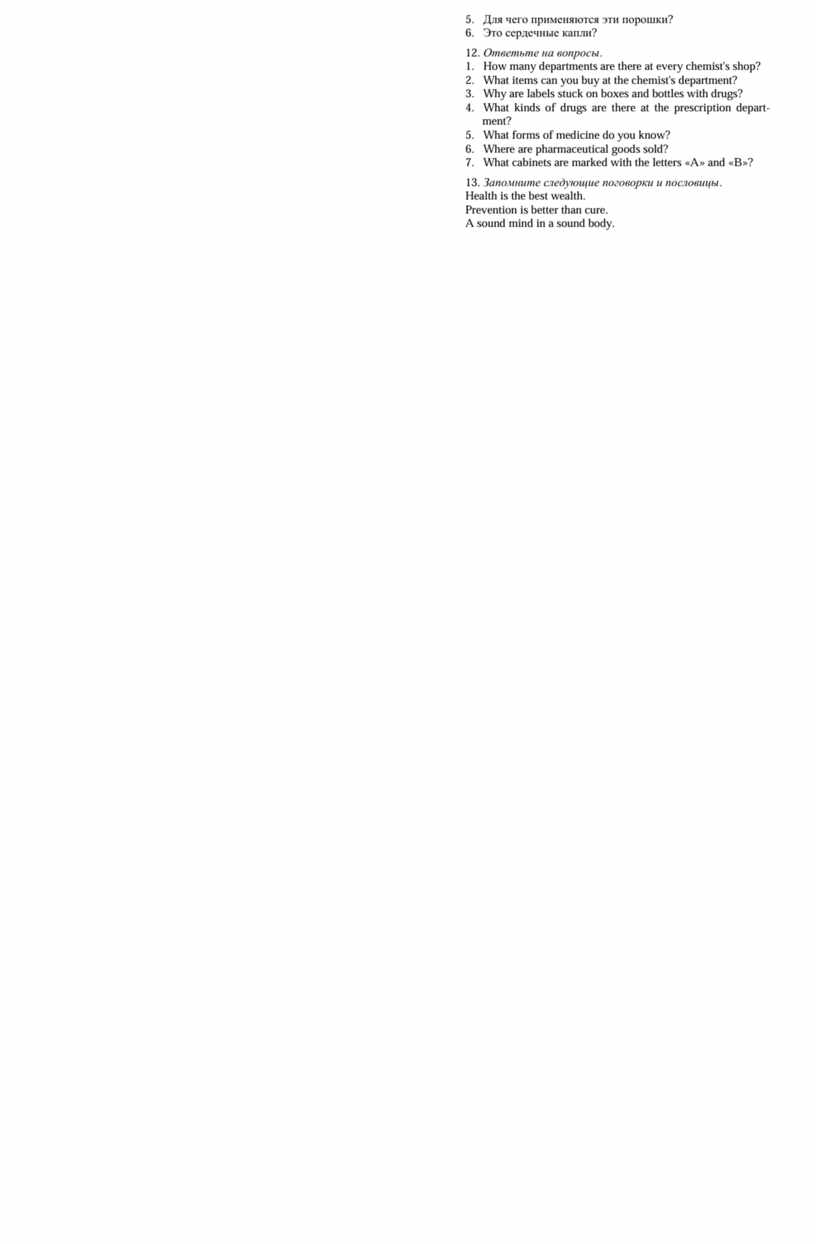
3. Прочитайте и переведите текст At the Chemists shop. Выполните задания
1-12 к тексту в тетради письменно.
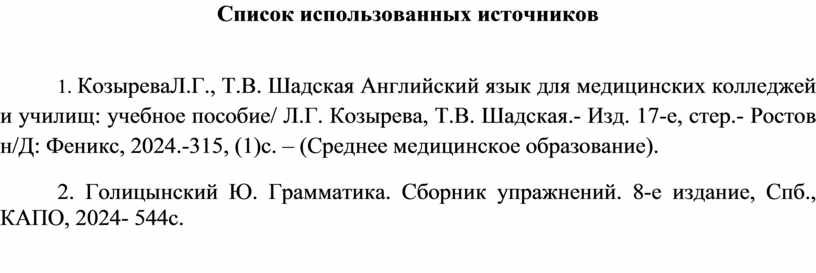
Список использованных источников
1. КозыреваЛ.Г., Т.В. Шадская Английский язык для медицинских колледжей и училищ: учебное пособие/ Л.Г. Козырева, Т.В. Шадская.- Изд. 17-е, стер.- Ростов н/Д: Феникс, 2024.-315, (1)с. – (Среднее медицинское образование).
2. Голицынский Ю. Грамматика. Сборник упражнений. 8-е издание, Спб., КАПО, 2024- 544с.

Материалы на данной страницы взяты из открытых источников либо размещены пользователем в соответствии с договором-офертой сайта. Вы можете сообщить о нарушении.


