
Поделиться


 Castle Combe.pptx
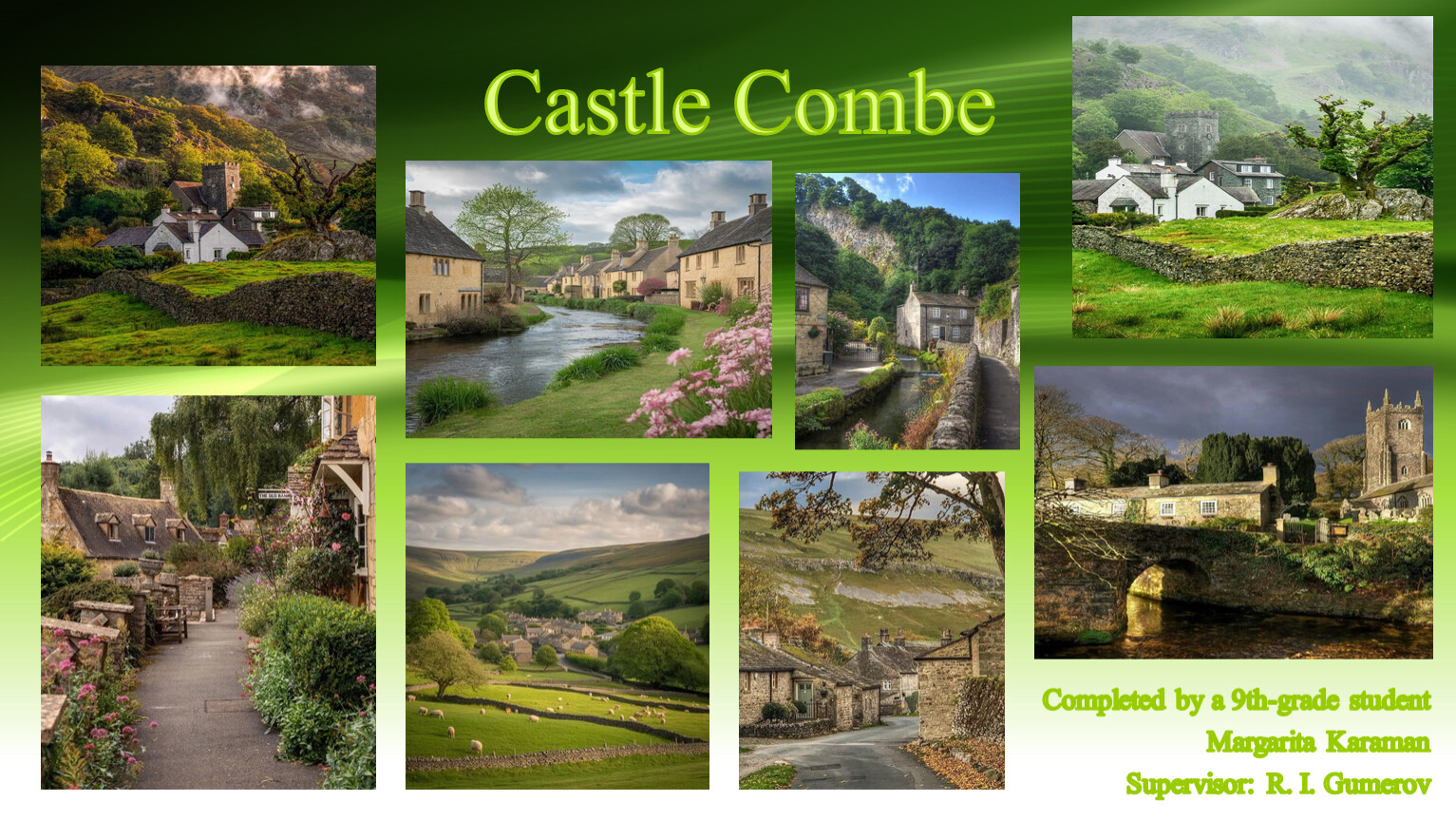
Castle Combe
Completed by a 9th-grade student
Margarita Karaman
Supervisor: R. I. Gumerov
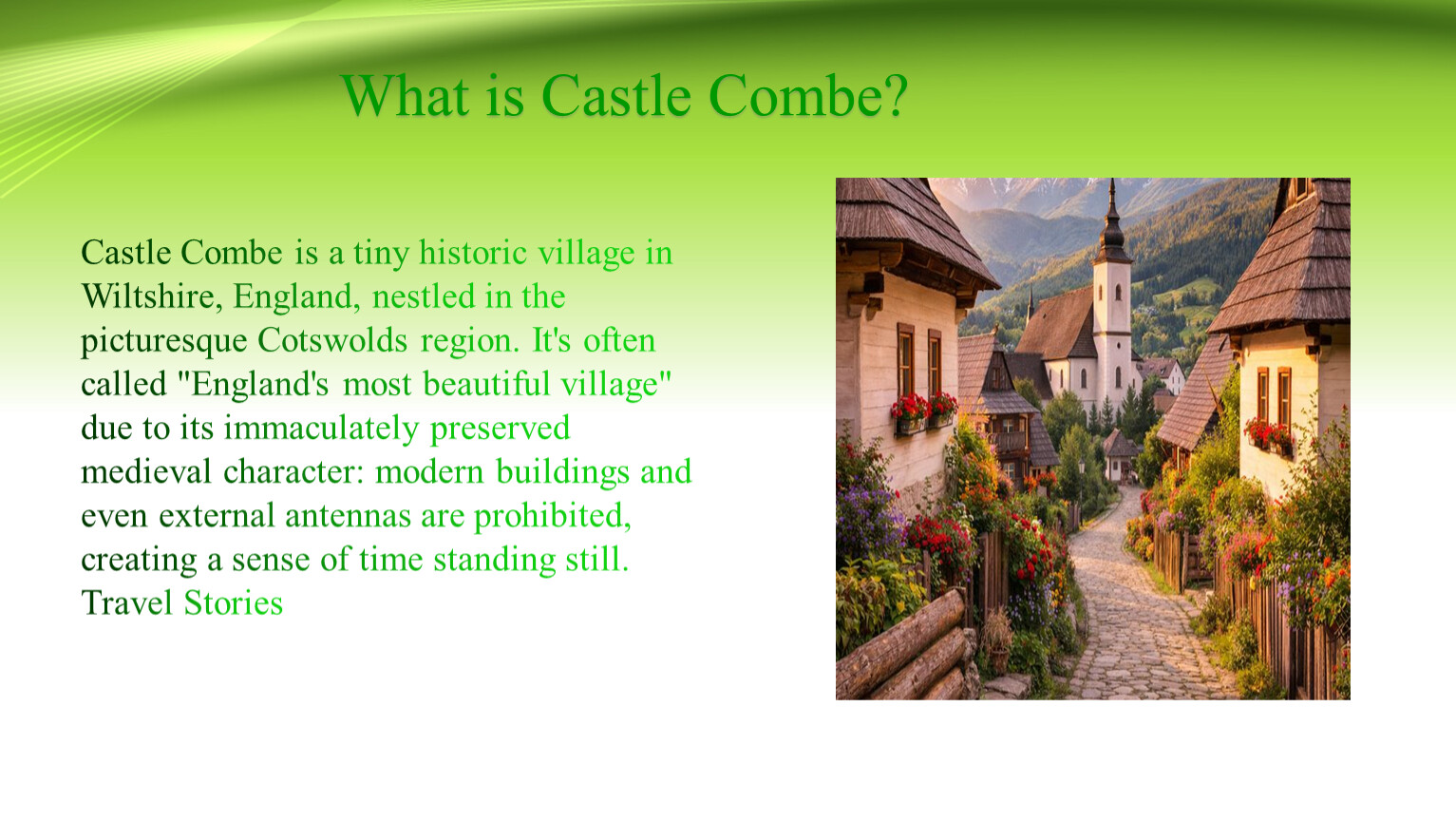
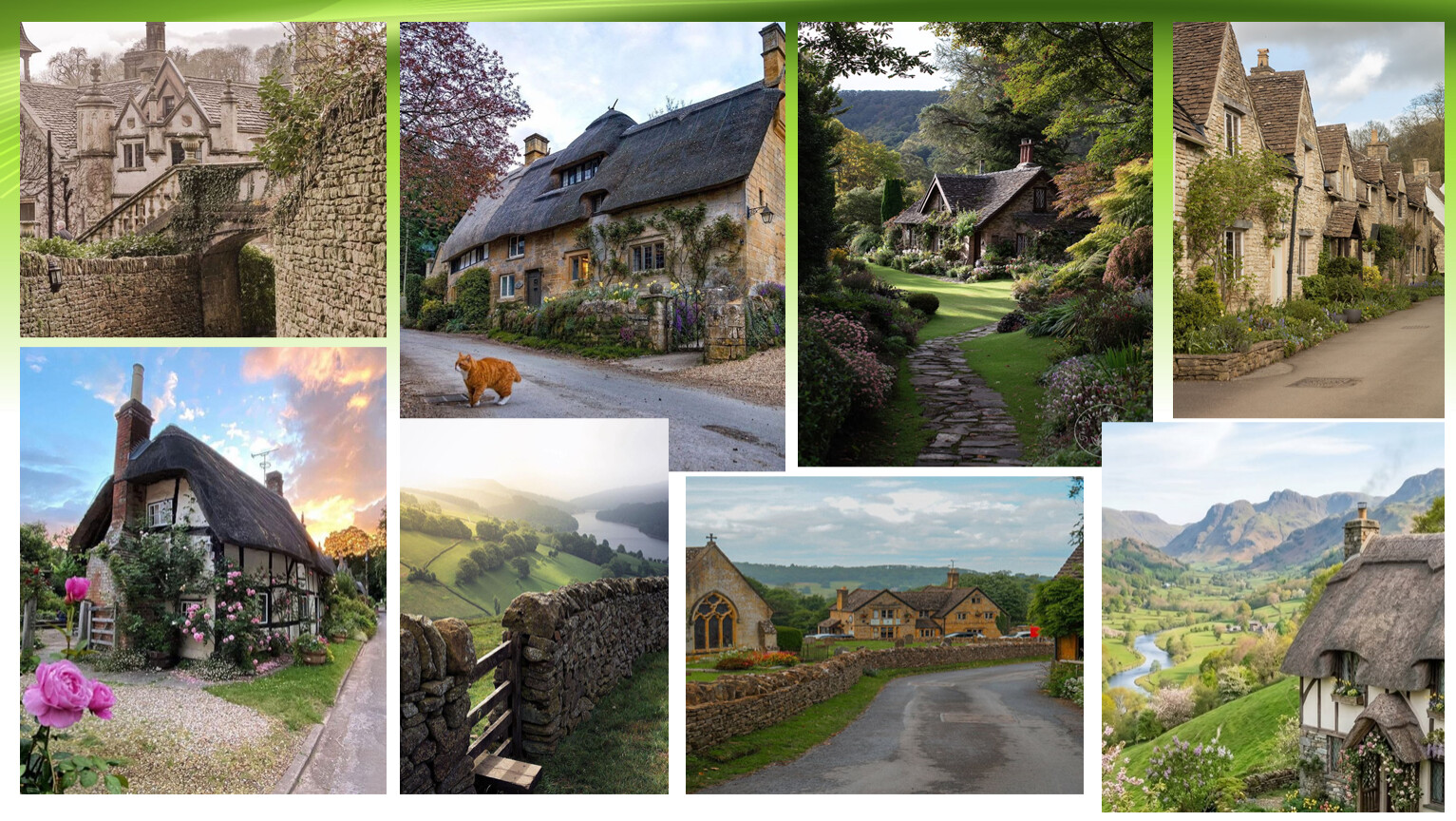
Castle Combe is a tiny historic village in Wiltshire, England, nestled in the picturesque Cotswolds region. It's often called "England's most beautiful village" due to its immaculately preserved medieval character: modern buildings and even external antennas are prohibited, creating a sense of time standing still. Travel Stories
What is Castle Combe?
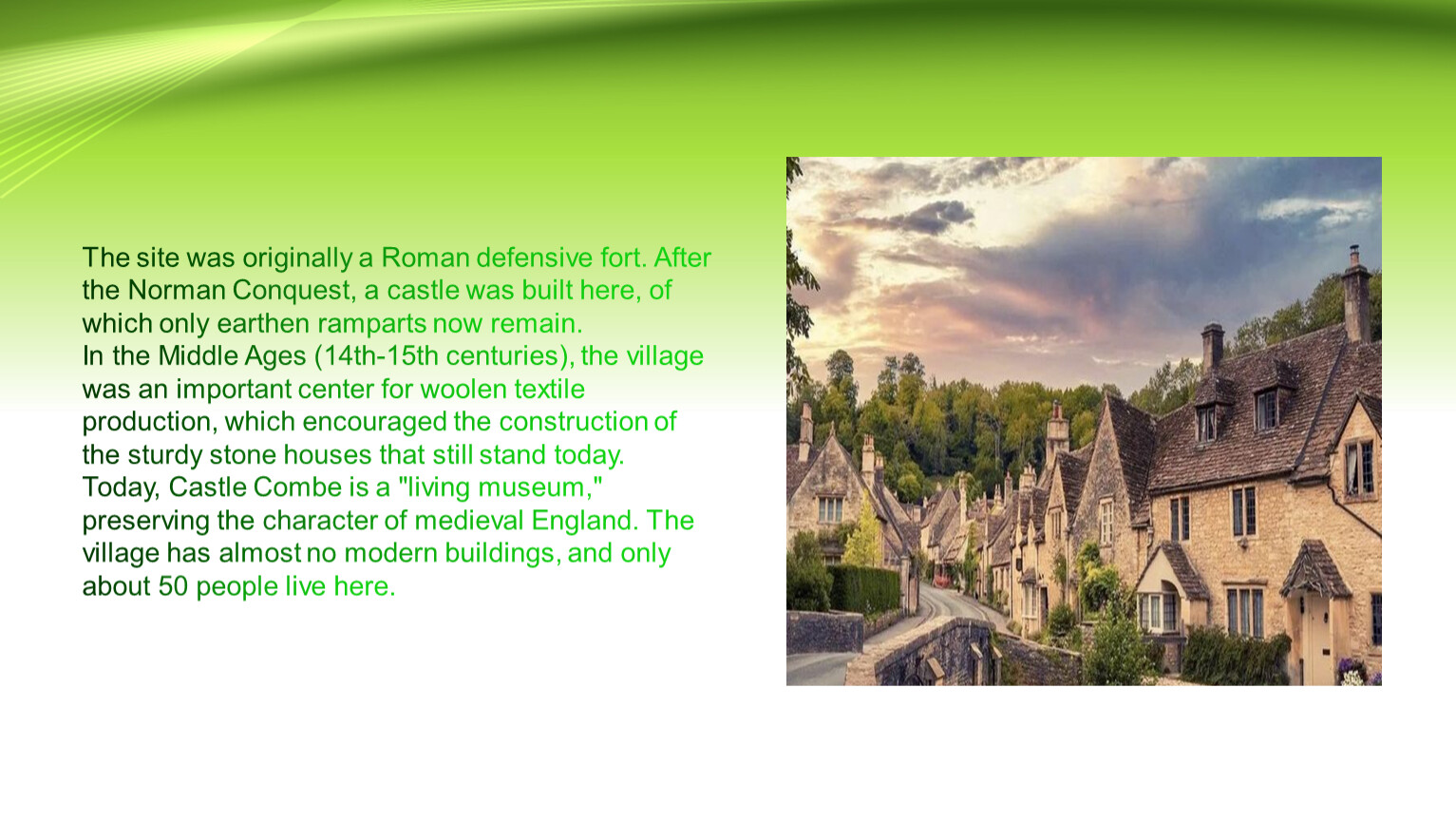
The site was originally a Roman defensive fort. After the Norman Conquest, a castle was built here, of which only earthen ramparts now remain.
In the Middle Ages (14th-15th centuries), the village was an important center for woolen textile production, which encouraged the construction of the sturdy stone houses that still stand today.
Today, Castle Combe is a "living museum," preserving the character of medieval England. The village has almost no modern buildings, and only about 50 people live here.
History of the village
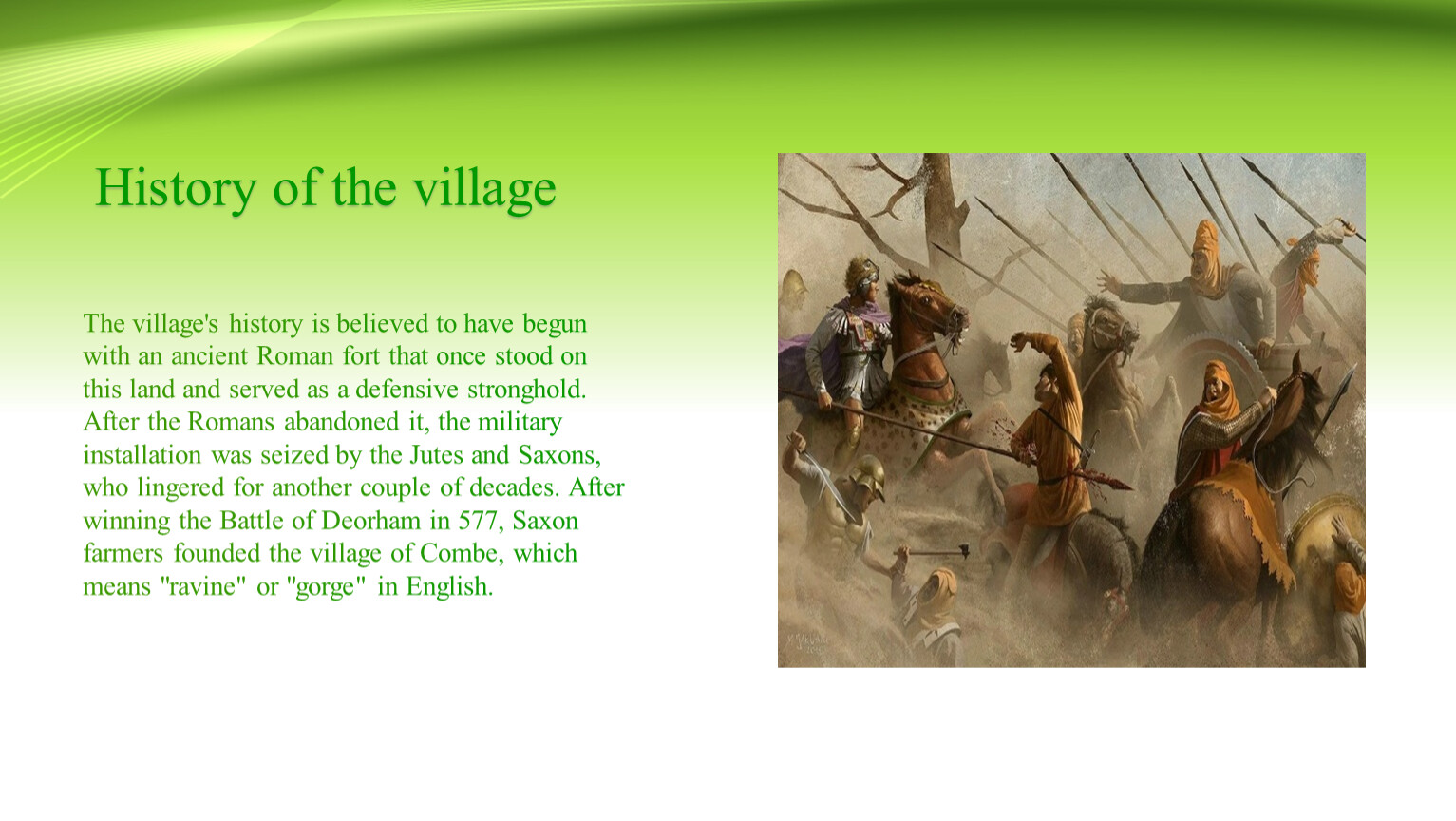
The village's history is believed to have begun with an ancient Roman fort that once stood on this land and served as a defensive stronghold. After the Romans abandoned it, the military installation was seized by the Jutes and Saxons, who lingered for another couple of decades. After winning the Battle of Deorham in 577, Saxon farmers founded the village of Combe, which means "ravine" or "gorge" in English.
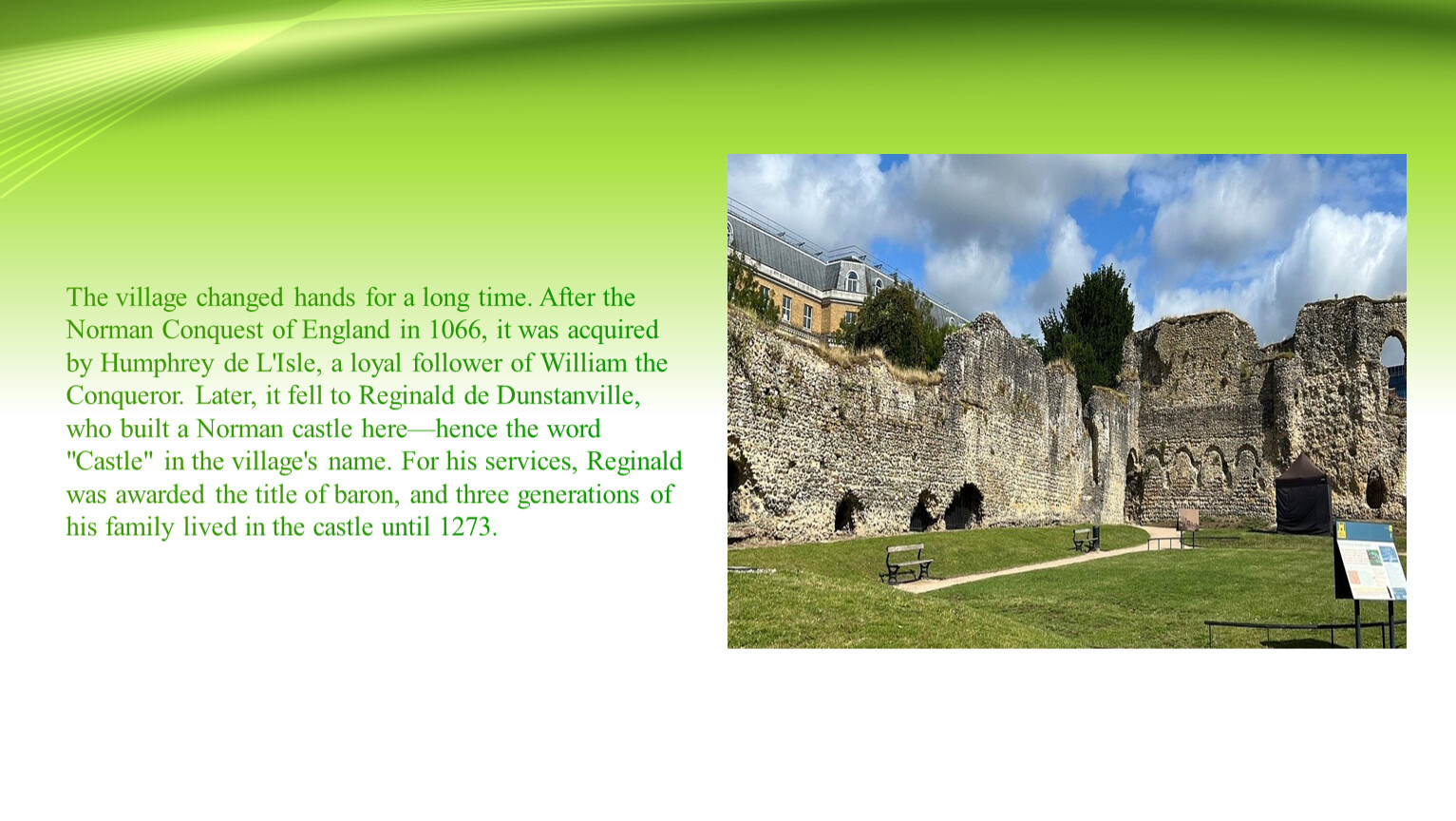
The village changed hands for a long time. After the Norman Conquest of England in 1066, it was acquired by Humphrey de L'Isle, a loyal follower of William the Conqueror. Later, it fell to Reginald de Dunstanville, who built a Norman castle here—hence the word "Castle" in the village's name. For his services, Reginald was awarded the title of baron, and three generations of his family lived in the castle until 1273.
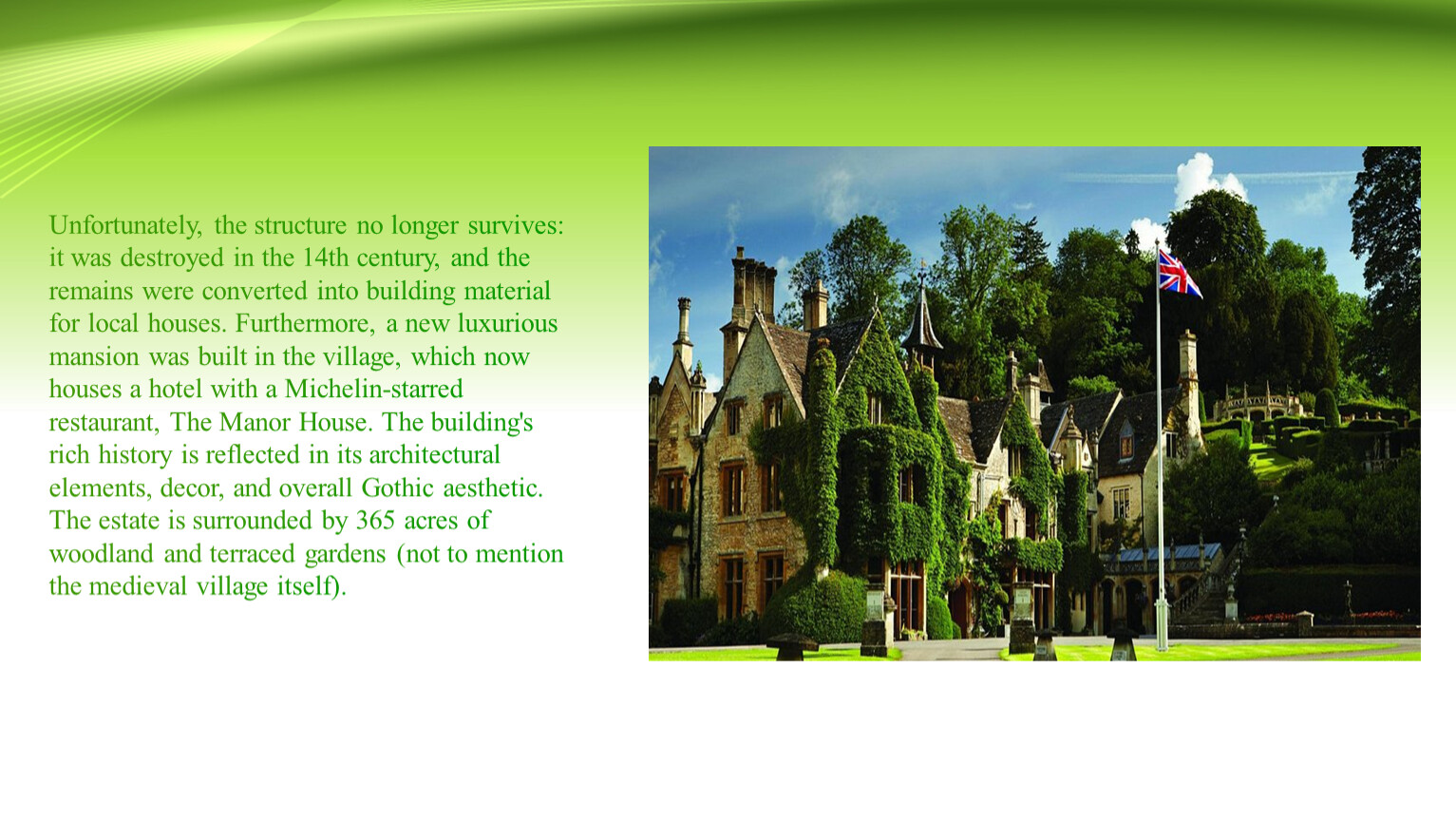
Unfortunately, the structure no longer survives: it was destroyed in the 14th century, and the remains were converted into building material for local houses. Furthermore, a new luxurious mansion was built in the village, which now houses a hotel with a Michelin-starred restaurant, The Manor House. The building's rich history is reflected in its architectural elements, decor, and overall Gothic aesthetic. The estate is surrounded by 365 acres of woodland and terraced gardens (not to mention the medieval village itself).
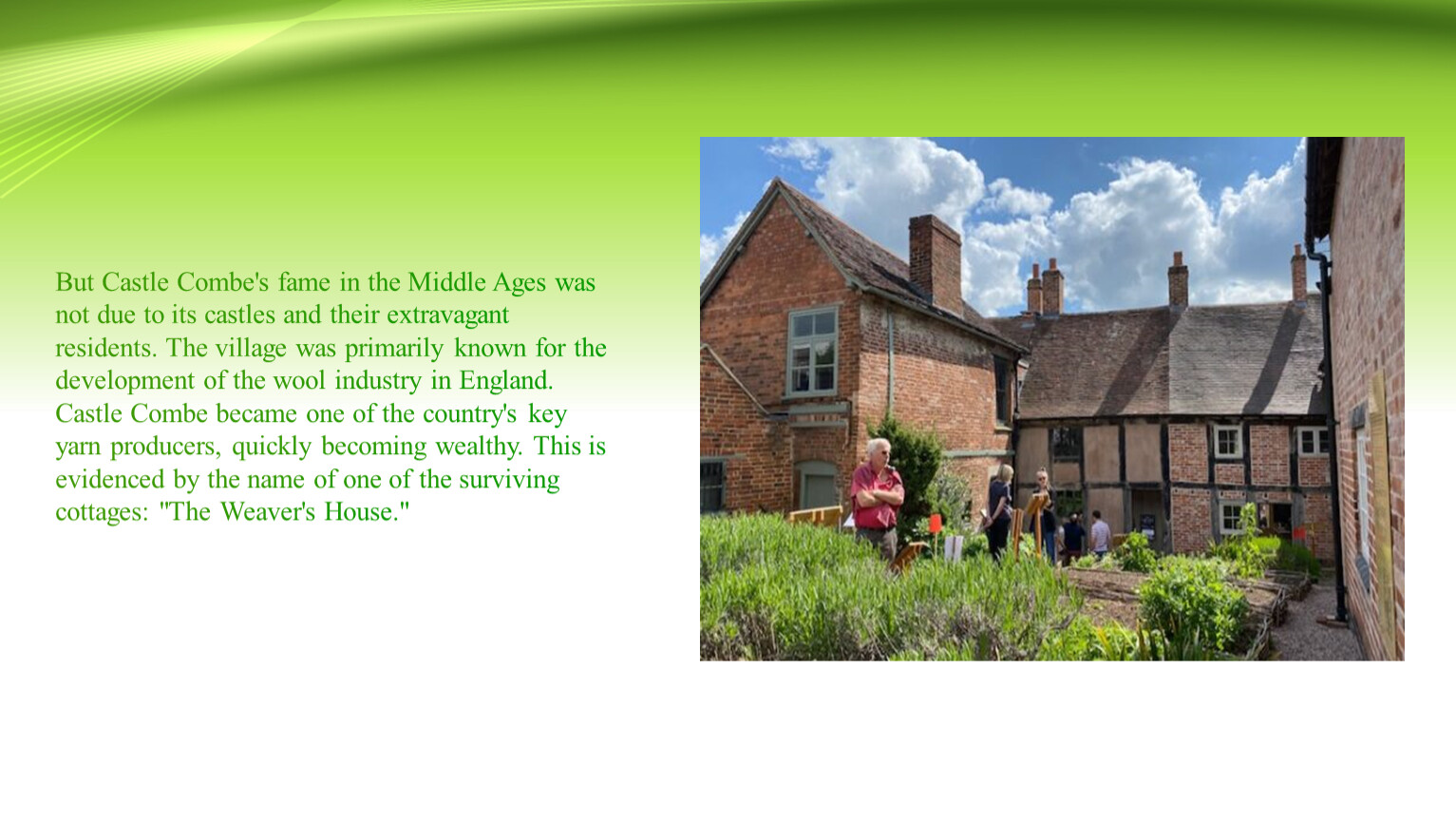
But Castle Combe's fame in the Middle Ages was not due to its castles and their extravagant residents. The village was primarily known for the development of the wool industry in England. Castle Combe became one of the country's key yarn producers, quickly becoming wealthy. This is evidenced by the name of one of the surviving cottages: "The Weaver's House."
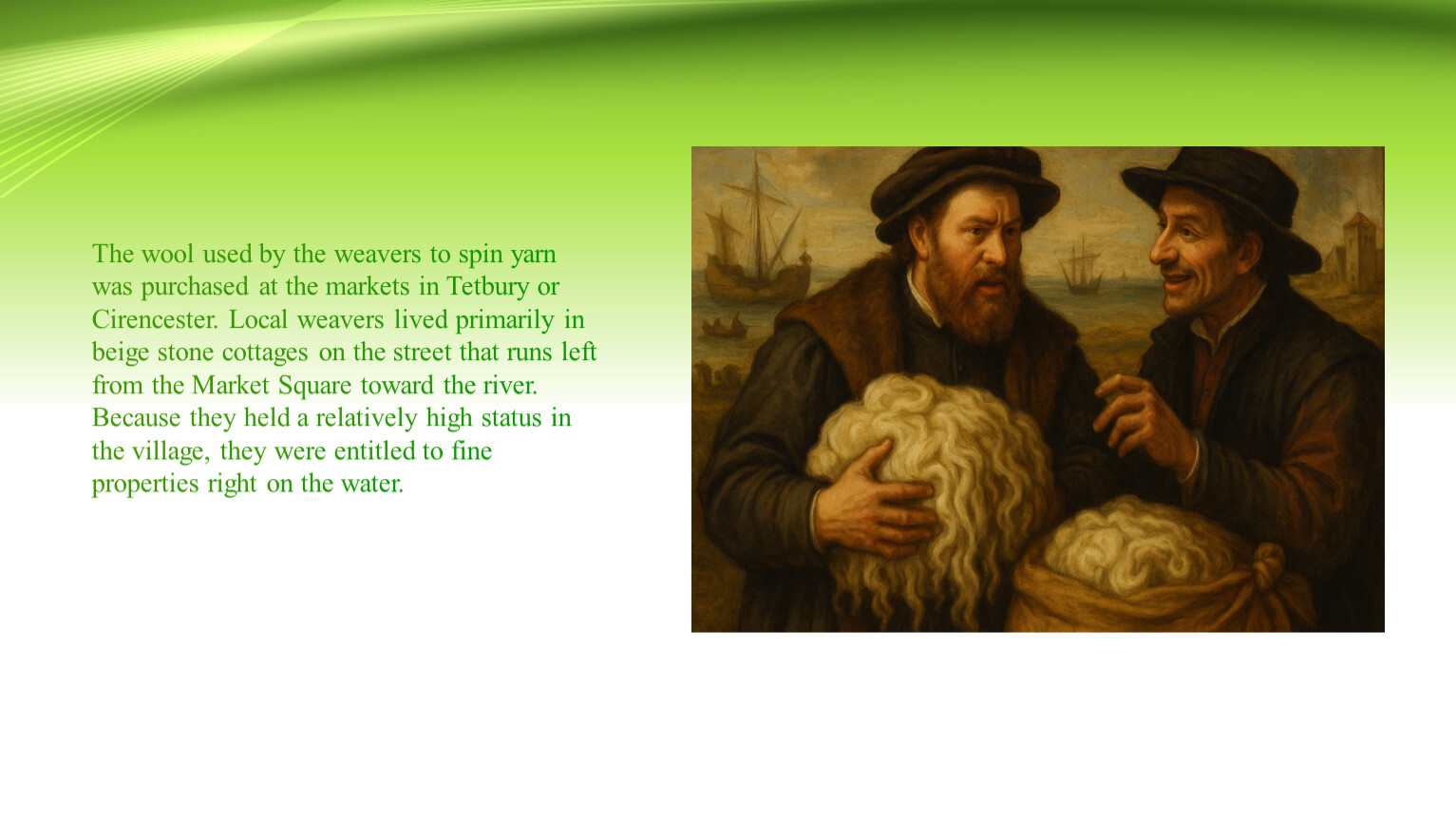
The wool used by the weavers to spin yarn was purchased at the markets in Tetbury or Cirencester. Local weavers lived primarily in beige stone cottages on the street that runs left from the Market Square toward the river. Because they held a relatively high status in the village, they were entitled to fine properties right on the water.
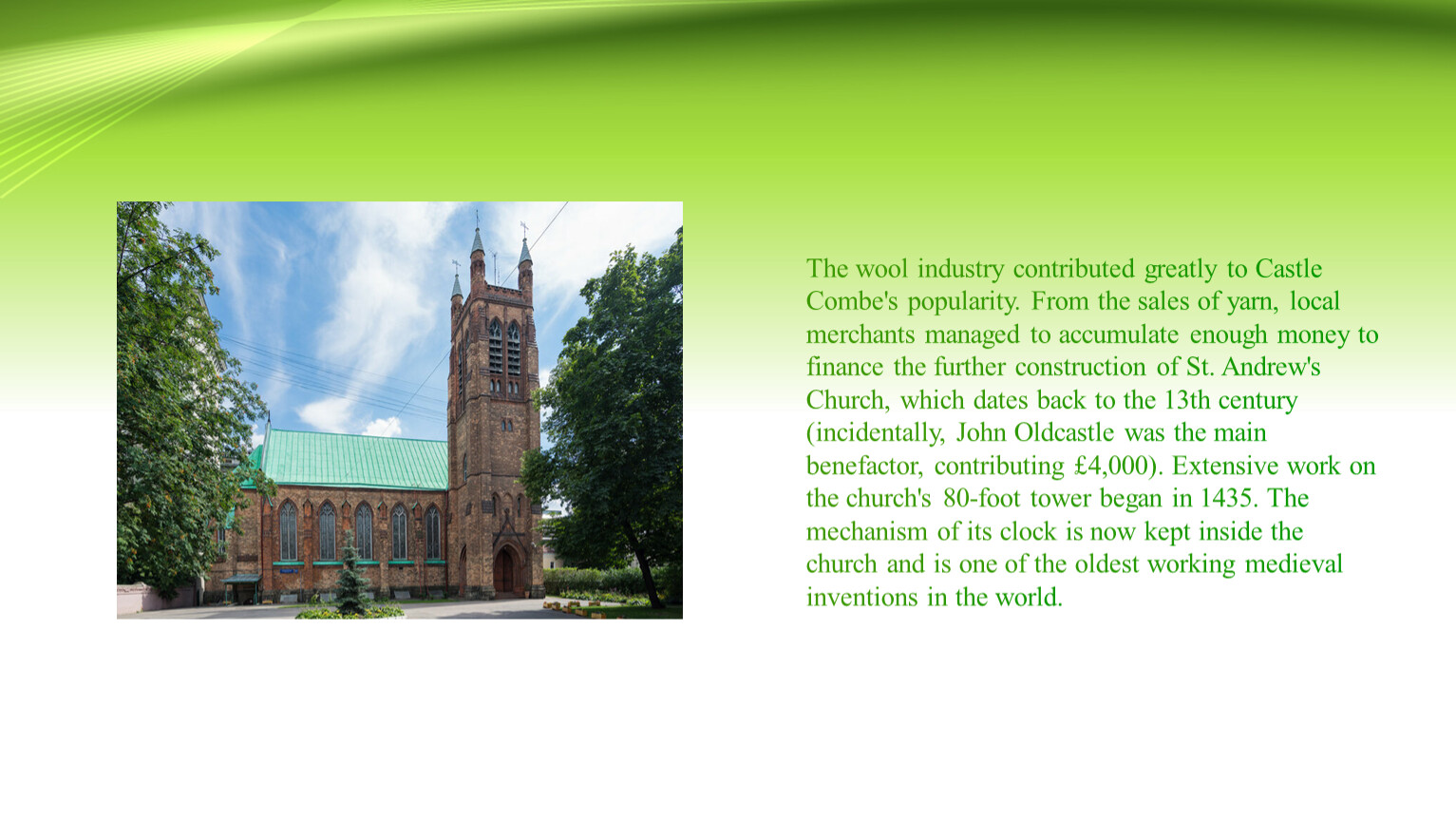
The wool industry contributed greatly to Castle Combe's popularity. From the sales of yarn, local merchants managed to accumulate enough money to finance the further construction of St. Andrew's Church, which dates back to the 13th century (incidentally, John Oldcastle was the main benefactor, contributing £4,000). Extensive work on the church's 80-foot tower began in 1435. The mechanism of its clock is now kept inside the church and is one of the oldest working medieval inventions in the world.
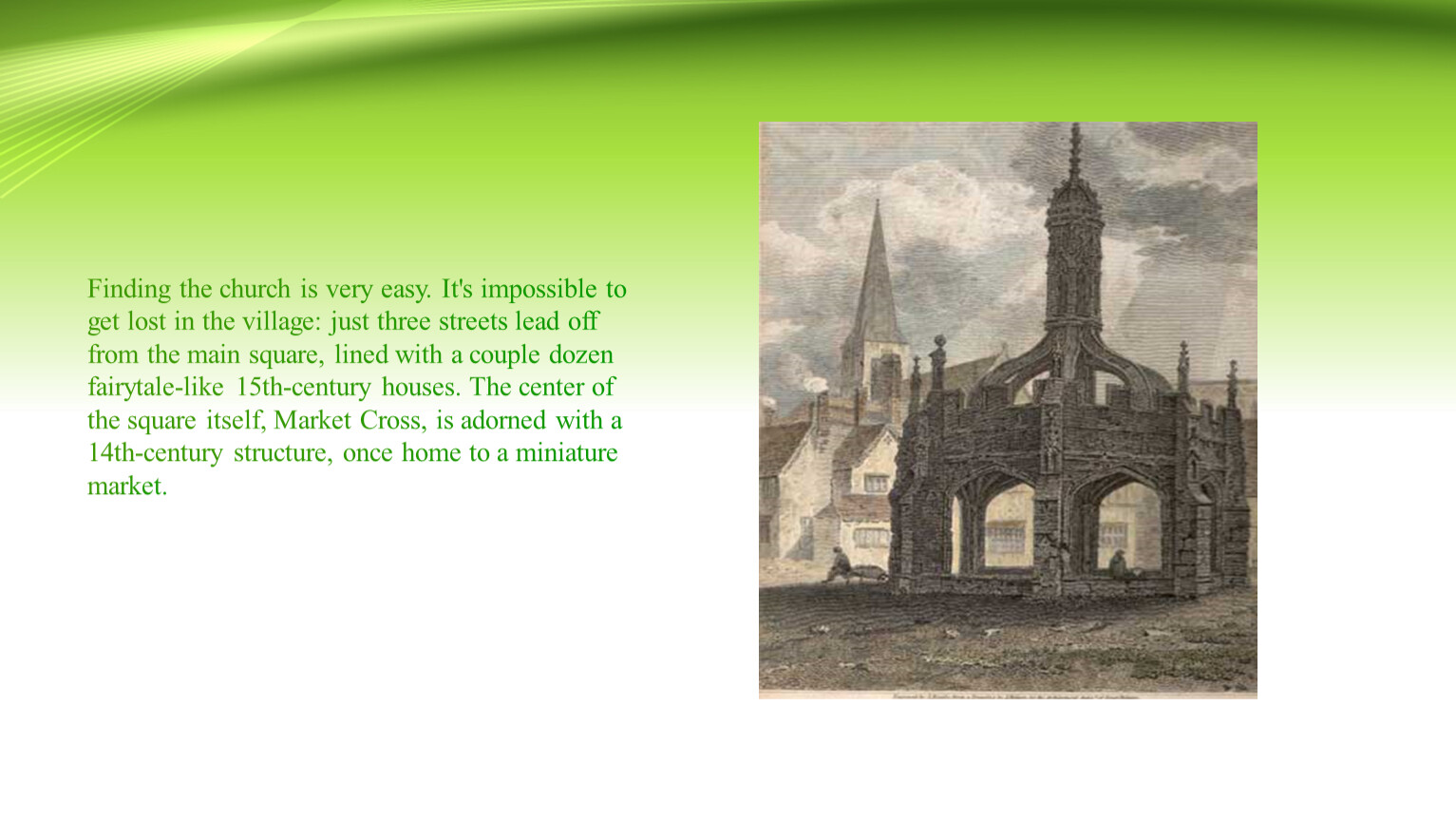
Finding the church is very easy. It's impossible to get lost in the village: just three streets lead off from the main square, lined with a couple dozen fairytale-like 15th-century houses. The center of the square itself, Market Cross, is adorned with a 14th-century structure, once home to a miniature market.
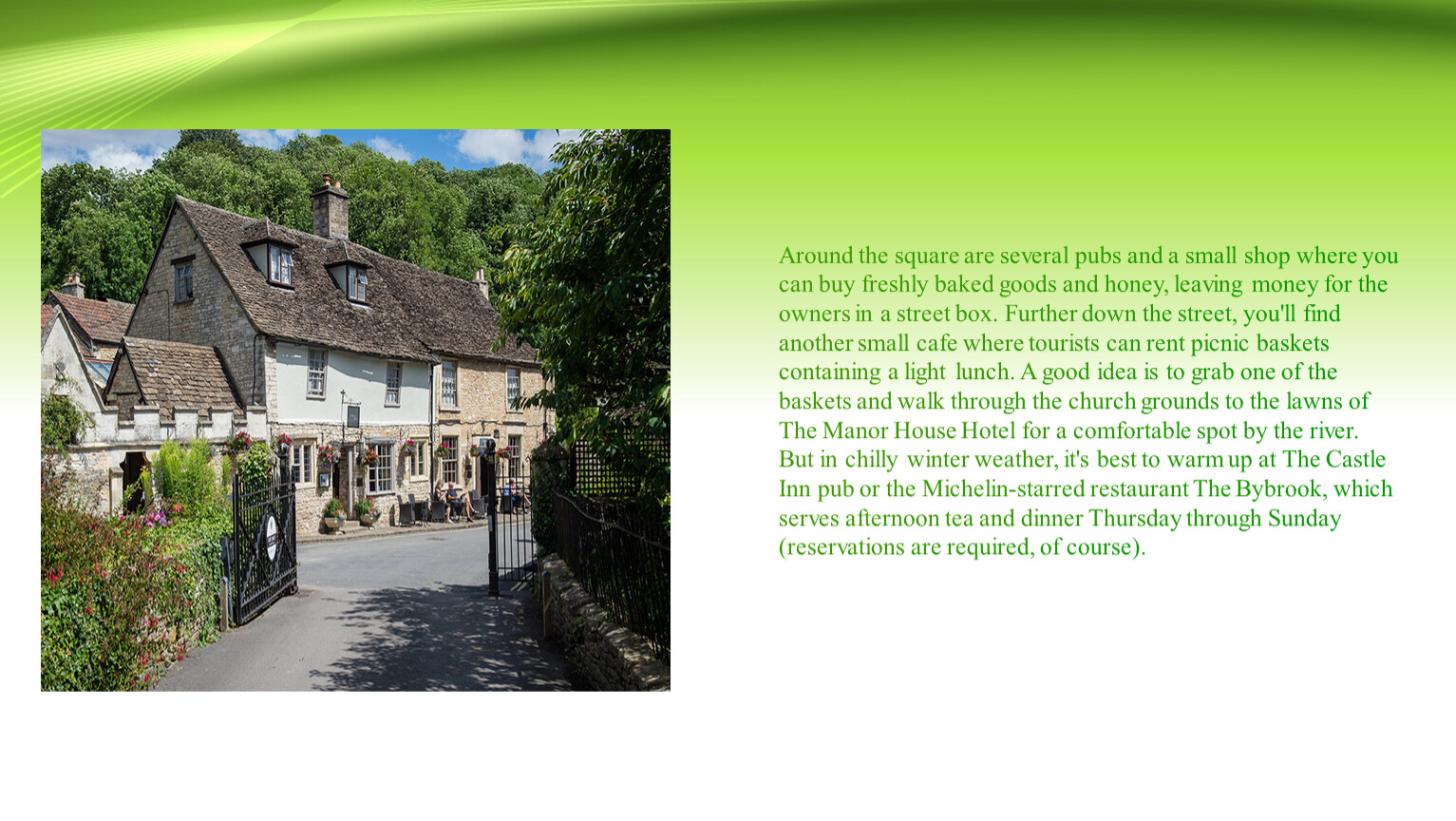
Around the square are several pubs and a small shop where you can buy freshly baked goods and honey, leaving money for the owners in a street box. Further down the street, you'll find another small cafe where tourists can rent picnic baskets containing a light lunch. A good idea is to grab one of the baskets and walk through the church grounds to the lawns of The Manor House Hotel for a comfortable spot by the river. But in chilly winter weather, it's best to warm up at The Castle Inn pub or the Michelin-starred restaurant The Bybrook, which serves afternoon tea and dinner Thursday through Sunday (reservations are required, of course).
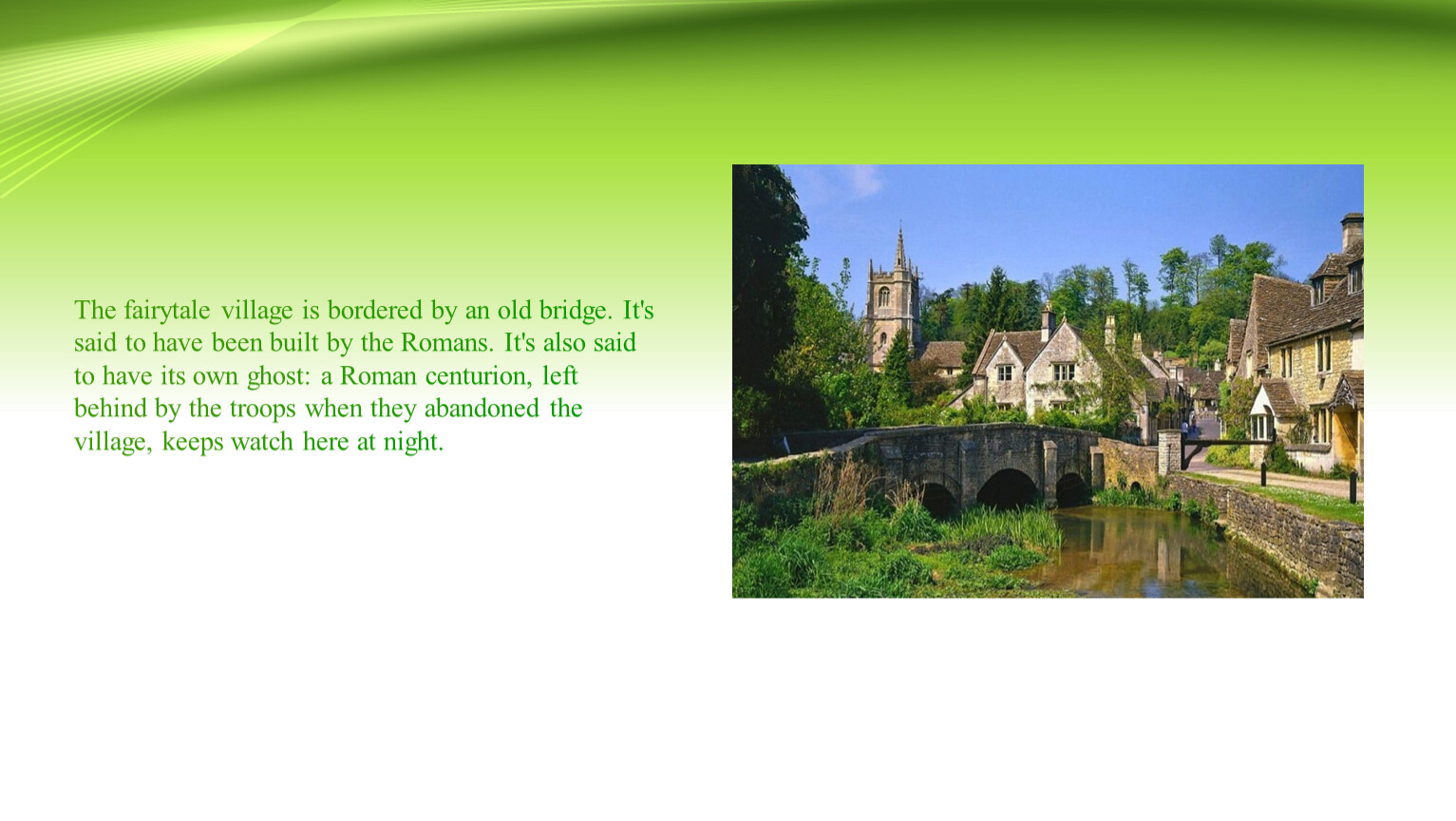
The fairytale village is bordered by an old bridge. It's said to have been built by the Romans. It's also said to have its own ghost: a Roman centurion, left behind by the troops when they abandoned the village, keeps watch here at night.
Interesting facts about Castle Combe:
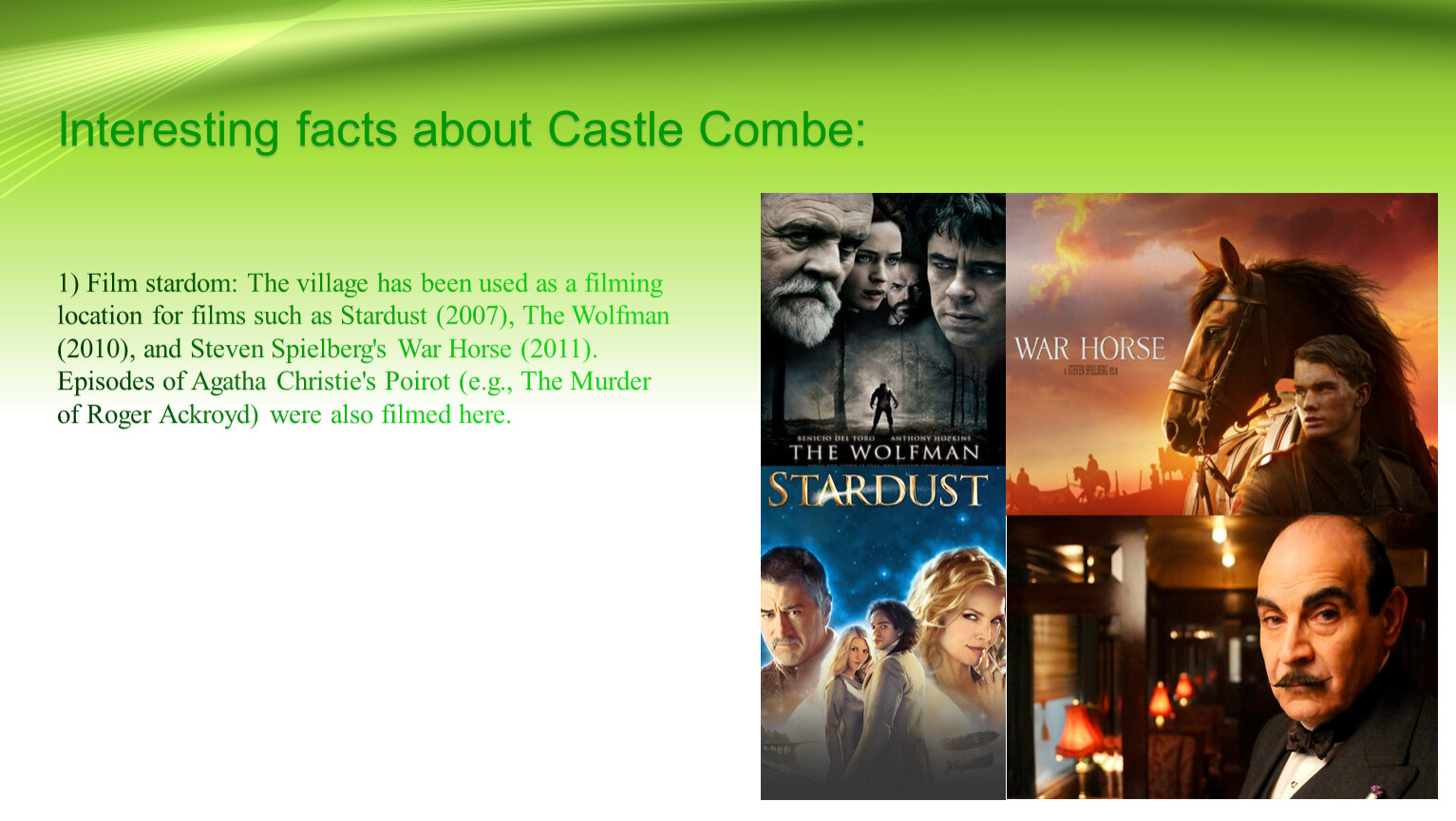
1) Film stardom: The village has been used as a filming location for films such as Stardust (2007), The Wolfman (2010), and Steven Spielberg's War Horse (2011). Episodes of Agatha Christie's Poirot (e.g., The Murder of Roger Ackroyd) were also filmed here.
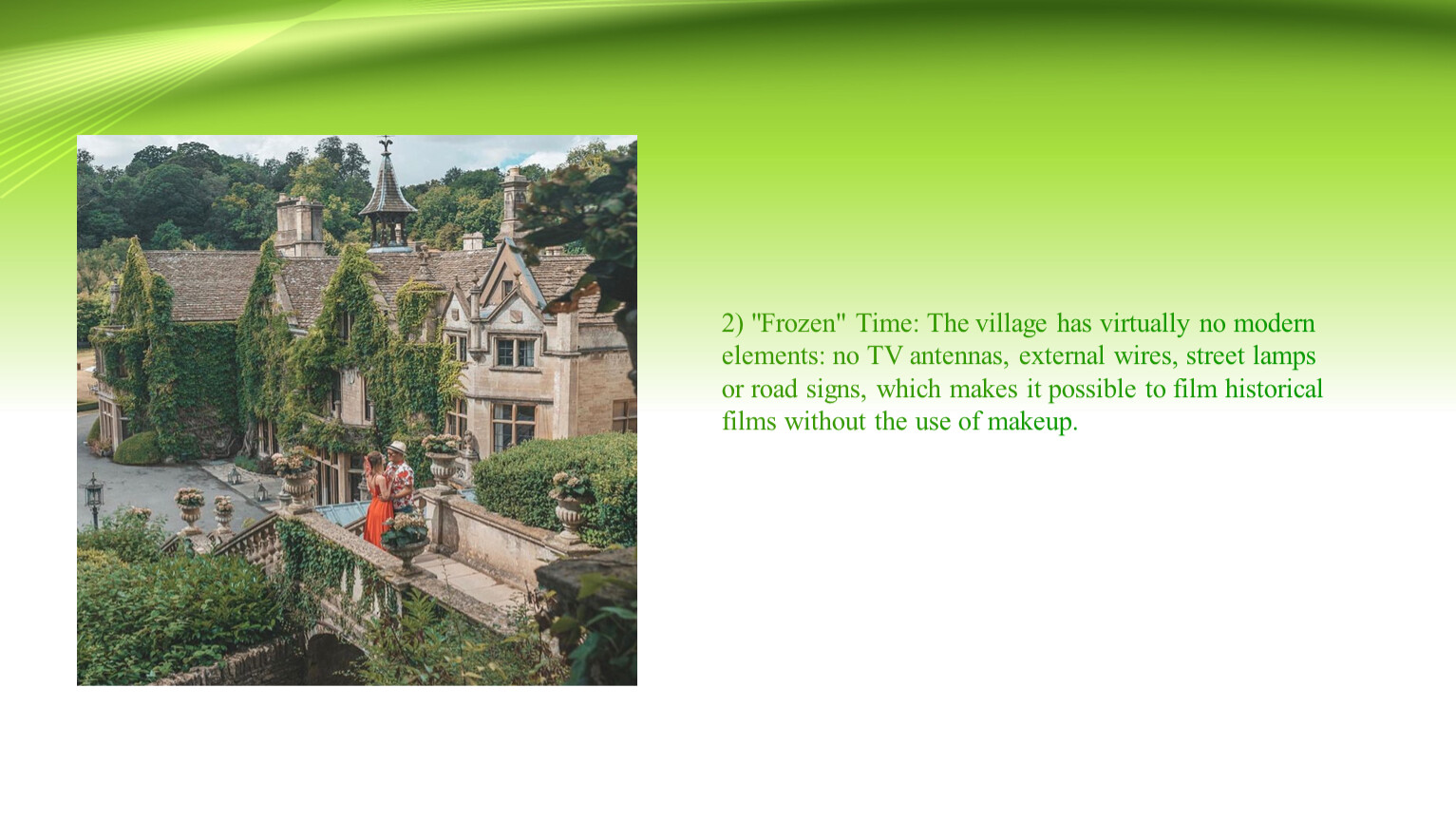
2) "Frozen" Time: The village has virtually no modern elements: no TV antennas, external wires, street lamps or road signs, which makes it possible to film historical films without the use of makeup.
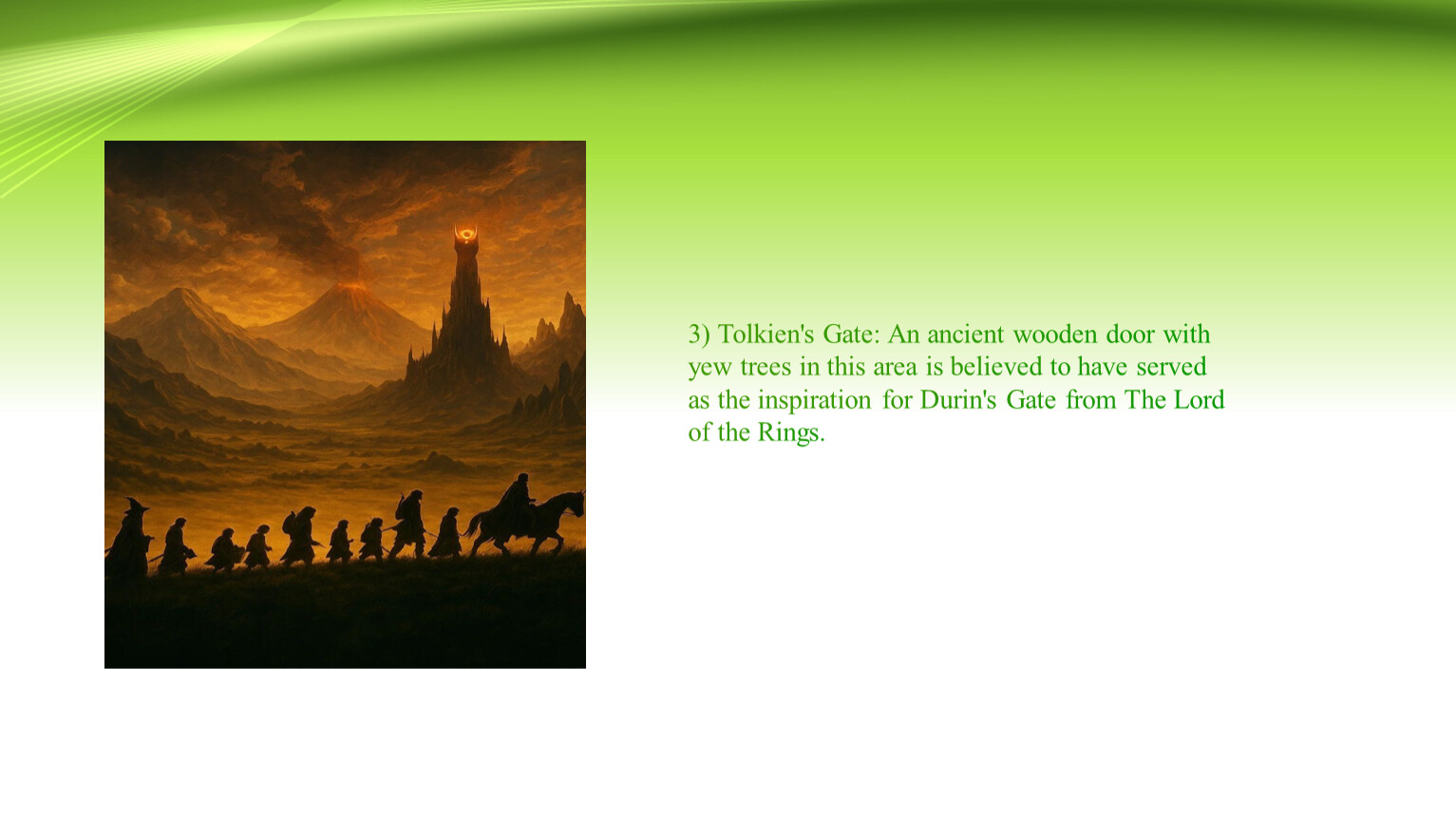
3) Tolkien's Gate: An ancient wooden door with yew trees in this area is believed to have served as the inspiration for Durin's Gate from The Lord of the Rings.
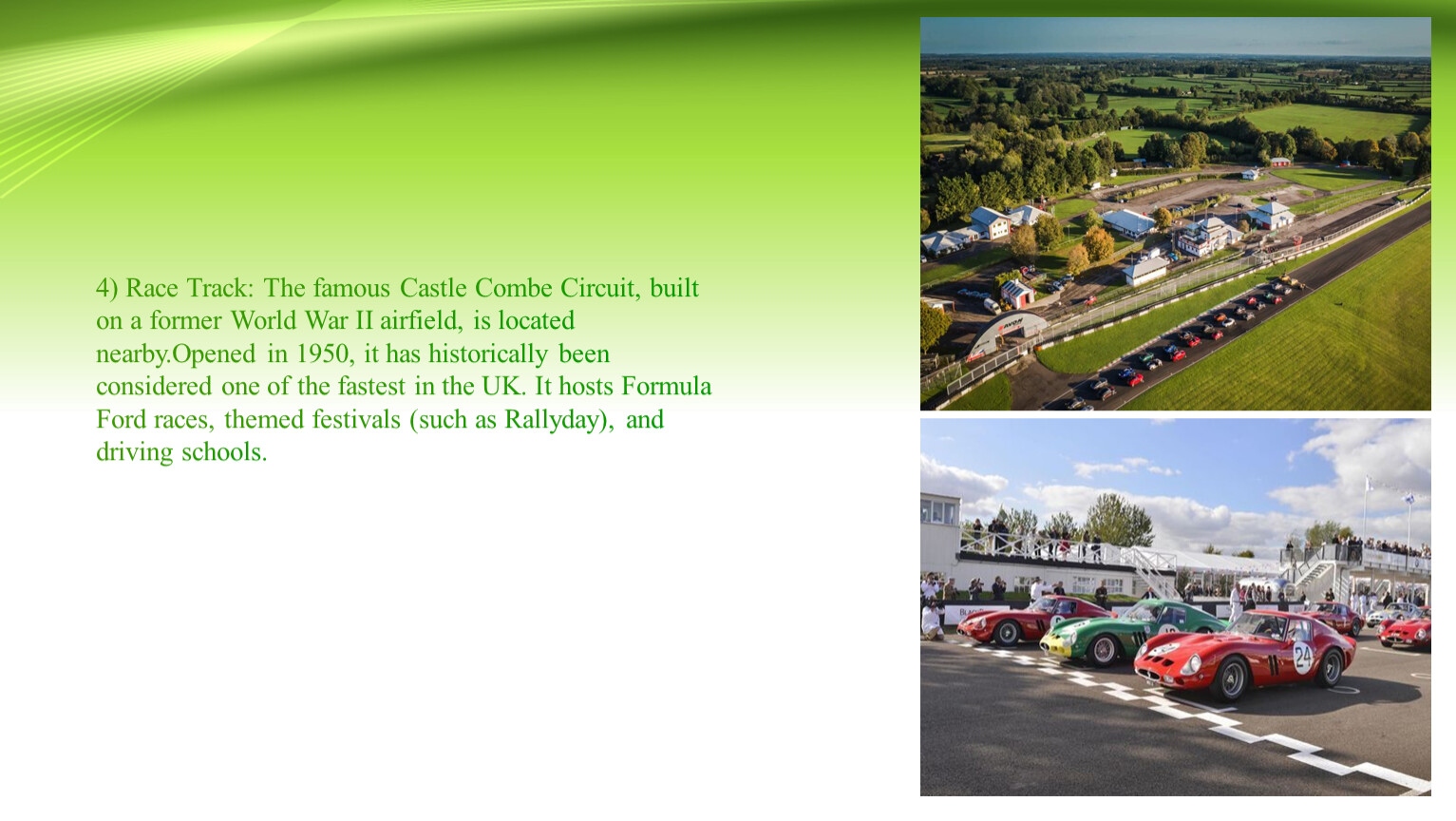
4) Race Track: The famous Castle Combe Circuit, built on a former World War II airfield, is located nearby.Opened in 1950, it has historically been considered one of the fastest in the UK. It hosts Formula Ford races, themed festivals (such as Rallyday), and driving schools.
Тhank you for your attention
Материалы на данной страницы взяты из открытых источников либо размещены пользователем в соответствии с договором-офертой сайта. Вы можете сообщить о нарушении.


