
Поделиться



 3. Урок по английскому языку ля 7 класса.docx
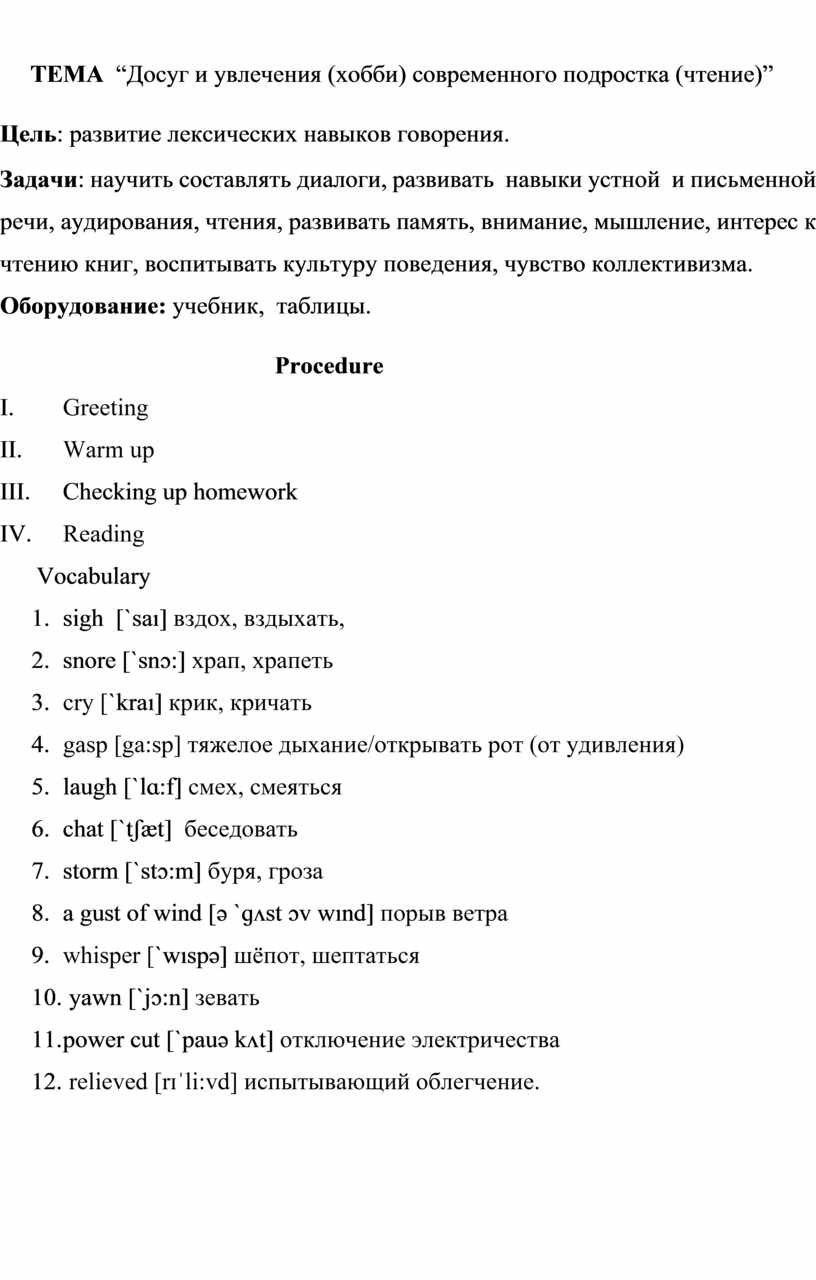
ТЕМА “Досуг и увлечения (хобби) современного подростка (чтение)”
Цель: развитие лексических навыков говорения.
Задачи: научить составлять диалоги, развивать навыки устной и письменной речи, аудирования, чтения, развивать память, внимание, мышление, интерес к чтению книг, воспитывать культуру поведения, чувство коллективизма.
Оборудование: учебник, таблицы.
Procedure
I. Greeting
II. Warm up
III. Checking up homework
IV. Reading
Vocabulary
1. sigh [`saı] вздох, вздыхать,
2. snore [`snɔ:] храп, храпеть
3. cry [`kraı] крик, кричать
4. gasp [ga:sp] тяжелое дыхание/открывать рот (от удивления)
5. laugh [`lɑ:f] смех, смеяться
6. chat [`tʃæt] беседовать
7. storm [`stɔ:m] буря, гроза
8. a gust of wind [ə `ɡʌst ɔv wınd] порыв ветра
9. whisper [`wıspə] шёпот, шептаться
10. yawn [`jɔ:n] зевать
11. power cut [`pauə kʌt] отключение электричества
12. relieved [rɪˈli:vd] испытывающий облегчение.
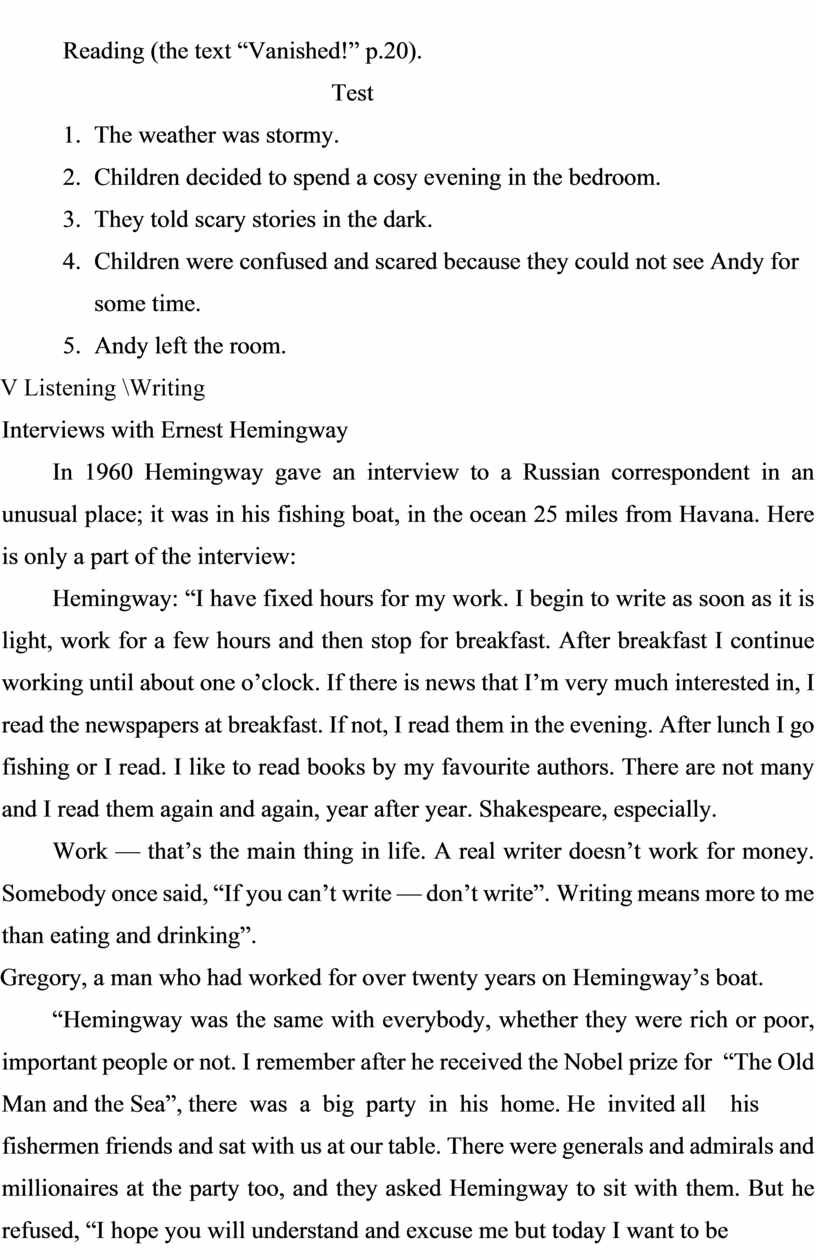
Reading (the text “Vanished!” p.20).
Test
1. The weather was stormy.
2. Children decided to spend a cosy evening in the bedroom.
3. They told scary stories in the dark.
4. Children were confused and scared because they could not see Andy for some time.
5. Andy left the room.
V Listening \Writing
Interviews with Ernest Hemingway
In 1960 Hemingway gave an interview to a Russian correspondent in an unusual place; it was in his fishing boat, in the ocean 25 miles from Havana. Here is only a part of the interview:
Hemingway: “I have fixed hours for my work. I begin to write as soon as it is light, work for a few hours and then stop for breakfast. After breakfast I continue working until about one o’clock. If there is news that I’m very much interested in, I read the newspapers at breakfast. If not, I read them in the evening. After lunch I go fishing or I read. I like to read books by my favourite authors. There are not many and I read them again and again, year after year. Shakespeare, especially.
Work — that’s the main thing in life. A real writer doesn’t work for money. Somebody once said, “If you can’t write — don’t write”. Writing means more to me than eating and drinking”.
Gregory, a man who had worked for over twenty years on Hemingway’s boat.
“Hemingway was the same with everybody, whether they were rich or poor, important people or not. I remember after he received the Nobel prize for “The Old Man and the Sea”, there was a big party in his home. He invited all his
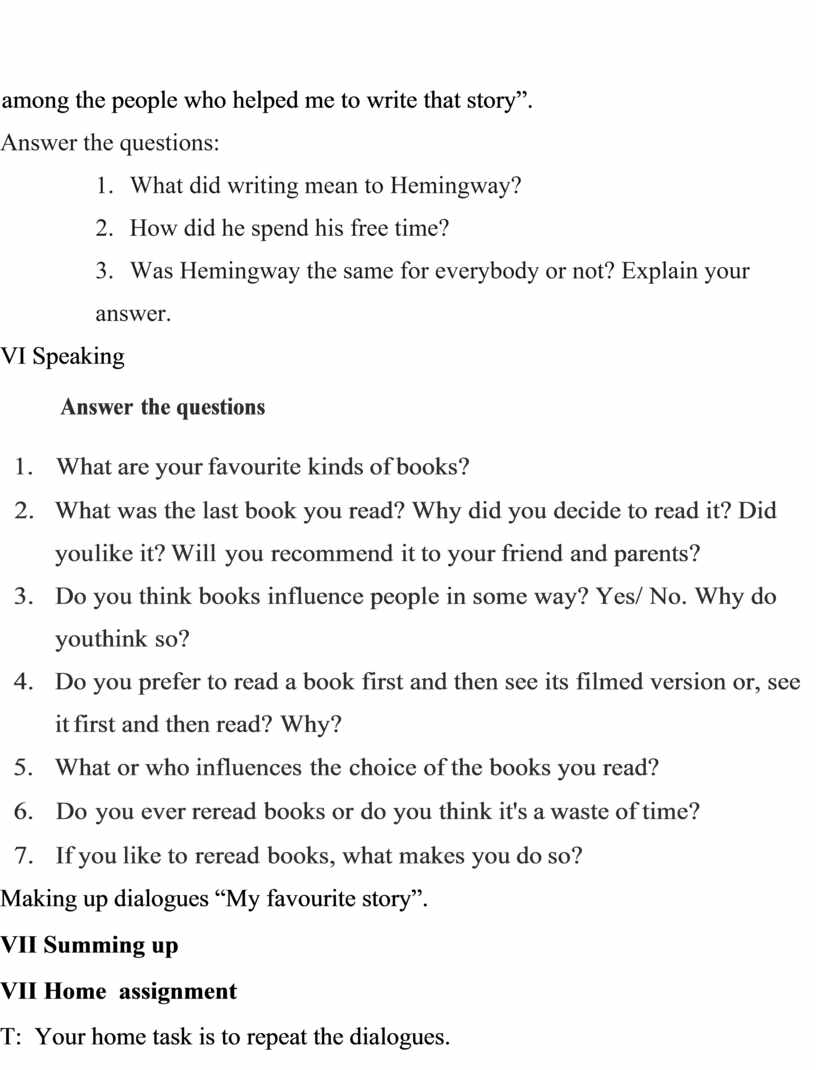
fishermen friends and sat with us at our table. There were generals and admirals and millionaires at the party too, and they asked Hemingway to sit with them. But he refused, “I hope you will understand and excuse me but today I want to be
among the people who helped me to write that story”.
Answer the questions:
1. What did writing mean to Hemingway?
2. How did he spend his free time?
3. Was Hemingway the same for everybody or not? Explain your answer.
VI Speaking
Answer the questions
1. What are your favourite kinds of books?
2. What was the last book you read? Why did you decide to read it? Did you like it? Will you recommend it to your friend and parents?
3. Do you think books influence people in some way? Yes/ No. Why do you think so?
4. Do you prefer to read a book first and then see its filmed version or, see it first and then read? Why?
5. What or who influences the choice of the books you read?
6. Do you ever reread books or do you think it's a waste of time?
7. If you like to reread books, what makes you do so?
Making up dialogues “My favourite story”.
VII Summing up
VII Home assignment
T: Your home task is to repeat the dialogues.
Материалы на данной страницы взяты из открытых источников либо размещены пользователем в соответствии с договором-офертой сайта. Вы можете сообщить о нарушении.


